Month: August 2016

  • A Deadlocked and Destructive Congress

    oneofive
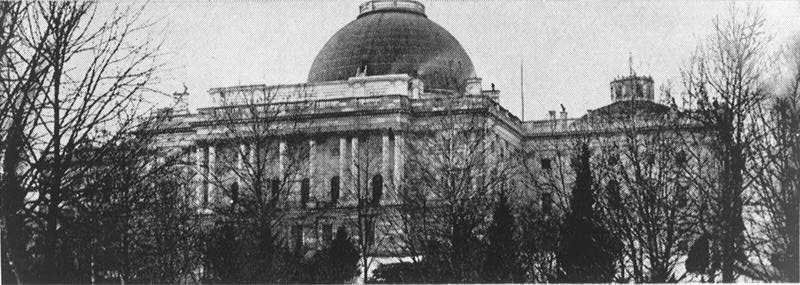
    The United States Capitol in 1848. Unknown Photographer, credit Library of Congress.

    During President James Polk’s administration, Congress grappled with resolving sectional tension arising out of whether slavery would be extended to newly acquired land from Mexico as well as the Oregon territory. Congress did not resolve that sectional tension but exacerbated it in what may have been one of the most deadlocked and destructive Congresses in American history. (more…)

  • The Theories of Slavery

    a89cbad2a1dccb130f3199e02ae7de2c
    Trout Fishing in Sullivan County, New York. By: Henry Inman.

    In the 15 years leading up to the Civil War, a wide variety of theories emerged for how the federal government should deal with slavery expanding, or not expanding, into the territories acquired by the United States.

    (more…)

  • The Role of Slavery in Splitting America

    underground_railroad
    The Underground Railroad. By: Charles T. Webber.

    Since the outbreak of the Civil War and continuing to the present day, the role of slavery in splitting America has been hotly debated. One may wonder whether there was merely a correlation between slavery and the Civil War or whether slavery was the cause. Investigating the nuances of the issue of slavery reveals that the Civil War resulted from sectionalism and slavery, which were practically synonymous.

    (more…)

  • Constitution Sunday: Reply to Mason’s “Objections”: “Civis Rusticus”

    Reply to Mason’s “Objections”: “Civis Rusticus”

    Virginia Independent Chronicle (Richmond), January 30, 1788

    Following are excerpts of an article written in response to George Mason’s article listing the objections to the Constitution:

    “5th. Had the convention left the executive power indivisible, I am free to own it would have been better, than giving the senate a share in it (more…)

  • The Work Divide

    john_caspar_wild_-_cincinnati_from_behind_newport_barracks_-_google_art_project
    Painting of Cincinnati, Ohio from Newport, Kentucky. By: John Caspar Wild.

    The North and the South had come to develop two distinct cultures by the mid-1800s. One of those fundamental differences was the nature of work.

    (more…)

  • Tipping the Balance of Sectionalism

    casper_wild
    Fort Snelling in the Upper Mississippi Valley. By: John Caspar Wild.

    By 1848, America had numerous sectional differences, and those sectional differences were beginning to take on a different character.

    (more…)

  • The Balance of Sectionalism

    john_caspar_wild_-_fourth_street_east_from_vine_-_google_art_project
    Fourth Street East from Vine Street in Cincinnati, Ohio. Circa 1835. By: John Caspar Wild.

    From the inception of America in 1776 to the mid-1800s, there was a balance between regions of the country. That dramatically changed throughout the 1840s and 1850s.

    (more…)

  • The American Spirit of the 1840s

    1930.7.2_Cole Thomas
    The Van Rensselaer Manor House. By: Thomas Cole.

    Through the early 1800s and well into the 1840s, Americans had developed a sense of unity and pride about their country.

    (more…)

  • The Country of the Future

    home_in_the_woods_1847_thomas_cole
    Home in the Woods. By: Thomas Cole.

    By 1848, America had undergone a significant transformation from the America that the Founding Fathers left just a few decades before.

    (more…)

  • Election of 1848: Whig Victory

    white-house-south-face-1840s
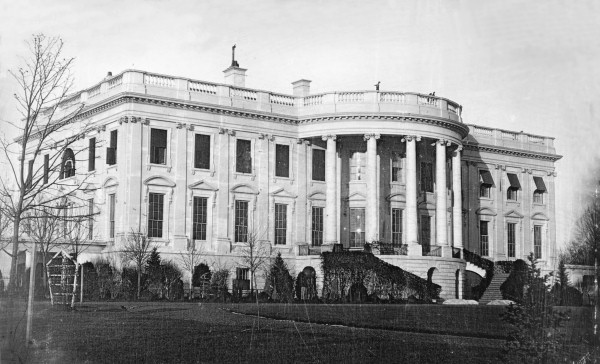
    The White House in 1848. Credit: Library of Congress.

    On November 7, 1848, Americans went to the polls to choose between Martin Van Buren, Zachary Taylor, and Lewis Cass.

    (more…)