-
Constitution Sunday: “Publius,” The Federalist LI [James Madison]
Independent Journal (New York) February 6, 1788 “But what is government itself but the greatest of all reflections of human nature?” This rhetorical question, which James Madison posed, is one that governments throughout the world—throughout history—have answered by showing that even the best-intentioned government fails where it does not take human nature into account.
-
The Civil War: Jefferson Davis: Message to the Confederate Congress
April 29, 1861 With only a few weeks at the helm of the Confederate government, president Jefferson Davis and the Confederate Congress had cause for concern—but also cause for inspiration. The whole of the South (and the whole of the North) was animated: men and women were mobilizing; making their preparations to contribute to the…
-
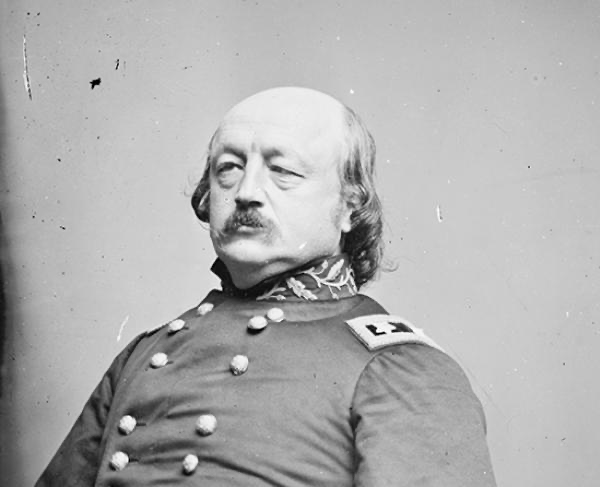
The Civil War: Benjamin F. Butler to Winfield Scott
One night in late May 1861, “three negroes”—who said they were field hands, slaves—delivered themselves to the picket line at Fort Monroe in Virginia. Fort Monroe, sat on the peninsula between the York River and James River, had at its helm Brigadier General Benjamin F. Butler. The fugitive slaves had come to the fort to…


-
The Civil War: William Howard Russell: from My Diary North and South
April 17, 1861 In the weeks and months leading up to the fall of Fort Sumter, the South had been brimming with excitement for the future. Charleston, South Carolina—with newly taken Fort Sumter in its harbor—was leading the South into that future both through its rhetoric and through its actions. Enthusiasm was abound for what…
-
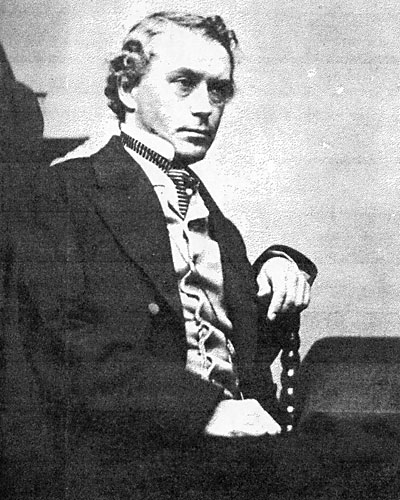
The Civil War: George Templeton Strong: Diary, April 13-16, 1861
Throughout the months leading up to the firing on Fort Sumter, there was widespread wonder about how the country would react to such a provocation; it was bound to be a cleave dividing the country and also its communities. Generations later—with the accordion of events neatly folded and the result of the war known—it would…
-
Lincoln’s Spot Resolutions
At the end of the Mexican-American War, President James Polk proposed taking as much as Mexico’s land as possible. However, he proposed this plan to a majority Whig House of Representatives.
-
America in 1848
In 1848, when word spread to America that a revolution was breaking out in France, President James Polk wrote: “The great principles of popular sovereignty which were proclaimed in 1776 by the immortal author of our Declaration of Independence, seem now to be in the course of rapid development throughout the world.” James Knox Polk…
-
The Persecution of Winfield Scott
Throughout the course of the Mexican-American War, General Winfield Scott was increasingly becoming a hero to Americans. While many Americans looked at Scott’s actions and could only admire him, one man took action to ensure Scott would not have a pristine reputation. That man was President James Polk.
-
The Taking of Mexico City
Winfield Scott was “one of the greatest soldiers the United States Army has ever produced,” fighting in the War of 1812, the Mexican-American War, and the Civil War. Daniel Walker Howe, What Hath God Wrought: Transformation of America, 1815-1848, 778.
-
The Whig Revolution
With the Mexican-American War well underway, the midterm elections in 1846-47 were bound to be consequential.
-
Constitution Sunday: “Publius,” The Federalist VIII [Alexander Hamilton]
“Publius,” The Federalist VIII [Alexander Hamilton] New-York Packet, November 20, 1787 Following are excerpts from The Federalist VIII, authored by Alexander Hamilton: “Assuming it therefore as an established truth that the several States, in case of disunion, or such combinations of them as might happen to be formed out of the wreck of the general confederacy,

