-
Constitution Sunday: “Publius,” The Federalist LI [James Madison]
Independent Journal (New York) February 6, 1788 “But what is government itself but the greatest of all reflections of human nature?” This rhetorical question, which James Madison posed, is one that governments throughout the world—throughout history—have answered by showing that even the best-intentioned government fails where it does not take human nature into account.
-
The Civil War: Jefferson Davis: Message to the Confederate Congress
April 29, 1861 With only a few weeks at the helm of the Confederate government, president Jefferson Davis and the Confederate Congress had cause for concern—but also cause for inspiration. The whole of the South (and the whole of the North) was animated: men and women were mobilizing; making their preparations to contribute to the…
-
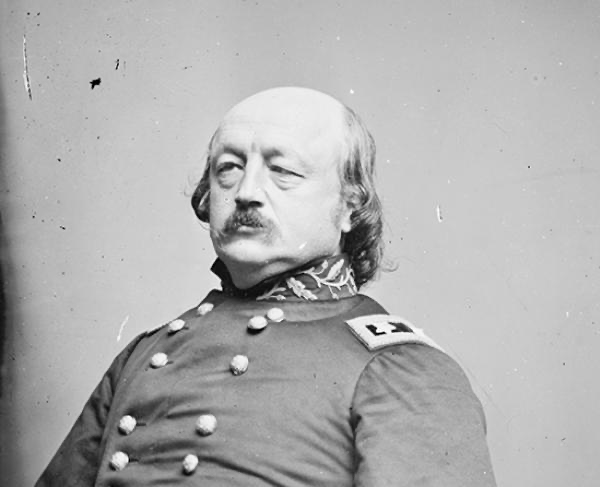
The Civil War: Benjamin F. Butler to Winfield Scott
One night in late May 1861, “three negroes”—who said they were field hands, slaves—delivered themselves to the picket line at Fort Monroe in Virginia. Fort Monroe, sat on the peninsula between the York River and James River, had at its helm Brigadier General Benjamin F. Butler. The fugitive slaves had come to the fort to…


-
The Civil War: William Howard Russell: from My Diary North and South
April 17, 1861 In the weeks and months leading up to the fall of Fort Sumter, the South had been brimming with excitement for the future. Charleston, South Carolina—with newly taken Fort Sumter in its harbor—was leading the South into that future both through its rhetoric and through its actions. Enthusiasm was abound for what…
-
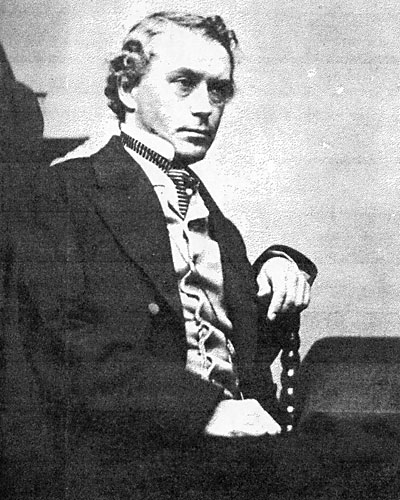
The Civil War: George Templeton Strong: Diary, April 13-16, 1861
Throughout the months leading up to the firing on Fort Sumter, there was widespread wonder about how the country would react to such a provocation; it was bound to be a cleave dividing the country and also its communities. Generations later—with the accordion of events neatly folded and the result of the war known—it would…
-
Election of 1844: Democratic Party Platform
As part of the Democratic platform for the Election of 1844, the Democrats incorporated their positions on “strict construction, banking, and congressional noninterference with slavery.” Daniel Walker Howe, What Hath God Wrought: Transformation of America, 1815-1848, 683. However, the Democrats took things one step further.
-
Election of 1844: The Conventions
The Election of 1844 was one of the most momentous in American history.
-
Constitution Sunday: George Washington to Bushrod Washington
George Washington to Bushrod Washington Mount Vernon, November 10, 1787 Following are excerpts from George Washington’s letter to Bushrod Washington: “Dear Bushrod: In due course of Post, your letters of the 19th. and 26th. Ult. came to hand and I thank you for the communications therein; for a continuation in matters of importance, I shall…
-
The Annexation of Texas
President John Tyler sought to achieve much success in foreign affairs during his presidency, and part of that success, he imagined, would be accomplished through expansion of the country. See Daniel Walker Howe, What Hath God Wrought: Transformation of America, 1815-1848, 677. The annexation of the Republic of Texas to be the 28th state in the Union was…
-
The Webster-Ashburton Treaty of 1842
Daniel Webster, the Secretary of State under President John Tyler, brought a breadth of experience and dignity to the office, but he also brought “a different perspective on Anglo-American relations.” Daniel Walker Howe, What Hath God Wrought: Transformation of America, 1815-1848, 672.
-
Rumblings of Annexation
President Andrew Jackson had a predisposition toward annexing Texas and making it American territory. See Daniel Walker Howe, What Hath God Wrought: Transformation of America, 1815-1848, 670.

