-
Constitution Sunday: “Publius,” The Federalist LI [James Madison]
Independent Journal (New York) February 6, 1788 “But what is government itself but the greatest of all reflections of human nature?” This rhetorical question, which James Madison posed, is one that governments throughout the world—throughout history—have answered by showing that even the best-intentioned government fails where it does not take human nature into account.
-
The Civil War: Jefferson Davis: Message to the Confederate Congress
April 29, 1861 With only a few weeks at the helm of the Confederate government, president Jefferson Davis and the Confederate Congress had cause for concern—but also cause for inspiration. The whole of the South (and the whole of the North) was animated: men and women were mobilizing; making their preparations to contribute to the…
-
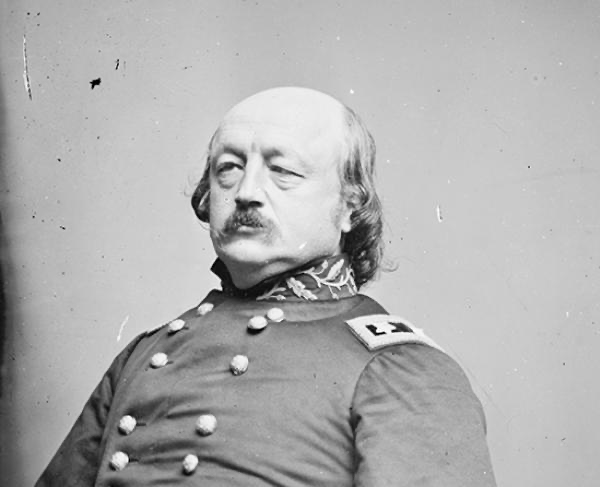
The Civil War: Benjamin F. Butler to Winfield Scott
One night in late May 1861, “three negroes”—who said they were field hands, slaves—delivered themselves to the picket line at Fort Monroe in Virginia. Fort Monroe, sat on the peninsula between the York River and James River, had at its helm Brigadier General Benjamin F. Butler. The fugitive slaves had come to the fort to…


-
The Civil War: William Howard Russell: from My Diary North and South
April 17, 1861 In the weeks and months leading up to the fall of Fort Sumter, the South had been brimming with excitement for the future. Charleston, South Carolina—with newly taken Fort Sumter in its harbor—was leading the South into that future both through its rhetoric and through its actions. Enthusiasm was abound for what…
-
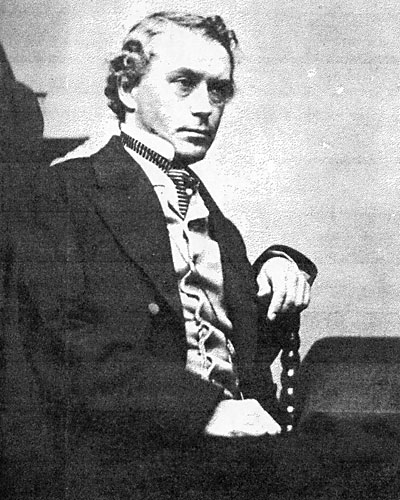
The Civil War: George Templeton Strong: Diary, April 13-16, 1861
Throughout the months leading up to the firing on Fort Sumter, there was widespread wonder about how the country would react to such a provocation; it was bound to be a cleave dividing the country and also its communities. Generations later—with the accordion of events neatly folded and the result of the war known—it would…
-
An Increase and Diffusion of Knowledge
In the early 1800s, America was expanding in many ways. Part of that expansion was the education of Americans both in the classroom and otherwise.
-
Jackson’s Farewell
President Andrew Jackson, with his term coming to an end, commissioned the Chief Justice of the Supreme Court, Roger Taney, to write his farewell address. This was his imitation of George Washington, who had started the tradition of the farewell address. See Daniel Walker Howe, What Hath God Wrought: Transformation of America, 1815-1848, 500.
-
Andrew Jackson’s Third Term
Martin Van Buren, President Andrew Jackson’s hand-picked heir, would carry out many of Jackson’s policies, such as the removal of the Native Americans westward, as he was elected in the election of 1836. President Jackson also fundamentally changed the nature of the presidency.
-
Constitution Sunday: Cato III
Cato III New York Journal, October 25, 1787 Following are excerpts from Cato III’s article in the New York Journal: “The governments of Europe have taken their limits and form from adventitious circumstances, and nothing can be argued on the motive
-
The Prioritization of Education
Education was not always such a prominent issue in every state and every American community in the way that modern Americans experience. Horace Mann, who was secretary of the Massachusetts State Board of Education in 1837, ensured that all schools would have in common: “tuition-free, tax-supported, meeting statewide standards of curriculum, textbooks, and facilities, staffed…
-
The Supreme Court Under Jackson
John Marshall, perhaps the greatest Chief Justice of the Supreme Court of the United States, died on July 6, 1835. As his life was coming to a close, he wrote Joseph Story, “I yield slowly and reluctantly to the conviction that our constitution cannot last.” Daniel Walker Howe, What Hath God Wrought: Transformation of America, 1815-1848,…

