-
Constitution Sunday: “Publius,” The Federalist LI [James Madison]
Independent Journal (New York) February 6, 1788 “But what is government itself but the greatest of all reflections of human nature?” This rhetorical question, which James Madison posed, is one that governments throughout the world—throughout history—have answered by showing that even the best-intentioned government fails where it does not take human nature into account.
-
The Civil War: Jefferson Davis: Message to the Confederate Congress
April 29, 1861 With only a few weeks at the helm of the Confederate government, president Jefferson Davis and the Confederate Congress had cause for concern—but also cause for inspiration. The whole of the South (and the whole of the North) was animated: men and women were mobilizing; making their preparations to contribute to the…
-
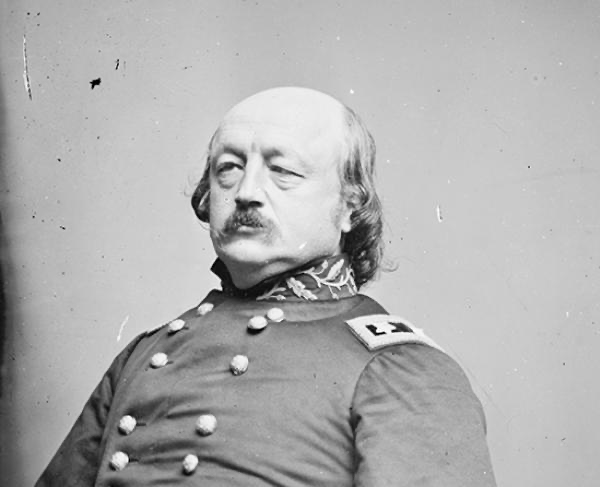
The Civil War: Benjamin F. Butler to Winfield Scott
One night in late May 1861, “three negroes”—who said they were field hands, slaves—delivered themselves to the picket line at Fort Monroe in Virginia. Fort Monroe, sat on the peninsula between the York River and James River, had at its helm Brigadier General Benjamin F. Butler. The fugitive slaves had come to the fort to…


-
The Civil War: William Howard Russell: from My Diary North and South
April 17, 1861 In the weeks and months leading up to the fall of Fort Sumter, the South had been brimming with excitement for the future. Charleston, South Carolina—with newly taken Fort Sumter in its harbor—was leading the South into that future both through its rhetoric and through its actions. Enthusiasm was abound for what…
-
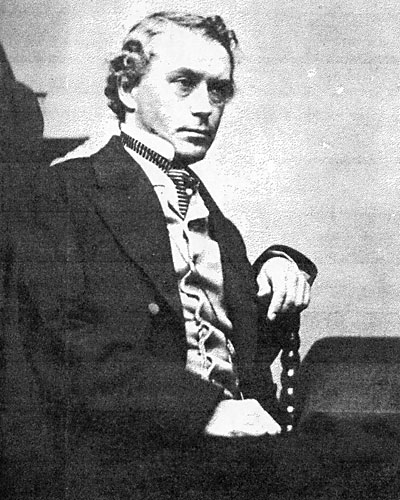
The Civil War: George Templeton Strong: Diary, April 13-16, 1861
Throughout the months leading up to the firing on Fort Sumter, there was widespread wonder about how the country would react to such a provocation; it was bound to be a cleave dividing the country and also its communities. Generations later—with the accordion of events neatly folded and the result of the war known—it would…
-
The Fort Hill Address
John Calhoun, by 1831, had alienated himself from President Andrew Jackson, and he wanted to “head off talk of secession,” and on July 26, 1831, he published his “Fort Hill Address” in a South Carolina newspaper. Daniel Walker Howe, What Hath God Wrought: Transformation of America, 1815-1848, 399.
-
The Aftermath of Jackson’s Bank Policies
In the aftermath of President Andrew Jackson’s destroying the Second Bank of the United States, there were ramifications throughout the country, from top to bottom.
-
The Most Important Veto
President Andrew Jackson did not want banknotes in the American economy, as he was an adherent to the gold standard. Daniel Walker Howe, What Hath God Wrought: Transformation of America, 1815-1848, 376. He would be forced to confront Nicholas Biddle, the President of the Second Bank of the United States.
-
The Second Bank of the United States
In 1816, with James Monroe as president, Congress agreed to “charter a Second Bank for twenty years.” Daniel Walker Howe, What Hath God Wrought: Transformation of America, 1815-1848, 374.
-
Liberty and Union, Now and Forever, One and Inseparable
In 1830, Daniel Webster, Senator from Massachusetts, engaged in a heated debate with Robert Hayne, Senator from South Carolina, which touched on the political theory of federal and state sovereignty.
-
Constitution Sunday: Letter from James Madison to Thomas Jefferson
Letter from James Madison to Thomas Jefferson New York, October 24, 1787 Following are excerpts from James Madison’s letter to Thomas Jefferson, dated October 24, 1787: “It remains then to be enquired whether a majority having any common interest, or feeling any common passion, will find sufficient motives to restrain them from oppressing the minority.

