-
Constitution Sunday: “Publius,” The Federalist LI [James Madison]
Independent Journal (New York) February 6, 1788 “But what is government itself but the greatest of all reflections of human nature?” This rhetorical question, which James Madison posed, is one that governments throughout the world—throughout history—have answered by showing that even the best-intentioned government fails where it does not take human nature into account.
-
The Civil War: Jefferson Davis: Message to the Confederate Congress
April 29, 1861 With only a few weeks at the helm of the Confederate government, president Jefferson Davis and the Confederate Congress had cause for concern—but also cause for inspiration. The whole of the South (and the whole of the North) was animated: men and women were mobilizing; making their preparations to contribute to the…
-
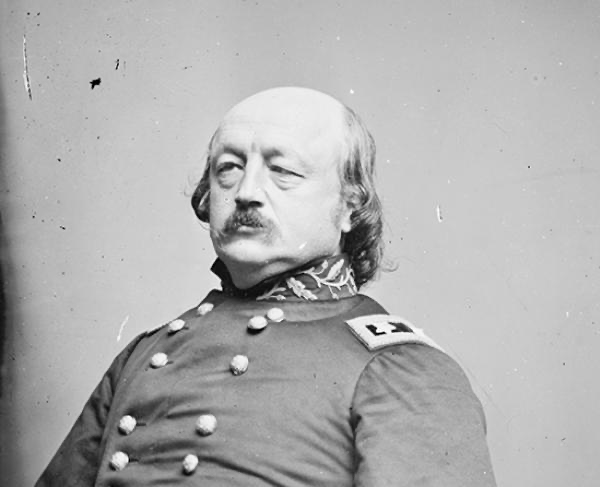
The Civil War: Benjamin F. Butler to Winfield Scott
One night in late May 1861, “three negroes”—who said they were field hands, slaves—delivered themselves to the picket line at Fort Monroe in Virginia. Fort Monroe, sat on the peninsula between the York River and James River, had at its helm Brigadier General Benjamin F. Butler. The fugitive slaves had come to the fort to…


-
The Civil War: William Howard Russell: from My Diary North and South
April 17, 1861 In the weeks and months leading up to the fall of Fort Sumter, the South had been brimming with excitement for the future. Charleston, South Carolina—with newly taken Fort Sumter in its harbor—was leading the South into that future both through its rhetoric and through its actions. Enthusiasm was abound for what…
-
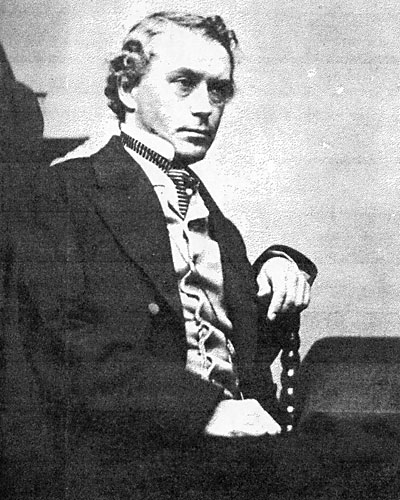
The Civil War: George Templeton Strong: Diary, April 13-16, 1861
Throughout the months leading up to the firing on Fort Sumter, there was widespread wonder about how the country would react to such a provocation; it was bound to be a cleave dividing the country and also its communities. Generations later—with the accordion of events neatly folded and the result of the war known—it would…
-
The Conventional Debate
In Pennsylvania, extraordinary events were transpiring that would shape how people expressed their will. William Smith (“Cato”) and a group of individuals, led by James Cannon (“Cassandra”) in 1776, debated the issue of how institutions should reflect the people’s will, given the Radical Political Experiment unfolding in Pennsylvania.
-
The Genesis of the Bill of Rights
Prior to the American Revolution, the colonists had become familiar with the concept of charters. Charters, whether royal, corporate, or proprietary, operated “as the evidence of a compact between an English King and the American subjects.” Gordon Wood, The Creation of the American Republic: 1776-1787, 268; see also Leonard Krieger, The Politics of Discretion: Pufendorf and the Acceptance…
-
A Check on Dangerous Usurpations
While an upper house of state legislatures was desirable to some, as explained in The Birth of the Senate, it also had its detractors. Those detractors argued that it was a mere redundancy, wholly irrelevant to the founding of a stable government. In taking that position, the detractors ignored many of the benefits of having…
-
The Delegation of Sovereignty
Prior to the creation and ratification of the Constitution, Americans struggled with legislatures who had run rampant. This, however, was the doing of the people themselves.
-
Carrying Liberty to Excess
While there were perceptions that America was suffering from a malaise in the 1780s, the political theory at the time had an explanation: licentiousness.

