-
Constitution Sunday: “Publius,” The Federalist LI [James Madison]
Independent Journal (New York) February 6, 1788 “But what is government itself but the greatest of all reflections of human nature?” This rhetorical question, which James Madison posed, is one that governments throughout the world—throughout history—have answered by showing that even the best-intentioned government fails where it does not take human nature into account.
-
The Civil War: Jefferson Davis: Message to the Confederate Congress
April 29, 1861 With only a few weeks at the helm of the Confederate government, president Jefferson Davis and the Confederate Congress had cause for concern—but also cause for inspiration. The whole of the South (and the whole of the North) was animated: men and women were mobilizing; making their preparations to contribute to the…
-
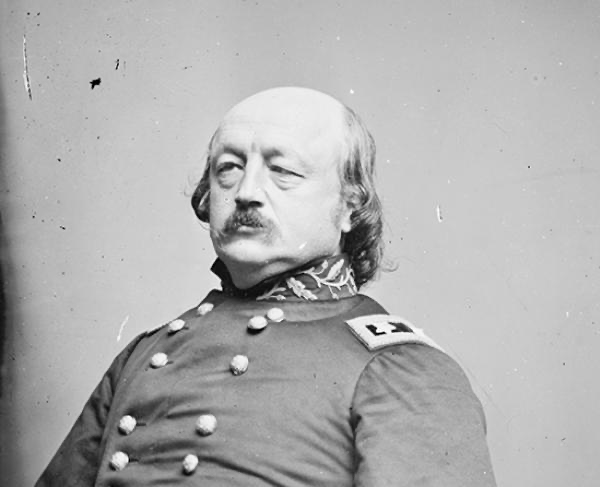
The Civil War: Benjamin F. Butler to Winfield Scott
One night in late May 1861, “three negroes”—who said they were field hands, slaves—delivered themselves to the picket line at Fort Monroe in Virginia. Fort Monroe, sat on the peninsula between the York River and James River, had at its helm Brigadier General Benjamin F. Butler. The fugitive slaves had come to the fort to…


-
The Civil War: William Howard Russell: from My Diary North and South
April 17, 1861 In the weeks and months leading up to the fall of Fort Sumter, the South had been brimming with excitement for the future. Charleston, South Carolina—with newly taken Fort Sumter in its harbor—was leading the South into that future both through its rhetoric and through its actions. Enthusiasm was abound for what…
-
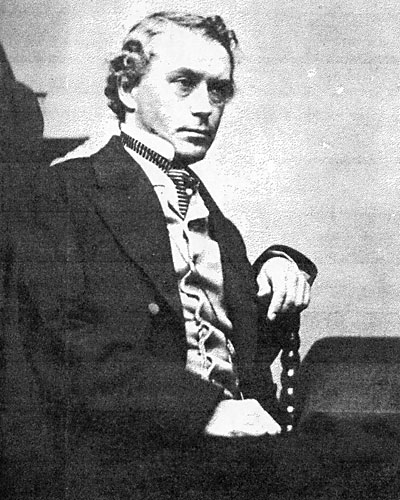
The Civil War: George Templeton Strong: Diary, April 13-16, 1861
Throughout the months leading up to the firing on Fort Sumter, there was widespread wonder about how the country would react to such a provocation; it was bound to be a cleave dividing the country and also its communities. Generations later—with the accordion of events neatly folded and the result of the war known—it would…
-
The Somewhat Representative Democracy
William Findley, a man of Irish descent who came to play a powerful role in Pennsylvanian politics, had an idea about what a politician should be. He said that politicians should be able to advocate for their own cause when they take the floor, that politicians should openly support their interests. Gordon Wood, Empire of Liberty,…
-
Passion for Distinction
In the early years of the Republic, John Adams commented on the various classes of American society: “the rich and the poor, the laborious and the idle, and the learned and the ignorant.” John Adams Letter to James Warren, January 9, 1787. He also observed that Americans had a certain “passion for distinction,” much as Alexis…
-
Economic Sanctions
Washington’s writings are replete with revelations about the hopes and aspirations for the country. Often, it is common for modern Americans to think that the Founding Fathers, despite all of their wisdom, could hardly imagine what the United States would become. For instance, now, the world is interconnected in a way as never before. One…
-
Political Parties
Alexander Hamilton and Thomas Jefferson had a contentious relationship, from their time serving as Secretaries in Washington’s administration forward. That contentious relationship manifested itself, at least partially, in the fact that they had crucial ideological differences. At first, those ideological differences were not reflected by different memberships in political parties. During the time they were…
-
East Versus West?
In 1790, President Washington implemented an excise tax on spirits distilled within the United States. A bold move for the Federalists, who were seeking to create a more assertive, more organized, more cohesive federal government. The maverick states did not take kindly to it, nor did the citizens affected by this newly created tax. What…

