Author: Last Best Hope of Earth

  • Constitution Sunday: “Publius,” The Federalist LI [James Madison]

    Independent Journal (New York)

    February 6, 1788

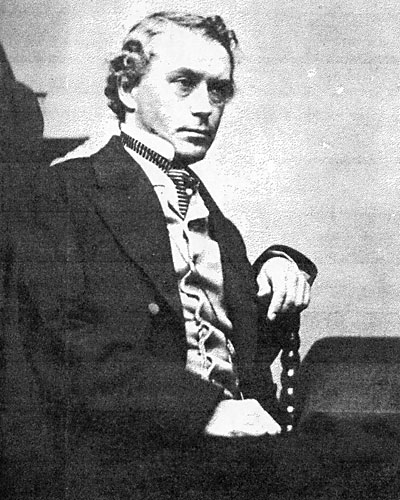
    “But what is government itself but the greatest of all reflections of human nature?” This rhetorical question, which James Madison posed, is one that governments throughout the world—throughout history—have answered by showing that even the best-intentioned government fails where it does not take human nature into account.

    (more…)
  • The Civil War: Benjamin F. Butler to Winfield Scott

    The Civil War: Benjamin F. Butler to Winfield Scott

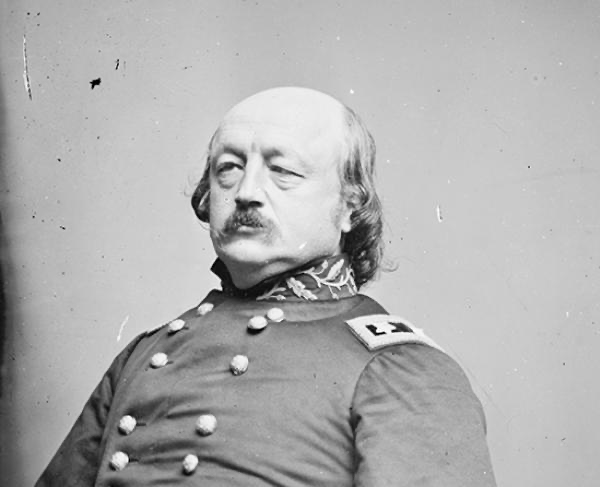
    One night in late May 1861, “three negroes”—who said they were field hands, slaves—delivered themselves to the picket line at Fort Monroe in Virginia. Fort Monroe, sat on the peninsula between the York River and James River, had at its helm Brigadier General Benjamin F. Butler. The fugitive slaves had come to the fort to not only escape but to join the Union effort—to offer their skills and services to Butler and his soldiers. With no military policy in place for what to do with such fugitive slaves, it was a situation that raised difficult questions for Butler and the Union—of if, and how, to receive them—and the Confederacy—of how to stop their property and manpower from joining the enemy.

    (more…)
  • The Civil War: Charles B. Haydon: Diary, May 3-12, 1861

    The Civil War: Charles B. Haydon: Diary, May 3-12, 1861

    Wars are waged by young men on battlefields. But, before that, they get trained up in camps; and before that, they were somewhere else, doing something else: perhaps working, helping their families, or being educated. It is one of the many cruelties of war that those men must pause their lives, and all their activities, to go fight and perhaps never resume them—for they may not return or, even if they do, they may return with no semblance of the youth and innocence they once had. And yet, despite this cruelty, there are seemingly countless instances of it.

    (more…)
  • The Civil War: Jefferson Davis: Message to the Confederate Congress

    April 29, 1861

    With only a few weeks at the helm of the Confederate government, president Jefferson Davis and the Confederate Congress had cause for concern—but also cause for inspiration. The whole of the South (and the whole of the North) was animated: men and women were mobilizing; making their preparations to contribute to the cause they dearly held. For his message to Congress, Davis—as ever—explained why the Confederate cause was just and good; why legally and historically it was correct and noble; and why it must continue its fight for independence.

    (more…)
  • The Civil War: John B. Jones: Diary, April 15-22, 1861

    The Civil War: John B. Jones: Diary, April 15-22, 1861

    John B. Jones was a rare man in Philadelphia. In the spring of 1861, he thought he may be arrested for being a Confederate sympathizer. After all, he had been the editor of that city’s weekly newspaper, the Southern Monitor, which was supportive of the South. In April 1861, he left his home—arriving in Richmond, Virginia three days later. His diary from those days in Richmond reflected some of the conventional wisdom of the time—much of which has been long forgotten—about how the Confederacy may have taken shape not as a group of states but as an empire. He also wrote about some unconventional wisdom of the time: how the North was not just preparing for an immediate war; it was preparing for a complete and ruthless victory.

    (more…)
  • The Civil War: William Howard Russell: from My Diary North and South

    April 17, 1861

    In the weeks and months leading up to the fall of Fort Sumter, the South had been brimming with excitement for the future. Charleston, South Carolina—with newly taken Fort Sumter in its harbor—was leading the South into that future both through its rhetoric and through its actions. Enthusiasm was abound for what had happened and what was to come. Three days after the southerners chased the northerners out of that fort, Charleston was bubbling over with joy. The city—the South, for that matter—was ebullient.

    (more…)
  • The Civil War: George Templeton Strong: Diary, April 13-16, 1861

    The Civil War: George Templeton Strong: Diary, April 13-16, 1861

    Throughout the months leading up to the firing on Fort Sumter, there was widespread wonder about how the country would react to such a provocation; it was bound to be a cleave dividing the country and also its communities. Generations later—with the accordion of events neatly folded and the result of the war known—it would seem obvious that a swell of patriotism came rose when the rebels fired the first shot in Charleston’s harbor. But in New York, an attorney and diarist, George Templeton Strong, documented that the swell of patriotism in his city was not immediate nor universal—but it was pronounced.

    (more…)
  • The Civil War: Abner Doubleday: from Reminiscences of Forts Sumter and Moultrie in 1860-’61

    There had been talk that, if a civil war began, it would begin at Fort Sumter. Sat in the harbor near Charleston, South Carolina, it was a fort that the United States held. Indeed, it was here that the first shots of the war would be fired. It was one thing to read about the events reported in the newspaper—focusing on the result: its surrender—but something else altogether to read an account from someone in the fort. Years later, Abner Doubleday wrote of his experience, in Fort Sumter, from the bombardment to its surrender on April 14, 1861.

    (more…)
  • The Civil War: Alexander H. Stephens: “Corner-Stone” Speech

    The Civil War: Alexander H. Stephens: “Corner-Stone” Speech

    March 21, 1861

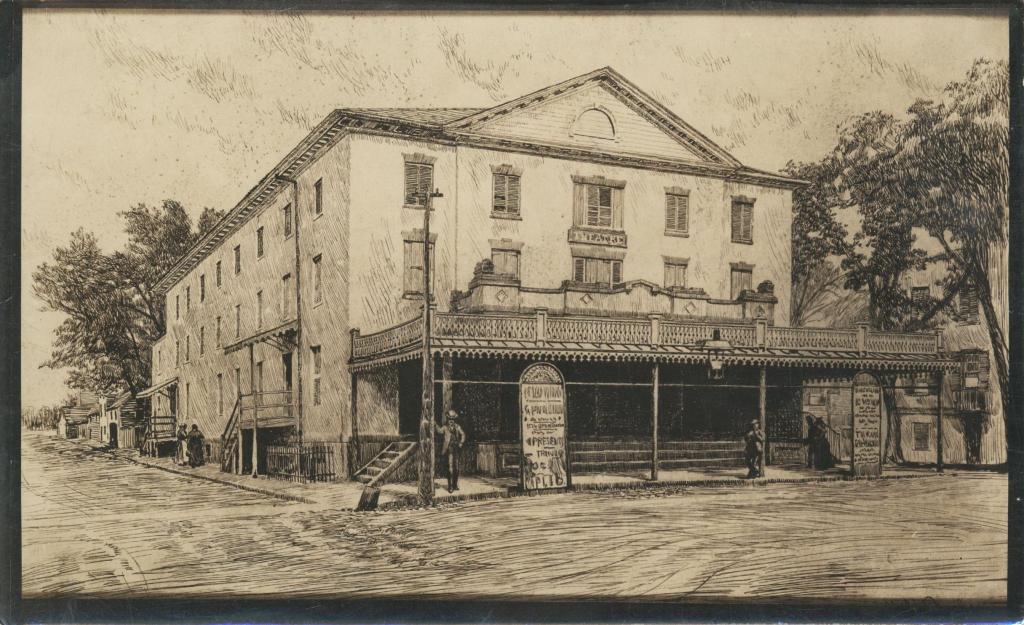
    In Savannah, Georgia, at its Atheneum—a theater for shows and oratory—the vice-president of the Confederacy, Alexander H. Stephens, came to speak about the events leading up to states seceding from the Union and forming the Confederacy. The pace of these events had been swift and sure to cause consternation with questions abound as to what would happen next. To hear Stephens speak that day was to gain a better grasp of what was to come and perhaps a sense of comfort that all would be well.

    (more…)
  • The Civil War: Robert E. Lee to George Washington Custis Lee

    The Civil War: Robert E. Lee to George Washington Custis Lee

    January 23, 1861

    While Robert E. Lee was serving as the acting commander of the Department of Texas at Fort Mason, in Texas, he wrote to his son George Washington Custis Lee of the events unfolding in the east—southern states beginning to secede amid antagonism from the north.

    (more…)