Author: Last Best Hope of Earth

  • Preparing for Invasion

    Preparing for Invasion

    july22firstreadingcolor
    Abraham Lincoln Meeting with His Cabinet in 1862. By: Francis Bicknell Carpenter.

    From the Union perspective, the dawn of 1862 presented as good an opportunity as ever for an attack on Richmond. If successful, it could force the Confederacy into surrendering and negotiating its reconciliation with the federal government with the only question being the extent of the retribution for secession. However, to be a successful strike on the Confederate capital, Abraham Lincoln must have known that military leadership as well as his administration heads would need to flawlessly execute a plan. This was particularly true given the Confederacy’s posture in the war: one that was entirely comfortable maintaining the status quo of defending its territory from the aggressor. (more…)
  • Constitution Sunday: “Publius,” The Federalist X

    “Publius,” The Federalist X [James Madison]

    Daily Advertiser (New York), November 22, 1787

    Following are excerpts from The Federalist X, authored by James Madison amidst the debates surrounding the ratification of the Constitution:

    “There are two methods of curing the mischiefs of faction: the one, by removing its causes; the other, by controling its effects.

    There are again two methods of removing (more…)

  • The Blockade Runners

    The Blockade Runners

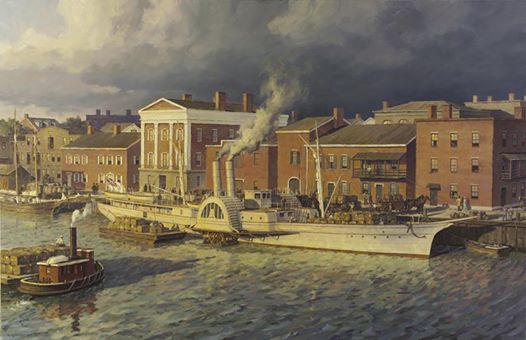
    Throughout the Civil War, the Union navy encircled the Confederacy’s ports and confiscated property that was entering or exiting the country in an effort to restrict the Confederate economy. While its full effect may be debated, it played a significant role in reducing the Confederacy’s foreign trade and consequently the strength of its economy and ability to conduct the war.

    (more…)

  • The Second Inauguration of Jefferson Davis

    The Second Inauguration of Jefferson Davis

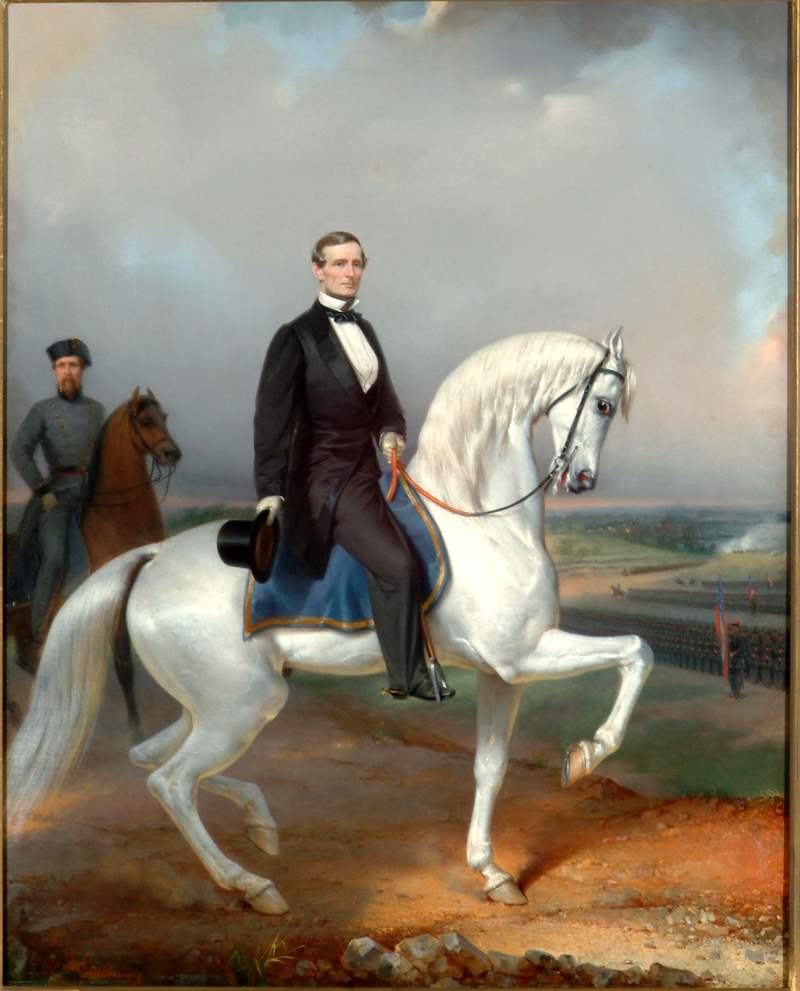
    Confederate President Jefferson Davis, on the 130th anniversary of George Washington’s birthdate, was due to be inaugurated for a second time. Davis ran unopposed in the first (and only) presidential election in the Confederate States of America and was set to begin his six-year term on February 22, 1862. His daily responsibilities as president left him more involved in paperwork than any other activity, and the beginning of the day of his second inauguration was scarcely different from any other day for Davis: he did an hour of paperwork before preparing for the ceremony.[i] (more…)

  • The Battle of Fort Donelson

    The Battle of Fort Donelson

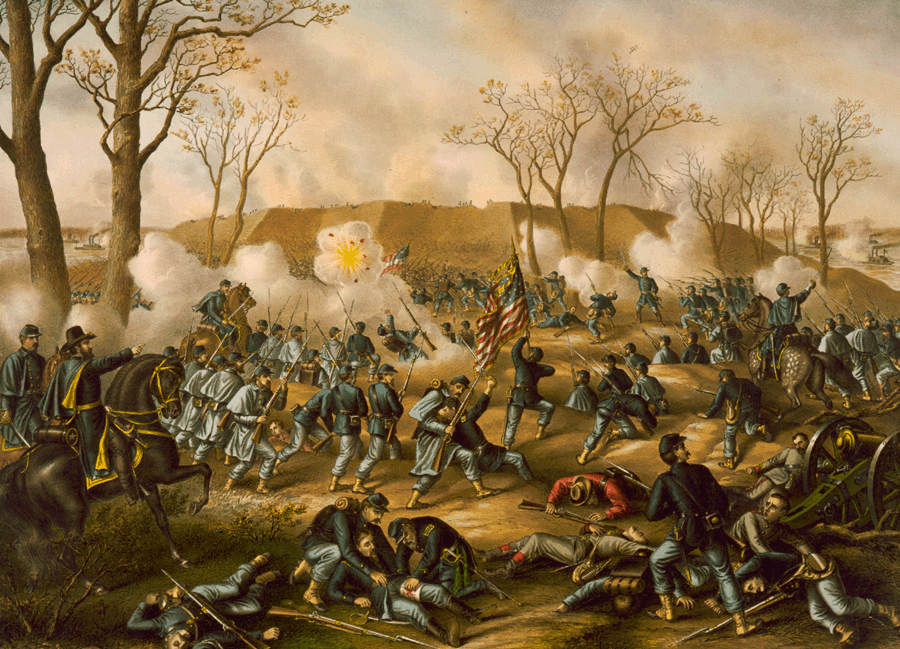
    Sited on the banks of the Cumberland River and only a matter of miles from Fort Henry, Fort Donelson was slated for Union assault even before General Ulysses S. Grant’s taking of Fort Henry. The close proximity between the two forts ensured that the Confederates would not be taken by surprise when Grant went onto Fort Donelson, but both sides knew that the ceding of Donelson would be a swift second defeat in a matter of days and inspire the Union to make further advances into Tennessee and Kentucky.

    (more…)

  • Grant’s Taking of Fort Henry

    In early 1862, heartened by his troops’ performance at the Battle of Belmont, Brigadier General Ulysses S. Grant had determined that he was capable of making inroads into the Confederacy. Securing the network of rivers feeding into the Mississippi River as well as the Mississippi itself would hinder the Confederacy’s mobility and economy, and accomplishing this objective would bring him into two states that did not officially join the Confederacy but parts of which were Confederate-controlled: Kentucky and Tennessee. Bordering those states, on the banks of the Tennessee River, Grant saw a Confederate fort ripe for the plucking: Fort Henry. (more…)

  • The Battle of Belmont

    The Battle of Belmont

    When fighting erupted between Confederate and Union forces in Mississippi County, Missouri, few could have expected that one man, a newly-promoted Brigadier General, would emerge from obscurity and tragedy and begin his upward trajectory to the heights of American myth and legend. Nonetheless, at the end of the Battle of Belmont, that man—Ulysses S. Grant—had secured himself admiration from his commanders and established a brand of warfare that would later elevate him up the ranks and define the Union’s conduct of the war. (more…)

  • The Anaconda Plan

    The Anaconda Plan

    Although George McClellan succeeded Winfield Scott as general in chief of the Union army in late 1861, Scott had already set a plan in motion that would, in one form or another, last the duration of the war. It was a plan that would be a factor in constricting the Confederate economy, choking the Confederacy into a defensive posture from which it would be impossible to escape. (more…)

  • The Battle of Ball’s Bluff

    The Battle of Ball’s Bluff

    By the end of 1861, the Union changed its commander but also suffered its third major defeat; this one northwest of Washington at Ball’s Bluff on the banks of the Potomac River. (more…)

  • The Battle of Wilson’s Creek

    The First Battle of Bull Run, which was fought near Manassas, Virginia, inaugurated the Eastern Theater of the Civil War. Weeks later, the first major battle of the Western Theater would occur on the banks of a creek in Missouri: Wilson’s Creek. The battle resulted in another Confederate victory and the first death of a Union general in the war. It also served as foreshadowing to the Confederacy; showing it that the Union was going to make a vigorous effort to prevent any other states from joining the Confederacy. (more…)