Author: Last Best Hope of Earth

  • Constitution Sunday: “Publius,” The Federalist XLVIII [James Madison]

    New-York Packet

    February 1, 1788

    James Madison, under the pseudonym Publius, wrote about the system of checks and balances housed in the draft Constitution—and how fragile they are. Those checks and balances are “a mere demarkation on parchment of the constitutional limits of the several departments”—those departments being the legislative, executive, and judicial. And the demarkation of those limits was “not a sufficient guard against those encroachments which lead to a tyrannical concentration of all the powers of government in the same hands.”

    (more…)
  • The Civil War: J.D.B. DeBow: The Non-Slaveholders of the South

    Nashville, Tennessee

    December 5, 1860

    J.D.B. DeBow had run into a friend on the street and talked with him about how, in the South, even non-slaveholders benefitted from the region’s slave labor system. Then, promising to expand on what he said, he wrote this friend a letter, setting out in detail—in ten points—those benefits. As is common in political discourse, people use fallacious arguments to support their positions. DeBow was one such person.

    (more…)
  • The Civil War: James Buchanan: From the Annual Message to Congress

    The Civil War: James Buchanan: From the Annual Message to Congress

    December 3, 1860

    Washington City

    James Buchanan was never going to avert the Civil War. But in his annual message to Congress, after the election of 1860, he scarcely even tried. Whereas most outgoing presidents use their last days in power to begin shaping their legacy, reflect on their time at the helm, and share their unique perspective on the country—and on the world—Buchanan was not like most outgoing presidents.

    (more…)
  • The Civil War: Frederick Douglass: The Late Edition

    December 1860

    Politicians walk a tightrope when they choose their positions on political issues, especially when it’s a thorny issue. And when critics attempt to pigeonhole a politician as an extremist, those critics often achieve exactly the opposite: that politician then essentially has license to choose any position except an extreme one—defying the critics and potentially pleasing the constituency. Meanwhile, other politicians—less “extreme” ones—continue walking the tightrope, carefully planning their next steps. When Abraham Lincoln won the election of 1860, this dynamic took hold: the South made dark predictions about what the “extreme” Lincoln administration would seek to accomplish—opening up space for Lincoln to navigate and gifting him the opportunity to placate fellow northerners while searching for ways to steer the country away from the menace of prolonged civil war.

    (more…)
  • The Civil War: William G. Brownlow to R.H. Appleton

    November 29, 1860

    Knoxville, Tennessee

    When the United States faced the prospect of disunion, in the fall of 1860, there was virtually no precedent to which Americans could look. This wasn’t a matter of policy differences: states were debating whether to leave the Union. And many felt that it was inherently wrong and tried to articulate why this situation was different from the American Revolution—why the North was not tyrannical toward the South in the same way that England had been tyrannical toward the colonies—and thus why secession was not warranted. William G. Brownlow, of eastern Tennessee, was one who was against secession and sent a letter to R.H. Appleton, a friend and former subscriber of Brownlow’s newspaper, unpacking the ways in which those states were wrong to secede.

    (more…)
  • Constitution Sunday: “Brutus” XI

    New York Journal

    January 31, 1788

    The Constitution’s creation of the Supreme Court raised many questions about how such a court would operate. But an anonymous author, Brutus, laid out what was likely to come from the Court, and this author described—much of it with remarkable precision—what would indeed happen to the Court in the coming decades and centuries.

    (more…)
  • The Civil War: George Templeton Strong: Diary, November 20-December 1, 1860

    The Civil War: George Templeton Strong: Diary, November 20-December 1, 1860

    November 20, 1860 to December 1, 1860

    New York City

    State laws often have an outsized influence on discussions of national politics. This is despite the fact that one state’s laws have no binding effect in other states; then, add to that the fact that some states will pass laws with little intent or resources backing the enforcement of those laws. Those are the laws that can be nothing more than pieces of paper as props in the political theater. But, when those laws touch on an inflammatory issue, the practicalities of the laws become irrelevant. The only thing that matters then is that the laws exist and that they could spread to other states, disrupting the status quo and creating concern as to the path that the nation and its states have chosen.

    (more…)
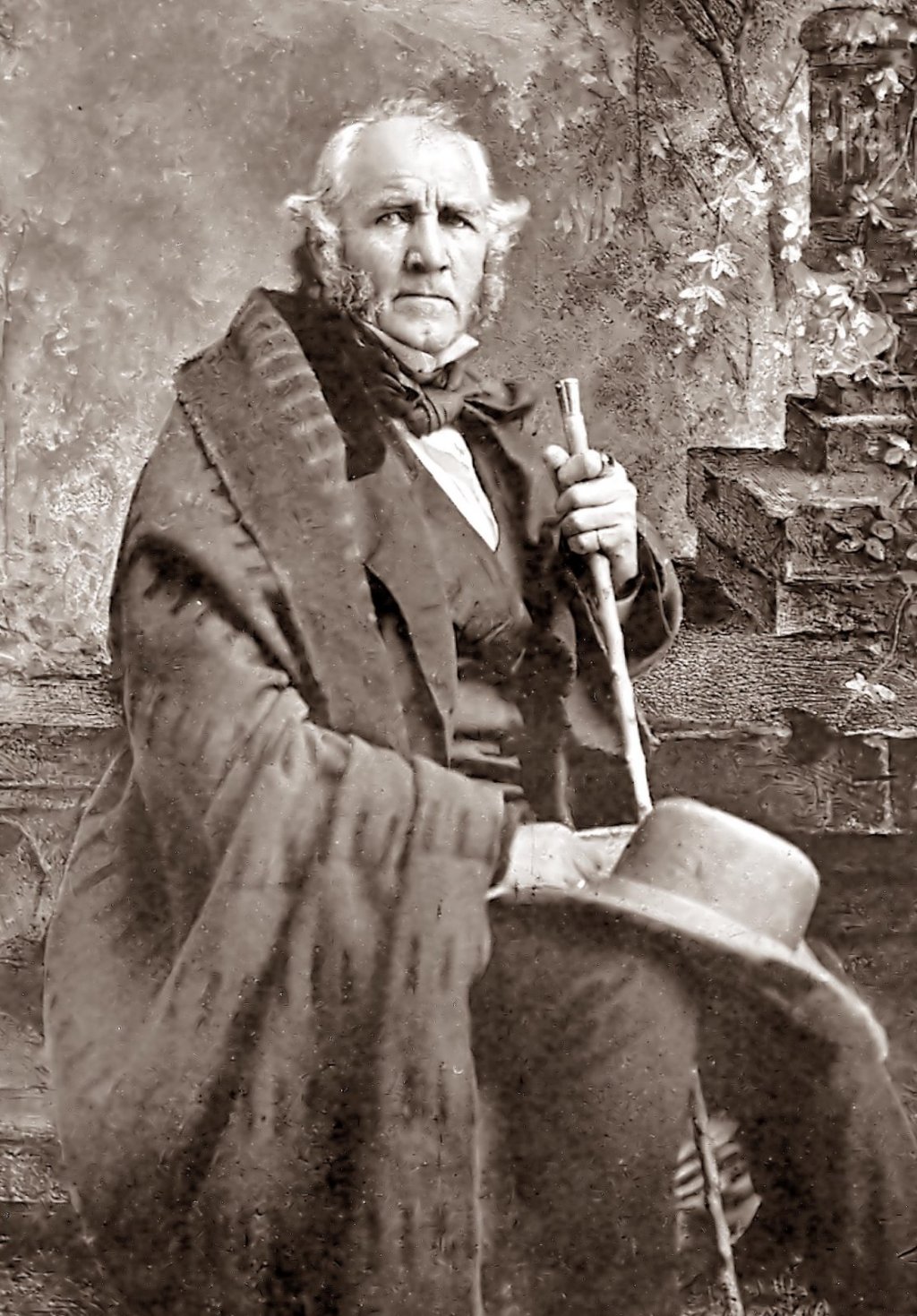
  • The Civil War: Sam Houston to H.M. Watkins and Others

    The Civil War: Sam Houston to H.M. Watkins and Others

    Sam Houston to H.M. Watkins and Others

    November 20, 1860

    Politicians who have become household names have an ability to sway public opinion—and they know it. They can use their precious political capital to that end. But it’s a risky proposition. If they see odds they like and place their bets only to lose, they may see themselves fall out of favor, out of office, and out of the public eye. If, however, they read the moment correctly and positioned themselves just right, they may ascend further still—higher in esteem and maybe even earn their place in the collective memory of the nation.

    (more…)
  • Constitution Sunday: David Ramsay to Benjamin Lincoln

    Charleston, South Carolina

    January 29, 1788

    A letter from a South Carolinian to a Massachusettsan—and from a budding historian to a Revolutionary War hero—captured the spirit of the moment as South Carolina was preparing to assemble its convention to consider the Constitution. David Ramsay, who would soon publish a two-volume book about the American Revolution, wrote to Benjamin Lincoln of the recent happenings in South Carolina’s legislature and the tenor of the time as states were analyzing the potential for coexisting with a federal government.

    (more…)
  • Constitution Sunday: “Publius,” The Federalist XLVI [James Madison]

    New-York Packet

    January 29, 1788

    James Madison, who would later become the fourth President of the United States, sought to quell fears of an overreaching and overly powerful federal government. The Constitution’s opponents had shared their fears—fears that Madison called “chimerical”—of a federal government that took power from the states and dominated the country’s governing. Rather than the states governing themselves and the federal government keeping to its own affairs, many of which related to international relations, the thinking was that the federal government would subsume those states’ powers and undermine their sovereignty.

    (more…)