Author: Last Best Hope of Earth

  • Constitution Sunday: The Weaknesses of Brutus Exposed: “A Citizen of Philadelphia” [Pelatiah Webster]

    The Weaknesses of Brutus Exposed: “A Citizen of Philadelphia” [Pelatiah Webster]

    Philadelphia, November 8, 1787

    Following is a series of excerpts from Pelatiah Webster’s article published in Philadelphia:

    “This government must have a supreme power, superior to and able to controul each and all of its parts. ‘Tis essential to all governments, that such a power (more…)
  • The Tariff of Abominations

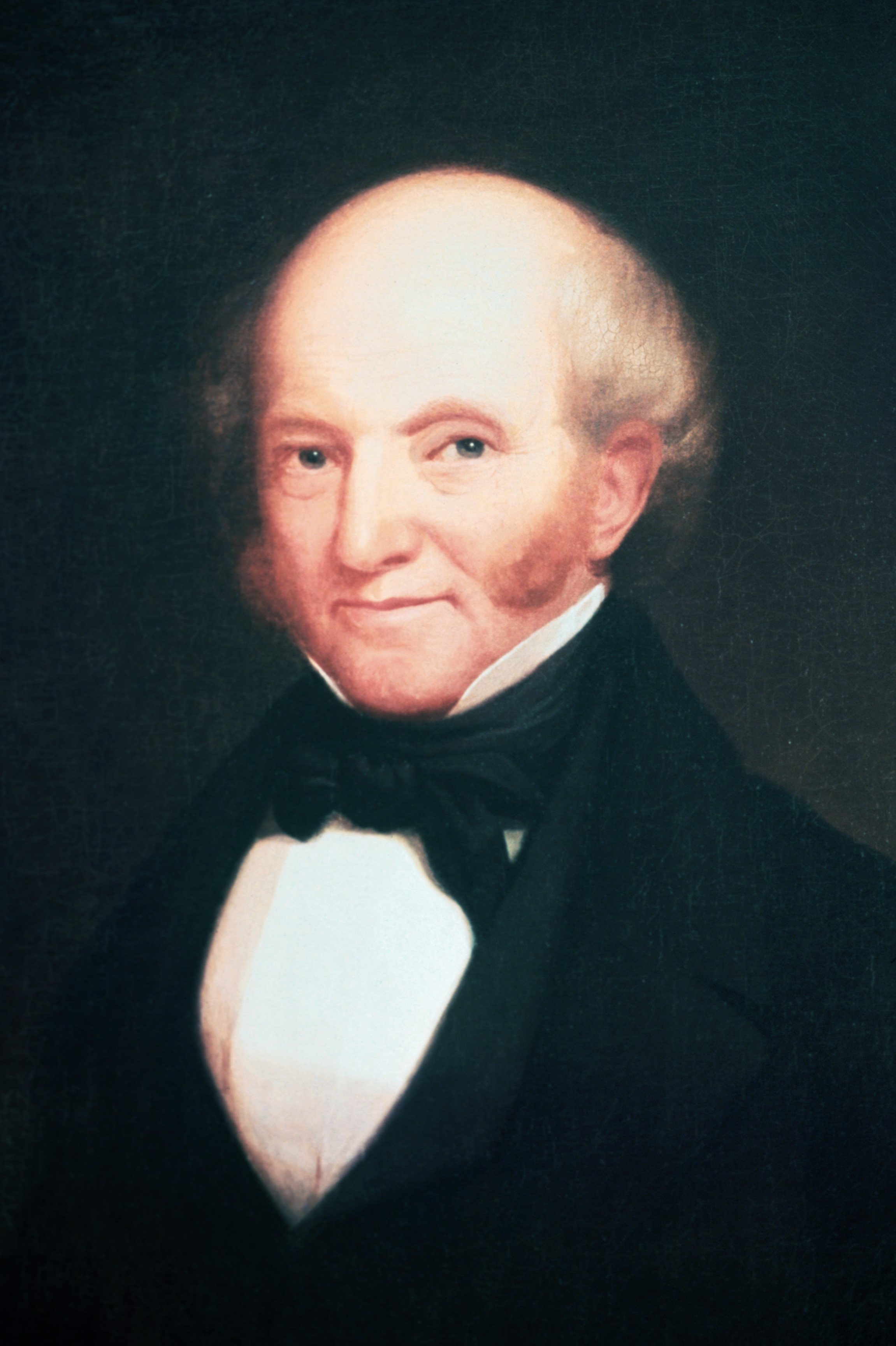
    Painted Portrait Of Martin Van Buren
    Martin Van Buren.

    Both President John Quincy Adams and Henry Clay were of the mindset that much could be accomplished in developing the American economy with the help of the government. Martin Van Buren had different ideas, however.

    (more…)

  • The First Third Political Party

    thurlow_weed_-_brady-handy
    Thurlow Weed. Photograph by: Mathew Brady.

    In the late 1820s, a third political party, the Antimasons, were formed, which would change the course of American political history.

    (more…)

  • The Failure of Colonization

    9c9e720a884e28c6a7f767d291253226
    Certificate for Life Membership in the American Colonization Society.

    The American Colonization Society, the premier organization advocating for the exportation of slavery to Africa, had a major supporter in Secretary of State Henry Clay in the late 1820s.

    (more…)

  • Taking the Wolf by the Ears

    paul_cuffee
    Paul Cuffe. By: Chester Harding.

    Paul Cuffe, by 1816, began making voyages across the Atlantic Ocean to Africa, transporting African-Americans who wished to make a new home in Africa. Daniel Walker Howe, What Hath God Wrought: Transformation of America, 1815-1848, 260.

    (more…)

  • The First Divided Government

    john_wesley_jarvis_-_john_randolph_-_google_art_project
    John Randolph. By: John Wesley Jarvis.

    Divided government, where one branch of government is controlled by a different political party than the other branches, is a familiar concept for most Americans. The midterm elections of 1826 and 1827 brought about the first instance in American history of divided government.

    (more…)

  • Protecting the Native Americans

    by Charles King Bird
    Secretary of War John Calhoun. By: Charles Bird King.

    President John Quincy Adams and his administration faced a serious challenge in dealing with the Native Americans.

    (more…)

  • Constitution Sunday: “A Citizen of America” [Noah Webster]

    “A Citizen of America” [Noah Webster]

    Philadelphia, October 17, 1787

    Following are excerpts from Noah Webster’s writing:

    “Another idea that naturally presents itself to our minds, on a slight consideration of the subject, is, that in a perfect government, all the members of a society should be (more…)

  • Quincy Adams’ Economic Agenda

    john-quincy-adams
    John Quincy Adams Shakes Hands with Admiral of the Fleet James Gambier. By: Amedee Forestier.

    President John Quincy Adams, in his First Annual Message to Congress delivered on December 6, 1825, set forth his agenda for developing the American economy. Daniel Walker Howe, What Hath God Wrought: Transformation of America, 1815-1848, 251.

    (more…)

  • The Conception of the Democratic Party

    1824b
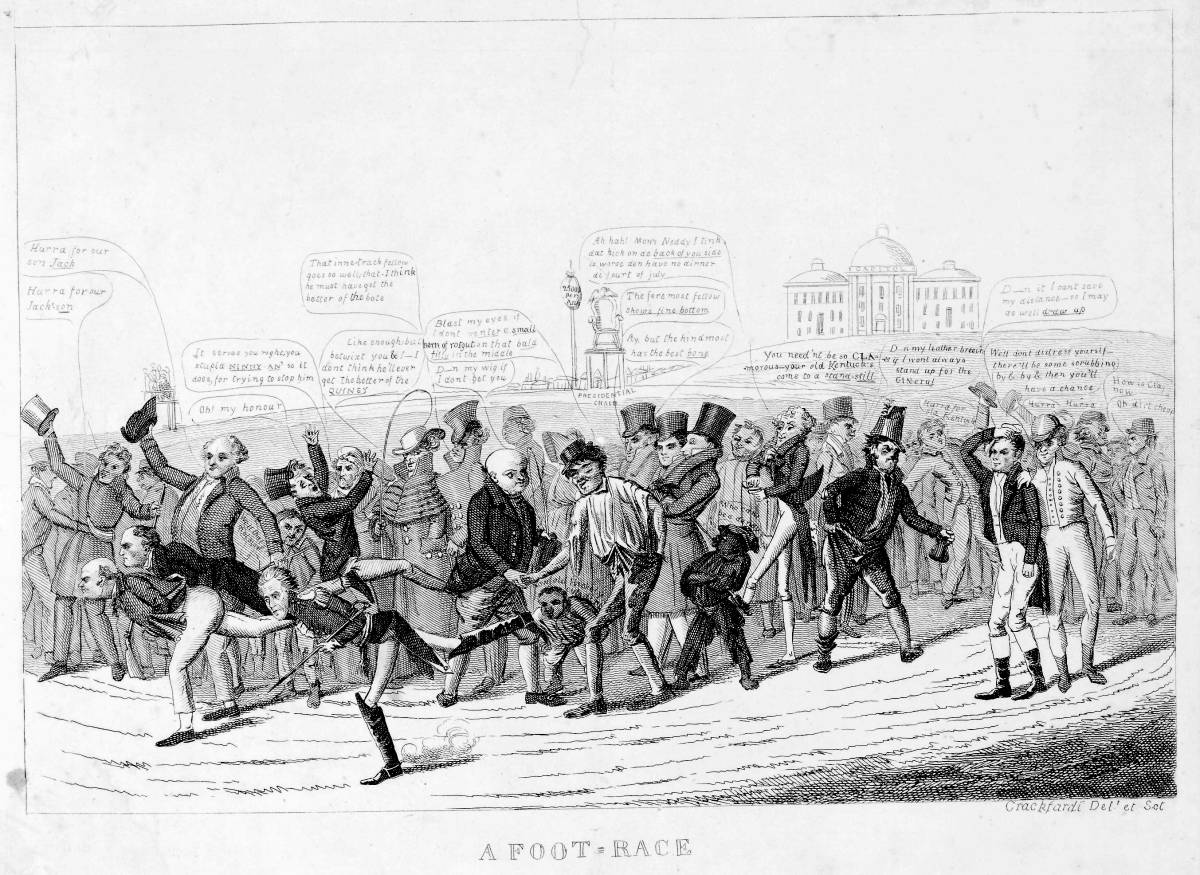
    A Foot Race. Political Cartoon of the Election of 1824.

    Following the Election of 1824, newly elected President John Quincy Adams went into the White House with a great deal of hope for the future. He was a lifelong student of Cicero and “envisioned the American republic as the culmination of the history of human progress and the realization of the potential of human nature.” Daniel Walker Howe, What Hath God Wrought: Transformation of America, 1815-1848, 245. In fact, historians have remarked that Quincy Adams was the “most learned president between [Thomas] Jefferson and [Woodrow] Wilson.” Id.

    (more…)