The Federalists, in overseeing the creation of the modern political system, culminating in the Constitution, had inadvertently changed not only the structure of government but also the trajectory of American politics.
The Federalists, in overseeing the creation of the modern political system, culminating in the Constitution, had inadvertently changed not only the structure of government but also the trajectory of American politics.
Looking to the state governments’ creation of their respective senates, as explained in The Birth of the Senate, the creation of the Senate in the Constitution was a given, when the Constitutional Convention began. See Gordon Wood, The Creation of the American Republic: 1776-1787, 553.

Because the Federalists outmaneuvered the Antifederalists in presenting the Constitution to the American people, the Antifederalists faced a predicament of what to do. As Richard Henry Lee stated, many who wished to change the federal structure of government realized that they had to accept “this or nothing.” Gordon Wood, The Creation of the American Republic: 1776-1787, 547 quoting Lee to Mason, Oct. 1, 1787, Ballagh, ed., Letters of R. H. Lee, II, 438. The Antifederalists were more or less forced to “attack the federal government in those mechanical Enlightenment terms most agreeable to the thought of the Federalists: the division and balancing of political power,” otherwise known as separation of powers. Gordon Wood, The Creation of the American Republic: 1776-1787, 548.

The debate surrounding the adoption of the Bill of Rights revealed to many Americans the stark differences between Federalists and Antifederalists. Edmund Pendleton, in the Virginia Convention, stated that opposition to the Constitution “rested on ‘mistaken apprehensions of danger, drawn from observations on government which do not apply to us.’” Gordon Wood, The Creation of the American Republic: 1776-1787, 543 quoting Pendleton (Va.), in Elliot, ed., Debates, III, 36-37. Pendleton pointed out that many governments in the world were ruled by dictators. Id. Those governments had “bred hostility between ‘the interest and ambition of a despot’ and ‘the good of the people,’ thus creating ‘a continual war between the governors and the governed.’” Id. Pendleton believed that these beliefs led Antifederalists to demand a bill of rights and to have other unfounded fears about the Constitution. Id.
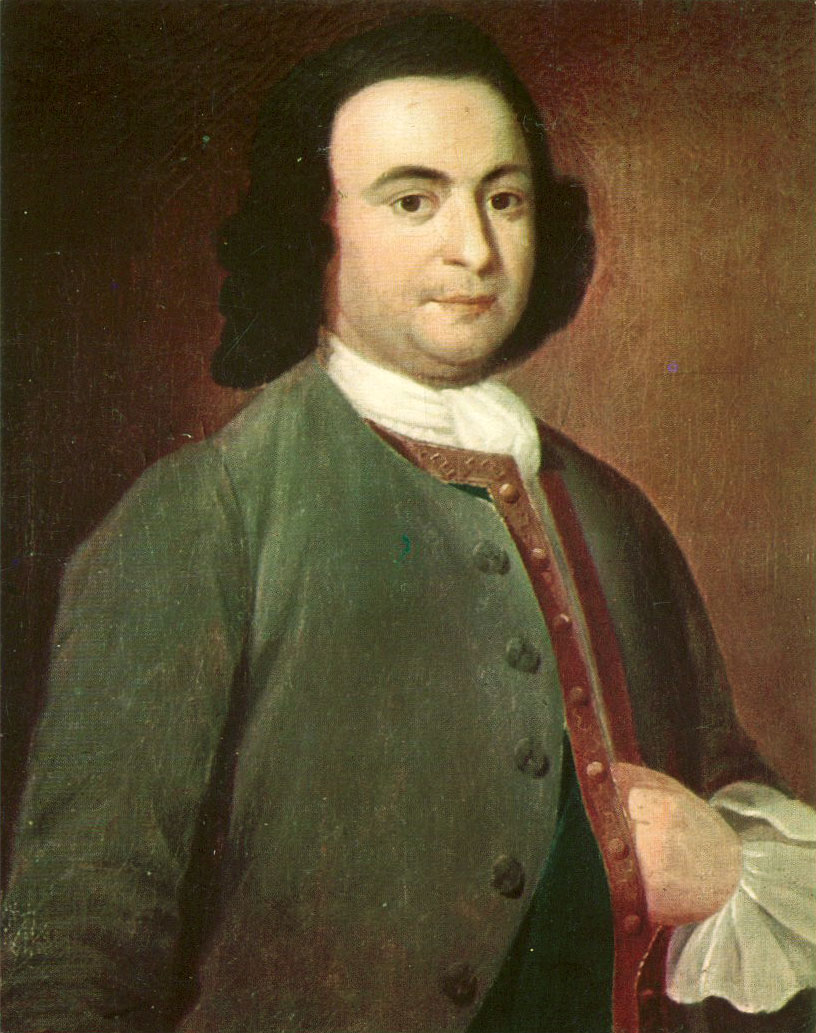
A bill of rights was not contemplated at the Constitutional Convention, until George Mason mentioned it in the last days of the Convention. Every state ruled it out. Rufus King, however, suggested that “as the fundamental rights of individuals are secured by express provisions in the State Constitutions; why may not a like security be provided for the Rights of the States in the National Constitution?” Gordon Wood, The Creation of the American Republic: 1776-1787, 536 quoting Farrand, ed., Records of the Federal Convention, II, 375-76, 378-79, I, 492-93.

Capturing the spirit of the Declaration of Independence, the Constitution was expressing “the inherent and unalienable right of the people” to determine their system of government. Gordon Wood, The Creation of the American Republic: 1776-1787, 535 quoting Wilson, in McMaster and Stone, eds., Pennsylvania and the Federal Constitution, 317.
James Wilson’s Speech at a Public Meeting
Philadelphia, October 6, 1787
Following are excerpts of James Wilson’s speech: (more…)

Coming out of the Philadelphia Convention, many Americans had different perspectives about what had transpired and how effective the Constitution could be as a governing document.

As the Constitution was being drafted and ratified, opinions ranged on the prospects for it effectively governing America. Some in the Philadelphia Convention believed it was “nothing more than a combination of the peculiarities of two of the State Governments which separately had been found insufficient.” Gordon Wood, The Creation of the American Republic: 1776-1787, 519 quoting Madison, in Farrand, ed., Records of the Federal Convention, II, 291. Even some Federalists, who favored a strong national government, concluded that there was “a preposterous combination of powers in the President and Senate, which may be used improperly.” Edward Carrington to Jefferson, Oct. 23, 1787, Boyd, ed., Jefferson Papers, XII, 255.

In the 1780s, Americans, like John Dickinson, observed that “[p]eople once respected their governors, their senators, their judges and their clergy; they reposed confidence in them; their laws were obeyed, and the states were happy in tranquility.” Dickinson, Letters of Fabius, Ford, ed., Pamphlets, 188. The authority of the government was declining. Gordon Wood, The Creation of the American Republic: 1776-1787, 507. (more…)
 Last Best Hope of Earth