Author: Last Best Hope of Earth

  • Empire of Reason

    washington_crossing_the_delaware_by_emanuel_leutze_mma-nyc_1851
    Washington Crossing the Delaware River. By: Emanuel Leutze.

    The American Revolution is one of the most extraordinary revolutions to have taken place in world history. Not only would it result in the birth of one of the most influential and most powerful nations ever known, but it would also be a revolution with seemingly peculiar triggers.

    As Gordon Wood in The Creation of the American Republic: 1776-1787 explained, “[t]here was none of the legendary tyranny of history that had so often driven desperate people into rebellion.” Gordon Wood, The Creation of the American Republic: 1776-1787, 3. Daniel Leonard concluded that “[n]ever in history . . . had there been so much rebellion with so ‘little real cause.’” Id.

    Some analysts have speculated that Americans had learned “how to define the rights of nature, how to search into, to distinguish, and to comprehend, the principles of physical, moral, religious, and civil liberty,” so as to prevent tyranny before it occurred. Id. at 4. Because of these actions and considerations, some would call America the Empire of Reason. Id.

    In 1768, John Dickinson wrote that colonists did not ask “what evil has actually attended particular measures,” instead asking “what evil, in the nature of things, is likely to attend them.” Id. at 5 quoting John Dickinson, Letters from a Farmer in Pennsylvania to the Inhabitants of the British Colonies (Philadelphia, 1768) in Paul L. Ford, ed., The Life and Writings of John Dickinson (Historical Society of Pennsylvania, Memoirs, 14 [Philadelphia, 1895]), 392, 389.

    The spirit of the American Revolution, framed this way, raises questions about how and why the colonists insisted on pursuing a revolution. For example, why were the colonists unified in fearing all forms of tyranny? In modern times, this question seems hardly worth asking, but in the late 1700s, tyranny so permeated the nations of the world that it would likely have felt unchallengeable. Nonetheless, the colonists were persistent in achieving the society they dreamed was possible.

    Perhaps the colonists’ actions in these years planted the seeds for future generations of Americans to question everything around them. Whether that is hyperbole or not, it is clear that Americans would become obsessed, and still are obsessed, with defining the contours of their rights and liberties. The project of creating an ideal society with all of its accompaniments can never cease.

    Consequently, it is only fair to say that the Empire of Reason is still alive and well.
  • The Setting Sun of the Founding Fathers

    joh
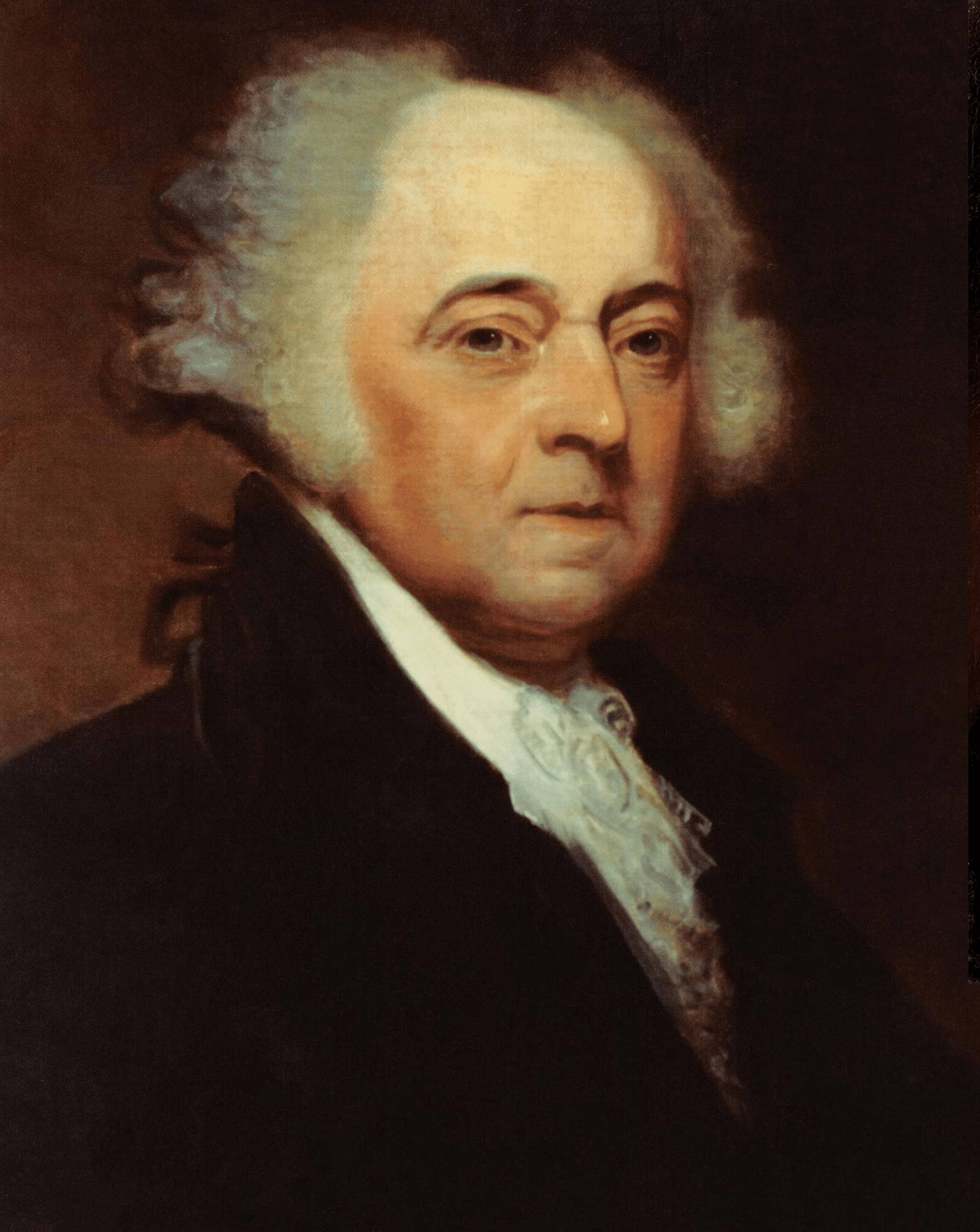
    John Adams.

    As the 1800s progressed, the era of the Founding Fathers was coming to an end. Thomas Jefferson and John Adams would outlast most of the Founding Fathers, only to die on the same date: July 4, 1826. The Founding Fathers would leave a profoundly different country than the one they created.

    Common Americans had created the sense that the United States was “a land of enterprising, optimistic, innovative, and equality-loving” people. Gordon Wood, Empire of Liberty, 733. The entrepreneurial, ambitious American spirit was born and permeating the entire country.

    Particularly after the resolution of the War of 1812, manifested in the Treaty of Ghent, Americans began to feel a permanent independence from Europe and a separation from European ideals. Gordon Wood, Empire of Liberty, 735. Americans began to look at themselves as worthy of analysis, introspection, and recognition.

    Thomas Jefferson believed that, as of 1823, America would serve “as a light to the world showing that mankind was capable of self-government.” Gordon Wood, Empire of Liberty, 737 citing Thomas Jefferson to Lafayette, 4 Nov. 1823, in Ford, ed., Writings of Jefferson, 10: 280. Jefferson confessed that his ideals for America “may be an Utopian dream, but being innocent, I have thought I might indulge in it till I go to the land of dreams, and sleep there with the dreams of all past and future times.” Id. at 738 citing Thomas Jefferson to J. Correa de Serra, 25 Nov. 1817, in L and B, eds. Writings of Jefferson, 15: 157.

    Jefferson’s dream of America may not have been achieved in exactly the way he imagined, but the country was becoming a player on the global stage. Americans had shown that they would not be a British colony, twice, and that Americans would create their own spirit which was loosely based on Europe and the classical civilizations of Greece and Rome.

    With the success of America increasing, the specter of slavery began to loom over the country. It presented an ideological divide for the North and South, but it also economically divided the country. In retrospect, the Civil War seemed inevitable, but as the sun was setting on the Founding Fathers’ America, there was hope that a major conflict could be avoided.

  • The Happiest People Upon the Earth

    benfranklinduplessis
    Benjamin Franklin. By: Joseph Siffred Duplessis.

    At the beginning of the 1800s, the American economy was becoming an unconventionally successful economy. Domestic commerce was “incalculably more valuable” than foreign commerce and “the home market for productions of the earth and manufactures is of more importance than all foreign ones.” Gordon Wood, Empire of Liberty, 707 quoting Nathan Miller, The Enterprise of a Free People: Aspects of Economic Development in New York State During the Canal Period, 1792-1838 (Ithaca, 1962), 42.

    Meanwhile, a middle class was emerging in the United States. In the 1780s, Benjamin Franklin predicted “the almost mediocrity of fortune that prevails in America . . . [made] its people to follow some business for subsistence,” which made the United States “the land of labor.” Gordon Wood, Empire of Liberty, 709 quoting Benjamin Franklin, “Information to Those Who Would Remove to America” (1784), Franklin: Writings, 975-83. This new middle class was gaining “a powerful moral hegemony over the society, especially in the North.” Gordon Wood, Empire of Liberty, 709.

    Both Benjamin Franklin and J. Hector St. John de Crevecoeur hoped a society could exist that lacked “both an aristocracy and a lower class.” Id. at 711. As Charles Ingersoll observed in 1810, “Were it not for the slaves of the south, there would be one rank.” Id. quoting Charles Jared Ingersoll, Inchiquin, the Jesuit’s Letters (1810), in Gordon S. Wood, ed., The Rising Glory of America, 1760-1820 (New York, 1971), 387.

    These developments would lead to some to conclude that the Americans in the North were “probably the happiest people upon the earth.” J.M. Opal, Beyond the Farm: National Ambitions in Rural New England (Philadelphia, 2008), 135, 136.

    These early years of the Republic, where prosperity was so widely spread that a seemingly universal middle class existed is of course a bit of an exaggeration in that there were poor and rich segments of society. But, on the other hand, the fact that so many individuals during that time commented on the subject reflects that it was a phenomenon occurring. A more cohesive, more uniform society was emerging. It was a society free from the highest highs and lowest lows that had come to characterize Europe.

    Since those early years, there has been a fluctuation in the strength and size of the middle class. One thing has not changed, however. The notion of a prosperous middle class has come to be an aspiration for all Americans. The early aspirations of Benjamin Franklin and other Founding Fathers transformed this dream into a reality. That reality is one that Americans hope to carry forward for many generations to come.

  • The Republicanization of America

    220132669487356421-benjamin-rush-full
    Benjamin Rush. By: John Witherspoon Peale C.

    The United States, as the 18th Century transitioned into the 19th Century, introduced to the world a host of ideas and beliefs that strayed from the Enlightenment period. The North American Review, in 1816, concluded that America was unlike any other country “in the points of greatness, complexity, and the number of its relations.” Gordon Wood, Empire of Liberty, 721 citing North American Review, 3 (1816), 345-47.

    America was also becoming the standard bearer for progress. The principles emerging in society emanated from the people themselves, “free from all sorts of artificial restraints, especially those imposed by government.” Gordon Wood, Empire of Liberty, 721 citing Gordon Wood, The Radicalism of the American Revolution (New York, 1992), 360.

    One example of the shift away from the ideals of the Enlightenment period is Dr. Benjamin Rush’s work “in seeking the universal theory that would purge medicine of its complexities and mysteries.” Gordon Wood, Empire of Liberty, 725. He believed that the Old World’s medicine could be “sufficiently simplified and republicanized” so that all members of society would be capable of treating themselves. Id. He carried the simplification to the furthest logical extent possible: that all diseases came down to fever, “caused by convulsive tension in the blood vessels,” which could only be treated by blood-letting. Id.

    Obviously, this extrapolation of American thinking applied to the medical field was a colossal failure. However, it showed the extent of the permeation of American ideals into society. Even the most closely held beliefs, or the sturdiest foundations underlying society, were questioned by Americans.

    This was a crucial, if unintentional, development for the United States. Rather than tailor American society and institutions to those of Europe or anywhere else for that matter, Americans tailored the society to its people.

    This people-centered approach would reap rewards for the coming centuries of Americans. Institutions, norms, and the government would all bend to the will of the people. That responsiveness has ensured that the government is able to adapt to the changing times, which is just one prerequisite for any country to survive over the course of two tumultuous centuries.

  • The Most Sublime Gift of Heaven

    blodget
    Samuel Blodgett. By: John Trumbull.

    In the early 1800s, America underwent a campaign of infrastructure building. The building of new roads, bridges, and canals were done in a spirit of “national grandeur and individual convenience.” Gordon Wood, Empire of Liberty, 730 quoting Charles G. Haines, Considerations on the Great Western Canal (Brooklyn, 1818), 11.

    In 1806, Samuel Blodgett, an economist and architect, concluded that commerce held together the Americans. Gordon Wood, Empire of Liberty, 730. Blodgett believed that commerce was “the most sublime gift of heaven, wherewith to harmonize and enlarge society.” Id. quoting Samuel Blodgett, Economica: A Statistical Manual for the United States of America (Washington, DC, 1806), 102.

    Blodgett believed that if America were to surpass Europe, it could not be done with the policies of Alexander Hamilton and the Federalists. Id. Instead, it had to be done with the Republicans, led by Thomas Jefferson. Id. Blodgett believed that only the Republican policies had the “capacity to further the material welfare of” America’s citizens. Id. citing Samuel Blodgett, Economica: A Statistical Manual for the United States of America (Washington, DC, 1806), 102.

    If commerce is the “most sublime gift of heaven,” as Blodgett said, then the manifestation of commerce in the United States as being carried out with the spirit of “national grandeur and individual convenience” is the reason that America has economically surpassed the individual states of Europe. Since the days of the early Republic, Americans have taken actions that both contributed to their individual benefit and have had the aggregate effect of creating national grandeur.

    In this sense, America has distinguished itself both historically and currently from other countries. Many countries, for example the Soviet Union in the past and China currently, have attempted to create national grandeur not through individual innovation but through government involvement. In doing so, those other countries have created the facade of success and grandeur that they hope to achieve. That is not to say that those countries have not developed sophisticated, successful economies. But the sustainability of those countries’ economies is debatable.

    One of America’s best qualities is that it has had prolonged economic success. Of course, there have been tumultuous times, like the Great Depression, and the so-called “Great Recession” and the panics and scares that are all but forgotten in modern times.

    However, America from the earliest days has encouraged individual success through its institutions, its culture, and its laws. The American people have believed in that opportunity and have taken risks, worked hard, and created an economy characterized by its national grandeur. Preserving the institutions, culture, and laws that foster such grandeur is crucial for America’s continued success.

  • An Outraged America

    capitol_building
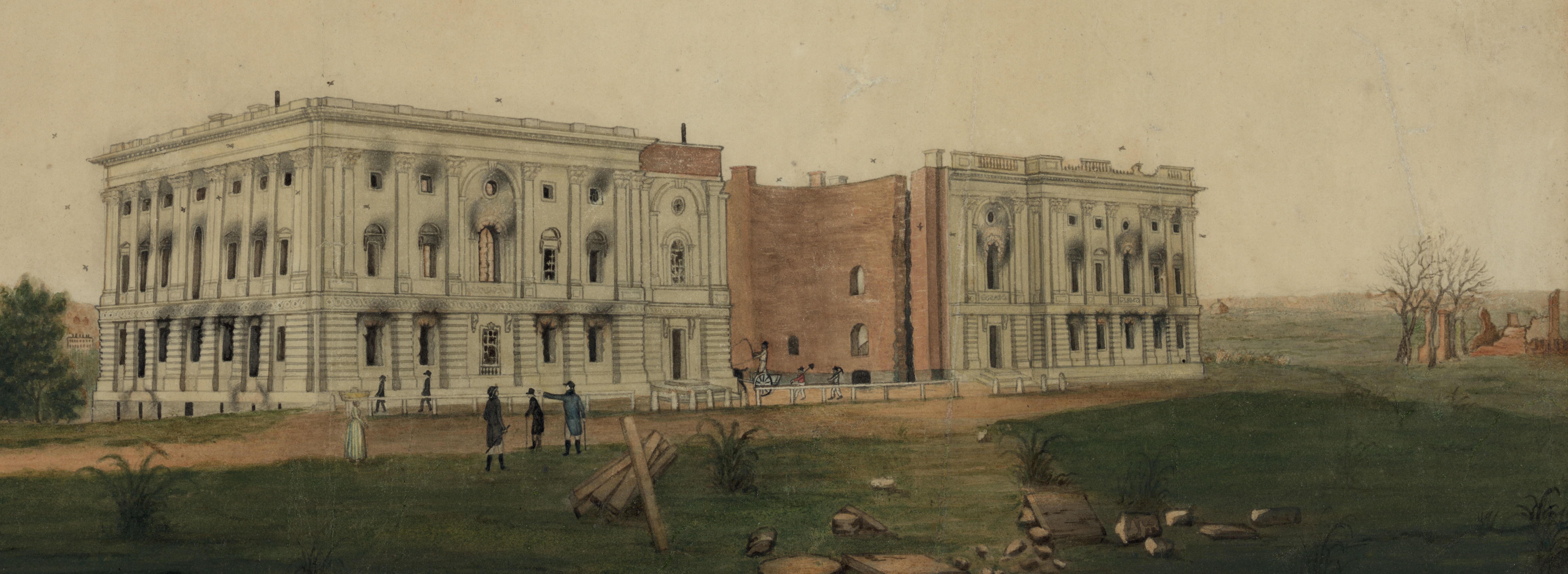
    The United States Capitol Building, showing damage inflicted by the British during the War of 1812.

    In March 1816, Congress passed a Compensation Act, “which raised the pay of congressmen from six dollars per diem to a salary of fifteen hundred dollars a year.” Gordon Wood, Empire of Liberty, 718-19. This was the first raise in the pay for congressmen since 1789. Id. at 719.

    Robert Wright, a Congressman in 1816, and previously a United States Senator, said that in the old days, congressmen “lived like gentlemen, and enjoyed a glass of generous wine, which cannot be afforded at this time for the present compensation.” Id. quoting C. Edward Skeen, “Vox Populi, Vox Dei: The Compensation Act of 1816 and the Rise of Popular Politics,” JER, 6 (1986), 259-60.

    Rather quickly, analysts and the public realized that Congress had effectively doubled its pay. Kentucky congressman Richard M. Johnson concluded that the Compensation Act brought more discontent than any other law up to that point in history. Thomas Jefferson agreed with him. Gordon Wood, Empire of Liberty, 719. Jefferson’s popularity amongst his fellow Republicans soared, as they all “resented paying taxes to pay for what seemed to be the high salaries of their public officials.” Id. citing Thomas Jefferson to De Meunier, 29 April 1795, in Paul Leicester Ford, ed., The Works of Thomas Jefferson: Federal Edition (New York, 1904), 8: 174.

    The public made their outrage known. There were public meetings throughout the country, there were publications strongly criticizing Congress for its work, and in Georgia, “opponents even burned the members of Congress in effigy.” Id. at 719-20 citing Skeen, “Vox Populi, Vox Dei,” JER, 6 (1986), 261.

    Congress’ reputation took a bit hit. Then, “[i]n the fall elections of 1816 nearly 70 percent of the Fourteenth Congress was not returned to the Fifteenth Congress.” Gordon Wood, Empire of Liberty, 720.

    The ordeal with the Compensation Act of 1816 was the first hint of what was to come with Americans’ behavior and perspective toward the actions of their government. Accountability became paramount. Participation became mandatory.

    It seemed clear that the days were over of the government being separate from the people and conducting its business in a sort of vacuum. Americans were taking matters into their own hands and sending a clear message to elected officials: do what is best for the country and its people, or you will not be re-elected.

    This is a message that is reinforced continually in American history, up to the present day. But many modern Americans may take for granted that it was not always the case. The acts of the early Americans, particularly in reaction to the Compensation Act of 1816, ensured that the country would develop opinions about the government, which in turn would lead to accountability. That accountability has inevitably served to perpetuate the health and wellbeing of the Republic.

  • The Emerging Middle Class and Entrepreneurial Spirit

    16a
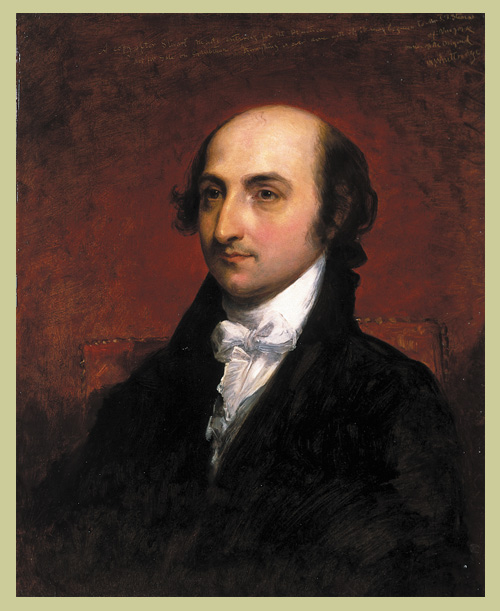
    Albert Gallatin.

    Albert Gallatin knew as early as 1799 that the United States “had become commercially and socially different from the former mother country” England. Gordon Wood, Empire of Liberty, 704. At that time, Gallatin was a Congressman, but he would later serve as Secretary of the Treasury from 1801 to 1814.

    In realizing that America was different, he said that Britain had “trades and occupations” that were “so well distinguished that a merchant and a farmer are rarely combined in the same person; a merchant is a merchant and nothing but a merchant; a manufacturer is only a manufacturer; a farmer is merely a farmer; but this is not the case in this country.” Id. at 704-05 quoting Annals of Congress, 5th Congress, 3rd session (Jan. 1799), 9: 2650.

    He said that if one were to venture into the middle of America, that individual would “scarcely find a farmer who is not, to some degree, a trader. In a grazing part of the country, you will find them buying and selling cattle; in other parts you will find them distillers, tanners, or brick-makers. So that, from one end of the United States to the other, the people are generally traders.” Annals of Congress, 5th Congress, 3rd session (Jan. 1799), 9: 2650.

    This meant that Thomas Jefferson’s dream of Americans being a nation of agriculture and avoiding the industrialization that Europe had experienced was not a dream to be realized, even after the transformative War of 1812.

    While this may have been troubling to Jefferson, Gallatin’s observations showed that Americans were developing a collective entrepreneurial spirit. Trading became an integral part of the American economy.

    Part of this was inevitably by necessity, where some had to supplement their income by engaging in trading that perhaps they did not have experience in. On the other hand, part of this change from England must have been that there was a wealth of natural resources and a middle class emerging in America.

    This early development after the War of 1812 should sound familiar to most modern Americans. First, although the middle class may change in size and wealth generation-by-generation, it has continually existed since the early Republic. Second, and most notably, Americans still carry an entrepreneurial spirit with them. Many would cite that entrepreneurial spirit for the success of America. It is certainly a factor.

  • The War of 1812

    jackson_neworleans
    Painting of the Battle of New Orleans during the War of 1812.

    The War of 1812 is often a forgotten war in modern times. It was a war that tested the Americans’ resolve in staying an independent nation and ultimately a war that brought together Americans in a way that no previous event had. Gordon Wood, Empire of Liberty, 699.

    It was also a war that brought about seemingly unusual events, particularly in retrospect. For example, the Americans, led by William Hull, planned and attempted a three-pronged attack on Canada. Id. at 677. Then, perhaps even stranger, the governor of Massachusetts entered into negotiations “with the British, offering part of Maine in return for an end to the war.” Id. at 693.

    Ultimately, the British invaded the United States and made an unexpected march directly on Washington, burning much of it to the ground. That was the extent of damage in America, however, and both countries entered into negotiations of a peace treaty. President James Madison led the way in negotiating a treaty with Britain, the Treaty of Ghent, which would peacefully end the war. Id. at 697.

    President Madison, a Jeffersonian Republican, conducted himself with the logic that it was better “to allow the country to be invaded and the capital burned than to build up state power in a European monarchical manner.” Id. at 698. Madison’s skillful handling of the war would result in 57 “towns and counties throughout the United States” being named after him, “more than any other president.” Id. at 699 citing Forrest Church, So Help Me God: The Founding Fathers and the First Great Battle Over Church and State (New York, 2007), 350. John Adams told Thomas Jefferson in 1817 that Madison had “acquired more glory, and established more Union than all his three Predecessors, Washington, Adams, Jefferson, put together.” Gordon Wood, Empire of Liberty, 699 quoting John Adams to Thomas Jefferson, 2 Feb. 1817, in Lester J. Cappon, ed., The Adams-Jefferson Letters: The Complete Correspondence Between Thomas Jefferson and Abigail and John Adams (Chapel Hill, 1959), 2: 508.

    Thomas Jefferson concluded in 1818 that “[o]ur government is now so firmly put on its republican tack that it will not be easily monarchised by forms.” Thomas Jefferson to Lafayette, 23 Nov. 1818, in Gilbert Chinard, ed., The Letters of Lafayette and Jefferson (Baltimore, 1929), 396.

    The War of 1812 has many quirks, as discussed above but perhaps most notably was the Battle of New Orleans, which took place after the Treaty of Ghent was signed but before word had reached the whole country. The Battle of New Orleans, led on the American side by Andrew Jackson, inflicted massive casualties to the British. Gordon Wood, Empire of Liberty, 698.

    Of course, the Star Spangled Banner was also a byproduct of the War of 1812 as well.

    As forgotten as the War of 1812 may be, it had significant consequences for the future of the country. America became a unified country, with the collective hardship of fighting the British twice creating a bond between Americans that would be strong, even if short-lived. It also was a war that illustrated the Republican principles of Madison and Jefferson could be successful. This set the stage for Republican dominance in politics, which was already underway by the time the War of 1812 began.

    While the Civil War would eventually come to define the 19th Century for America, with its horrific nature and result of keeping the country united, the War of 1812 ensured that there was an America worth fighting for. Had the War of 1812 not occurred, perhaps the Civil War would have been waged differently and perhaps the course of American history would have had a noticeable absence of patriotism. While it is impossible to predict, the wise decisions of American leaders in those tumultuous years and those who fought for their young country give modern Americans much to be thankful for.

  • Everyone’s Tax Policy

    Portrait of John Eppes.

    Amidst the War of 1812, the Republicans passed a tax law “which included a direct tax on land, a duty on imported salt, and excise taxes on stills, retailers, auction sales, sugar carriages, and negotiable paper. All these taxes, however, were not to go into effect until the beginning of 1814.” Gordon Wood, Empire of Liberty, 684.

    One Virginian congressman wisely concluded that “everyone is for taxing every body, except himself and his Constituents.” Id. citing Donald R. Hickey, The War of 1812: A Forgotten Conflict (Urbana, IL, 1989), 122. It is believed that this quote is attributable to the Chairman of the House Ways and Means Committee, Congressman John Eppes. Bill White, Barron’s, Pay It All, and Pay it Quickly, Feb. 13, 2015, available at http://www.barrons.com/articles/SB51367578116875004693704580454041219159332.

    While this was during the War of 1812 and was undoubtedly true then, it is a prescient quote and universally applicable. Taxation has consistently been viewed as an evil necessity by many and a necessity that should be imposed on others, not themselves. While this perspective is only natural for self-preservation, it is one that is dangerous for the future generations of Americans.

    Taxation has always played a unique role in American society, beginning with the British taxes on America’s colonial goods, which were viewed as crippling the colonial economy unnecessarily. Taxation was later viewed as an impediment on growth and an unnecessary burden on finances.

    Modern policymakers would do well to remember that taxation is a tool to place a burden on future generations without necessity and without justification. The temptation to act in conformance with populist beliefs should not prevent policymakers from confronting the uncomfortable truth: taxation is necessary to preserve the society that all Americans should enjoy.

    While the appropriate taxation rate is always up for debate and will always be debated, the burden of taxation should be fairly apportioned to all generations of Americans, so as to ensure that revenues are raised consistently to provide the services and necessities to all Americans for the foreseeable future of the country.

  • Gearing up for the War of 1812

    Depiction of the Battle of Lake Erie.

    In large part, the War of 1812 was brought about by necessity but also by politics.

    In terms of necessity, the British were executing a policy of impressment where the British would inspect American ships for contraband or material support for the French. America’s foreign policy adopted in reaction to these events was to create commercial warfare through trading, bringing the conflict to a head. In terms of politics, however, the Republicans saw the likely potential of war as a second war for independence and a defense of republicanism. Gordon Wood, Empire of Liberty, 669. On the other side of the aisle, the Federalists, such as Alexander Hanson of Maryland, welcomed the war believing that the Republicans would mismanage the war “so to discredit their party and bring the Federalists back into power.” Id.

    Despite the oncoming war, the Republicans were aware that the country’s military was not prepared for a war, much less with one of the world’s supreme powers: Great Britain. In 1807, the Republicans strengthened the army and navy, but in 1810, the Republicans questioned themselves and did not further strengthen the military. Id. at 671. John Taylor, a Republican senator, stated that armies and navies “only serve to excite wars, squander money, and extend corruptions.” Id.

    Ultimately, the army was expanded prior to the war but the navy was not, for fear that its permanent establishment was unnecessary and would only endanger the longevity of the Republic. There was a large group of Republicans “who in the early months of 1812 voted against all attempts to arm and prepare the navy, who opposed all efforts to beef up the War Department, who rejected all tax increases, and yet who in June 1812 voted for the war.” Id. at 672.

    These years prior to the War of 1812 reflect the early Americans’ desire to not just proclaim independence but prove that independence and not take the risk of being viewed as a client state of England. The war was not inevitable, but it became so when the Republicans so strongly opposed impressment by the British and created a foreign policy of disrupting the commerce of England. The war was not necessary for the short term health of the United States, as England and France were embroiled in a long war that left America to be a secondary concern.

    But for the long term health of the United States, the War of 1812 was absolutely necessary. America needed to become a country unto itself, capable of asserting its presence and becoming a leader in the world. If it had not taken a strong stance against England, there was a serious danger that one of two things would happen: England, after its war with France, would invade the United States to take back “the colonies” or America would always be seen as England’s brash client state.

    The Republicans, although disorganized in executing their policies, effectively preserved the long term wellbeing of the United States in bringing on the War of 1812. But that would only become clear after significant casualties, damage, and perseverance.