Category: The Revolution

  • Laboratories of Democracy

    colonial_williamsburg_governors_palace_front_dscn7232
    Governor’s Palace. Williamsburg, Virginia.

    In the months leading up to the Declaration of Independence, the states began the process of adopting their own constitutions. These constitutions, being drafted in 1776, approximately 13 years before the United States Constitution would be ratified, had to confront many of the same issues as the United States Constitution, with various approaches being taken. (more…)

  • The Embodiment of the American Dream

    thomas_paine_rev1
    Thomas Paine. By: Auguste Milliere.

    There are myriad examples of individuals coming to the United States to enjoy extraordinary success. Some have come to call that the “American Dream.” Perhaps nobody better embodies the American Dream than Thomas Paine, the famous pamphleteer of the late 1700s. (more…)

  • The Real Revolution


    revolution
    Washington’s Army Marching Toward Valley Forge. By: William B. T. Trego.

    The American Revolution is a topic that has been dissected, analyzed, and retold by every generation of Americans. The political theory of the American Revolution is conventionally believed to be centered on the revolutionaries’ genius. (more…)

  • The Perfect Commonwealth

    jacobeichholtzamericanpainter1776-1842conestoga-creek-and-lancaster
    Pennsylvania Countryside. By: Jacob Eichholtz.

    The success or failure of countries, and politicians for that matter, are an often studied subject. Studies have been ongoing for centuries.

    James Burgh, an English Whig, wrote: “Almost all political establishments have been the creates of chance rather than of wisdom. Therefore it is impossible to say what would be the effect of a perfect commonwealth” as there was no precedent in history. James Burgh, Political Disquisitions, Vol. 1, 23. (more…)

  • Divided Sovereignty

    glanzman-s
    Signing of the Constitution. By: Louis S. Glanzman.

    John Adams had strong opinions about federalism. He believed that the government should be structured similarly to the British Empire, given the British Empire’s extraordinary success.

    At the time of the signing of the Constitution, Adams firmly believed that the Constitution had secured a national government, as opposed to a government dividing its sovereignty into states and a federal government. Gordon Wood, Revolutionary Characters: What Made the Founders Different, 191. (more…)

  • The Birth of the House

    Image of Washington's inauguration at Philadelphia by J.L.G. Fer
    Painting of the Inauguration of President George Washington. By: Jean Leon Gerome Ferris.

    For many of the Founding Fathers, the biggest threat to the stability and success of the United States was tyranny. Tyranny was a force that could bring down the most free and just societies. Underlying much of the creation of the institutions that now define the American government, the judiciary, the legislature, and the executive, are precautionary and prophylactic measures to prevent tyranny. (more…)

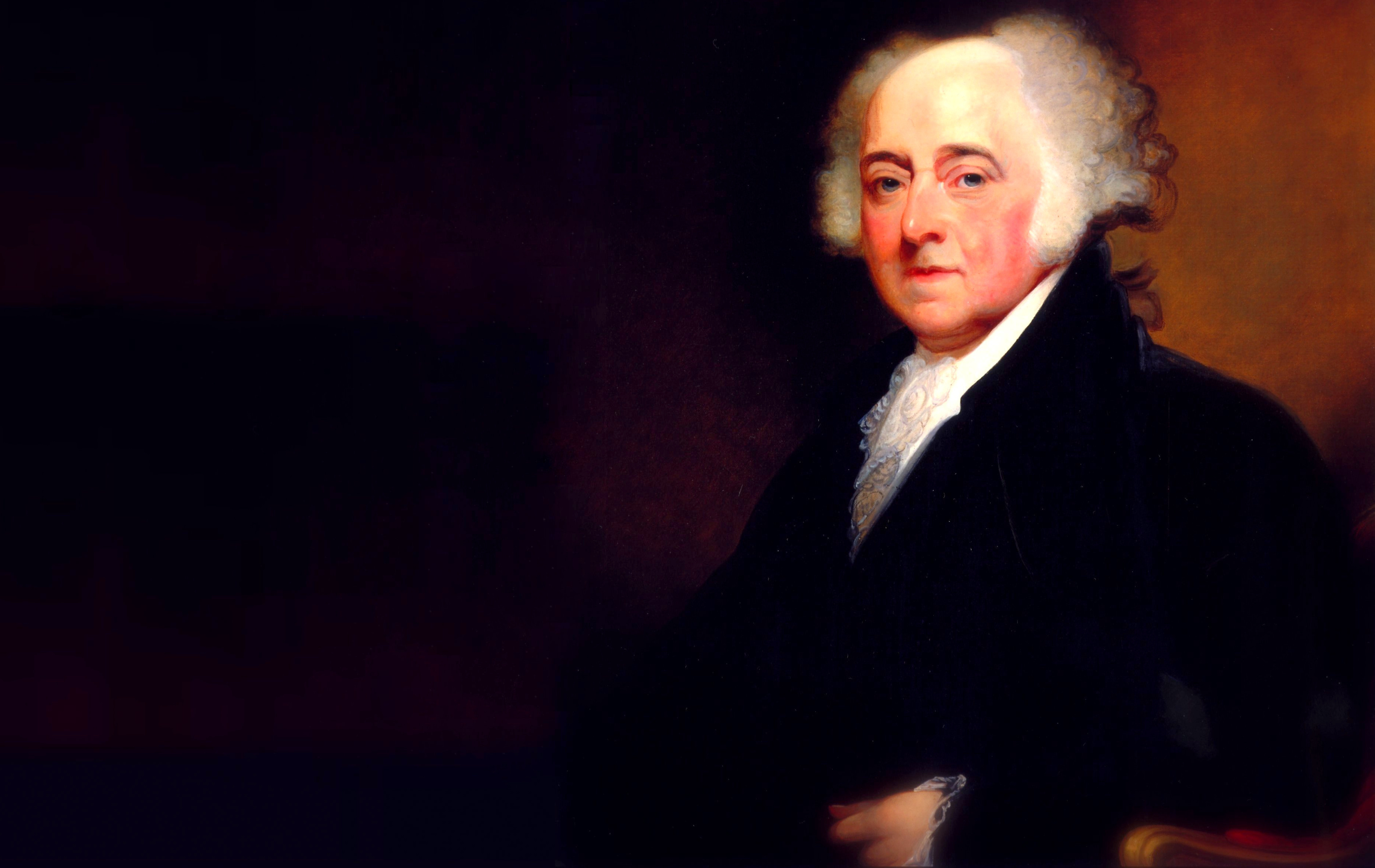
  • Adams’ Doubts

    john-adams21
    John Adams. By: John Trumbull.

    John Adams was amongst the most hopeful about America’s prospects for the future. At the time of the Declaration of Independence and the years of the American Revolution, he believed America could avoid the pitfalls of the European nations.

    But just ten years later, Adams was of a different mind. In 1787, he wrote his Defence of the Constitutions, where he concluded that “his countrymen were as corrupt as any nation in the world.” Gordon Wood, Revolutionary Characters: What Made the Founders Different, 181. (more…)

  • Alexander Hamilton’s Plan for Success

    Portrait of Alexander Hamilton
    Alexander Hamilton in 1792. By: John Trumbull.

    In 1790 and 1791, Alexander Hamilton, as Secretary of the Treasury, proposed the creation of a financial system in four reports, which covered the topics of a national bank, a mint, and manufactures. Gordon Wood, Revolutionary Characters: What Made the Founders Different, 133. (more…)

  • A Messianic Sense of Obligation

    thomas_jefferson_1786_by_mather_brown
    A Young Thomas Jefferson. By: Mather Brown.

    The effects of the American Revolution throughout the world were not immediately clear, but Thomas Jefferson opined that it would be “a movement on behalf of the rights of man.” Gordon Wood, Revolutionary Characters: What Made the Founders Different, 110. (more…)

  • The American Cincinnatus

    IMG_1970
    George Washington. By: Gilbert Stuart.

    George Washington, to some, is revered as a brilliant general. To others, he is to be remembered because in his will drafted in the summer of 1799, he freed all of his slaves and took the extra step of ensuring that the slaves would be taught to read and write and be prepared for “some useful occupation.” Gordon Wood, Revolutionary Characters: What Made the Founders Different, 40. (more…)