Tag: Abraham Lincoln

  • The Civil War: Frederick Douglass: The Late Edition

    December 1860

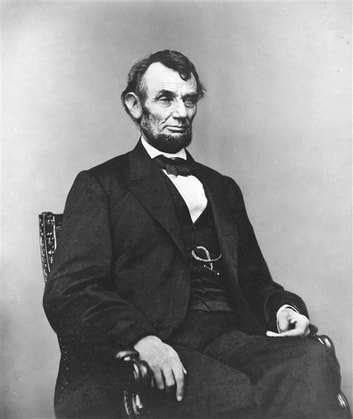
    Politicians walk a tightrope when they choose their positions on political issues, especially when it’s a thorny issue. And when critics attempt to pigeonhole a politician as an extremist, those critics often achieve exactly the opposite: that politician then essentially has license to choose any position except an extreme one—defying the critics and potentially pleasing the constituency. Meanwhile, other politicians—less “extreme” ones—continue walking the tightrope, carefully planning their next steps. When Abraham Lincoln won the election of 1860, this dynamic took hold: the South made dark predictions about what the “extreme” Lincoln administration would seek to accomplish—opening up space for Lincoln to navigate and gifting him the opportunity to placate fellow northerners while searching for ways to steer the country away from the menace of prolonged civil war.

    (more…)
  • The Civil War: Sam Houston to H.M. Watkins and Others

    The Civil War: Sam Houston to H.M. Watkins and Others

    Sam Houston to H.M. Watkins and Others

    November 20, 1860

    Politicians who have become household names have an ability to sway public opinion—and they know it. They can use their precious political capital to that end. But it’s a risky proposition. If they see odds they like and place their bets only to lose, they may see themselves fall out of favor, out of office, and out of the public eye. If, however, they read the moment correctly and positioned themselves just right, they may ascend further still—higher in esteem and maybe even earn their place in the collective memory of the nation.

    (more…)
  • The Civil War: John G. Nicolay: Memoranda Regarding Abraham Lincoln

    The Civil War: John G. Nicolay: Memoranda Regarding Abraham Lincoln

    November 5-6, 1860

    Who won the presidential election of 1860 would shape the following weeks and months—not because the winner would immediately take power; but because the direction of the country would come into focus. Perhaps the South would avoid its worst fear of having a Black Republican in the White House. Or perhaps their worst fear would become reality: Abraham Lincoln would win the election; then, there would be no choice but to go on with seceding between the election—in November—and the inauguration—in March. And then, for the South, there would finally be a cause for conflict; and not just a conflict of words but, for some, an overdue start to warfare with the North.

    (more…)
  • Ulysses S. Grant: An American Hero

    Ulysses S. Grant: An American Hero


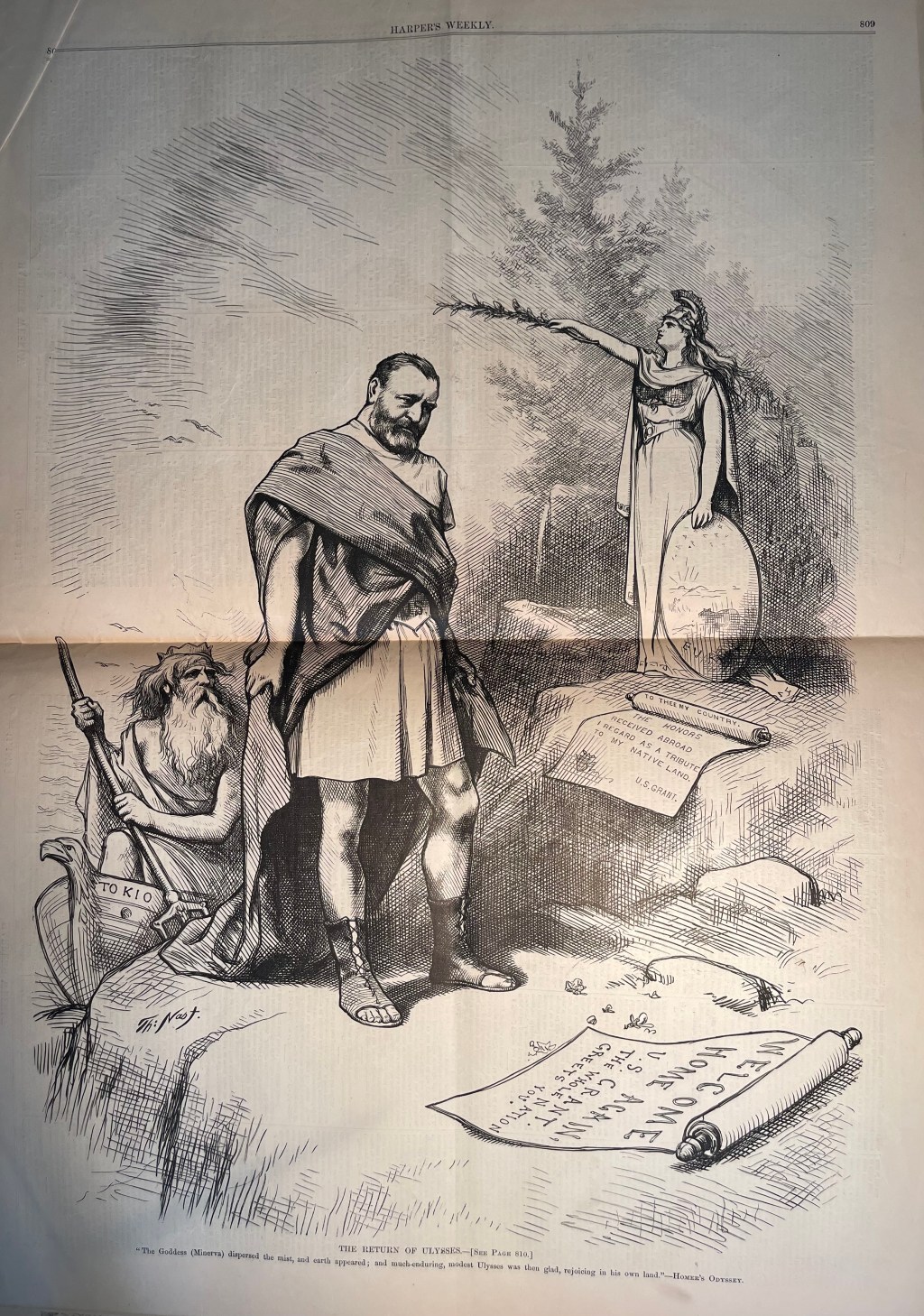
    As time passes and collective morals change, the legacies of prominent figures in American history often evolve. The context in which these individuals earned their place in American memory becomes increasingly difficult to uncover.

    (more…)
  • The Legacy of Robert E. Lee

    The Legacy of Robert E. Lee

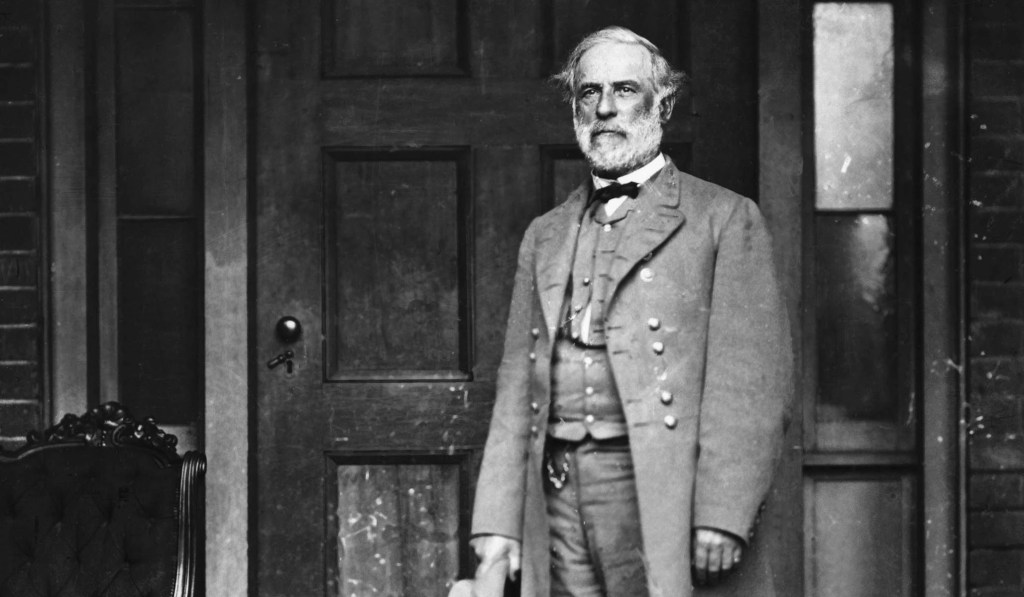
    No figures in American history earn universal admiration. As years—and generations—pass, legacies change. As morals, priorities, and political issues evolve, so do understandings of those people in the past who brought change—good, bad, or otherwise—to the country. For some figures, like Abraham Lincoln, whose authentic genius is admired generation after generation, their merit is questioned only by those who unreasonably say the great should have been greater. For others, it becomes much more varied and nuanced, and for Robert E. Lee, his legacy has always differed depending on the part of the country where his legacy is measured and the tenor of the moment. This is because, perhaps more than even Confederate President Jefferson Davis, Lee became a symbol of the Confederacy—with all its ills but also its potential for what might have been.

    (more…)
  • The Election of 1884

    The Election of 1884

    The Democratic Party was in turmoil. Its candidates were not winning, and many of its ideas had fallen out of favor. It was a long way from the days of the Party’s founding: Andrew Jackson and his disciple, Martin Van Buren, held power for the twelve years spanning 1829 to 1841 and—into the 1840s and 1850s—James Polk, Franklin Pierce, and James Buchanan continued to lead the Party into the White House albeit against candidates from the newly-formed and then soon-to-be-disbanded Whig Party. Then, following the emergence of the Republican Party—an emergence which culminated in its candidate, Abraham Lincoln, prevailing in the elections of 1860 and 1864—Andrew Johnson, Lincoln’s Vice President and then successor as President, oversaw a one-term presidency which came to an end in 1869. Johnson, partly because he was serving between two titans of the century (Lincoln and Civil War hero Ulysses S. Grant), was always going to struggle to earn admiration but, unlike Lincoln and Grant, Johnson was technically a Democrat, and perhaps because he was so thoroughly shamed for his actions as President, the Party would scarcely recognize him as a member. Whether a result of Johnson’s malfeasance or not, following Johnson’s presidency came an era of Republican dominance: Republican Grant won two consecutive terms, Republican Rutherford B. Hayes secured a succeeding term, Republican James Garfield then was victorious, and following his assassination, Republican Chester Arthur served out the remainder of that term. That brought the parties and the country to 1884. As the election of 1884 approached, it had been decades since a strong, effective Democrat—a Democrat who embodied the Party’s principles and would be a standard bearer for the Party, unlike the postbellum Democratic President, Johnson, or the last antebellum one, Buchanan—held office, and for Democrats to win this election, it would take someone special; someone who would be transformative even if only in a way that was possible at the time. As fortune would have it, it could not be a wartime presidency or a presidency that birthed fundamental change in American government, but that was because the circumstances of the era did not call for such a President; it could, however, be a presidency that tackled one of the biggest issues of the time: corruption.

    (more…)
  • Reconstruction

    Reconstruction

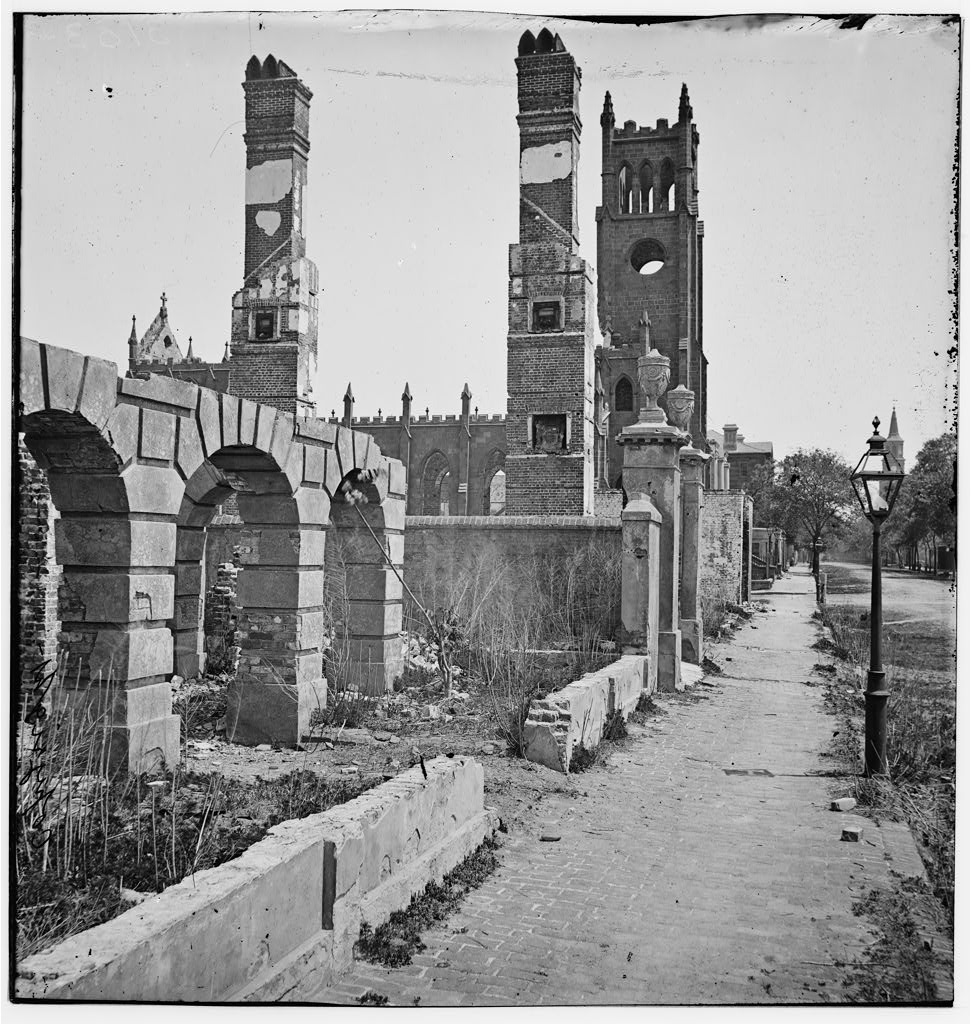
    The years after the Civil War, until 1877, were replete with novel uncertainties. The country had changed: the qualities that defined antebellum America had vanished; those who had been the most vocal before the war—soon-to-be Confederates—had seen their soapbox taken by the “Radical Republicans,” Republicans who sought to not only end slavery but to bring into effect equality amongst the races. Regardless of political party or geographic location, the country and its citizens had the task of reconstructing the United States, every one of them, and that task began before the Civil War’s end. President Abraham Lincoln spoke of his hope to reconcile the “disorganized and discordant elements” of the country, and he said: “I presented a plan of re-construction (as the phrase goes) which, I promised, if adopted by any State, should be acceptable to, and sustained by, the Executive government of the nation. I distinctly stated that this was not the only plan which might possibly be acceptable.”[i] Lincoln died four days later without fully setting forth his vision for how the nation may reconstruct itself, but events would soon render that vision—broad and ambiguous as it was—antiquated: soon after his death, the same federal government that had grown to enjoy extraordinary power (such as suspending the writ of habeas corpus) would go from having an authentic political genius, Lincoln, at its helm to having Andrew Johnson, a disagreeable at best (belligerent at worst) as executive; and not so long after Johnson took power, roving bands of the Ku Klux Klan acted in concert with state officials throughout the South to subjugate—by any means—those who had been freed.

    (more…)
  • A Nation Reborn

    A Nation Reborn

    In the same way that the Second World War would reshape the globe in the Twentieth Century, the Civil War reshaped America for the remainder of the Nineteenth Century. Veterans of both wars came to define their respective generations and rise to positions of power: just as Union General Ulysses S. Grant’s meteoric rise culminated in him becoming President three years after the war, General Dwight D. Eisenhower would find himself being elected President seven years after the war of his generation. Lesser generals also worked their way into office—some of those offices being elected and others being executive offices of companies in the emerging industries following the wars—but that would occur over the course of decades: the last Civil War veteran to reach the presidency, William McKinley, occupied the White House as the Nineteenth Century faded into the Twentieth. As ever, those who held power determined the direction of the country’s future. In the weeks and months following the end of the Civil War, and President Abraham Lincoln’s assassination, people in power would be sketching out the contours of a post-war America; and it was then, at that nascent stage of the newly reborn nation’s life, that new factions emerged—factions that would vie for weeks, months, and even years to cast the die of America in their own image and either keep, or make, the nation they wished to have.

    (more…)
  • The Second Father

    The Second Father

    In February 1861, Abraham Lincoln traveled to the Western Railroad Depot carrying his trunk tied with a rope and with the inscription, “A. Lincoln, White House, Washington, D.C.” Friends and family prepared him for the train ride from Illinois to Washington which would take twelve days and bring the President-elect into contact with tens of thousands of citizens. Lincoln had been “unusually grave and reflective” as he lamented “parting with this scene of joys and sorrows during the last thirty years and the large circle of old and faithful friends,” and when he went to his law partner for sixteen years, Billy Herndon, he assured him that his election to the presidency merely placed a hold on his partnership role: “If I live I’m coming back some time, and then we’ll go right on practising law as if nothing had ever happened.” As he stood on his private train car and addressed the crowd of well-wishers, the sentiment was no less heartfelt: “My friends—No one, not in my situation, can appreciate my feeling of sadness at this parting. To this place, and the kindness of these people, I owe everything. Here I have lived a quarter of a century, and have passed from a young to an old man. Here my children have been born, and one is buried. I now leave, not knowing when, or whether ever, I may return, with a task before me greater than that which rested upon Washington. . . . I hope in your prayers you will commend me, I bid you an affectionate farewell.” And so, with the crowd moved to tears, Lincoln would leave Springfield for the last time in his life with the train slowly moving “out of the sight of the silent gathering.” Within the train car, furnished with dark furniture, “crimson curtains, and a rich tapestry carpet,” Lincoln “sat alone and depressed” without his usual “hilarious good spirits.” (more…)

  • Appomattox

    Appomattox

    Conceptualizing the Civil War’s end, even during the opening months of 1865, was nearly impossible: who could imagine Confederate General Robert E. Lee surrendering himself and his men to the custody of the Union army? How many members of the Confederate government would be taken prisoner and be tried for treason and any number of other crimes for defying the United States federal government? What would come from an Abraham Lincoln presidency that was not entirely consumed with prosecuting the war? And perhaps the most troubling question of all: how, after all the fratricidal blood shed and destruction wrought against one another, could the Confederate states be readmitted and the country continue to exist? On April 9, 1865, at Appomattox Court House in Virginia, when General Lee surrendered to Union General Ulysses S. Grant, the contours of a post-war America were beginning to be defined—and for the Confederates, it appeared, with Lee’s surrender, that the future would be one of subjugation to the northern states. (more…)