Abraham Lincoln’s victory in the Election of 1860 was disconcerting news for the South. It was the most recent event in a string of events that seemingly endangered the southern way of life and the future of the country. At a time when many northerners suspected southern threats of secession were but a bluff, there was evidence that the country had already split and the formalities were soon to follow. (more…)
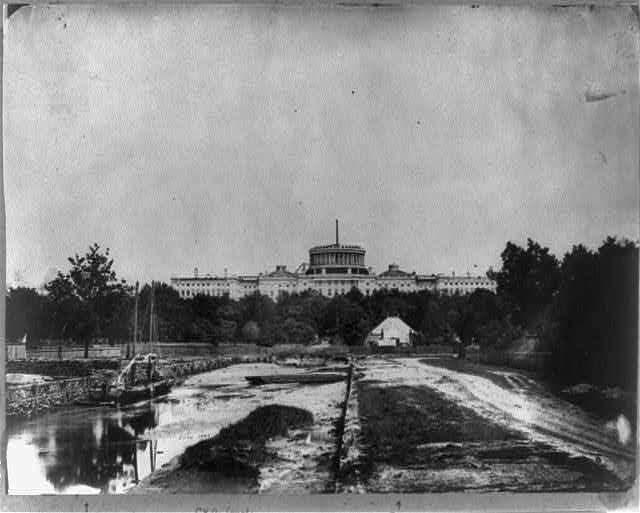
The United States Capitol in 1860. Courtesy: Library of Congress
Every presidential election is consequential, but the Election of 1860 would play a significant role in whether the United States would remain one nation. The division of the North and South on the issue of slavery threatened to cause a secession of the South. The result of the election would determine whether that threat would materialize and cause a Second American Revolution. (more…)
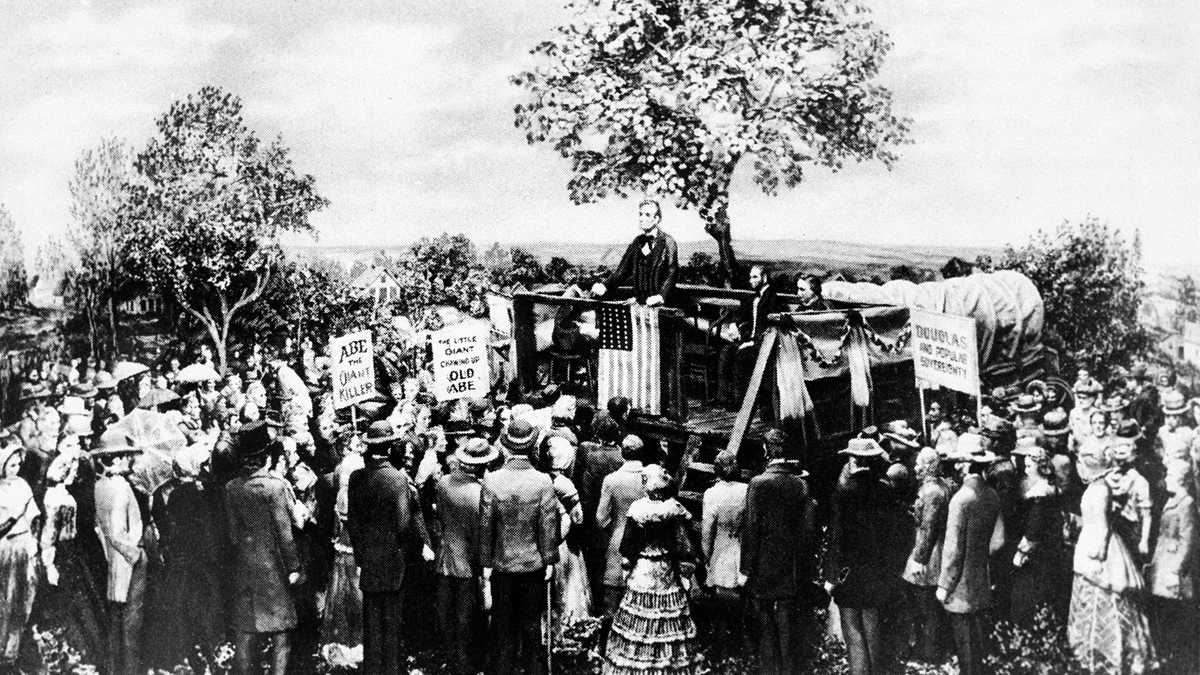
Senator Stephen Douglas had come into the political spotlight through his work in the Compromise of 1850 and the Kansas-Nebraska Act, which had temporarily held the country together but perpetuated the institution of slavery. Douglas, a Democrat, was a force to be reckoned with for keeping a seat in the United States Senate despite the growing strength of the Republican Party throughout the North and in his home state of Illinois. Throughout 1858, a time when the state legislatures elected senators to the United States Senate, Douglas would have to win the support of the people of Illinois, and the Illinois legislature, by debating the issue of slavery, and the future of the country, with the Republican candidate for the Senate, Abraham Lincoln. See David Potter, The Impending Crisis: America Before the Civil War, 1848-1861, 330-31. (more…)
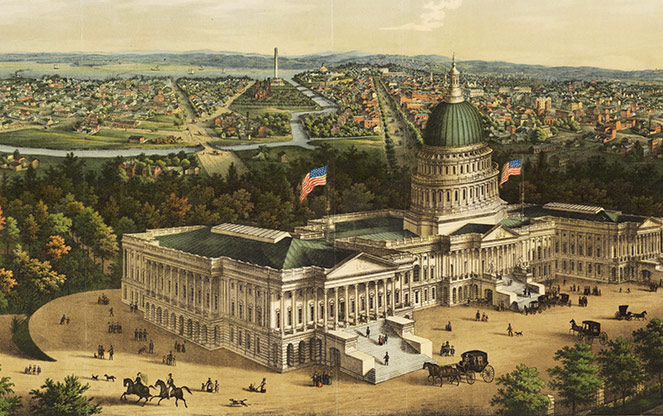
Panoramic View of Washington, DC in 1856. Courtesy: E. Sachse & Co.
The Democratic Party and Whig Party were the dominant political parties from the early 1830s up until the mid-1850s. Both were institutions in national politics despite not having a coherent national organization by cobbling together a diverse group of states to win elections. While the Democrats had a more populist agenda, the Whigs were more focused on pursuing industrialization and development of the country. See David Potter, The Impending Crisis: America Before the Civil War, 1848-1861, 226. While the Democratic Party would survive to the present day, the Whig Party would not survive the mid-1850s, not as a result of its own ineptness but because of the changing political landscape of that era. (more…)
Since the outbreak of the Civil War and continuing to the present day, the role of slavery in splitting America has been hotly debated. One may wonder whether there was merely a correlation between slavery and the Civil War or whether slavery was the cause. Investigating the nuances of the issue of slavery reveals that the Civil War resulted from sectionalism and slavery, which were practically synonymous.
One of the most outspoken Representatives in the House of Representatives, John Quincy Adams, had opposed the declaration of war on Mexico and fought President James Polk’s policies for the duration of his presidency.
At the end of the Mexican-American War, President James Polk proposed taking as much as Mexico’s land as possible. However, he proposed this plan to a majority Whig House of Representatives.
Some Americans may suppose that during wartime, partisanship declines and a sense of unity prevails. During the Mexican-American War, this was not the case. The Whigs were vocal in their disagreement with President James Polk and the Democrats.




 Last Best Hope of Earth