Tag: Alabama

  • The Civil War: Jefferson Davis: Farewell Address in the U.S. Senate

    January 21, 1861

    United States Senator Jefferson Davis, of Mississippi, rose on the floor of that august chamber the morning of January 21, 1861 to make an announcement. It would not be one pertaining to some Senate bill, or a resolution, but instead an announcement that he was leaving the Senate.

    (more…)
  • A Nation Reborn

    A Nation Reborn

    In the same way that the Second World War would reshape the globe in the Twentieth Century, the Civil War reshaped America for the remainder of the Nineteenth Century. Veterans of both wars came to define their respective generations and rise to positions of power: just as Union General Ulysses S. Grant’s meteoric rise culminated in him becoming President three years after the war, General Dwight D. Eisenhower would find himself being elected President seven years after the war of his generation. Lesser generals also worked their way into office—some of those offices being elected and others being executive offices of companies in the emerging industries following the wars—but that would occur over the course of decades: the last Civil War veteran to reach the presidency, William McKinley, occupied the White House as the Nineteenth Century faded into the Twentieth. As ever, those who held power determined the direction of the country’s future. In the weeks and months following the end of the Civil War, and President Abraham Lincoln’s assassination, people in power would be sketching out the contours of a post-war America; and it was then, at that nascent stage of the newly reborn nation’s life, that new factions emerged—factions that would vie for weeks, months, and even years to cast the die of America in their own image and either keep, or make, the nation they wished to have.

    (more…)
  • The March to the Sea

    The March to the Sea

    Throughout the Civil War, soldiers and citizens alike could view the events unfolding before them and question whether there was a better alternative than to prosecute the war to its bitter end. What had started as a spectator’s war—with men and women gathering near the battlefields to picnic and take in the action—had morphed, by mid-1864, into slaughter with the only variables being where the slaughter may occur and what magnitude it may reach. One veteran lieutenant recalled after the war, “As we lay there watching the bright stars, many a soldier asked himself the question: What is this all about? Why is it that 200,000 men of one blood and one tongue, believing as one man in the fatherhood of God and the universal brotherhood of man, should in the nineteenth century of the Christian era be thus armed with all the improved appliances of modern warfare and seeking one another’s lives? We could settle our differences by compromising, and all be at home in ten days.”[i] Of all the soldiers that gazed at the bright stars and asked themselves these questions, the men under the command of Union General William Tecumseh Sherman were not a part of that group when they left Atlanta burning and began a campaign through the heart of Georgia to the Atlantic Ocean. (more…)

  • On to Richmond

    On to Richmond

    Although the Confederacy had awakened the North’s spirit by initiating hostilities at Fort Sumter, both sides could have still hoped for reconciliation. While some advocated for immediate peace, others wished for a full prosecution of war against the South, viewing its expanding secession as nothing short of treason. By the end of spring 1861, there was a decisive answer to the question of whether there would soon be peace. (more…)

  • The Outbreak of the Civil War

    The Outbreak of the Civil War

    Within a matter of weeks of Abraham Lincoln’s presidency beginning, the gravest crisis of perhaps any president confronted him and the nation: civil war. (more…)

  • The Secession of the Deep South

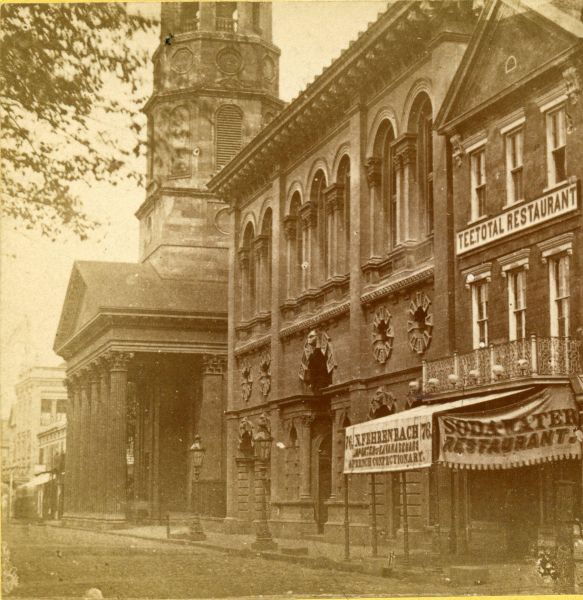
    secession-hall-583x600
    Secession Hall in Charleston, South Carolina. Credit: The Civil War Trust.

    In the wake of the disconcerting result of the Election of 1860, the nature of southern secessionism suggested the imminent secession of at least some southern states from the Union. The timing and execution of states actually seceding from the Union was unclear, but the Deep South was prepared to act first. (more…)

  • The Election of 1860

    1860photo_uscapitol_washingtoncanalvisiblie
    The United States Capitol in 1860. Courtesy: Library of Congress

    Every presidential election is consequential, but the Election of 1860 would play a significant role in whether the United States would remain one nation. The division of the North and South on the issue of slavery threatened to cause a secession of the South. The result of the election would determine whether that threat would materialize and cause a Second American Revolution. (more…)

  • The Birth of Secessionism

    state_square_and_depot
    Antebellum Atlanta, Georgia. Photographer Unknown.

    Following the Compromise of 1850, southerners became concerned about the North securing additional concessions from the South. Aware of the South’s concerns, President Millard Fillmore tried to calm southern nerves by (more…)

  • The Extermination of Native Americans

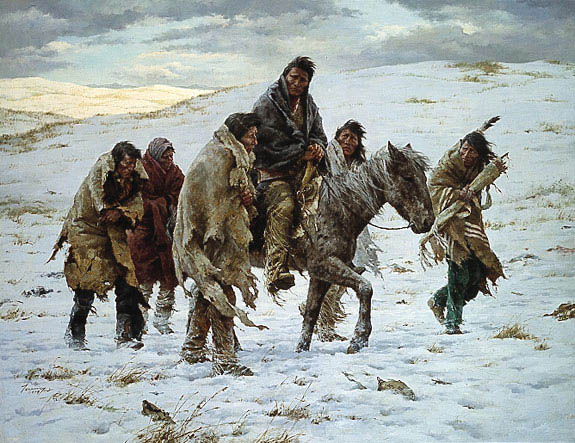
    max-d-stanley-trail-of-tears
    Trail of Tears. By: Max D. Stanley.

    Under President Andrew Jackson, and his successor President Martin Van Buren, there was mass removal of Native Americans westward across America.

    (more…)

  • Jackson’s Removal of Native Americans

    chief-joseph
    Depiction of the Removal of Native Americans.

    In the first year of Andrew Jackson’s presidency, the removal of Native Americans from their lands became a top priority.

    (more…)