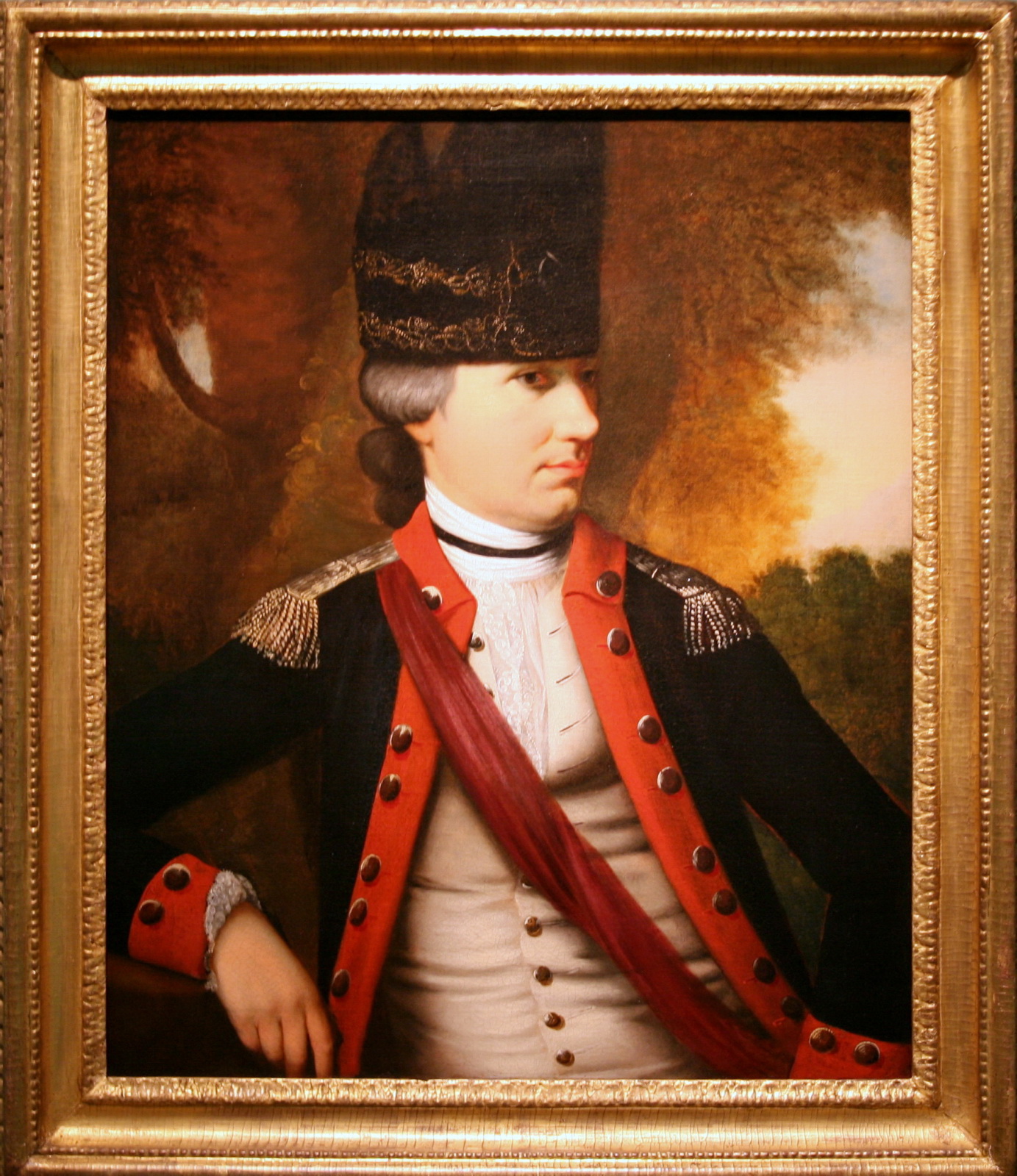
Tag: Alexander Hamilton

  • Constitution Sunday: “Publius,” The Federalist XXII

    “Publius,” The Federalist XXII [Alexander Hamilton]

    New-York Packet, December 14, 1787

    A well-functioning democracy must be capable of recognizing and dealing with the friction that occurs between the minority and the majority on any given issue. As Alexander Hamilton wrote, in the Federalist XXII, the difference between a vote requiring a simple majority versus a vote requiring a two-thirds majority is one that—the latter—empowers a small, vocal minority to obtain significant power over two-thirds of the body. Furthermore, it enables foreign powers—who may be seeking to “perplex our councils and embarrass our exertions”—to sway the policymaking of our country by using that method to encourage factions to block legislation that may be harmful to that foreign power but beneficial to us. (more…)

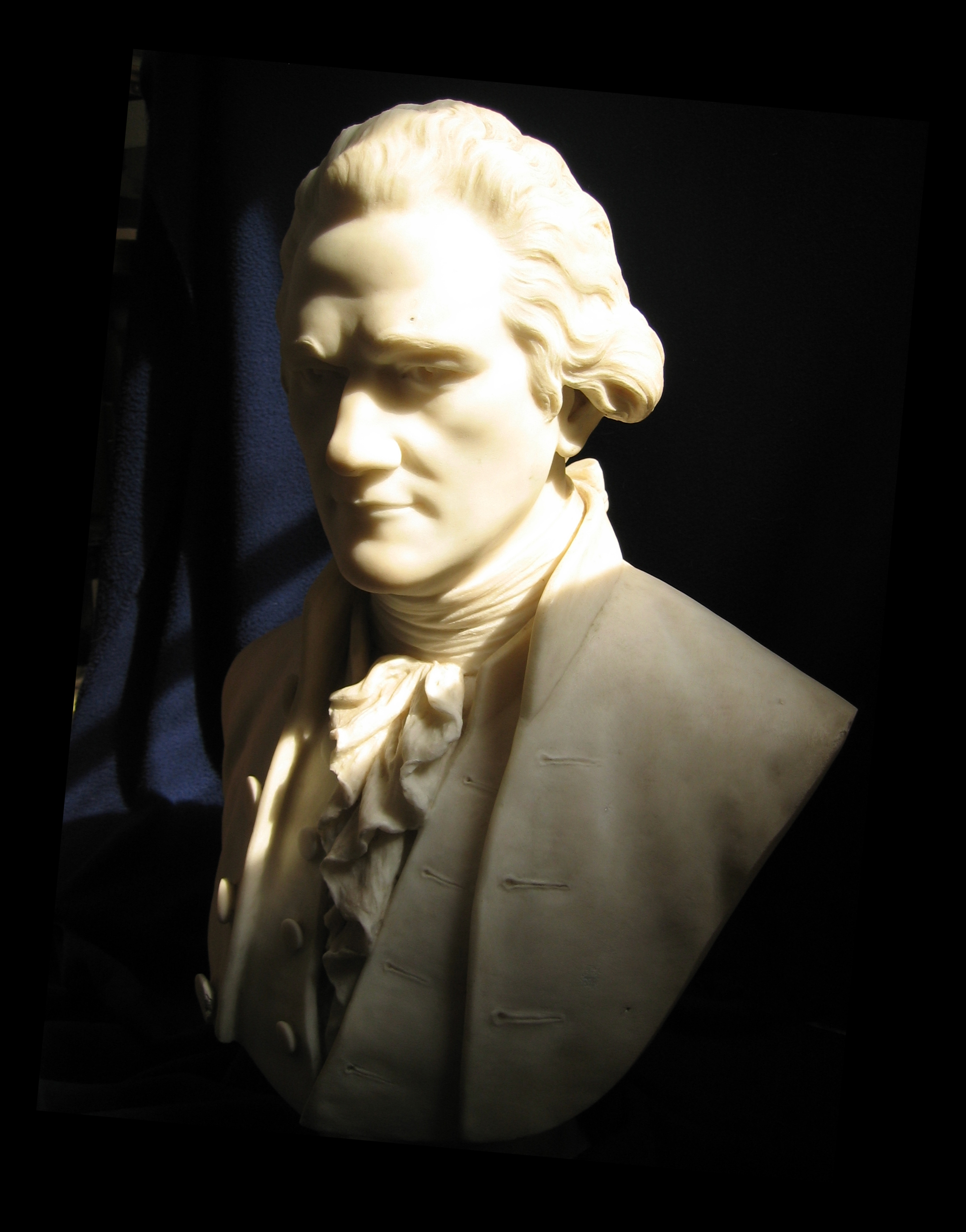
  • Constitution Sunday: “Publius,” The Federalist IX [Alexander Hamilton]

    “Publius,” The Federalist IX [Alexander Hamilton]

    Independent Journal (New York), November 21, 1787

    Following are excerpts from Alexander Hamilton’s writings in the Federalist Papers:

    “When Montesquieu recommends a small extent for republics, the standards he had in view were of dimensions, far short of the limits of almost every one of these States. (more…)

  • Constitution Sunday: “Publius,” The Federalist VIII [Alexander Hamilton]

    “Publius,” The Federalist VIII [Alexander Hamilton]

    New-York Packet, November 20, 1787

    Following are excerpts from The Federalist VIII, authored by Alexander Hamilton:

    “Assuming it therefore as an established truth that the several States, in case of disunion, or such combinations of them as might happen to be formed out of the wreck of the general confederacy, (more…)

  • Constitution Sunday: “Publius,” The Federalist I [Alexander Hamilton]

    “Publius,” The Federalist I [Alexander Hamilton]

    Independent Journal (New York), October 27, 1787

    Following are excerpts from the Federalist I, written by Alexander Hamilton:

    “The subject speaks its own importance; comprehending in its consequences, nothing less than the existence of the union, (more…)

  • The Defeat of the Bonus Bill

    james_madison_by_chester_harding_1829_img_4295
    James Madison. By: Chester Harding.

    Following the War of 1812, President James Madison was proudly touting the status of America. It had mobilized its navy to protect trade in the Mediterranean Sea, it had reestablished commercial relations with Britain, and it had pacified the Native Americans. See Daniel Walker Howe, What Hath God Wrought: Transformation of America, 1815-1848, 80.

    (more…)

  • A Revolutionary and Unique System

    alexander_hamilton_utst_by_franklin_simmons_tilt
    Alexander Hamilton. By: Franklin Simmons.

    The Federalists, in overseeing the creation of the modern political system, culminating in the Constitution, had inadvertently changed not only the structure of government but also the trajectory of American politics.

    (more…)

  • Redefining Bicameralism

    charles_cotesworth_pinckney_by_benbridge
    Charles Pinckney. By: Henry Benbridge.

    Looking to the state governments’ creation of their respective senates, as explained in The Birth of the Senate, the creation of the Senate in the Constitution was a given, when the Constitutional Convention began. See Gordon Wood, The Creation of the American Republic: 1776-1787, 553.

    (more…)

  • War Between the Governors and Governed

    james_madison_by_gilbert_stuart
    James Madison. By: Gilbert Stuart.

    The debate surrounding the adoption of the Bill of Rights revealed to many Americans the stark differences between Federalists and Antifederalists. Edmund Pendleton, in the Virginia Convention, stated that opposition to the Constitution “rested on ‘mistaken apprehensions of danger, drawn from observations on government which do not apply to us.’” Gordon Wood, The Creation of the American Republic: 1776-1787, 543 quoting Pendleton (Va.), in Elliot, ed., Debates, III, 36-37. Pendleton pointed out that many governments in the world were ruled by dictators. Id. Those governments had “bred hostility between ‘the interest and ambition of a despot’ and ‘the good of the people,’ thus creating ‘a continual war between the governors and the governed.’” Id. Pendleton believed that these beliefs led Antifederalists to demand a bill of rights and to have other unfounded fears about the Constitution. Id.

    (more…)

  • The Inadequacy of the Confederation

    jj-1958-306-pub-001-606x750
    John Jay. By: John Trumbull.

    By 1787, the strength and stability of the states was under scrutiny. Shays’ Rebellion had erupted, citizens had become more licentious, and state legislatures appeared to be running rampant, doing significant damage to the health of the country as a whole. See Gordon Wood, The Creation of the American Republic: 1776-1787, 465.

    (more…)

  • The Defense Against Encroachments

    large_bp29
    James Varnum. By: John Nelson Arnold.

    While during the American Revolution, the judiciary was mostly forgotten, in the interest of controlling gubernatorial power by empower legislatures, that began to change during the 1780s.

    (more…)