Conservatives and liberals during the Revolutionary years realized that democracy must have power distributed throughout various sources, known as a mixed government, so as to survive.
Conservatives and liberals during the Revolutionary years realized that democracy must have power distributed throughout various sources, known as a mixed government, so as to survive.
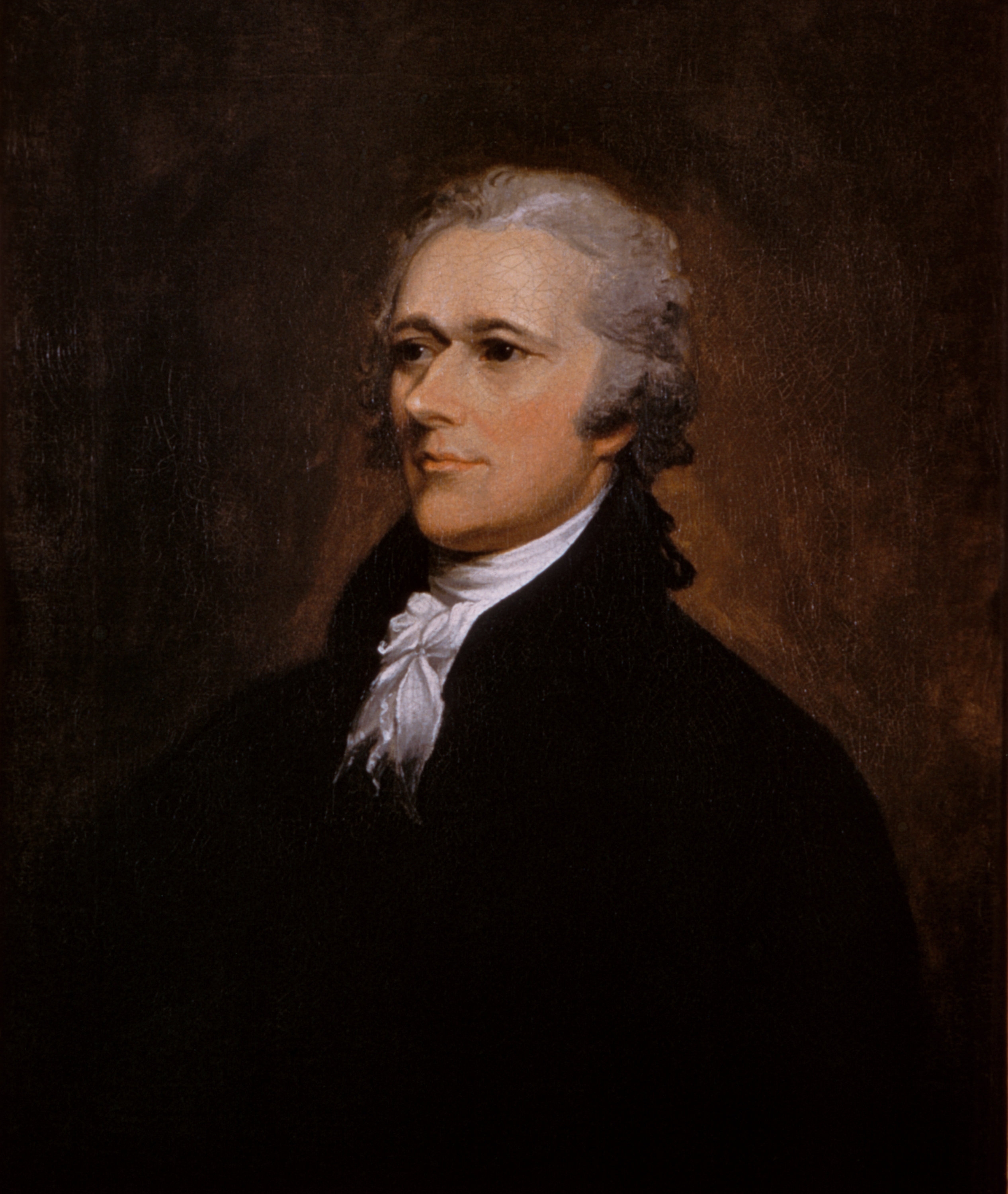
It is no secret that Aaron Burr and Alexander Hamilton disliked each other. That rivalry culminated in the infamous duel in 1804, leaving Hamilton to die just days later. However, prior to that, Hamilton’s dislike of Burr led Hamilton to pontificate on which individuals would make the best politicians in America. See Gordon Wood, Revolutionary Characters: What Made the Founders Different, 237.
To fully understand the magnitude and impact of the American Revolution, context is crucial. While the Enlightenment was the process of society learning “the sources of a flourishing society and human happiness,” the Revolution was the process of finding the best form of government perhaps the world has ever known. See Gordon Wood, The Idea of America: Reflections on the Birth of the United States, 59.

In the earliest years of the American Republic, theories were abound about the proper structure of government to best balance equality and wise decision-making. John Adams stated, in his Thoughts on Government, that “a people cannot be long free, nor ever happy, whose government is in one assembly.” Gordon Wood, The Creation of the American Republic: 1776-1787, 208-09 quoting John Adams, Thoughts on Government, Adams, ed., Works of John Adams, IV, 194, 196. These theories became tested throughout the young country, in each of the state’s constitutions.

While revolution was necessary to reinvent the American system of government to best meet the needs of Americans, another key element was necessary. The early Americans realized that “[p]eace is seldom made, and never kept, unless the subject retain such a power in his hands as may oblige the prince to stand to what is agreed.” Gordon Wood, The Creation of the American Republic: 1776-1787, 24 quoting Foster, Short Essay on Civil Government, 29-30.

John Adams had strong opinions about federalism. He believed that the government should be structured similarly to the British Empire, given the British Empire’s extraordinary success.
At the time of the signing of the Constitution, Adams firmly believed that the Constitution had secured a national government, as opposed to a government dividing its sovereignty into states and a federal government. Gordon Wood, Revolutionary Characters: What Made the Founders Different, 191. (more…)

In 1790 and 1791, Alexander Hamilton, as Secretary of the Treasury, proposed the creation of a financial system in four reports, which covered the topics of a national bank, a mint, and manufactures. Gordon Wood, Revolutionary Characters: What Made the Founders Different, 133. (more…)
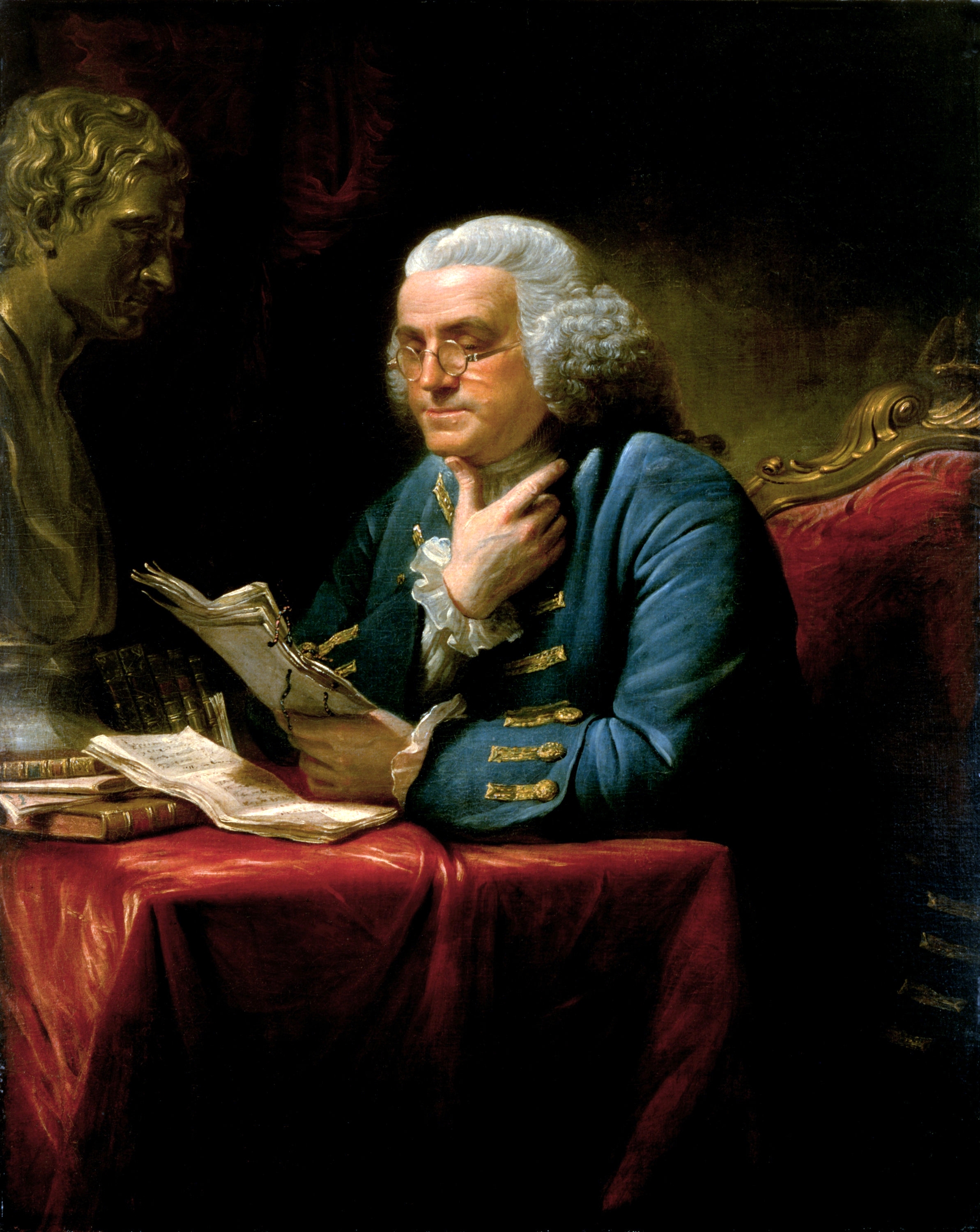
Benjamin Franklin, one of the most well-known and most revered Founding Fathers, had a more controversial history than most modern Americans realize.
In the late 1750s and early 1760s, Franklin was a “complete Anglophile.” Gordon Wood, Revolutionary Characters: What Made the Founders Different, 79. He made “disparaging comments about the provinciality and vulgarity of America in contrast with the sophistication and worthiness of England.” Id. He also believed that America, not England, was “corrupt and luxury-loving.” Id.
While living in England, Franklin was becoming more influential and had become a deputy postmaster. Id. at 84. In 1772, Franklin came into possession of some damning letters that would change his life. In the late 1760s, Thomas Hutchinson, the then-lieutenant governor of Massachusetts, had written letters to an Englishman advocating taking away liberties from the colonists so as to “maintain the colonies’ dependency on Great Britain.” Id. at 83. Franklin sent these letters to Massachusetts, prompting a crisis that would result in Franklin being terminated as deputy postmaster. Id.
In March 1775, he came back to America a changed man: a passionate patriot. Some of this passion was feigned, so as to show his fellow colonists that he was not an Englishman masquerading as a revolutionary. Id. at 84. He would become one of the most popular and widely respected Americans in the world, with only George Washington outshining him.
By the time of his death in 1790, Benjamin Franklin had created a legacy that lasts to this day. In the early Republic, that legacy was predicated on him showing that being self-made in America was not only possible, it was downright glamorous. Often forgotten or lost after those years of the early Republic, however, is that Franklin was not the same as the other Founding Fathers.
While Alexander Hamilton was not a full-blooded American and Thomas Jefferson spent a significant amount of time in Europe, Franklin so fully affiliated himself with England that it is difficult to draw a parallel to a contemporary American figure. In modern times, such an affiliation would certainly spell doom to a legacy.
Nonetheless, Franklin is remembered for his genius, his relatable nature, and his embodiment of the most American of ideals. Modern Americans’ forgiveness is likely warranted, but some may wonder: What if Franklin had not sent those letters? What would his legacy be then?

In the early 1800s, America underwent a campaign of infrastructure building. The building of new roads, bridges, and canals were done in a spirit of “national grandeur and individual convenience.” Gordon Wood, Empire of Liberty, 730 quoting Charles G. Haines, Considerations on the Great Western Canal (Brooklyn, 1818), 11.
In 1806, Samuel Blodgett, an economist and architect, concluded that commerce held together the Americans. Gordon Wood, Empire of Liberty, 730. Blodgett believed that commerce was “the most sublime gift of heaven, wherewith to harmonize and enlarge society.” Id. quoting Samuel Blodgett, Economica: A Statistical Manual for the United States of America (Washington, DC, 1806), 102.
Blodgett believed that if America were to surpass Europe, it could not be done with the policies of Alexander Hamilton and the Federalists. Id. Instead, it had to be done with the Republicans, led by Thomas Jefferson. Id. Blodgett believed that only the Republican policies had the “capacity to further the material welfare of” America’s citizens. Id. citing Samuel Blodgett, Economica: A Statistical Manual for the United States of America (Washington, DC, 1806), 102.
If commerce is the “most sublime gift of heaven,” as Blodgett said, then the manifestation of commerce in the United States as being carried out with the spirit of “national grandeur and individual convenience” is the reason that America has economically surpassed the individual states of Europe. Since the days of the early Republic, Americans have taken actions that both contributed to their individual benefit and have had the aggregate effect of creating national grandeur.
In this sense, America has distinguished itself both historically and currently from other countries. Many countries, for example the Soviet Union in the past and China currently, have attempted to create national grandeur not through individual innovation but through government involvement. In doing so, those other countries have created the facade of success and grandeur that they hope to achieve. That is not to say that those countries have not developed sophisticated, successful economies. But the sustainability of those countries’ economies is debatable.
One of America’s best qualities is that it has had prolonged economic success. Of course, there have been tumultuous times, like the Great Depression, and the so-called “Great Recession” and the panics and scares that are all but forgotten in modern times.
However, America from the earliest days has encouraged individual success through its institutions, its culture, and its laws. The American people have believed in that opportunity and have taken risks, worked hard, and created an economy characterized by its national grandeur. Preserving the institutions, culture, and laws that foster such grandeur is crucial for America’s continued success.
.jpg)
Prior to the Revolution, the colonists relied on a court system with royally appointed judges that served indefinitely “during good behavior,” which ultimately meant that judges would hold office so long as the crown was pleased with them. Gordon Wood, Empire of Liberty, 400. This led to the colonists ultimately associating the judiciary with the “resented royal governors, or chief magistrates,” which undermined the colonists’ confidence that the courts were an option for redress. Id.
The colonists viewed the judiciary not “as an independent entity or even as a separate branch of government,” but as a political body “that performed numerous administrative and executive tasks.” Id. During these early years, the “courts in most colonies had assessed taxes, granted licenses, overseen poor relief, supervised road repairs, set prices, upheld moral standards, and all in all monitored the localities over which they presided.” Id. quoting William E. Nelson, Americanization of the Common Law: The Impact of Legal Change on Massachusetts Society, 1760-1830 (Cambridge, MA, 1975), 14-16.
As such, early Americans, including John Adams, concluded that there were two kinds of constitutional powers: “those of legislation and those of execution.” Gordon Wood, Empire of Liberty, 401.
After the Revolution, the role of courts in citizens’ lives changed. The Constitution’s division of government into the three branches played a significant role in this, but progress was gradual. For example, even after the Revolution, Alexander Hamilton described the duties of judges as “two-fold, ‘judicial and ministerial,’ and the ministerial duties were ‘performed out of Court and often without reference to it.’” Id. quoting Alexander Hamilton, The Examination, February 23, 1802.
This led to John Jay, the first Chief Justice of the Supreme Court, to conclude that the Court did not have “the ‘Energy, weight and Dignity’ to support the national government and little likelihood of acquiring any.” Gordon Wood, Empire of Liberty, 437 quoting John Jay to John Adams, January 2, 1801, in Maeva Marcus et al., eds., The Documentary History of the United States Supreme Court (New York, 1992) 4:664.
This brief look into the place of the courts at the time of the Revolution and shortly thereafter highlights the changes between the years of the early Republic and modern times. Courts are purely limited to adjudicating disputes. Depending on the jurisdiction, those disputes can be as narrow and specific as family matters, or matters under a threshold dollar amount like $5,000.00, while other courts hear more general matters. But courts do not engage in any of the administrative or ministerial functions that partially defined the role of courts in citizens’ lives.
The most notable change since the early years of the Republic is the trust that citizens place in the judiciary. While in the early years citizens were disenchanted with the courts because the courts were so closely tied with the crown, courts now likely garner the highest respect between the three branches of government. While there are instances of corruption or wrongdoing in the court system, many look to the courts as a hallmark of America’s success in peacefully, justly, and fairly adjudicating disputes amongst citizens. Fortunately for modern Americans, this most flawed inheritance of a dysfunctional court system has been converted into one that is widely admired and heavily used.
 Last Best Hope of Earth