Tag: American Revolution

  • The Civil War: Jefferson Davis: Farewell Address in the U.S. Senate

    January 21, 1861

    United States Senator Jefferson Davis, of Mississippi, rose on the floor of that august chamber the morning of January 21, 1861 to make an announcement. It would not be one pertaining to some Senate bill, or a resolution, but instead an announcement that he was leaving the Senate.

    (more…)
  • The Revolution: James Otis’ The Rights of the British Colonies Asserted and Proved

    Boston, 1764

    The origin of government are more than complicated. It is a subject that “has in all ages no less perplexed the heads of lawyers and politicians, than the origin of evil has embarrassed divines and philosophers.” Regardless of one’s perspective on origin and its mysteries, part of the foundation of every government is the protection of property, wrote James Otis.

    (more…)
  • The Revolution: Cato’s Thoughts on a Question Proposed to the Public (Part III)

    Pamphlet by “Cato”: Thoughts on a Question of Importance Proposed to the Public, Whether it is probable that the Immense Extent of Territory acquired by this Nation at the late Peace, will operate towards the Prosperity, or the Ruin of the Island of Great-Britain?

    London, 1765.

    Part I here.

    Spheres of influence as well as empires are difficult to maintain. Maintaining them requires time, money, and sound discretion. The author whose pen name was Cato recognized this when discussing the British colonies, which he labeled as “unweildy Possessions [sic].” In making his arguments, he wrote, he did not base them “upon the Treachery of particular Men, or even the Degeneracy of the present Age, but upon the Mistakes of Human Nature.”

    (more…)
  • The Revolution: Thomas Jefferson on the Draft Articles of Confederation (Part II)

    The Autobiography. By: Thomas Jefferson

    July 30, 1776 – August 1, 1776

    How the colonies would get along with each other was always going to be a monumental challenge. And, when the nation was born, there was tension between delegates and their states in setting up the framework for how the colonies would vote. With states such as Massachusetts and Pennsylvania being much larger in size and population, smaller states such as Rhode Island could justifiably fear that confederating with the colonies would bring more harms than benefits. However, to the chagrin of larger states, in the draft Articles of Confederation, at Article XVII, it stated: “In determining questions each colony shall have one vote.”

    (more…)
  • The Revolution: Thomas Jefferson on the Draft Articles of Confederation (Part I)

    The Autobiography. By: Thomas Jefferson.

    July 30, 1776 – July 31, 1776

    In Thomas Jefferson’s autobiography, he wrote of the debate and adoption of the Articles of Confederation. While the country has long learned that the Constitution is far superior to those Articles, the reasons why must extend beyond “a stronger national government was needed under the Articles, and the Constitution cured that defect.” A committee took up the Articles on July 30th and 31st and then August 1st of 1776. During the first couple days, the delegates debated how to calculate each state’s monetary contribution to the “common treasury” and the “manner of voting in Congress.” And it was there that controversy occurred; controversy that would continue to the time when the Constitution was drafted and adopted and even to nearly 250 years later.

    (more…)
  • The Revolution: Cato’s Thoughts on a Question Proposed to the Public (Part II)

    Pamphlet by “Cato”: Thoughts on a Question of Importance Proposed to the Public, Whether it is probable that the Immense Extent of Territory acquired by this Nation at the late Peace, will operate towards the Prosperity, or the Ruin of the Island of Great-Britain?

    London, 1765.

    Part I here.

    When a nation has “Elegance and Luxury” introduced to its people, “it must be Manufacture and Commerce only, which can make a People numerous and prosperous.” So wrote Cato, and he continued by noting that when a nation has a more expansive territory, there is “less Necessity either of Manufactures or Commerce” as the “Multitude of common People, by whose Hands National Industry must be carried on, can easily find Support without them.” But, what if, as was the case with the British Empire, the territories become so far spread? Cato doubted that the same rules applied to such a situation; he predicted that manufacture and commerce were indeed still necessary for making the common people “numerous and prosperous.” And he made that prediction based on three reasons.

    (more…)
  • The Revolution: Cato’s Thoughts on a Question Proposed to the Public (Part I)

    Pamphlet by “Cato”: Thoughts on a Question of Importance Proposed to the Public, Whether it is probable that the Immense Extent of Territory acquired by this Nation at the late Peace, will operate towards the Prosperity, or the Ruin of the Island of Great-Britain?

    London, 1765.

    At the end of the Seven Years War, known to Americans as the French and Indian War, a peace came to be that included Great Britain adding more territory to its empire. That territory, located in the New World, brought the British Empire to effectively control North America, and while that was widely viewed as a net positive, questions were emerging about what the empire would do with its burgeoning colonies; colonies which may have been bringing income and commodities to Great Britain itself but also colonies that were becoming more difficult to maintain. To the author known as “Cato,” these developments did not bode well: he urged the British government to use the “quiet Interval, such as you now enjoy,” and while it “is very rare in Countries where there is so much Liberty as we have at present; neither can it be expected to last long.”

    (more…)
  • The Awakened Giant

    The Awakened Giant

    The news from Fort Sumter spread throughout the country, and its coming awakened a restless energy in the North. That energy ignited patriotism and a new sense of collectivism throughout northern cities and states that would lead to a then-unparalleled war effort directed against the Confederacy. (more…)

  • America in 1848

    154
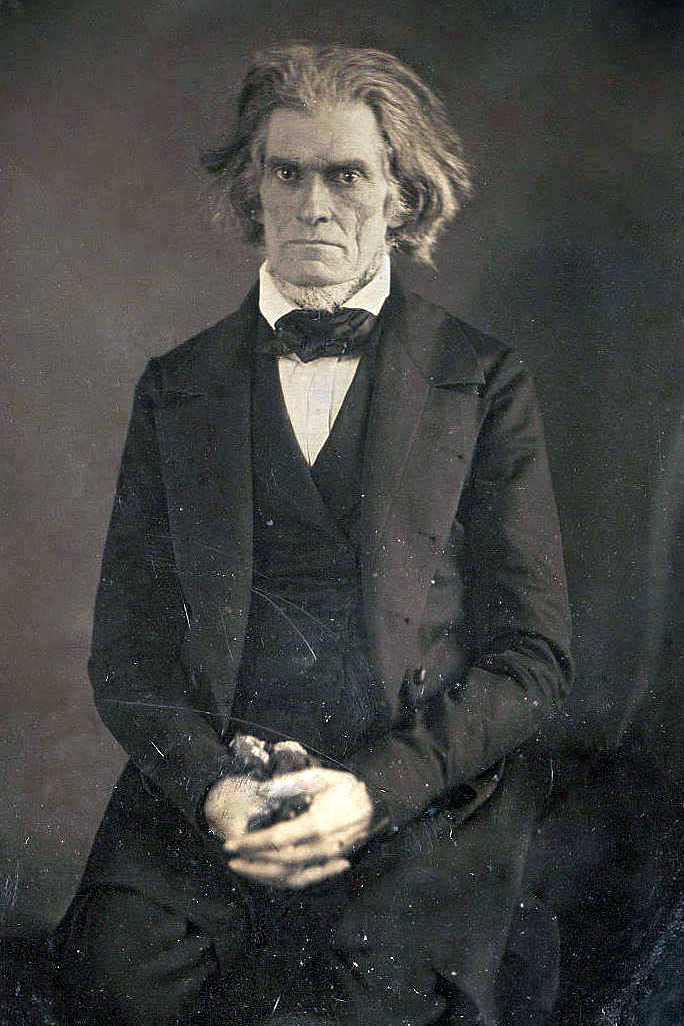
    John Calhoun.

    In 1848, when word spread to America that a revolution was breaking out in France, President James Polk wrote: “The great principles of popular sovereignty which were proclaimed in 1776 by the immortal author of our Declaration of Independence, seem now to be in the course of rapid development throughout the world.” James Knox Polk to Richard Rush, April 18, 1848, quoted in Michael Morrison, “American Reactions to European Revolutions, 1848-1852,” Civil War History 49 (June 2003): 117.

    (more…)

  • Lincoln the Teetotaler

    underhill-old-country-store
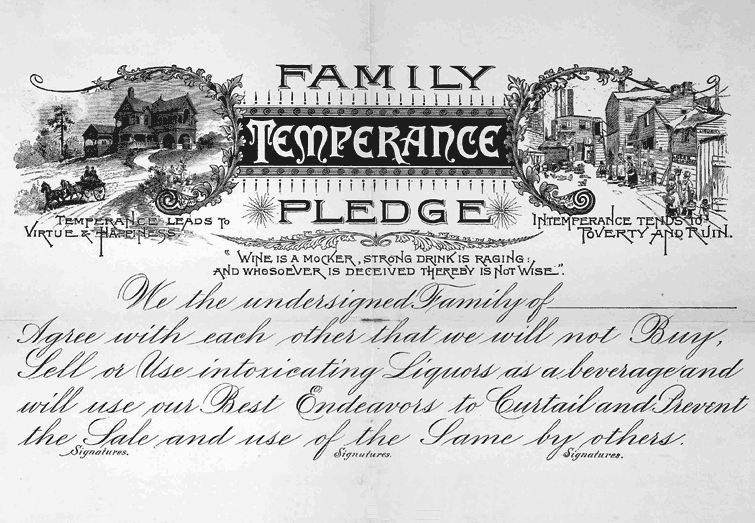
    A Pledge to be Part of the Temperance Movement.

    While the Democrats had held up Andrew Jackson as the ideal man, the Whigs began to view Abraham Lincoln in the 1840s as the ideal man, even though his personality was “artificial—that is, self-constructed.” Daniel Walker Howe, What Hath God Wrought: Transformation of America, 1815-1848, 598.

    (more…)