
Following the War of 1812, enfranchisement broadened in American society considerably.
Following the War of 1812, enfranchisement broadened in American society considerably.

In the 1810s and 1820s, Americans were drinking as much as seven gallons of alcohol per year per person, drinking at every meal. Daniel Walker Howe, What Hath God Wrought: Transformation of America, 1815-1848, 167. Even students at school could see their teacher inebriated while teaching, with drunkenness being commonplace throughout society. Id. This came, however, during the Second Great Awakening, a profound increase in religiosity in American society.

James Monroe was the last president who was truly part of the American Revolution generation. Daniel Walker Howe, What Hath God Wrought: Transformation of America, 1815-1848, 91. He crossed the Delaware River with George Washington. Id. Obvious to his contemporaries, he dressed the part of the Revolutionary gentleman, wearing knee breeches and buckled shoes, with a powdered wig and three-cornered hat. Id.

The American Revolution changed political theory and government. At the heart of that change was the empowerment of the people, which continues to present day America.

In the earliest years of the American Republic, individuals like James Madison, Samuel Williams, Charles Pinckney, and Samuel Langdon concluded that no country had created a better model for representative government than America’s. See Gordon Wood, The Creation of the American Republic: 1776-1787, 596.
The political theory that emerged from the Revolution and the debates surrounding the Constitution was not “a matter of deliberation as it was a matter of necessity.” Gordon Wood, The Creation of the American Republic: 1776-1787, 593.

Because the Federalists outmaneuvered the Antifederalists in presenting the Constitution to the American people, the Antifederalists faced a predicament of what to do. As Richard Henry Lee stated, many who wished to change the federal structure of government realized that they had to accept “this or nothing.” Gordon Wood, The Creation of the American Republic: 1776-1787, 547 quoting Lee to Mason, Oct. 1, 1787, Ballagh, ed., Letters of R. H. Lee, II, 438. The Antifederalists were more or less forced to “attack the federal government in those mechanical Enlightenment terms most agreeable to the thought of the Federalists: the division and balancing of political power,” otherwise known as separation of powers. Gordon Wood, The Creation of the American Republic: 1776-1787, 548.
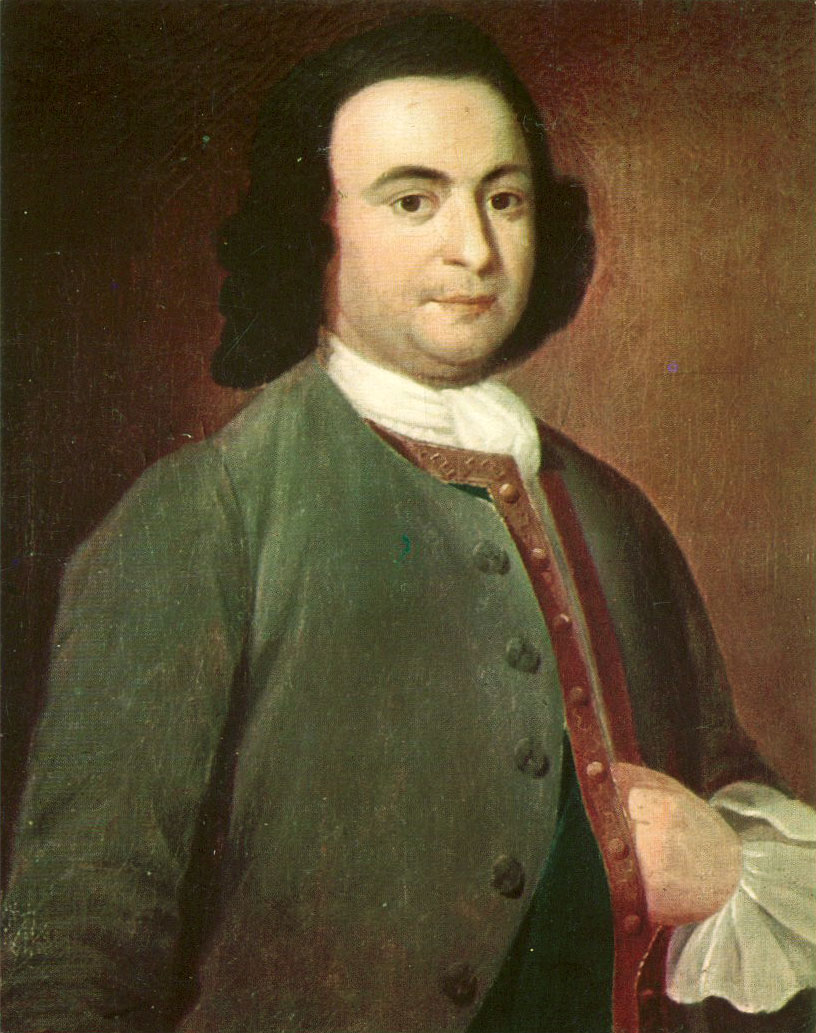
A bill of rights was not contemplated at the Constitutional Convention, until George Mason mentioned it in the last days of the Convention. Every state ruled it out. Rufus King, however, suggested that “as the fundamental rights of individuals are secured by express provisions in the State Constitutions; why may not a like security be provided for the Rights of the States in the National Constitution?” Gordon Wood, The Creation of the American Republic: 1776-1787, 536 quoting Farrand, ed., Records of the Federal Convention, II, 375-76, 378-79, I, 492-93.

Capturing the spirit of the Declaration of Independence, the Constitution was expressing “the inherent and unalienable right of the people” to determine their system of government. Gordon Wood, The Creation of the American Republic: 1776-1787, 535 quoting Wilson, in McMaster and Stone, eds., Pennsylvania and the Federal Constitution, 317.

As the Constitution was being drafted and ratified, opinions ranged on the prospects for it effectively governing America. Some in the Philadelphia Convention believed it was “nothing more than a combination of the peculiarities of two of the State Governments which separately had been found insufficient.” Gordon Wood, The Creation of the American Republic: 1776-1787, 519 quoting Madison, in Farrand, ed., Records of the Federal Convention, II, 291. Even some Federalists, who favored a strong national government, concluded that there was “a preposterous combination of powers in the President and Senate, which may be used improperly.” Edward Carrington to Jefferson, Oct. 23, 1787, Boyd, ed., Jefferson Papers, XII, 255.
 Last Best Hope of Earth