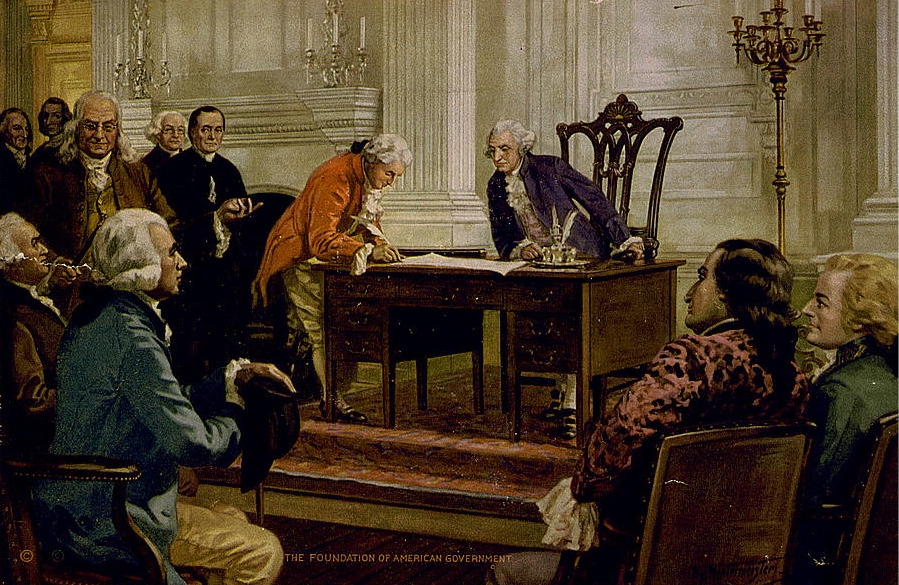
The separation of powers in the government of the United States has “come to define the very character of the American political system.” Gordon Wood, The Creation of the American Republic: 1776-1787, 151. (more…)
The separation of powers in the government of the United States has “come to define the very character of the American political system.” Gordon Wood, The Creation of the American Republic: 1776-1787, 151. (more…)
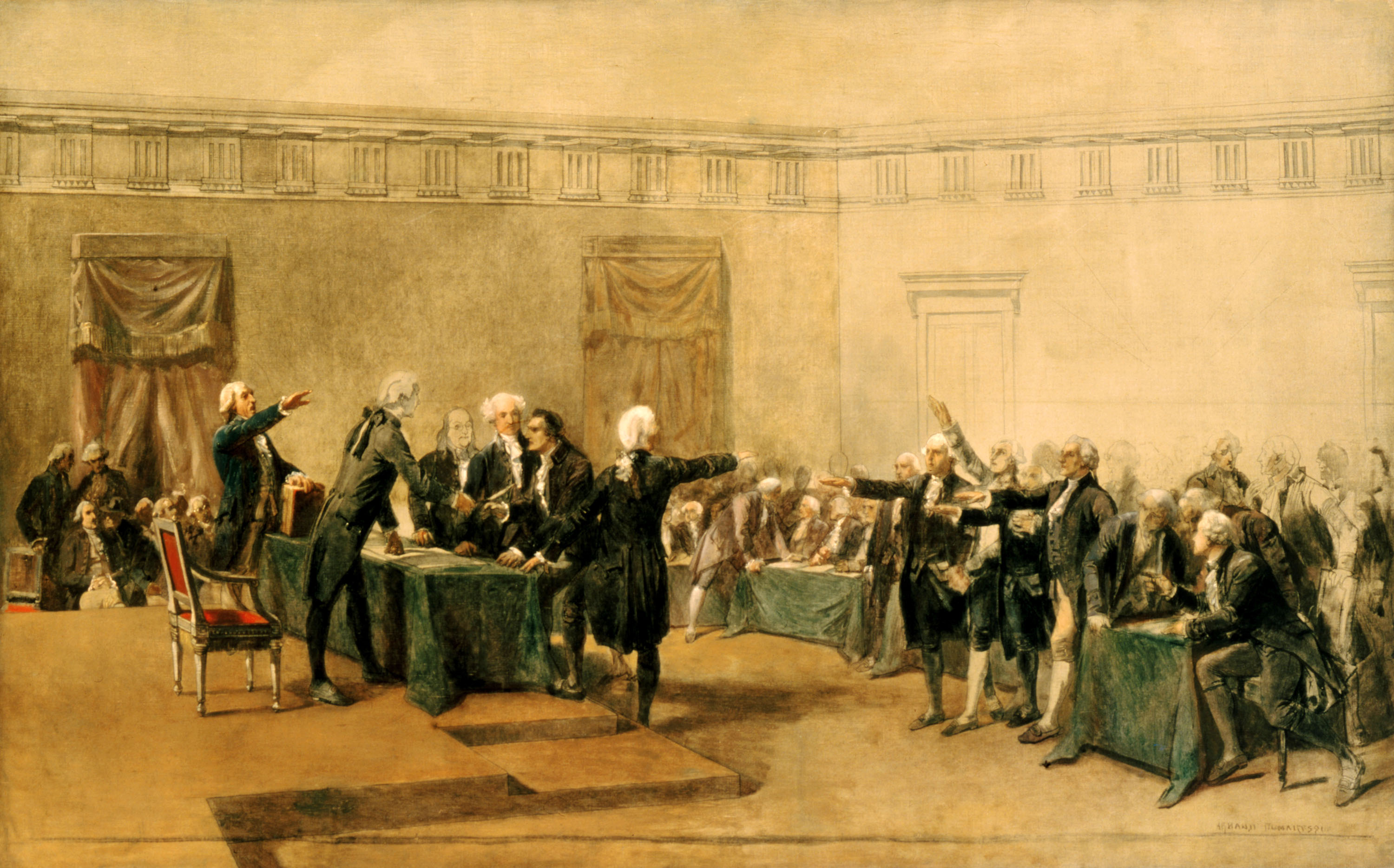
Tyranny, one of the early Americans’ greatest fears, may seem to contemporary Americans an unjustified fear. Perhaps that is because the early Americans’ precautionary actions relegated the threat of tyranny to the 18th Century. Perhaps not. (more…)

At the birth of the Republic, the contrast with the European monarchies became clear. The ideals of the Republic represented a fundamental shift in the role of government in individuals’ lives.

In the months leading up to the Declaration of Independence, the states began the process of adopting their own constitutions. These constitutions, being drafted in 1776, approximately 13 years before the United States Constitution would be ratified, had to confront many of the same issues as the United States Constitution, with various approaches being taken. (more…)

There are myriad examples of individuals coming to the United States to enjoy extraordinary success. Some have come to call that the “American Dream.” Perhaps nobody better embodies the American Dream than Thomas Paine, the famous pamphleteer of the late 1700s. (more…)

The American Revolution is a topic that has been dissected, analyzed, and retold by every generation of Americans. The political theory of the American Revolution is conventionally believed to be centered on the revolutionaries’ genius. (more…)

The success or failure of countries, and politicians for that matter, are an often studied subject. Studies have been ongoing for centuries.
James Burgh, an English Whig, wrote: “Almost all political establishments have been the creates of chance rather than of wisdom. Therefore it is impossible to say what would be the effect of a perfect commonwealth” as there was no precedent in history. James Burgh, Political Disquisitions, Vol. 1, 23. (more…)

John Adams had strong opinions about federalism. He believed that the government should be structured similarly to the British Empire, given the British Empire’s extraordinary success.
At the time of the signing of the Constitution, Adams firmly believed that the Constitution had secured a national government, as opposed to a government dividing its sovereignty into states and a federal government. Gordon Wood, Revolutionary Characters: What Made the Founders Different, 191. (more…)

For many of the Founding Fathers, the biggest threat to the stability and success of the United States was tyranny. Tyranny was a force that could bring down the most free and just societies. Underlying much of the creation of the institutions that now define the American government, the judiciary, the legislature, and the executive, are precautionary and prophylactic measures to prevent tyranny. (more…)
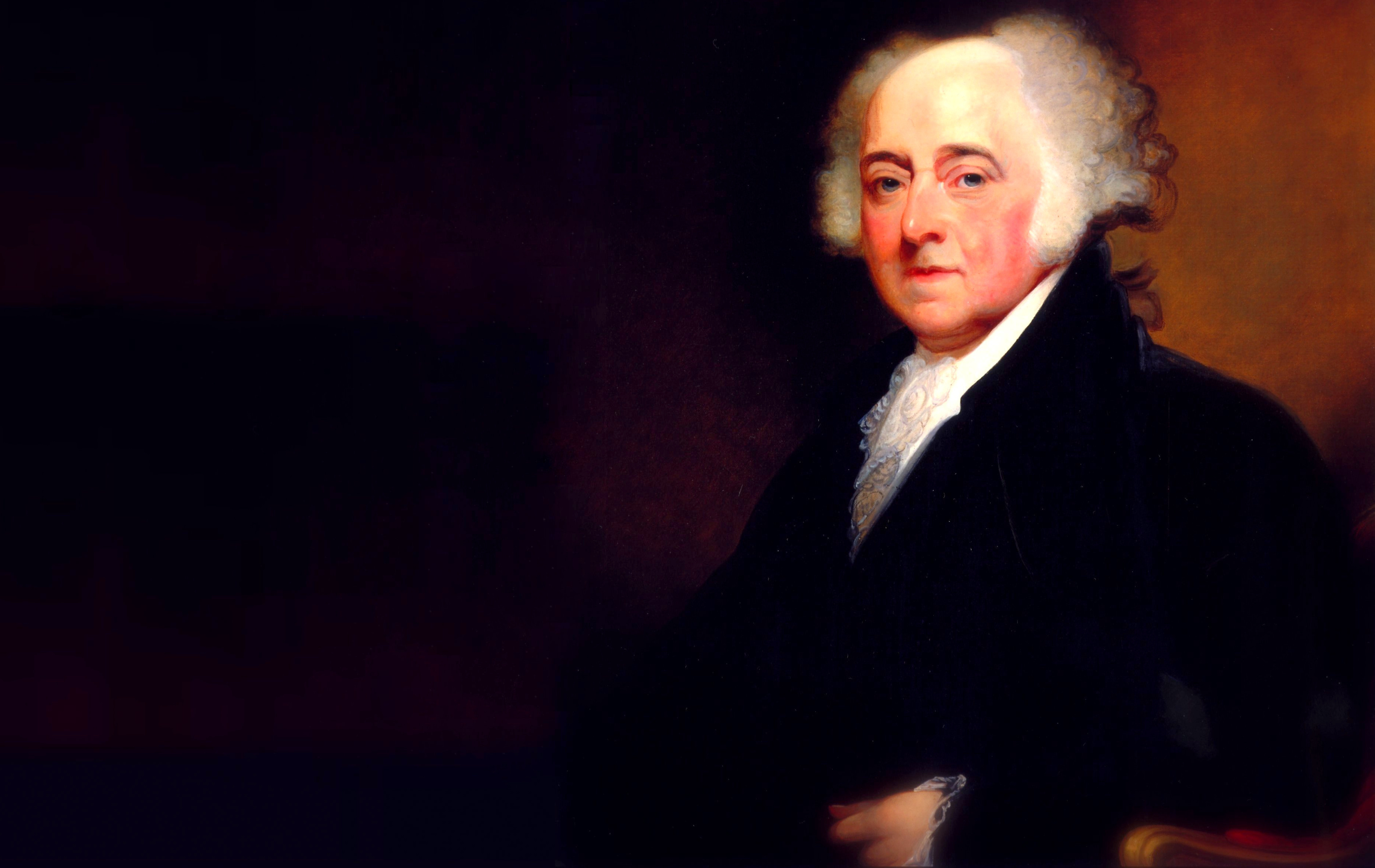
John Adams was amongst the most hopeful about America’s prospects for the future. At the time of the Declaration of Independence and the years of the American Revolution, he believed America could avoid the pitfalls of the European nations.
But just ten years later, Adams was of a different mind. In 1787, he wrote his Defence of the Constitutions, where he concluded that “his countrymen were as corrupt as any nation in the world.” Gordon Wood, Revolutionary Characters: What Made the Founders Different, 181. (more…)
 Last Best Hope of Earth