Tag: Anti-Federalist

  • Constitution Sunday: Cato III

    Cato III

    New York Journal, October 25, 1787

    Following are excerpts from Cato III’s article in the New York Journal:

    “The governments of Europe have taken their limits and form from adventitious circumstances, and nothing can be argued on the motive (more…)
  • Constitution Sunday: “A Political Dialogue”

    “A Political Dialogue”

    Massachusetts Centinel (Boston), October 24, 1787

    Following are excerpts from an article published in the Massachusetts Centinel, which purported to capture a conversation between “Mr. Grumble” and “Mr. Union”:

    “Mr. Union. Well, but neighbour, what are your objections to the new Constitution?”

    “Mr. Grumble. Why, as to the matter, I can’t say I have any, but then what vexes (more…)

  • Constitution Sunday: “An Old Whig” [George Bryan et al.] I

    “An Old Whig” [George Bryan et al.] I

    Independent Gazetteer (Philadelphia), October 12, 1787

    Following is a series of excerpts from George Bryan’s article in the Independent Gazetteer:

    “And after the constitution is once ratified, it must remain fixed until two thirds of both the houses of Congress shall deem it necessary to propose amendments; (more…)

  • Constitution Sunday: Rebuttal to “An Officer of the Late Continental Army”: “Plain Truth”

    Rebuttal to “An Officer of the Late Continental Army”: “Plain Truth”

    Independent Gazetteer (Philadelphia), November 10, 1787

    Following are excerpts from an article with an unknown author, published as a rebuttal to a reply by an officer of the late Continental Army to James Wilson’s speech:

    “Congress may ‘provide for calling forth the militia,’ ‘and may provide for organizing, arming and disciplining it.’—But the states respectively can only raise it, (more…)

  • Constitution Sunday: Reply to Wilson’s Speech: “An Officer of the Late Continental Army”

    Reply to Wilson’s Speech: “An Officer of the Late Continental Army”

    Independent Gazetteer (Philadelphia), November 6, 1787

    Following are excerpts from an article with an unknown author, published in response to James Wilson’s speech:

    “That of the senate is so small that it renders its extensive powers extremely dangerous: it is to consist only of 26 members, (more…)

  • Constitution Sunday: Reply to Wilson’s Speech: “Cincinnatus” [Arthur Lee] I

    Reply to Wilson’s Speech: “Cincinnatus” [Arthur Lee] I

    New York Journal, November 1, 1787

    Following are excerpts from the article, published in response to James Wilson’s speech:

    “Your first attempt is to apologize for so very obvious a defect as—the omission of a declaration of rights. This apology consists in a very ingenious discovery; that in the state constitutions, whatever is not reserved is given; but in the congressional constitution, whatever is not given, is reserved. (more…)

  • Constitution Sunday: Reply to Wilson’s Speech: “A Democratic Federalist”

    Reply to Wilson’s Speech: “A Democratic Federalist”

    Pennsylvania Herald (Philadelphia), October 17, 1787

    Following are excerpts from the article, published in response to James Wilson’s speech: (more…)

  • A Revolutionary and Unique System

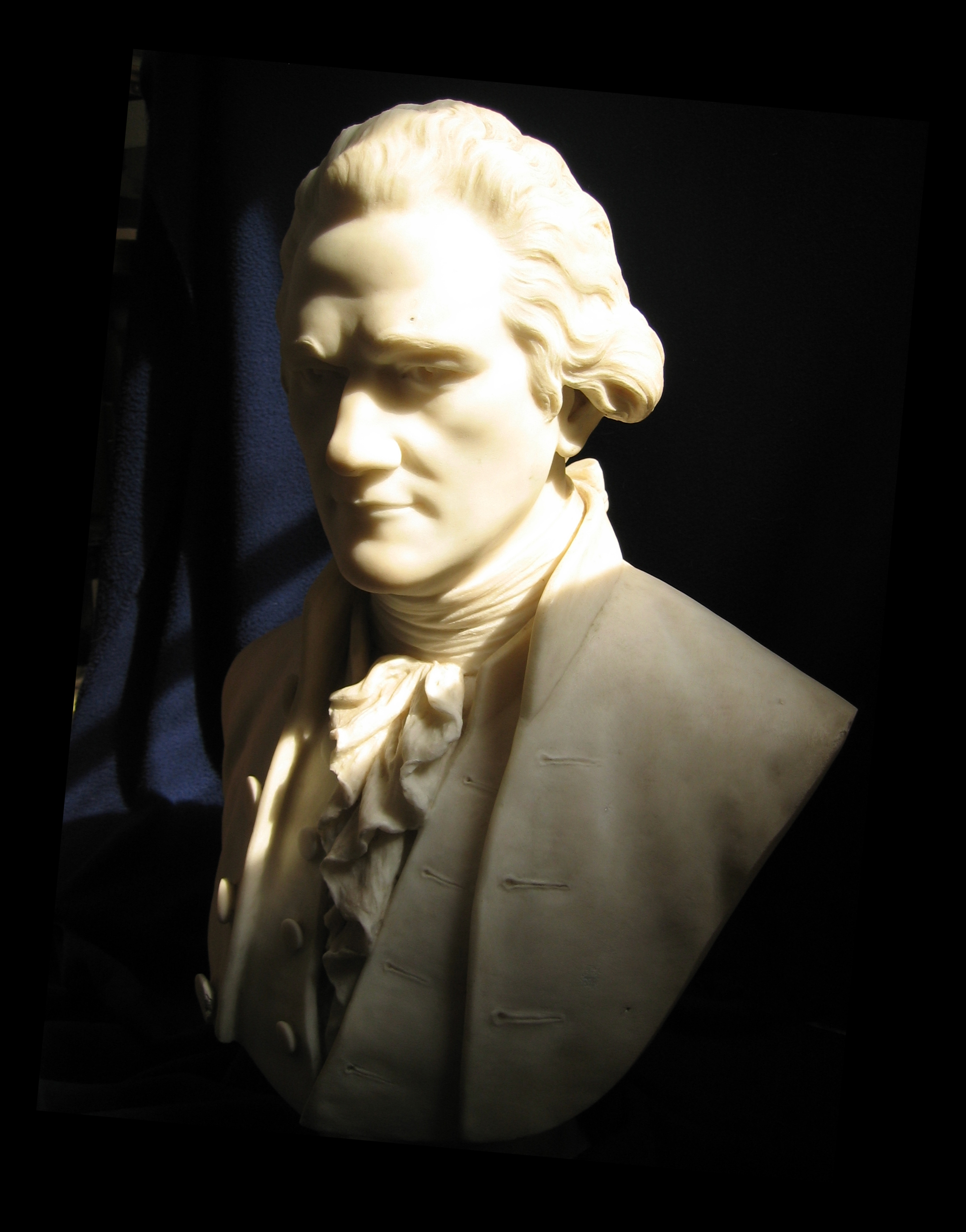
    alexander_hamilton_utst_by_franklin_simmons_tilt
    Alexander Hamilton. By: Franklin Simmons.

    The Federalists, in overseeing the creation of the modern political system, culminating in the Constitution, had inadvertently changed not only the structure of government but also the trajectory of American politics.

    (more…)

  • Division and Balancing of Political Power

    richard_henry_lee_at_nat-_portrait_gallery_img_4471
    Richard Henry Lee. By: Billy Hathorn.

    Because the Federalists outmaneuvered the Antifederalists in presenting the Constitution to the American people, the Antifederalists faced a predicament of what to do. As Richard Henry Lee stated, many who wished to change the federal structure of government realized that they had to accept “this or nothing.” Gordon Wood, The Creation of the American Republic: 1776-1787, 547 quoting Lee to Mason, Oct. 1, 1787, Ballagh, ed., Letters of R. H. Lee, II, 438. The Antifederalists were more or less forced to “attack the federal government in those mechanical Enlightenment terms most agreeable to the thought of the Federalists: the division and balancing of political power,” otherwise known as separation of powers. Gordon Wood, The Creation of the American Republic: 1776-1787, 548.

    (more…)

  • War Between the Governors and Governed

    james_madison_by_gilbert_stuart
    James Madison. By: Gilbert Stuart.

    The debate surrounding the adoption of the Bill of Rights revealed to many Americans the stark differences between Federalists and Antifederalists. Edmund Pendleton, in the Virginia Convention, stated that opposition to the Constitution “rested on ‘mistaken apprehensions of danger, drawn from observations on government which do not apply to us.’” Gordon Wood, The Creation of the American Republic: 1776-1787, 543 quoting Pendleton (Va.), in Elliot, ed., Debates, III, 36-37. Pendleton pointed out that many governments in the world were ruled by dictators. Id. Those governments had “bred hostility between ‘the interest and ambition of a despot’ and ‘the good of the people,’ thus creating ‘a continual war between the governors and the governed.’” Id. Pendleton believed that these beliefs led Antifederalists to demand a bill of rights and to have other unfounded fears about the Constitution. Id.

    (more…)