Tag: Aristocracy

  • Constitution Sunday: “An Old State Soldier” I

    Virginia Independent Chronicle (Richmond)

    January 16, 1788

    A former soldier sought to inform his fellow Virginians about the merits of the draft Constitution, and his fellow Virginians would be incorrect if they assumed that he was merely a soldier and would know nothing about the wisdom needed for setting up a new government. He described himself as a “fellow-citizen whose life has once been devoted to your service, and knows no other interest now than what is common to you all, solicits your attention for a new few moments on the new plan of government submitted to your consideration.” He was all too aware that some of the more intellectual arguments had already been made but also that his perspective would serve “to contradict some general opinions which may have grown out of circumstances too dangerous to our reputations to remain unanswered.”

    (more…)
  • Constitution Sunday: James Wilson’s Opening Address

    Constitution Sunday: James Wilson’s Opening Address

    Pennsylvania Ratifying Convention. November 20 through December 15, 1787. James Wilson’s Opening Address.

    November 24, 1787

    At the convention in Pennsylvania called for ratifying the draft Constitution, one of the foremost students of history and articulate Americans of his time, James Wilson, delivered the opening address. Just as every great storyteller knows to do, he provided the context for the moment: whereas most governments are created as “the result of force, fraud, or accident,” America “now presents the first instance of a people assembled to weigh deliberately and calmly, and to decide leisurely and peacably, upon the form of government by which they will bind themselves and their posterity.” Past governments, whether that of the Swiss Cantons, the United Kingdom’s monarchy, the United Netherlands, or the ancients—the Achaean and Lycian leagues, the Greeks, the Romans—provided examples for the three forms of government: “Monarchical, Aristocratical, and Democratical.”

    (more…)
  • The Two Scales and the Hand that Holds it

    benjamin-lincoln-5
    Benjamin Lincoln. By: John Singer Sargent.

    Benjamin Lincoln wrote a series of articles in the Boston Magazine and Independent Chronicle that would touch on many of the same subjects as John Adams in his Defence of the ConstitutionSee Gordon Wood, The Creation of the American Republic: 1776-1787, 576.

    (more…)

  • Constitution Sunday: Reply to Wilson’s Speech: “A Democratic Federalist”

    Reply to Wilson’s Speech: “A Democratic Federalist”

    Pennsylvania Herald (Philadelphia), October 17, 1787

    Following are excerpts from the article, published in response to James Wilson’s speech: (more…)

  • A Revolutionary and Unique System

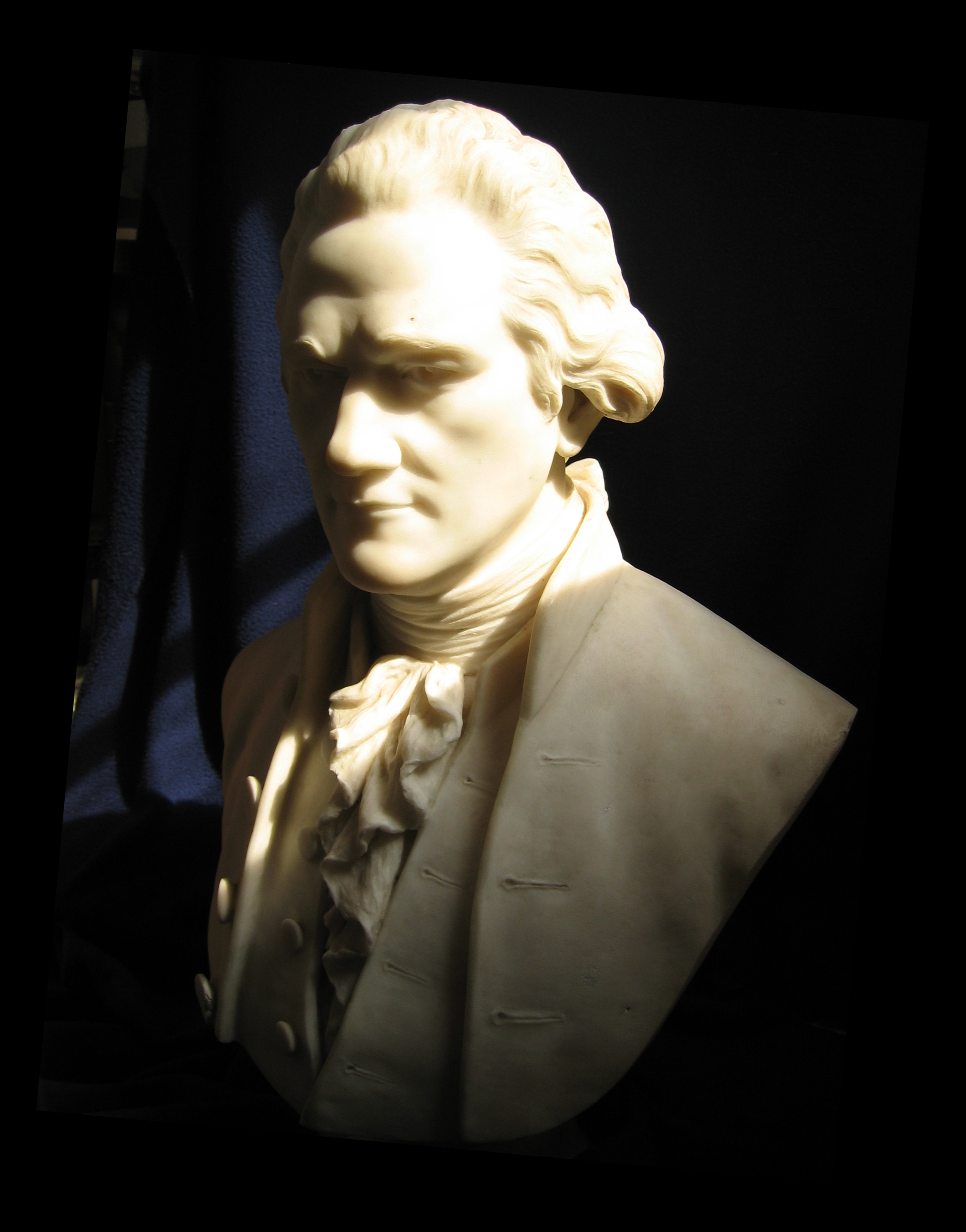
    alexander_hamilton_utst_by_franklin_simmons_tilt
    Alexander Hamilton. By: Franklin Simmons.

    The Federalists, in overseeing the creation of the modern political system, culminating in the Constitution, had inadvertently changed not only the structure of government but also the trajectory of American politics.

    (more…)

  • Redefining Bicameralism

    charles_cotesworth_pinckney_by_benbridge
    Charles Pinckney. By: Henry Benbridge.

    Looking to the state governments’ creation of their respective senates, as explained in The Birth of the Senate, the creation of the Senate in the Constitution was a given, when the Constitutional Convention began. See Gordon Wood, The Creation of the American Republic: 1776-1787, 553.

    (more…)

  • A Compound of Aristocracy and Monarchy

    jonathan_jackson_delegate
    Etching of Jonathan Jackson. By: Max Rosenthal.

    In the 1780s, Americans, like John Dickinson, observed that “[p]eople once respected their governors, their senators, their judges and their clergy; they reposed confidence in them; their laws were obeyed, and the states were happy in tranquility.” Dickinson, Letters of Fabius, Ford, ed., Pamphlets, 188. The authority of the government was declining. Gordon Wood, The Creation of the American Republic: 1776-1787, 507. (more…)

  • Constitution Sunday: “Centinel” [Samuel Bryan] I

    “Centinel” [Samuel Bryan] I

    Independent Gazetteer (Philadelphia), October 5, 1787

    Following are a series of excerpts: (more…)

  • Guarding Against an Evil

    benjamin_franklin
    Benjamin Franklin. By: Joseph Siffred Duplessis.

    Americans’ political beliefs were rapidly changing as the American Revolution progressed into the early years of the Republic. In fact, those beliefs were “constantly in flux, continually adapting and adjusting to ever-shifting political and social circumstances.” Gordon Wood, The Creation of the American Republic: 1776-1787, 438.

    (more…)

  • The Nobility of the Founding Fathers

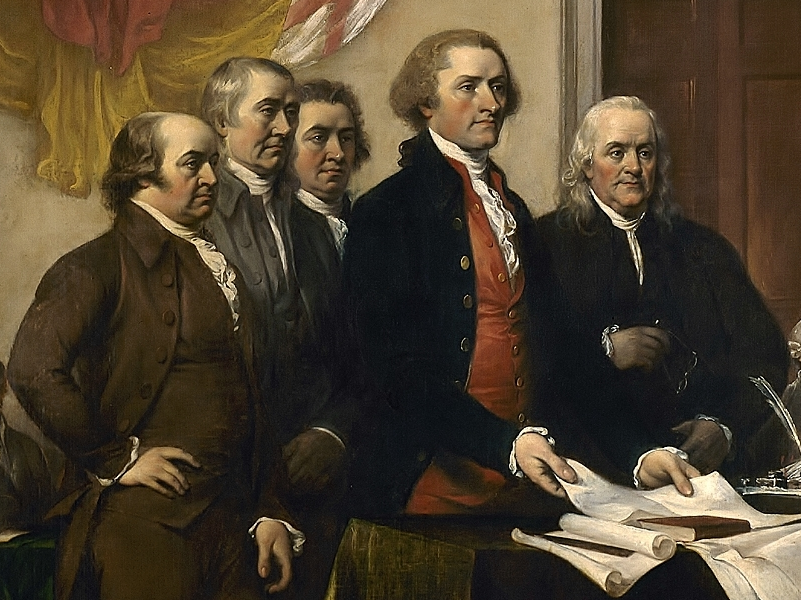
    committee_of_five_1776
    The “Committee of Five,” composed of John Adams, Thomas Jefferson Benjamin Franklin, Roger Sherman, and Robert Livingston, presenting the Declaration of Independence. The Declaration of Independence. By: John Trumbull.

    Much of the progress that America experienced during the Revolution happened as a result of the Founding Fathers’ contradictory actions. The Founding Fathers, predominantly privileged, in some ways paid the price of the Revolution in the most noble way.

    (more…)