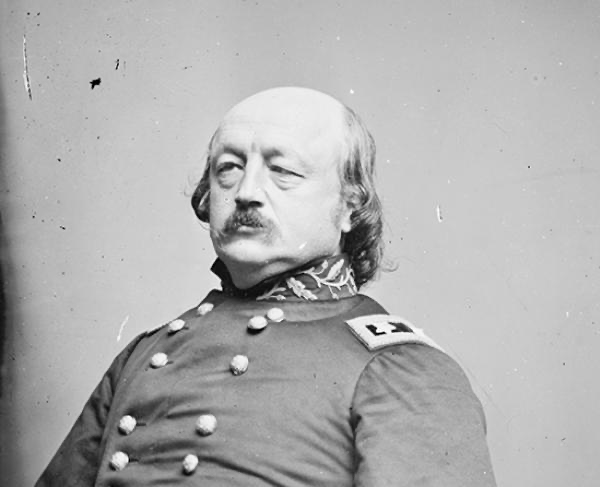
One night in late May 1861, “three negroes”—who said they were field hands, slaves—delivered themselves to the picket line at Fort Monroe in Virginia. Fort Monroe, sat on the peninsula between the York River and James River, had at its helm Brigadier General Benjamin F. Butler. The fugitive slaves had come to the fort to not only escape but to join the Union effort—to offer their skills and services to Butler and his soldiers. With no military policy in place for what to do with such fugitive slaves, it was a situation that raised difficult questions for Butler and the Union—of if, and how, to receive them—and the Confederacy—of how to stop their property and manpower from joining the enemy.
(more…)Tag: Benjamin Butler
-

The Battle of Petersburg
Consistent with every other battle in Ulysses S. Grant’s career that left him with a discouraging result, he had drawn up a plan to avenge the disaster at Cold Harbor and put the Confederates on their heels. (more…)
-

On to Richmond
Although the Confederacy had awakened the North’s spirit by initiating hostilities at Fort Sumter, both sides could have still hoped for reconciliation. While some advocated for immediate peace, others wished for a full prosecution of war against the South, viewing its expanding secession as nothing short of treason. By the end of spring 1861, there was a decisive answer to the question of whether there would soon be peace. (more…)
 Last Best Hope of Earth