Tag: Bill of Rights

  • Constitution Sunday: Nathaniel Barrell, a “Plain Husbandman,” Warns of the Passion for Power, but Favors Ratification

    February 5, 1788

    Massachusetts Ratifying Convention

    The draft Constitution had its parts that inspired and other parts that terrified. Nathaniel Barrell, either as a sign of his modesty or as a way to relate to his fellow residents of Massachusetts, claimed that he would not speak with the eloquence of a Cicero but would articulate his objections to the Constitution.

    (more…)
  • Constitution Sunday: Charles Jarvis Supports Hancock’s Strategy on Amendments

    Massachusetts Ratifying Convention

    February 4, 1788

    Building consensus is a challenge. In the United States Congress, consensus has always been difficult to build because of the diversity—geographic and otherwise—of its Representatives and Senators, given their assigned districts and states. But when the Constitution was being debated, the stakes were as high as they have been in American history: consensus was needed not for some legislation, small or large, but for reworking the structure of the states’ and federal government and putting the country on a new, bolder trajectory. At the Massachusetts Ratifying Convention, Charles Jarvis articulated his support for the draft Constitution—recognizing its merits—but only if the Constitution was passed with the amendments.

    (more…)
  • Constitution Sunday: John Hancock Proposes Ratification with Amendments and Samuel Adams Supports

    Massachusetts Ratifying Convention

    January 31, 1788

    John Hancock, at the Massachusetts Ratifying Convention, made a motion for the Convention to adopt the Constitution as it was a document that would not only “advance the prosperity of the whole world” but create a form of government that would “extend its good influences to every part of the United States.” But, recognizing that a contingent in the Convention would not support the Constitution without some modifications, Hancock argued that a series of “some general amendments” accompany the approved Constitution so as to “quiet the apprehensions of gentlemen.” Samuel Adams, recognizing that many people in other Conventions had similarly felt that a set of amendments was not only necessary but urgently needed, saw that including amendments would “have the most salutary effect throughout the union.”

    (more…)
  • Constitution Sunday: Thomas B. Wait to George Thatcher

    Portland, Maine, January 8, 1788

    When drafting any written constitution or even any law, there is a question of whether every right should be explicitly laid out in the document. Where there are express rights in a constitution—such as the right to freedom of speech—a reader (including judges) may conclude that the list of rights are exhaustive and that there are no rights but those mentioned in that constitution. A reader could also reason that those rights which are expressed in the constitution are not a complete list but only the most important rights and may, in fact, include other rights. Additionally, a constitution may have express prohibitions such as the United States Constitution at Article I, Section 9: “The privilege of the writ of Habeas Corpus shall not be suspended.” Questions of interpretation, such as these, led to debates between friends in the winter of 1787 and 1788, and a letter from Thomas B. Wait to George Thatcher illustrated those debates.

    (more…)
  • The Master of Parliamentary Procedure

    john_q-_adams
    John Quincy Adams.

    The United States Congress was not above adopting its own rules that would silence abolitionist views. While mass mailings to southerners became a regular occurrence for abolitionists, creating significant tension between proslavery and anti-slavery factions, those had occurred outside the purview of government. The House of Representatives, when it used a gag rule to prevent discussion of petitions relating to abolition, was striking a blow to abolitionists all over the country.

    (more…)

  • Constitution Sunday: Reply to Wilson’s Speech: “Centinel” [Samuel Bryan] II

    Reply to Wilson’s Speech: “Centinel” [Samuel Bryan] II

    Freeman’s Journal (Philadelphia), October 24, 1787

    Following are excerpts from Samuel Bryan’s article, published in response to James Wilson’s speech:

    “Friends, countrymen, and fellow-citizens, As long as the liberty of the press (more…)

  • War Between the Governors and Governed

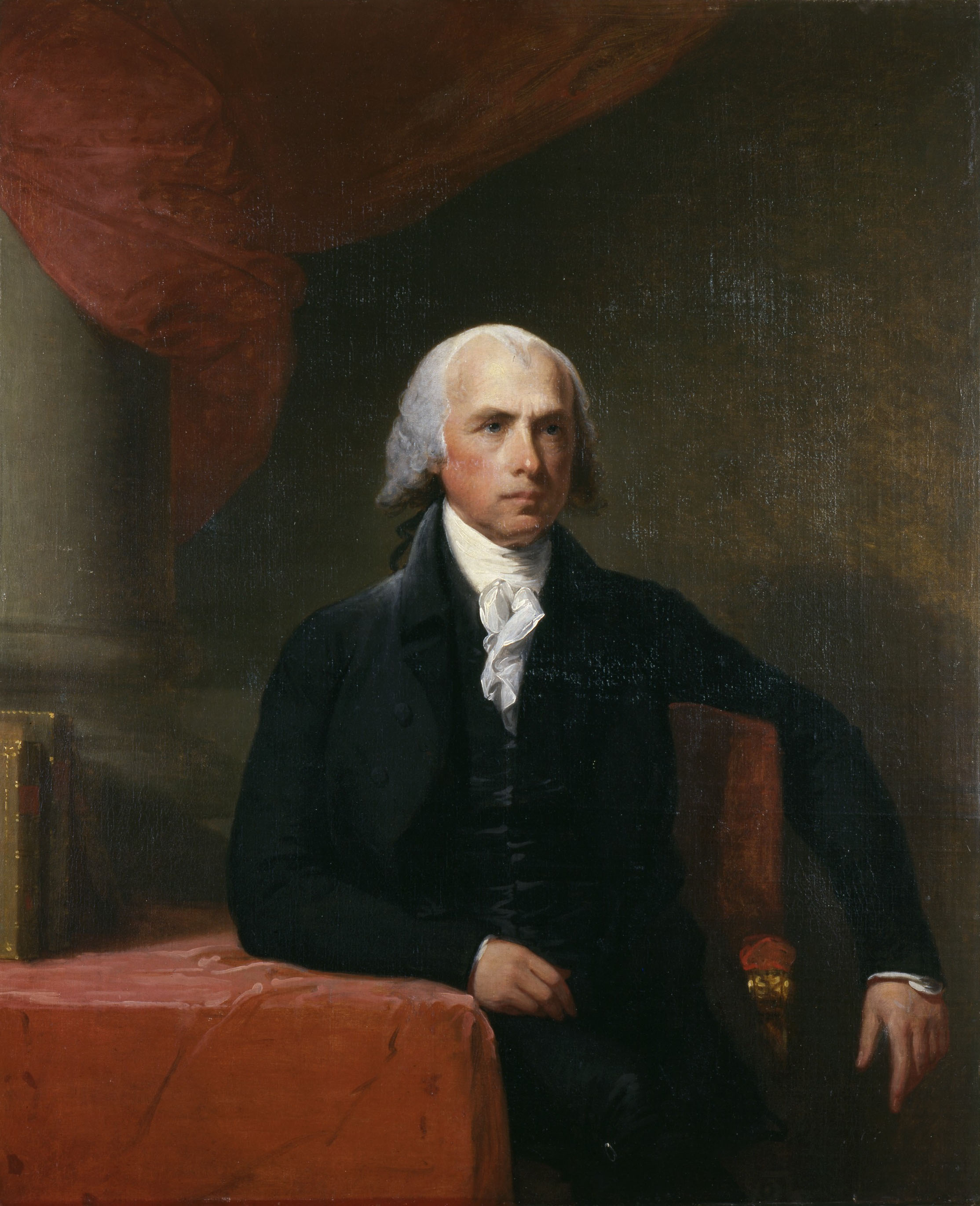
    james_madison_by_gilbert_stuart
    James Madison. By: Gilbert Stuart.

    The debate surrounding the adoption of the Bill of Rights revealed to many Americans the stark differences between Federalists and Antifederalists. Edmund Pendleton, in the Virginia Convention, stated that opposition to the Constitution “rested on ‘mistaken apprehensions of danger, drawn from observations on government which do not apply to us.’” Gordon Wood, The Creation of the American Republic: 1776-1787, 543 quoting Pendleton (Va.), in Elliot, ed., Debates, III, 36-37. Pendleton pointed out that many governments in the world were ruled by dictators. Id. Those governments had “bred hostility between ‘the interest and ambition of a despot’ and ‘the good of the people,’ thus creating ‘a continual war between the governors and the governed.’” Id. Pendleton believed that these beliefs led Antifederalists to demand a bill of rights and to have other unfounded fears about the Constitution. Id.

    (more…)

  • Building the Bill of Rights

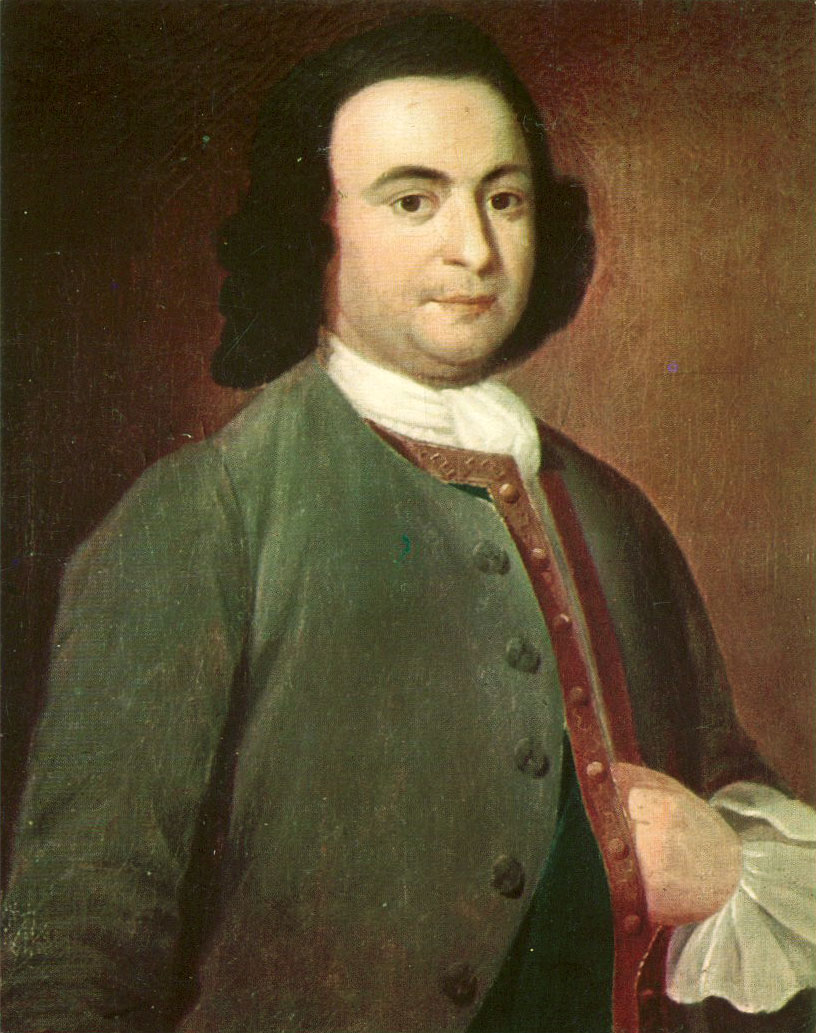
    georgemason-painting
    George Mason. By: Dominic W. Doubet.

    A bill of rights was not contemplated at the Constitutional Convention, until George Mason mentioned it in the last days of the Convention. Every state ruled it out. Rufus King, however, suggested that “as the fundamental rights of individuals are secured by express provisions in the State Constitutions; why may not a like security be provided for the Rights of the States in the National Constitution?” Gordon Wood, The Creation of the American Republic: 1776-1787, 536 quoting Farrand, ed., Records of the Federal Convention, II, 375-76, 378-79, I, 492-93.

    (more…)

  • The Genesis of the Bill of Rights

    magna_carta_british_library_cotton_ms_augustus_ii-106
    Magna Carta.

    Prior to the American Revolution, the colonists had become familiar with the concept of charters. Charters, whether royal, corporate, or proprietary, operated “as the evidence of a compact between an English King and the American subjects.” Gordon Wood, The Creation of the American Republic: 1776-1787, 268; see also Leonard Krieger, The Politics of Discretion: Pufendorf and the Acceptance of Natural Law (Chicago, 1965), 121.

    (more…)