Tag: Christianity

  • The Evolving Political Parties of the 1850s

    panoramic-view-of-washington-city-e-sachse-and-co-1856
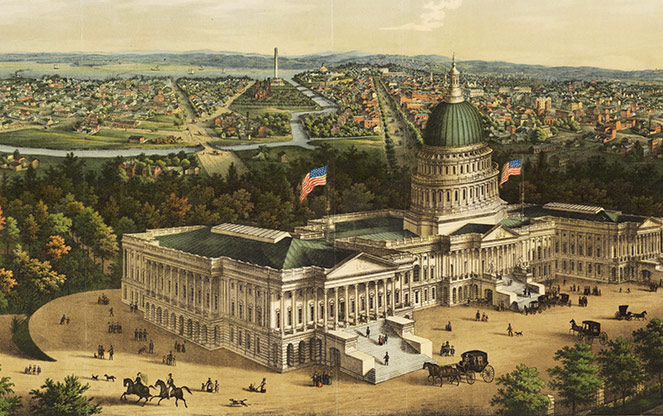
    Panoramic View of Washington, DC in 1856. Courtesy: E. Sachse & Co.

    The Democratic Party and Whig Party were the dominant political parties from the early 1830s up until the mid-1850s. Both were institutions in national politics despite not having a coherent national organization by cobbling together a diverse group of states to win elections. While the Democrats had a more populist agenda, the Whigs were more focused on pursuing industrialization and development of the country. See David Potter, The Impending Crisis: America Before the Civil War, 1848-1861, 226. While the Democratic Party would survive to the present day, the Whig Party would not survive the mid-1850s, not as a result of its own ineptness but because of the changing political landscape of that era. (more…)

  • The Role of Slavery in Splitting America

    underground_railroad
    The Underground Railroad. By: Charles T. Webber.

    Since the outbreak of the Civil War and continuing to the present day, the role of slavery in splitting America has been hotly debated. One may wonder whether there was merely a correlation between slavery and the Civil War or whether slavery was the cause. Investigating the nuances of the issue of slavery reveals that the Civil War resulted from sectionalism and slavery, which were practically synonymous.

    (more…)

  • Injury to the Cause of Christ

    lyman_beecher_-_brady-handy
    Lyman Beecher. By: Mathew Brady.

    The role of religion in Americans’ lives began to change not long after the War of 1812. In fact, the state of Connecticut “disestablished religion in 1818.” Daniel Walker Howe, What Hath God Wrought: Transformation of America, 1815-1848, 165. It should be noted that the First Amendment to the Constitution reads: “Congress shall make no law respecting an establishment of religion or prohibiting the free exercise thereof.” In other words, the First Amendment “restricted the federal government only, not the states.” Id. This would change in the 20th Century when the Supreme Court “incorporated” the freedoms of the Bill of Rights, through the Fourteenth Amendment (not passed until 1868), to the states. Id.

    (more…)

  • America in 1815: The Native Americans

    scene-from-the-last-of-the-mohicans-cora-kneeling-at-the-feet-of-tanemund-1827
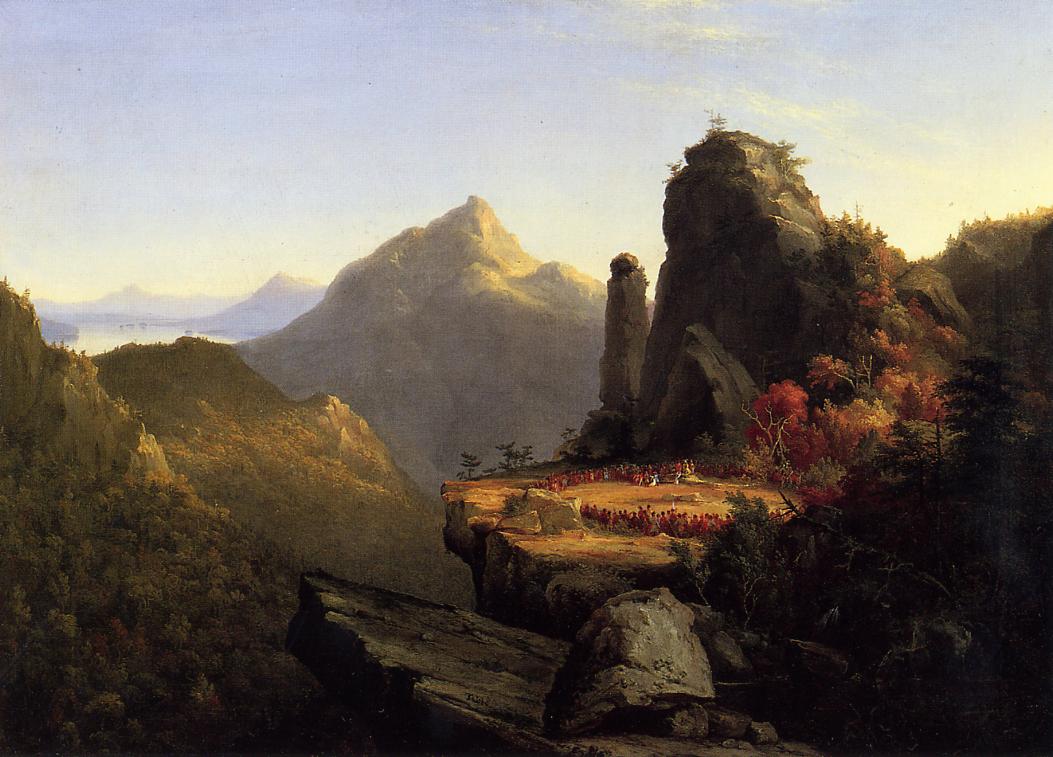
    The Last of the Mohicans. By: Thomas Cole.

    By 1815, the Native Americans had been pushed mostly out of the New England area and into territories just east of the Mississippi River and the entirety of the territory west of the Mississippi River. The Native Americans were a significant obstacle to expanding American territory.

    (more…)