Tag: Confederacy

  • The Civil War: Jefferson Davis: Message to the Confederate Congress

    April 29, 1861

    With only a few weeks at the helm of the Confederate government, president Jefferson Davis and the Confederate Congress had cause for concern—but also cause for inspiration. The whole of the South (and the whole of the North) was animated: men and women were mobilizing; making their preparations to contribute to the cause they dearly held. For his message to Congress, Davis—as ever—explained why the Confederate cause was just and good; why legally and historically it was correct and noble; and why it must continue its fight for independence.

    (more…)
  • The Civil War: John B. Jones: Diary, April 15-22, 1861

    The Civil War: John B. Jones: Diary, April 15-22, 1861

    John B. Jones was a rare man in Philadelphia. In the spring of 1861, he thought he may be arrested for being a Confederate sympathizer. After all, he had been the editor of that city’s weekly newspaper, the Southern Monitor, which was supportive of the South. In April 1861, he left his home—arriving in Richmond, Virginia three days later. His diary from those days in Richmond reflected some of the conventional wisdom of the time—much of which has been long forgotten—about how the Confederacy may have taken shape not as a group of states but as an empire. He also wrote about some unconventional wisdom of the time: how the North was not just preparing for an immediate war; it was preparing for a complete and ruthless victory.

    (more…)
  • The Civil War: Alexander H. Stephens: “Corner-Stone” Speech

    The Civil War: Alexander H. Stephens: “Corner-Stone” Speech

    March 21, 1861

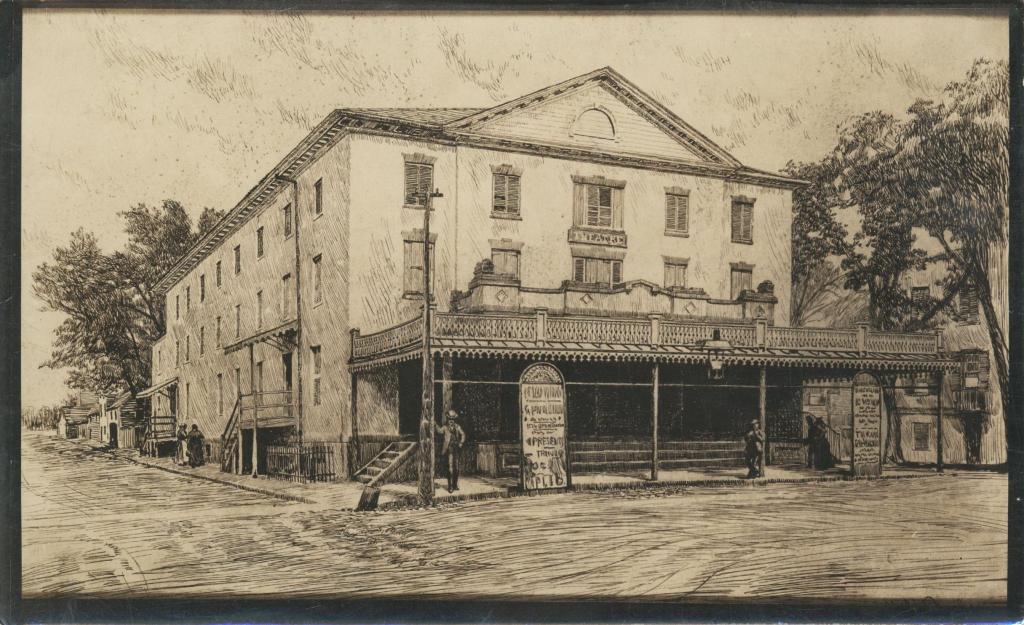
    In Savannah, Georgia, at its Atheneum—a theater for shows and oratory—the vice-president of the Confederacy, Alexander H. Stephens, came to speak about the events leading up to states seceding from the Union and forming the Confederacy. The pace of these events had been swift and sure to cause consternation with questions abound as to what would happen next. To hear Stephens speak that day was to gain a better grasp of what was to come and perhaps a sense of comfort that all would be well.

    (more…)
  • The Hunt for Jefferson Davis

    The president was on the run. He hadn’t just gotten away; he had been evading his pursuers for some time. This man had been the president of the Confederacy, and now he was the most wanted man in the country, overseeing the few remaining people and things that belonged to the breakaway country. By this time, the Civil War had ended for all intents and purposes: there was no army under his control anymore, but there was a loyal group of men who were helping him live on the run. And there was no telling how long he would live this way. Whereas his soldiers had laid down their arms and many had already returned home to begin their post-war lives, this man had been fleeing for some time—perhaps because the consequences of his actions were outside his control and were no longer applied to his soldiers or even his top advisors; those consequences would flow directly to him now. There loomed the possibility that those in power in Washington would see to his imprisonment or even his execution. Confederate president Jefferson Davis could take heart, as a Mississippian, that perhaps President Andrew Johnson—a Tennessean—would see to those federals going easy on Davis, but that was just a hope, a wish. And that would only be a possibility if Davis was captured.

    (more…)
  • The Legacy of Robert E. Lee

    The Legacy of Robert E. Lee

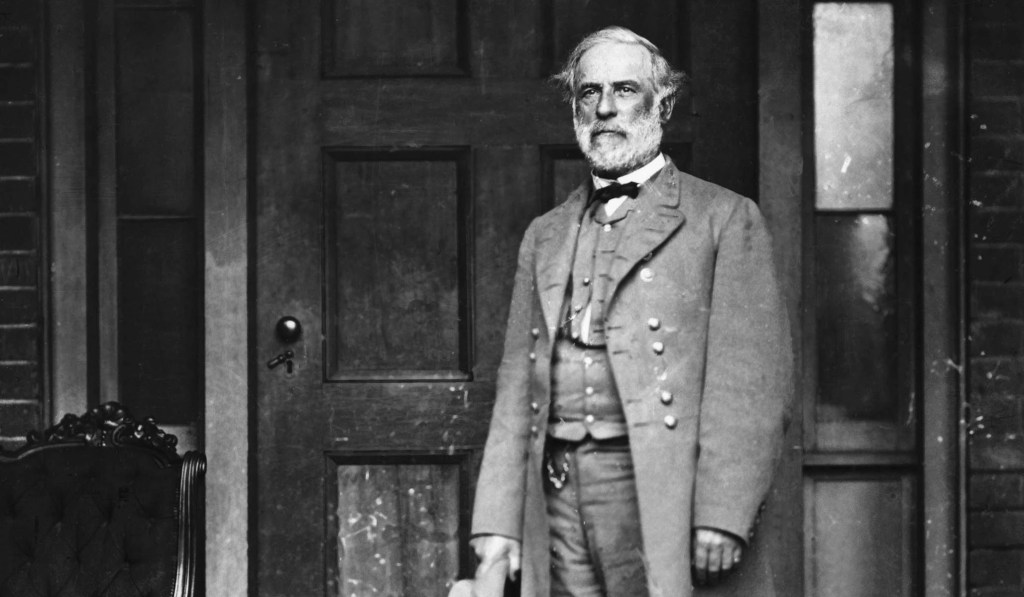
    No figures in American history earn universal admiration. As years—and generations—pass, legacies change. As morals, priorities, and political issues evolve, so do understandings of those people in the past who brought change—good, bad, or otherwise—to the country. For some figures, like Abraham Lincoln, whose authentic genius is admired generation after generation, their merit is questioned only by those who unreasonably say the great should have been greater. For others, it becomes much more varied and nuanced, and for Robert E. Lee, his legacy has always differed depending on the part of the country where his legacy is measured and the tenor of the moment. This is because, perhaps more than even Confederate President Jefferson Davis, Lee became a symbol of the Confederacy—with all its ills but also its potential for what might have been.

    (more…)
  • Reconstruction

    Reconstruction

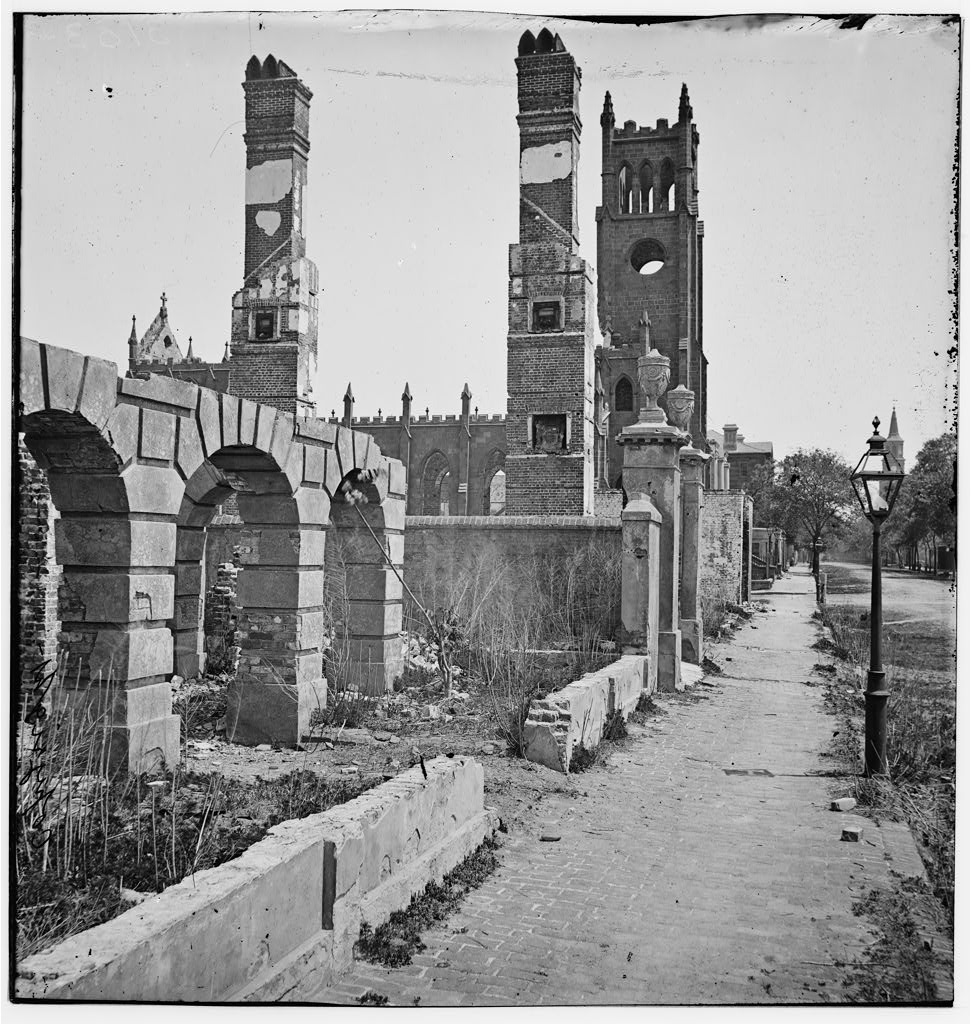
    The years after the Civil War, until 1877, were replete with novel uncertainties. The country had changed: the qualities that defined antebellum America had vanished; those who had been the most vocal before the war—soon-to-be Confederates—had seen their soapbox taken by the “Radical Republicans,” Republicans who sought to not only end slavery but to bring into effect equality amongst the races. Regardless of political party or geographic location, the country and its citizens had the task of reconstructing the United States, every one of them, and that task began before the Civil War’s end. President Abraham Lincoln spoke of his hope to reconcile the “disorganized and discordant elements” of the country, and he said: “I presented a plan of re-construction (as the phrase goes) which, I promised, if adopted by any State, should be acceptable to, and sustained by, the Executive government of the nation. I distinctly stated that this was not the only plan which might possibly be acceptable.”[i] Lincoln died four days later without fully setting forth his vision for how the nation may reconstruct itself, but events would soon render that vision—broad and ambiguous as it was—antiquated: soon after his death, the same federal government that had grown to enjoy extraordinary power (such as suspending the writ of habeas corpus) would go from having an authentic political genius, Lincoln, at its helm to having Andrew Johnson, a disagreeable at best (belligerent at worst) as executive; and not so long after Johnson took power, roving bands of the Ku Klux Klan acted in concert with state officials throughout the South to subjugate—by any means—those who had been freed.

    (more…)
  • The Election of 1872

    The Election of 1872

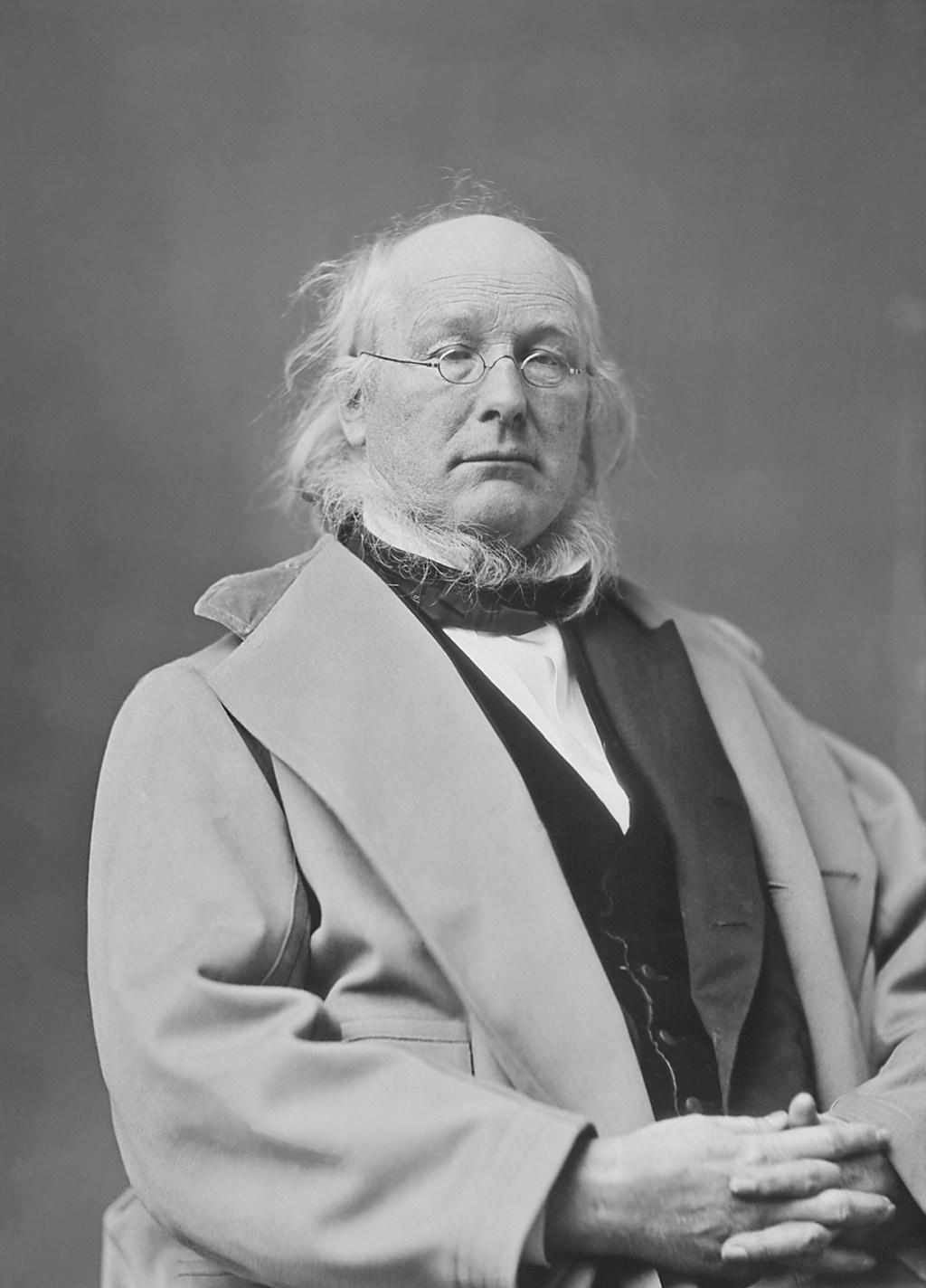
    From the time that Ulysses S. Grant became a household name in America—during the Civil War—and particularly following Lincoln’s assassination, there was no more popular American in the remainder of the Nineteenth Century. The presidential election of 1868 showed the level of support that Grant had: although it was his first election, he won the entirety of the Midwest and New England and even took six of the former Confederate states. He was always going to be a formidable opponent. As the election of 1872 approached, it became clear that Grant, a Republican, would not have to vie for re-election against a candidate with the stature of a fellow former general or even a well-established politician; instead, his challenger would be the founder and editor of a newspaper: Horace Greeley, a Democrat. Although Greeley had one term in the House of Representatives at the end of the 1840s, his following stemmed not from his brief time as a politician but rather the incisive pieces that he wrote and published in his newspaper, the New-York Tribune. As loyal as his readers were, there remained a question whether Greeley’s following could grow to unseat the man who still, seven years after the war, was viewed as bringing peace and prosperity to the country.

    (more…)
  • The Election of 1868

    The Election of 1868

    In 1864, as the election neared, President Abraham Lincoln, a Republican, wagered that his re-election prospects depended on having a unity ticket: rather than choose a fellow Republican for the nomination for Vice President, he opted for a War Democrat and southerner, Andrew Johnson. With Johnson being from the South, condemning the Confederacy, and supporting the prosecution of the Civil War without negotiated peace—unlike the faction in his party known as the Copperheads (which called for immediate peace negotiations with the Confederacy)—he served as a useful balance to the Republican, Lincoln, whose party was increasingly vocal about abolition and subjugating the South, political issues that chilled some parts of the electorate to Lincoln. By 1868, much had changed. Lincoln had been assassinated, Johnson had poorly navigated Washington politics (and had come to within one vote of the Senate removing him from the presidency), and Ulysses S. Grant had continued his meteoric rise in popularity. There was little doubt that Grant would be the Republican nominee; he was one of the most popular Americans of the 1860s and would remain so for the duration of the 19th Century. The bigger questions were who the Democratic Party would choose as its nominee and whether that nominee would have a chance at becoming the first Democrat elected to the Presidency in twelve years—when James Buchanan won the election of 1856. (more…)

  • A Nation Reborn

    A Nation Reborn

    In the same way that the Second World War would reshape the globe in the Twentieth Century, the Civil War reshaped America for the remainder of the Nineteenth Century. Veterans of both wars came to define their respective generations and rise to positions of power: just as Union General Ulysses S. Grant’s meteoric rise culminated in him becoming President three years after the war, General Dwight D. Eisenhower would find himself being elected President seven years after the war of his generation. Lesser generals also worked their way into office—some of those offices being elected and others being executive offices of companies in the emerging industries following the wars—but that would occur over the course of decades: the last Civil War veteran to reach the presidency, William McKinley, occupied the White House as the Nineteenth Century faded into the Twentieth. As ever, those who held power determined the direction of the country’s future. In the weeks and months following the end of the Civil War, and President Abraham Lincoln’s assassination, people in power would be sketching out the contours of a post-war America; and it was then, at that nascent stage of the newly reborn nation’s life, that new factions emerged—factions that would vie for weeks, months, and even years to cast the die of America in their own image and either keep, or make, the nation they wished to have.

    (more…)
  • Appomattox

    Appomattox

    Conceptualizing the Civil War’s end, even during the opening months of 1865, was nearly impossible: who could imagine Confederate General Robert E. Lee surrendering himself and his men to the custody of the Union army? How many members of the Confederate government would be taken prisoner and be tried for treason and any number of other crimes for defying the United States federal government? What would come from an Abraham Lincoln presidency that was not entirely consumed with prosecuting the war? And perhaps the most troubling question of all: how, after all the fratricidal blood shed and destruction wrought against one another, could the Confederate states be readmitted and the country continue to exist? On April 9, 1865, at Appomattox Court House in Virginia, when General Lee surrendered to Union General Ulysses S. Grant, the contours of a post-war America were beginning to be defined—and for the Confederates, it appeared, with Lee’s surrender, that the future would be one of subjugation to the northern states. (more…)