Tag: Confederate States of America

  • The Civil War: Sam Houston to H.M. Watkins and Others

    The Civil War: Sam Houston to H.M. Watkins and Others

    Sam Houston to H.M. Watkins and Others

    November 20, 1860

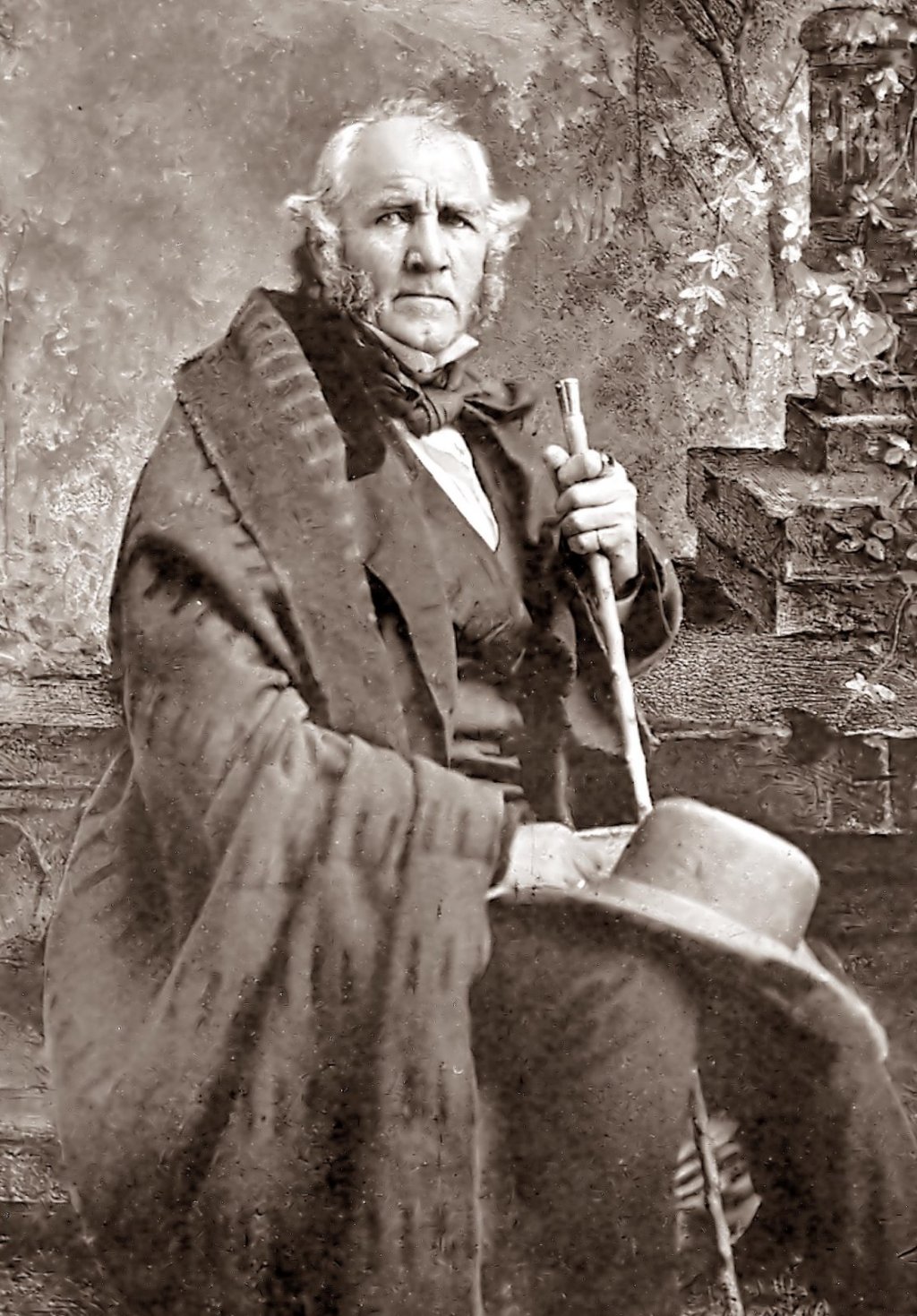
    Politicians who have become household names have an ability to sway public opinion—and they know it. They can use their precious political capital to that end. But it’s a risky proposition. If they see odds they like and place their bets only to lose, they may see themselves fall out of favor, out of office, and out of the public eye. If, however, they read the moment correctly and positioned themselves just right, they may ascend further still—higher in esteem and maybe even earn their place in the collective memory of the nation.

    (more…)
  • The Hunt for Jefferson Davis

    The president was on the run. He hadn’t just gotten away; he had been evading his pursuers for some time. This man had been the president of the Confederacy, and now he was the most wanted man in the country, overseeing the few remaining people and things that belonged to the breakaway country. By this time, the Civil War had ended for all intents and purposes: there was no army under his control anymore, but there was a loyal group of men who were helping him live on the run. And there was no telling how long he would live this way. Whereas his soldiers had laid down their arms and many had already returned home to begin their post-war lives, this man had been fleeing for some time—perhaps because the consequences of his actions were outside his control and were no longer applied to his soldiers or even his top advisors; those consequences would flow directly to him now. There loomed the possibility that those in power in Washington would see to his imprisonment or even his execution. Confederate president Jefferson Davis could take heart, as a Mississippian, that perhaps President Andrew Johnson—a Tennessean—would see to those federals going easy on Davis, but that was just a hope, a wish. And that would only be a possibility if Davis was captured.

    (more…)
  • Appomattox

    Appomattox

    Conceptualizing the Civil War’s end, even during the opening months of 1865, was nearly impossible: who could imagine Confederate General Robert E. Lee surrendering himself and his men to the custody of the Union army? How many members of the Confederate government would be taken prisoner and be tried for treason and any number of other crimes for defying the United States federal government? What would come from an Abraham Lincoln presidency that was not entirely consumed with prosecuting the war? And perhaps the most troubling question of all: how, after all the fratricidal blood shed and destruction wrought against one another, could the Confederate states be readmitted and the country continue to exist? On April 9, 1865, at Appomattox Court House in Virginia, when General Lee surrendered to Union General Ulysses S. Grant, the contours of a post-war America were beginning to be defined—and for the Confederates, it appeared, with Lee’s surrender, that the future would be one of subjugation to the northern states. (more…)

  • Andersonville Prison

    Andersonville Prison

    Throughout the Civil War, there was no shortage of suffering on the battlefield, but even the newest soldier knew that being taken prisoner was likely to lead to more suffering. While a Confederate prisoner may have reasonably expected that he could obtain improved rations in a northern prison—particularly as the war progressed and rebel supplies had become increasingly stretched—a Union soldier could precisely expect the converse: that if he were taken prisoner, he would receive fewer and poorer rations than that of his starving adversary. While any rebel military prison was expected to be an unwelcome place because of smaller rations and numerous other factors, none has had the enduring reputation of being the site of vileness as the prison situated in Andersonville, Georgia, which operated from the Winter of 1864 to the Spring of 1865. (more…)

  • The March to the Sea

    The March to the Sea

    Throughout the Civil War, soldiers and citizens alike could view the events unfolding before them and question whether there was a better alternative than to prosecute the war to its bitter end. What had started as a spectator’s war—with men and women gathering near the battlefields to picnic and take in the action—had morphed, by mid-1864, into slaughter with the only variables being where the slaughter may occur and what magnitude it may reach. One veteran lieutenant recalled after the war, “As we lay there watching the bright stars, many a soldier asked himself the question: What is this all about? Why is it that 200,000 men of one blood and one tongue, believing as one man in the fatherhood of God and the universal brotherhood of man, should in the nineteenth century of the Christian era be thus armed with all the improved appliances of modern warfare and seeking one another’s lives? We could settle our differences by compromising, and all be at home in ten days.”[i] Of all the soldiers that gazed at the bright stars and asked themselves these questions, the men under the command of Union General William Tecumseh Sherman were not a part of that group when they left Atlanta burning and began a campaign through the heart of Georgia to the Atlantic Ocean. (more…)

  • The Election of 1864

    The Election of 1864

    The summer of 1864 was one of dismay for President Abraham Lincoln and his administration: throughout the Union, the appetite for war had rapidly shrunk; particularly as compared to the heady days of 1860 that ushered Lincoln into the White House. While some voters in the North saw the continued prosecution of the war as nothing more than an attempt to manifest Lincoln’s wish to abolish slavery—and therefore a war not worth fighting—others had naturally, in view of the mounting casualties, developed a fatigue for war and, if they had a choice in the matter, would have opted for a negotiated peace. If Lincoln were to lose the election—so the argument ran—then families could be reunited and the violence could come to an end. For Confederates, northern voter despair was precisely the ingredient that was needed in the giant pot that was political discourse in the Union, but it was not all that was needed: the rebels had dreamt of forcing a negotiated peace, and now, with the election in sight, they had hope that Lincoln would be voted out and the war could be brought to a favorable end. (more…)

  • The Taking of Atlanta

    The Taking of Atlanta

    According to Confederate President Jefferson Davis, the fall of Atlanta into Union hands would “open the way for the Federal Army to the Gulf on the one hand, and to Charleston on the other, and close up those rich granaries from which Lee’s armies are supplied. It would give them control of our network of railways and thus paralyze our efforts.”[i] The strategic location of the city was only one of several reasons for the Confederates to hold it: Atlanta had seen tremendous growth during the war with “foundries, factories, munitions plants, and supply depots” having sprung up on account of the city becoming a railroad hub.[ii] Capturing the city became the primary goal of Union General William Tecumseh Sherman, but, because the rebels had come to see the city as being second only to Richmond as a “symbol of resistance and nationality,” the campaign to Atlanta was almost certain to be easier than taking Atlanta.[iii] (more…)

  • The Battle of the Crater

    The Battle of the Crater

    Although the Battle of Petersburg had ended with the Confederates retaining control of the city, the Union had started its siege; a strategy that had been effective at Vicksburg but required months to succeed. Prolonged trench warfare was virtually certain, and, despite federal efforts to disrupt Confederate General Robert E. Lee’s supply lines, many of the northern troops lacked the energy that they possessed during the early part of the war and were unable to destroy the railroads surrounding Petersburg so completely that the rebels could not repair them. While the beginning of 1864 had shown the Union’s ability to take rebel territory, from June to the end of July, the momentum of the war took on a pendular quality as both sides seemed to come ever closer to victory. (more…)

  • The Atlanta Campaign

    ECWC TOPIC Atlanta Campaign Dalton to Chattahoochee PIC Battle of Kennesaw Mountain
    Battle of Kennesaw Mountain. By: Thure de Thulstrup. Courtesy: U.S. Department of the Interior.

    After over four years of fighting, the North and the South had become increasingly fatigued with the war and anxious for its resolution. Throughout the Confederacy, hope was growing that the Union, rather than continue to tighten its grip at the expense of casualties on both sides, would agree to a negotiated peace. Standing in the way of that result was President Abraham Lincoln who had expected nothing less than a total victory. While the Union generals led by Ulysses S. Grant had achieved progress by taking territory in the west and cutting off resources to the Confederate capital, for each of the past four years, momentum had stalled whenever any general, including Grant, had come within earshot of Richmond. With the election of 1864 approaching, the rebels saw the potential for the northern electorate to oust Lincoln and bring a president to Washington that would negotiate an end to the war. (more…)

  • The Battle of Cold Harbor

    The Battle of Cold Harbor

    Within a dozen miles of Richmond sat the dusty crossroads of Cold Harbor. The town, with its tavern and “triangular grove of trees at the intersection of five roads,” would be the next stop in Ulysses S. Grant’s Overland Campaign in Virginia to defeat Robert E. Lee. There, approximately 109,000 Union troops sat ready to take on around 59,000 entrenched rebels.[i] The battle was likely to only be a continuation of the “relentless, ceaseless warfare” that had characterized Grant’s campaign into Virginia throughout 1864, and in Grant’s mind, he felt that “success over Lee’s army” was “already assured.”[ii] (more…)