Tag: Congress

  • Injury to the Cause of Christ

    lyman_beecher_-_brady-handy
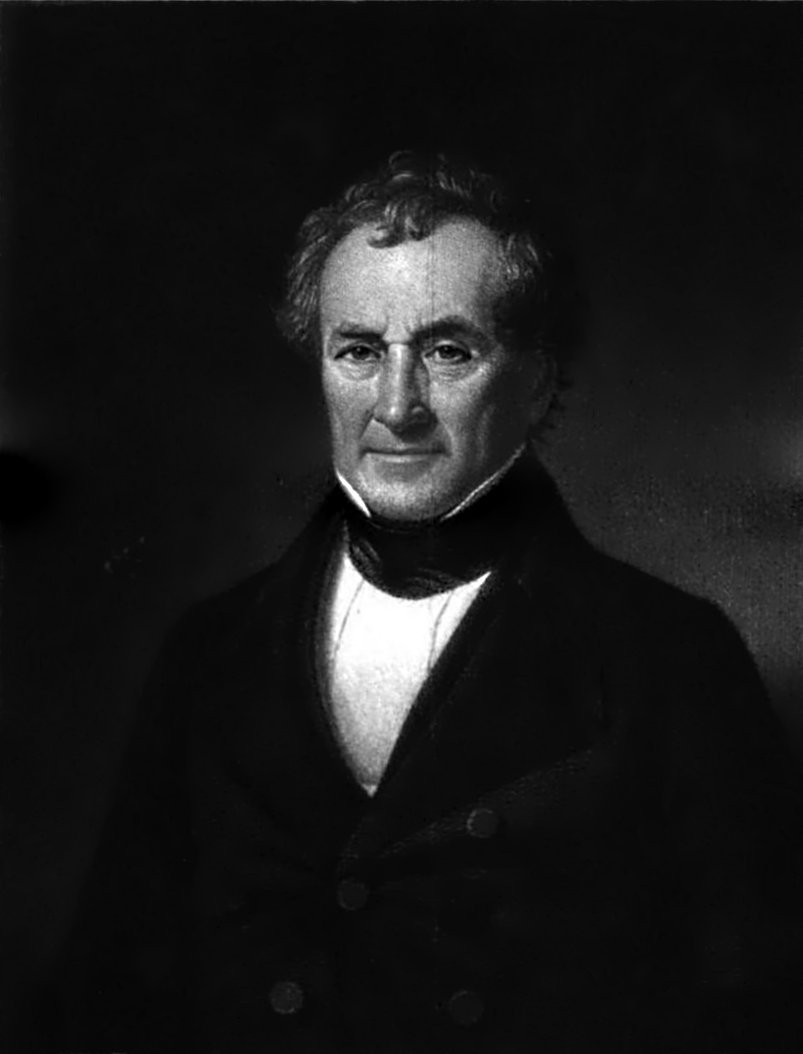
    Lyman Beecher. By: Mathew Brady.

    The role of religion in Americans’ lives began to change not long after the War of 1812. In fact, the state of Connecticut “disestablished religion in 1818.” Daniel Walker Howe, What Hath God Wrought: Transformation of America, 1815-1848, 165. It should be noted that the First Amendment to the Constitution reads: “Congress shall make no law respecting an establishment of religion or prohibiting the free exercise thereof.” In other words, the First Amendment “restricted the federal government only, not the states.” Id. This would change in the 20th Century when the Supreme Court “incorporated” the freedoms of the Bill of Rights, through the Fourteenth Amendment (not passed until 1868), to the states. Id.

    (more…)

  • Vesey’s Almost Rebellion

    denmark_vesey
    Denmark Vesey.

    During the controversy surrounding the Missouri Compromise, those who advocated for restricting slavery had been interpreted by southerners as encouraging insurrection. See Daniel Walker Howe, What Hath God Wrought: Transformation of America, 1815-1848, 161.

    (more…)

  • The Second Missouri Compromise

    mtiwnja4njmznzcynja2otg4
    Henry Clay.

    With the creation of the Missouri Compromise came a second controversy for Missouri. Some northerners threatened “not to consent to the Missouri constitution when it came back to Congress for final approval.” Daniel Walker Howe, What Hath God Wrought: Transformation of America, 1815-1848, 156. Henry Clay, then-Speaker of the House of Representatives, led the effort to solving this second controversy.

    (more…)

  • The Missouri Compromise

    james_tallmadge_portrait
    James Tallmadge.

    By 1819, the area west of the Mississippi River, known as the Missouri Territory, had obtained a population qualifying it to be admitted to the Union. Daniel Walker Howe, What Hath God Wrought: Transformation of America, 1819-1848, 147. The only requirement to be admitted was that an enabling act be presented to Congress “authorizing Missouri voters to elect a convention to draft a state constitution.” Id. That bill was proposed, but Representative James Tallmadge proposed an amendment prohibiting further “importation of slavery” and “all children of slaves born after Missouri’s admission to the Union should become free at the age of twenty-five.” Id. This provoked great “consternation in the House of Representatives.” Id. citing Annals of Congress, 15th Cong., 2nd sess., 1170.

    (more…)

  • Constitution Sunday: Reply to Wilson’s Speech: “Centinel” [Samuel Bryan] II

    Reply to Wilson’s Speech: “Centinel” [Samuel Bryan] II

    Freeman’s Journal (Philadelphia), October 24, 1787

    Following are excerpts from Samuel Bryan’s article, published in response to James Wilson’s speech:

    “Friends, countrymen, and fellow-citizens, As long as the liberty of the press (more…)

  • Division and Balancing of Political Power

    richard_henry_lee_at_nat-_portrait_gallery_img_4471
    Richard Henry Lee. By: Billy Hathorn.

    Because the Federalists outmaneuvered the Antifederalists in presenting the Constitution to the American people, the Antifederalists faced a predicament of what to do. As Richard Henry Lee stated, many who wished to change the federal structure of government realized that they had to accept “this or nothing.” Gordon Wood, The Creation of the American Republic: 1776-1787, 547 quoting Lee to Mason, Oct. 1, 1787, Ballagh, ed., Letters of R. H. Lee, II, 438. The Antifederalists were more or less forced to “attack the federal government in those mechanical Enlightenment terms most agreeable to the thought of the Federalists: the division and balancing of political power,” otherwise known as separation of powers. Gordon Wood, The Creation of the American Republic: 1776-1787, 548.

    (more…)

  • The Revolution’s Failure and Excesses

    port_dickinson-peale
    John Dickinson. By: Charles Willson Peale.

    The culmination of beliefs and events that led to the drafting of the Constitution were varied but also generally in agreement about the necessity of having the Constitution.

    (more…)

  • A Supreme Sovereign Power

    Portrait
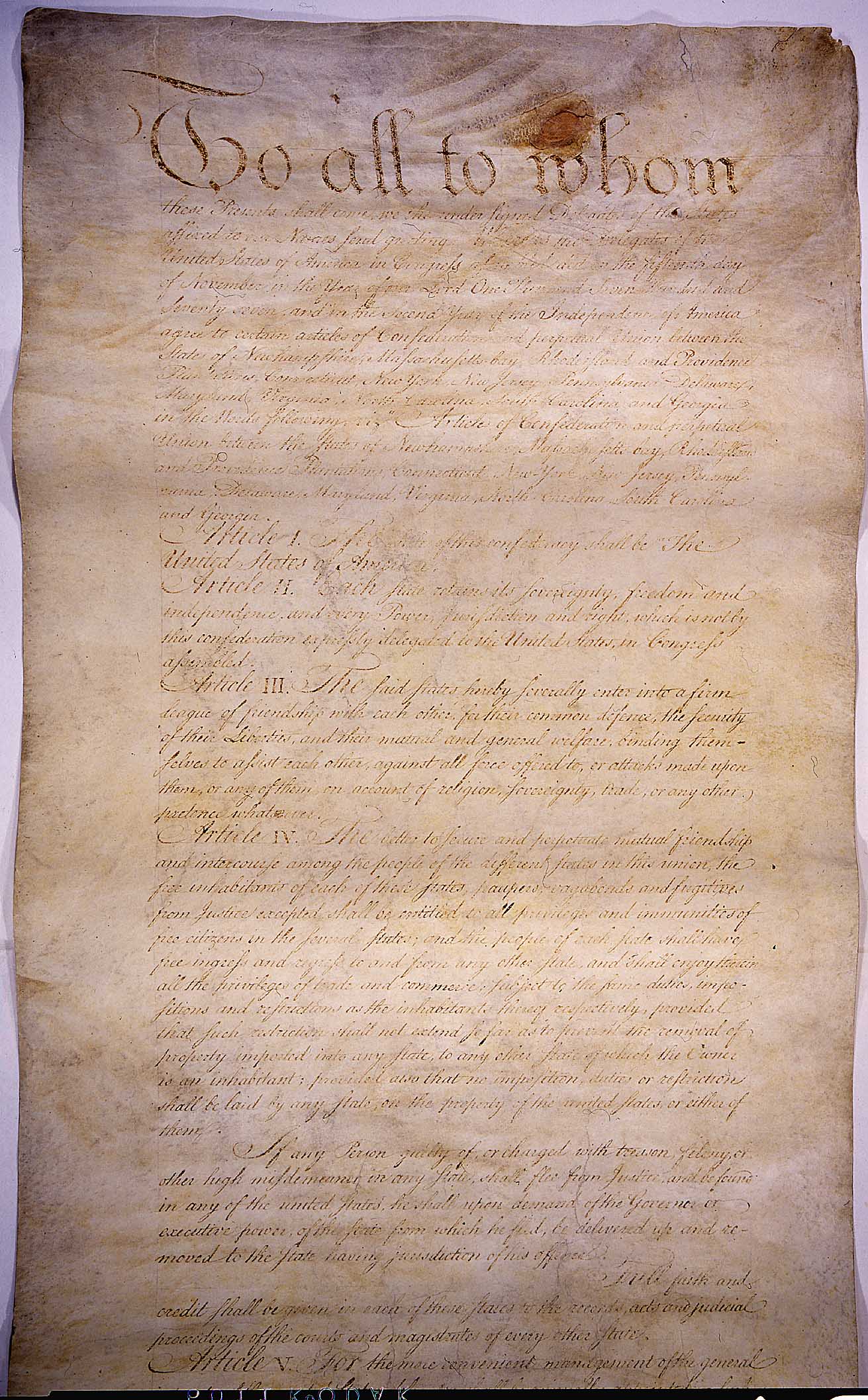
    Page 1 of the Articles of Confederation.

    Despite the fact that the Articles of Confederation loosely held the states together, there was still a remarkable union achieved. There were privileges and immunities granted, “reciprocity of extradition and judicial proceedings among the states,” no “travel and discriminatory trade restrictions between states, and the substantial grant of powers to the Congress in Article 9 made the league of states as cohesive and strong as any similar sort of republican confederation in history—stronger in fact than some Americans had expected.” Gordon Wood, The Creation of the American Republic: 1776-1787, 359. (more…)

  • The Birth of the Senate

    new_york_city_hall_1789
    City Hall of New York City in 1789, where Congress convened during the 1790s.

    In the earliest years of the American Republic, theories were abound about the proper structure of government to best balance equality and wise decision-making. John Adams stated, in his Thoughts on Government, that “a people cannot be long free, nor ever happy, whose government is in one assembly.” Gordon Wood, The Creation of the American Republic: 1776-1787, 208-09 quoting John Adams, Thoughts on Government, Adams, ed., Works of John Adams, IV, 194, 196. These theories became tested throughout the young country, in each of the state’s constitutions.

    (more…)

  • The Birth of the House

    Image of Washington's inauguration at Philadelphia by J.L.G. Fer
    Painting of the Inauguration of President George Washington. By: Jean Leon Gerome Ferris.

    For many of the Founding Fathers, the biggest threat to the stability and success of the United States was tyranny. Tyranny was a force that could bring down the most free and just societies. Underlying much of the creation of the institutions that now define the American government, the judiciary, the legislature, and the executive, are precautionary and prophylactic measures to prevent tyranny. (more…)