Tag: Constitution

  • Constitution Sunday: “Publius,” The Federalist LI [James Madison]

    Independent Journal (New York)

    February 6, 1788

    “But what is government itself but the greatest of all reflections of human nature?” This rhetorical question, which James Madison posed, is one that governments throughout the world—throughout history—have answered by showing that even the best-intentioned government fails where it does not take human nature into account.

    (more…)
  • The Civil War: John B. Jones: Diary, April 15-22, 1861

    The Civil War: John B. Jones: Diary, April 15-22, 1861

    John B. Jones was a rare man in Philadelphia. In the spring of 1861, he thought he may be arrested for being a Confederate sympathizer. After all, he had been the editor of that city’s weekly newspaper, the Southern Monitor, which was supportive of the South. In April 1861, he left his home—arriving in Richmond, Virginia three days later. His diary from those days in Richmond reflected some of the conventional wisdom of the time—much of which has been long forgotten—about how the Confederacy may have taken shape not as a group of states but as an empire. He also wrote about some unconventional wisdom of the time: how the North was not just preparing for an immediate war; it was preparing for a complete and ruthless victory.

    (more…)
  • The Civil War: Alexander H. Stephens: “Corner-Stone” Speech

    The Civil War: Alexander H. Stephens: “Corner-Stone” Speech

    March 21, 1861

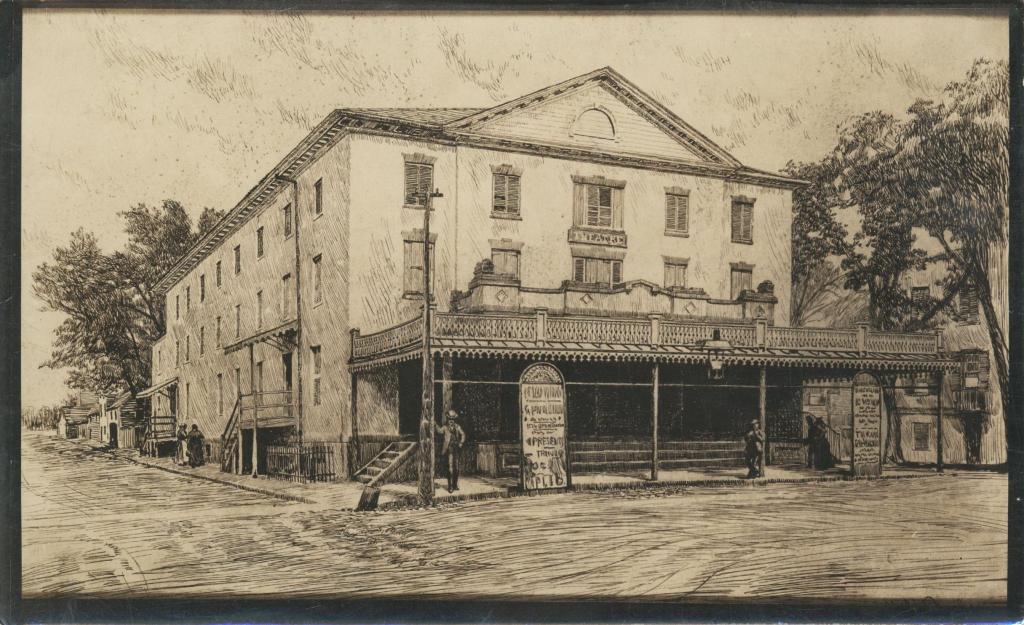
    In Savannah, Georgia, at its Atheneum—a theater for shows and oratory—the vice-president of the Confederacy, Alexander H. Stephens, came to speak about the events leading up to states seceding from the Union and forming the Confederacy. The pace of these events had been swift and sure to cause consternation with questions abound as to what would happen next. To hear Stephens speak that day was to gain a better grasp of what was to come and perhaps a sense of comfort that all would be well.

    (more…)
  • The Civil War: Jefferson Davis: Farewell Address in the U.S. Senate

    January 21, 1861

    United States Senator Jefferson Davis, of Mississippi, rose on the floor of that august chamber the morning of January 21, 1861 to make an announcement. It would not be one pertaining to some Senate bill, or a resolution, but instead an announcement that he was leaving the Senate.

    (more…)
  • The Civil War: Benjamin F. Wade: Remarks in the U.S. Senate

    The Civil War: Benjamin F. Wade: Remarks in the U.S. Senate

    December 17, 1860

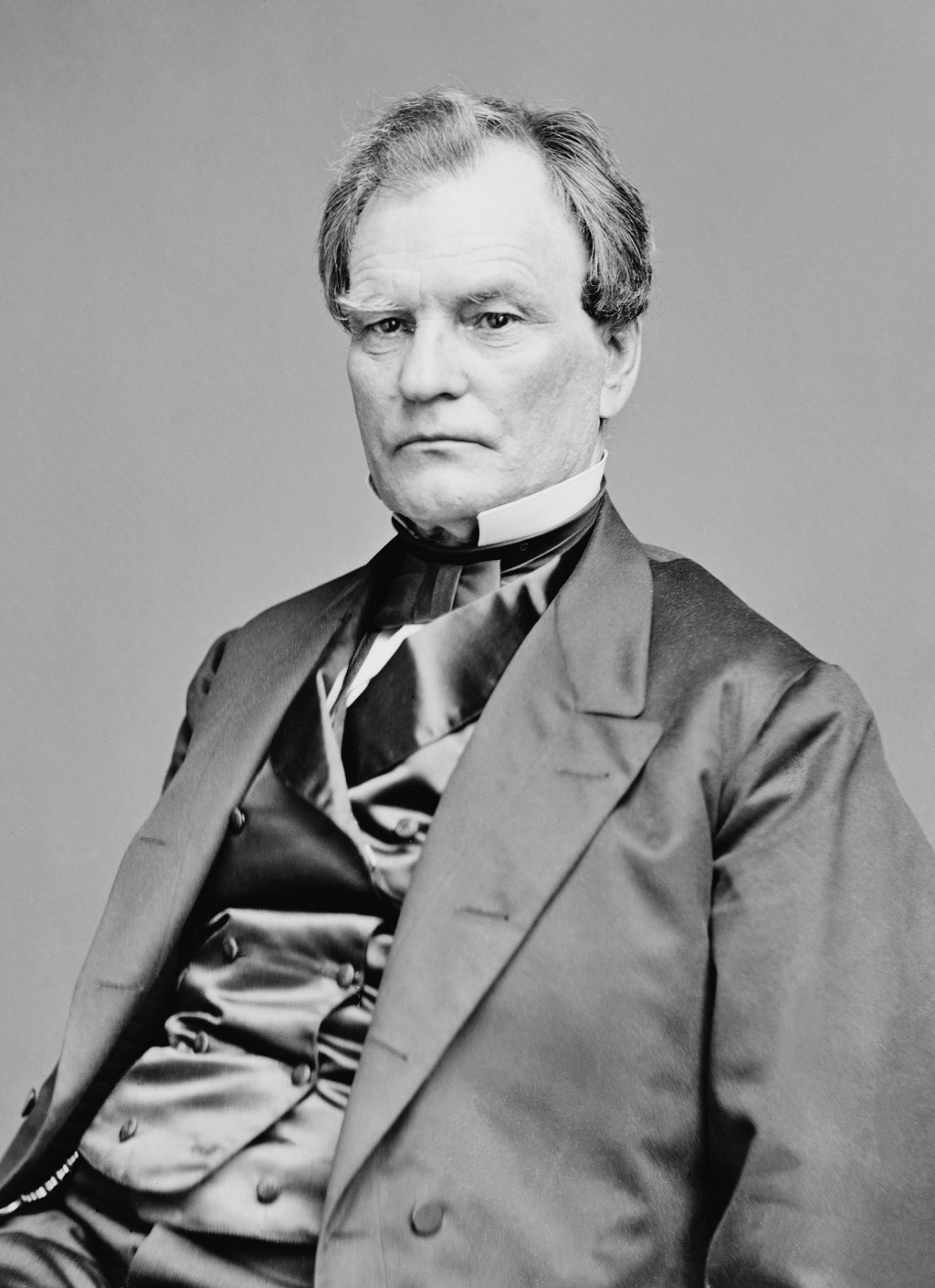
    Benjamin Wade, a Republican Senator from Ohio, rose to speak in the Senate. There were murmurs abound of averting the crisis—of stopping states from seceding from the Union. Some talked of forming a committee to explore the potential for a compromise between northern and southern states, even though no one knew what contours such a compromise could take. After all, for decades, Congress had been encapsulating compromises into bills, presidents had been signing those bills into law, and none of the laws resolved the tensions between the states.

    (more…)
  • Constitution Sunday: “Publius,” The Federalist XLVIII [James Madison]

    New-York Packet

    February 1, 1788

    James Madison, under the pseudonym Publius, wrote about the system of checks and balances housed in the draft Constitution—and how fragile they are. Those checks and balances are “a mere demarkation on parchment of the constitutional limits of the several departments”—those departments being the legislative, executive, and judicial. And the demarkation of those limits was “not a sufficient guard against those encroachments which lead to a tyrannical concentration of all the powers of government in the same hands.”

    (more…)
  • The Civil War: James Buchanan: From the Annual Message to Congress

    The Civil War: James Buchanan: From the Annual Message to Congress

    December 3, 1860

    Washington City

    James Buchanan was never going to avert the Civil War. But in his annual message to Congress, after the election of 1860, he scarcely even tried. Whereas most outgoing presidents use their last days in power to begin shaping their legacy, reflect on their time at the helm, and share their unique perspective on the country—and on the world—Buchanan was not like most outgoing presidents.

    (more…)
  • The Civil War: William G. Brownlow to R.H. Appleton

    November 29, 1860

    Knoxville, Tennessee

    When the United States faced the prospect of disunion, in the fall of 1860, there was virtually no precedent to which Americans could look. This wasn’t a matter of policy differences: states were debating whether to leave the Union. And many felt that it was inherently wrong and tried to articulate why this situation was different from the American Revolution—why the North was not tyrannical toward the South in the same way that England had been tyrannical toward the colonies—and thus why secession was not warranted. William G. Brownlow, of eastern Tennessee, was one who was against secession and sent a letter to R.H. Appleton, a friend and former subscriber of Brownlow’s newspaper, unpacking the ways in which those states were wrong to secede.

    (more…)
  • Constitution Sunday: “Brutus” XI

    New York Journal

    January 31, 1788

    The Constitution’s creation of the Supreme Court raised many questions about how such a court would operate. But an anonymous author, Brutus, laid out what was likely to come from the Court, and this author described—much of it with remarkable precision—what would indeed happen to the Court in the coming decades and centuries.

    (more…)
  • The Civil War: George Templeton Strong: Diary, November 20-December 1, 1860

    The Civil War: George Templeton Strong: Diary, November 20-December 1, 1860

    November 20, 1860 to December 1, 1860

    New York City

    State laws often have an outsized influence on discussions of national politics. This is despite the fact that one state’s laws have no binding effect in other states; then, add to that the fact that some states will pass laws with little intent or resources backing the enforcement of those laws. Those are the laws that can be nothing more than pieces of paper as props in the political theater. But, when those laws touch on an inflammatory issue, the practicalities of the laws become irrelevant. The only thing that matters then is that the laws exist and that they could spread to other states, disrupting the status quo and creating concern as to the path that the nation and its states have chosen.

    (more…)