
Americans’ trust in their government has always ebbed and flowed, and those ebbs and flows have largely depended on whether the government and its officers have acted in ways that earned the trust of its citizens or in ways that led the government to be mired in scandal—therefore sullying its reputation. Some of the largest ebbs in trust have come after officials in the top echelon of government—Senators, Representatives, Presidents and their cabinets—have used their offices for their own benefit. Two months before the election of 1872, news broke of a scandal that would extend well into 1873 and implicate politicians as prominent as the Vice President, and that scandal foreshadowed the ways in which big business and politics would intertwine in not only the Nineteenth Century but the Twentieth and Twenty-First Centuries.
(more…)Tag: Corruption
-
Constitution Sunday: “Cato” V
“Cato” V
New York Journal, November 22, 1787
Following are excerpts from an anonymous article published in the New York Journal:
“To the Citizens of the State of New-York.
In my last number I endeavored to prove that the language of the article relative to the establishment of the executive of this new government was vague and inexplicit, that the great powers of the President (more…)
-
The Dawn of the Age of Jackson

Inauguration of Andrew Jackson. By: Robert Cruickshank. Andrew Jackson, upon taking the White House, was bound to change the political landscape of America, and he did so quickly.
-
The Conception of the Democratic Party

A Foot Race. Political Cartoon of the Election of 1824. Following the Election of 1824, newly elected President John Quincy Adams went into the White House with a great deal of hope for the future. He was a lifelong student of Cicero and “envisioned the American republic as the culmination of the history of human progress and the realization of the potential of human nature.” Daniel Walker Howe, What Hath God Wrought: Transformation of America, 1815-1848, 245. In fact, historians have remarked that Quincy Adams was the “most learned president between [Thomas] Jefferson and [Woodrow] Wilson.” Id.
-
Building the Momentum of the Revolution

James Iredell. By: Charles Balthazar Julien Fevret de Saint-Memin. For a revolution, and particularly a bloodless revolution, to occur, the momentum must build so that the population’s outrage culminates in a change of power and a change of government. How the people sparking the flame that leads to the roaring fire of revolution is a subject worth studying, as revolutions are an inevitable fact of life in the world.
-
Preventing and Facilitating Tyranny
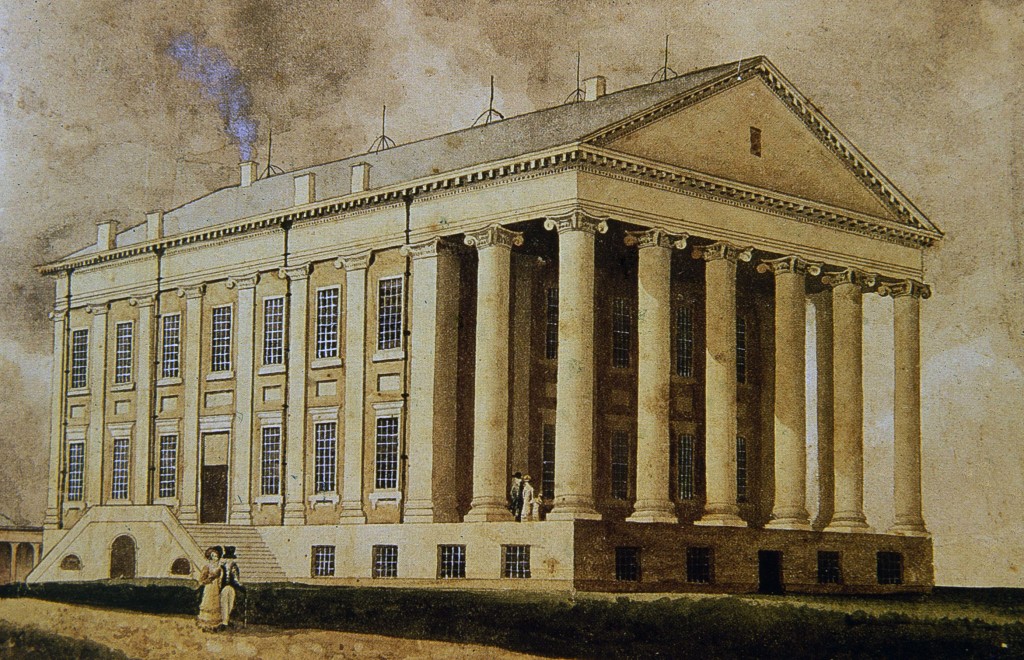
Virginia State Capitol. By: William Goodacre. As the American Revolution became more and more inevitable, states began contemplating the role and responsibilities of their legislatures. Those contemplations centered around curing the perceived ills and shortcomings of the English constitution.
 Last Best Hope of Earth