Tag: Early Republic

  • Constitution Sunday: “Americanus” [John Stevens, Jr.] VII

    Daily Advertiser (New York)

    January 21, 1788

    With the draft Constitution being circulated and reviewed by throughout the country, Governor Edmund Randolph of Virginia wrote a letter to the Speaker of the House of Delegates detailing his objections—of which there were many—to adopting the Constitution as written. Given his stature as a governor, his objections would inevitably bring people to adopt his way of thinking, foster debate, and awaken proponents of the Constitution to defend the document, explaining its merits and why adopting the Constitution was warranted despite Governor Randolph’s objections. One such defender was John Stevens, Jr., and he took on the governor’s objections in an article published in New York’s Daily Advertiser.

    (more…)
  • Constitution Sunday: “Publius,” The Federalist XVI

    “Publius,” The Federalist XVI [Alexander Hamilton]

    New-York Packet, December 4, 1787

    When any union or confederacy of states or provinces decide to form a nation, it does so with its citizens knowing that members may “alarm the apprehensions, inflame the passions, and conciliate the good will even” in those states that were not “chargeable with any violation, or omission of duty” but had influence to be obtained. As Alexander Hamilton wrote in the Federalist XVI, when there are associates not found “at home, recourse would be had to the aid of foreign powers, who would seldom be disinclined to encouraging the dissentions of a confederacy, from the firm Union of which they had so much to fear.” The consequences of such an event are substantial: “When the sword is once drawn, the passions of men observe no bounds of moderation. The suggestions of wounded pride, the instigations of irritated resentment, would be apt to carry the States, against which the arms of the Union were exerted to any extremes necessary to revenge the affront, or to avoid the disgrace of submission. The first war of this kind would probably terminate in a dissolution of the Union.” (more…)

  • Constitution Sunday: “Publius,” The Federalist XIV

    “Publius,” The Federalist XIV [James Madison]

    New-York Packet, November 30, 1787

    With the draft Constitution having been published for consideration by the residents of each state in 1787 came questions about whether and how the federal government would effectuate its responsibilities given the vast land that the states and territories had already comprised—which James Madison found to be framed by the Atlantic Ocean and the Mississippi River. Madison, in The Federalist XIV, articulated the reasoning behind the Constitution’s model for government, and at the heart of that reasoning was that this new form of government was not going to be a pure democracy of yore but rather a modern republic: “The true distinction” between a democracy and a republic is “that in a democracy, the people meet and exercise the government in person; in a republic they assemble and administer it by their representatives and agents. A democracy consequently will be confined to a small spot. A republic may be extended over a large region.” (more…)

  • Constitution Sunday: “Publius,” The Federalist IX [Alexander Hamilton]

    “Publius,” The Federalist IX [Alexander Hamilton]

    Independent Journal (New York), November 21, 1787

    Following are excerpts from Alexander Hamilton’s writings in the Federalist Papers:

    “When Montesquieu recommends a small extent for republics, the standards he had in view were of dimensions, far short of the limits of almost every one of these States. (more…)

  • The Oregon Question

    0814-oregon-territory
    A Depiction of the Oregon Territory in 1848.

    Following the Democrats’ victory in the Election of 1844, President James Polk began negotiating with the British about the Oregon territory, which America had permitted Britain to occupy for several decades. See Daniel Walker Howe, What Hath God Wrought: Transformation of America, 1815-1848, 715.

    (more…)

  • The Whigs’ Manifest Destiny

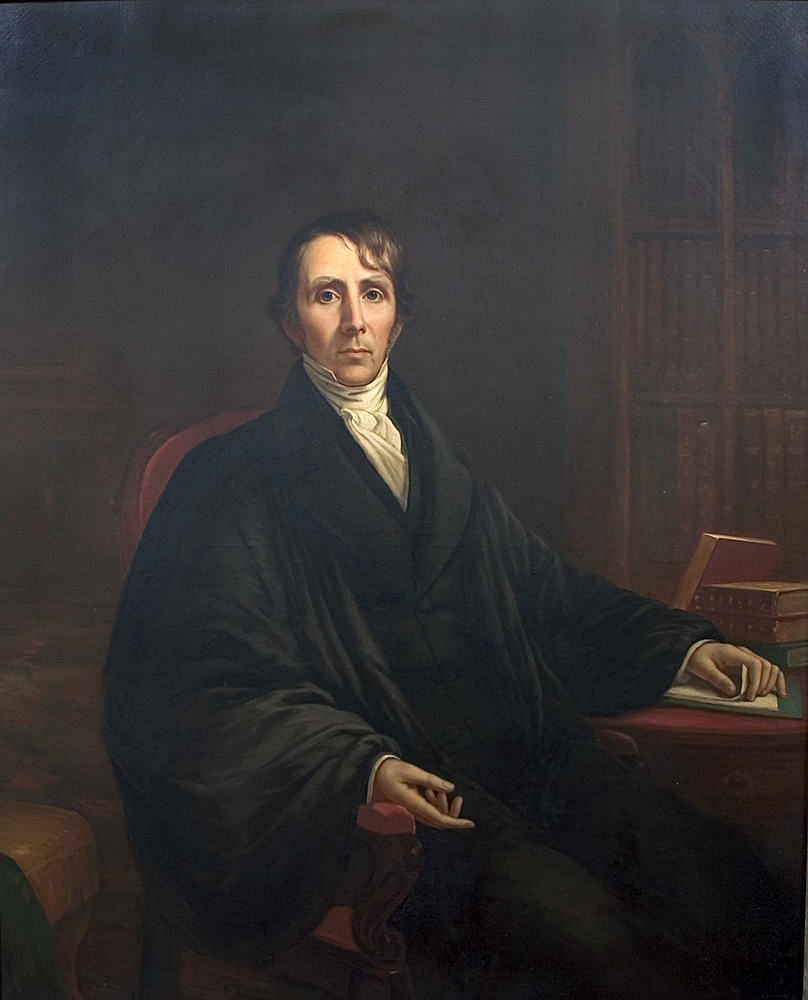
    william_ellery_channing_by_henry_cheever_pratt_1857
    William Ellery Channing. By: Henry Cheever Pratt.

    The Whigs had their own approach to interpreting manifest destiny, and that approach mainly applied to shaping America’s foreign policy.

    (more…)

  • Manifest Destiny

    demrevcontentspage
    The Democratic Review Magazine.

    While many Americans would come to embrace manifest destiny, the idea that America would achieve its imperial destiny and dominate the continent, it was not a politician or president who coined the term. Rather, it was coined in 1845 in New York’s Democratic Review magazine. See Daniel Walker Howe, What Hath God Wrought: Transformation of America, 1815-1848, 702-03.

    (more…)

  • Election of 1844: Polk Prevails

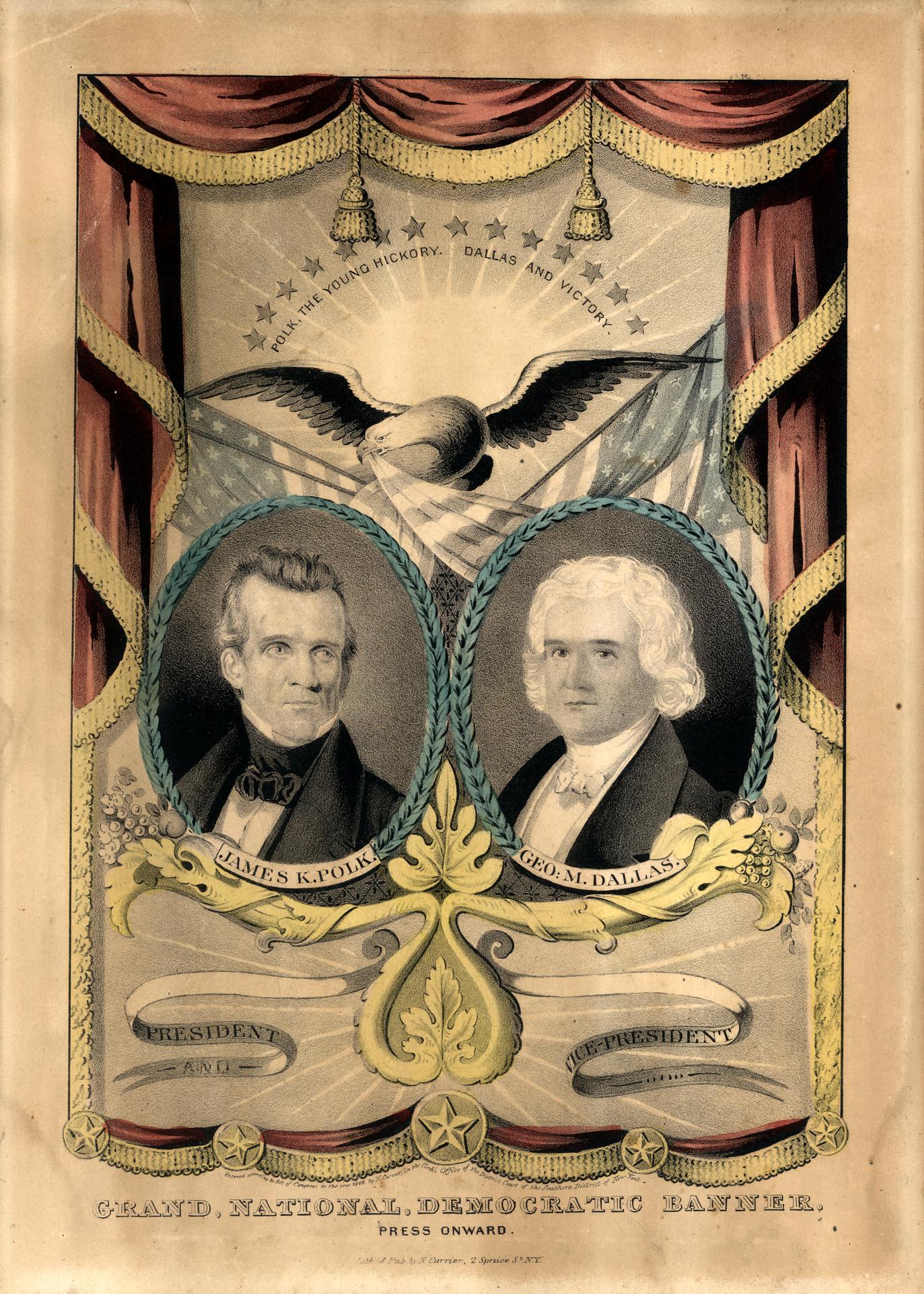
    polk_dallas_campaign_banner
    Campaign Banner for James Polk and George Dallas.

    Throughout the first  twelve days of November of 1844, the population voted for the next president. Voters had to pick between the Democrat, James Polk, the Whig, Henry Clay, and the Liberty Party’s candidate, James Birney. See Daniel Walker Howe, What Hath God Wrought: Transformation of America, 1815-1848, 688.

    (more…)

  • Election of 1844: Democratic Party Platform

    hon-_robert_j-_walker2c_miss_-_nara_-_528738
    Robert Walker. By: Mathew Brady.

    As part of the Democratic platform for the Election of 1844, the Democrats incorporated their positions on “strict construction, banking, and congressional noninterference with slavery.” Daniel Walker Howe, What Hath God Wrought: Transformation of America, 1815-1848, 683. However, the Democrats took things one step further.

    (more…)

  • Election of 1844: The Conventions

    shades_polk_0002
    James Knox Polk. By: George P.A. Healy.

    The Election of 1844 was one of the most momentous in American history.

    (more…)