Tag: Early Republic

  • The Election of 1824

    m-9636
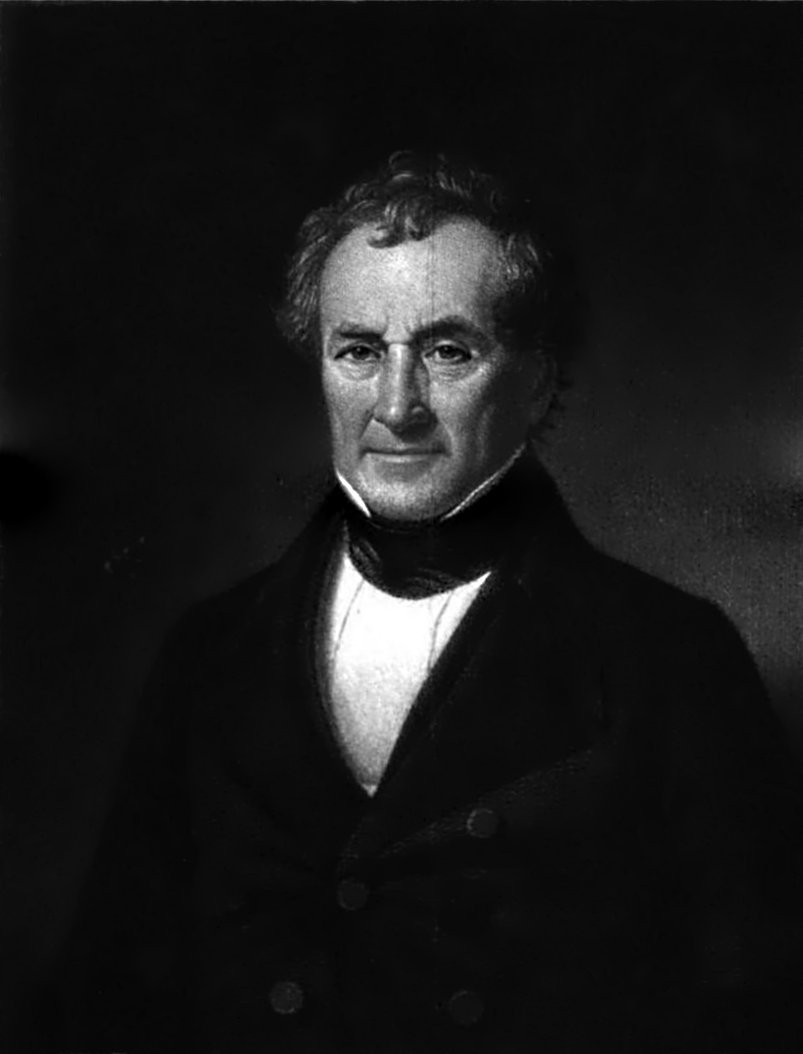
    William Harris Crawford.

    Not long after the election of 1820, an essentially uncontested election seeing the re-election of President James Monroe, the campaigning for the election of 1824 began. President Monroe had indicated that he would not seek an unprecedented third term as president, but that did not stop others from posturing for the election. As a journalist observed in the spring of 1822, “electioneering begins to wax hot.” Daniel Walker Howe, What Hath God Wrought: Transformation of America, 1815-1848, 203 quoting James F. Hopkins, “Election of 1824,” in History of American Presidential Elections, ed. Arthur M. Schlesinger Jr. (New York, 1985), 363.

    (more…)

  • The Second Great Awakening

    1839-meth
    A Methodist Gathering. By: J. Maze Burbank.

    In the 1810s and 1820s, Americans were drinking as much as seven gallons of alcohol per year per person, drinking at every meal. Daniel Walker Howe, What Hath God Wrought: Transformation of America, 1815-1848, 167. Even students at school could see their teacher inebriated while teaching, with drunkenness being commonplace throughout society. Id. This came, however, during the Second Great Awakening, a profound increase in religiosity in American society.

    (more…)

  • Injury to the Cause of Christ

    lyman_beecher_-_brady-handy
    Lyman Beecher. By: Mathew Brady.

    The role of religion in Americans’ lives began to change not long after the War of 1812. In fact, the state of Connecticut “disestablished religion in 1818.” Daniel Walker Howe, What Hath God Wrought: Transformation of America, 1815-1848, 165. It should be noted that the First Amendment to the Constitution reads: “Congress shall make no law respecting an establishment of religion or prohibiting the free exercise thereof.” In other words, the First Amendment “restricted the federal government only, not the states.” Id. This would change in the 20th Century when the Supreme Court “incorporated” the freedoms of the Bill of Rights, through the Fourteenth Amendment (not passed until 1868), to the states. Id.

    (more…)

  • Vesey’s Almost Rebellion

    denmark_vesey
    Denmark Vesey.

    During the controversy surrounding the Missouri Compromise, those who advocated for restricting slavery had been interpreted by southerners as encouraging insurrection. See Daniel Walker Howe, What Hath God Wrought: Transformation of America, 1815-1848, 161.

    (more…)

  • The Second Missouri Compromise

    mtiwnja4njmznzcynja2otg4
    Henry Clay.

    With the creation of the Missouri Compromise came a second controversy for Missouri. Some northerners threatened “not to consent to the Missouri constitution when it came back to Congress for final approval.” Daniel Walker Howe, What Hath God Wrought: Transformation of America, 1815-1848, 156. Henry Clay, then-Speaker of the House of Representatives, led the effort to solving this second controversy.

    (more…)

  • The Missouri Compromise

    james_tallmadge_portrait
    James Tallmadge.

    By 1819, the area west of the Mississippi River, known as the Missouri Territory, had obtained a population qualifying it to be admitted to the Union. Daniel Walker Howe, What Hath God Wrought: Transformation of America, 1819-1848, 147. The only requirement to be admitted was that an enabling act be presented to Congress “authorizing Missouri voters to elect a convention to draft a state constitution.” Id. That bill was proposed, but Representative James Tallmadge proposed an amendment prohibiting further “importation of slavery” and “all children of slaves born after Missouri’s admission to the Union should become free at the age of twenty-five.” Id. This provoked great “consternation in the House of Representatives.” Id. citing Annals of Congress, 15th Cong., 2nd sess., 1170.

    (more…)

  • The Panic of 1819

    william-jones
    William Jones. Artist Unknown.

    America’s reliance on cotton as an economic staple presented an opportunity for prosperity and an accompanying risk. In late 1818, the value of cotton fell as supply outpaced demand and “London banks decided there was no longer a need to extend more credit.” Daniel Walker Howe, What Hath God Wrought: Transformation of America, 1815-1848, 142. Then, the Second Bank of the United States, just two years into its life, “responded by shifting suddenly away from its own expansionist policy,” by the direction of William Jones, which only exacerbated the credit problem. See id. at 142-43. The Panic of 1819 erupted.

    (more…)

  • The Genesis of King Cotton

    cotton_pickers_oil_painting_on_panel_by_william_aiken_walker
    Cotton Pickers. By: William Aiken Walker.

    Following the War of 1812, Americans had at their disposal a new 14 million acres that General Andrew Jackson acquired from the Creek tribe in the South. Daniel Walker Howe, What Hath God Wrought: Transformation of America, 1815-1848, 125. The expansion of territory, particularly in the South, would have massive ramifications in the coming decades.

    (more…)

  • The New Republican Nationalism

    tsp-0064-cfa-08-06-09-resizejpg-25ab31ced2e9ad6e_large
    Chief Justice John Marshall of the Supreme Court of the United States. By: Cephas Thompson.

    John Marshall would serve as Chief Justice of the United States Supreme Court from 1801 to 1835 and had a lasting impact on the institution. More broadly, he shaped the development of policy in America.

    (more…)

  • The Transcontinental Treaty of Washington

    gilbert_stuart_-_john_quincy_adams_-_google_art_project
    John Quincy Adams in 1818. By: Gilbert Stuart.

    John Quincy Adams, Secretary of State from 1817 to 1825, was a principled, “tough negotiator.” Daniel Walker Howe, What Hath God Wrought: Transformation of America, 1815-1848, 107.

    (more…)