Tag: Early Republic

  • Virtue as a Principle and Foundation

    gilbert_stuart_john_adams
    John Adams. By: Gilbert Stuart.

    At the time of the Revolution, republicanism was permeating political discourse and political theory. John Adams asked in 1776 that “[i]f there is a form of government, then, whose principle and foundation is virtue, will not every sober man acknowledge it better calculated to promote the general happiness than any other form?” He continued by explaining that a republican constitution “introduces knowledge among the people, and inspires them with a conscious dignity becoming freemen; a general emulation takes place, which causes good humor, sociability, good manners, and good morals to be general. That elevation of sentiment inspired by such a government, makes the common people brave and enterprising. That ambition which is inspired by it makes them sober, industrious, and frugal.” John Adams, Thoughts on Government, Adams, ed., Works of John Adams, IV, 194, 199.
    (more…)

  • Preserving the Health of the Constitution

    general_george_washington_at_trenton_by_john_trumbull
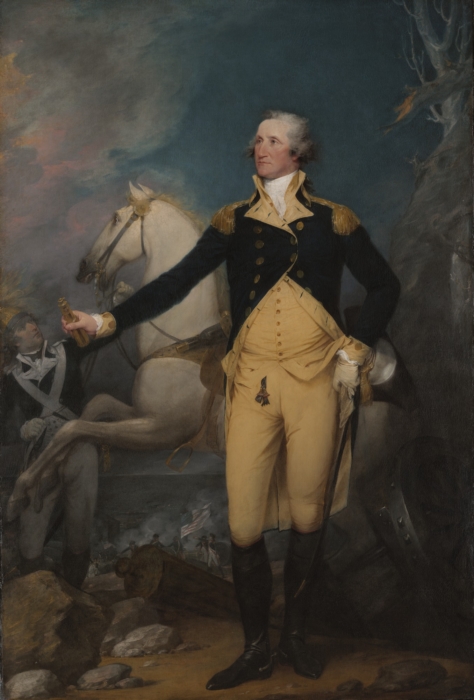
    General George Washington at Trenton. By: John Trumbull.

    Corruption was rife in England in the decades leading up to the American Revolution, and Americans were keenly aware of that fact. For many individuals, the English Constitution was viewed as a hollow document, as the crown had taken the power away from all other sources. See Gordon Wood, The Creation of the American Republic: 1776-1787, 34-35. Americans knew that this corruption “always begins amongst the Rich and the Great” and would spread to the common people, leaving them “enfeebled and their souls depraved.” Id. at 35 quoting Pinkney’s Wmsbg. Va. Gazette, June 15, 1775; Phila. Pa. Packet, May 29, 1775, Aug. 8, 1774; Purdie and Dixon’s Wmsbg. Va. Gazette, Sept. 5, 1771. (more…)

  • A Tradition of Extra-Legislative Action

    sl27979
    Samuel Adams. By: John Singleton Copley.

    As touched on in Unalterable Constitutions, Americans began resorting to conventions for amending their state constitutions, and this was only one example of Americans looking to advance their causes outside of the bounds of government. See Gordon Wood, The Creation of the American Republic: 1776-1787, 310. This was not a novel approach, however, and it was not the only approach that Americans were increasingly taking to advance their interests.

    (more…)

  • Hamilton’s Ideal Politician

    alexander_hamilton_portrait_by_john_trumbull_1806
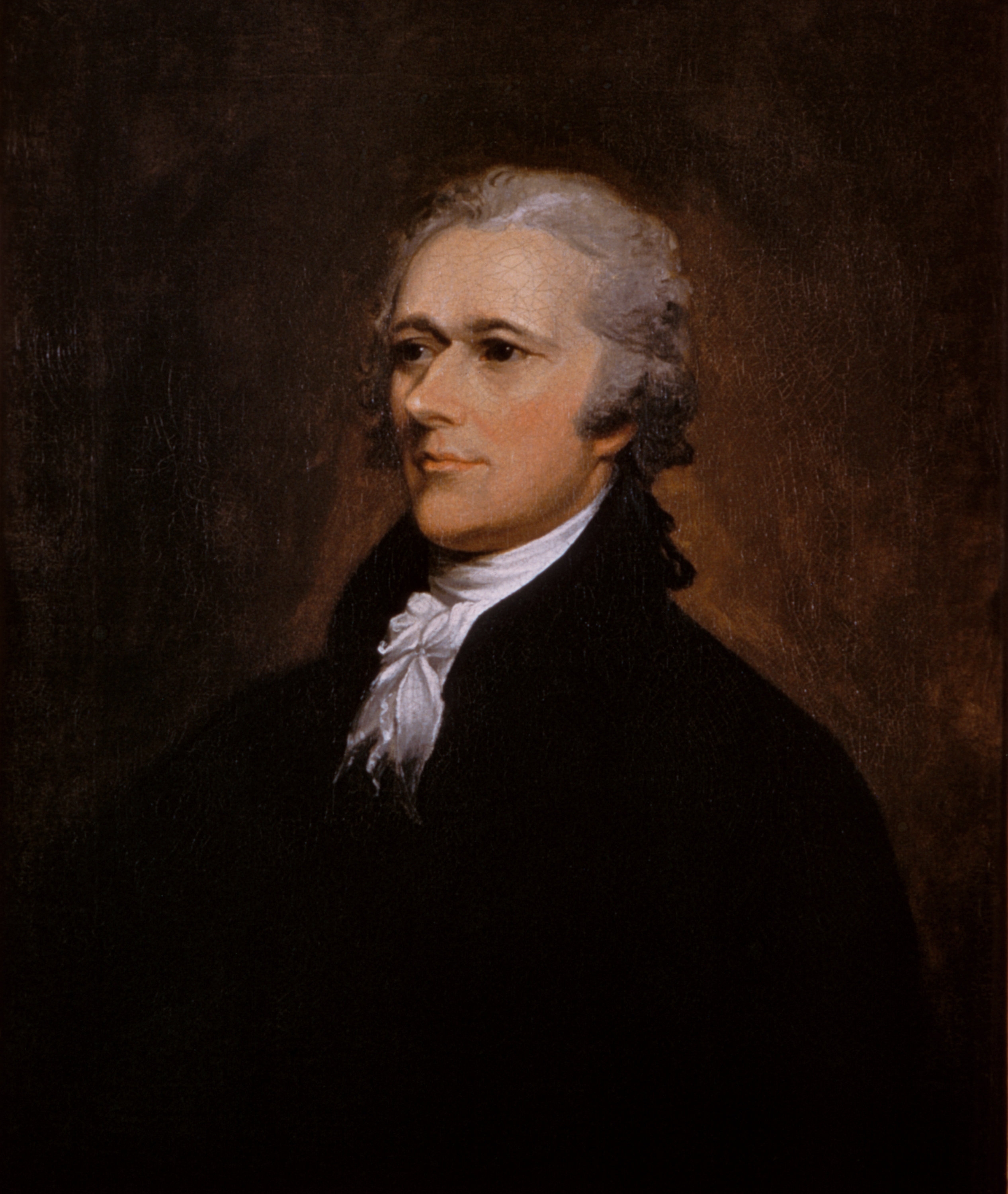
    Alexander Hamilton. By: John Trumbull.

    It is no secret that Aaron Burr and Alexander Hamilton disliked each other. That rivalry culminated in the infamous duel in 1804, leaving Hamilton to die just days later. However, prior to that, Hamilton’s dislike of Burr led Hamilton to pontificate on which individuals would make the best politicians in America. See Gordon Wood, Revolutionary Characters: What Made the Founders Different, 237.

    (more…)

  • The Nobility of the Founding Fathers

    committee_of_five_1776
    The “Committee of Five,” composed of John Adams, Thomas Jefferson Benjamin Franklin, Roger Sherman, and Robert Livingston, presenting the Declaration of Independence. The Declaration of Independence. By: John Trumbull.

    Much of the progress that America experienced during the Revolution happened as a result of the Founding Fathers’ contradictory actions. The Founding Fathers, predominantly privileged, in some ways paid the price of the Revolution in the most noble way.

    (more…)

  • Setting an Unshakeable Foundation

    John_Marshall_by_Henry_Inman,_1832
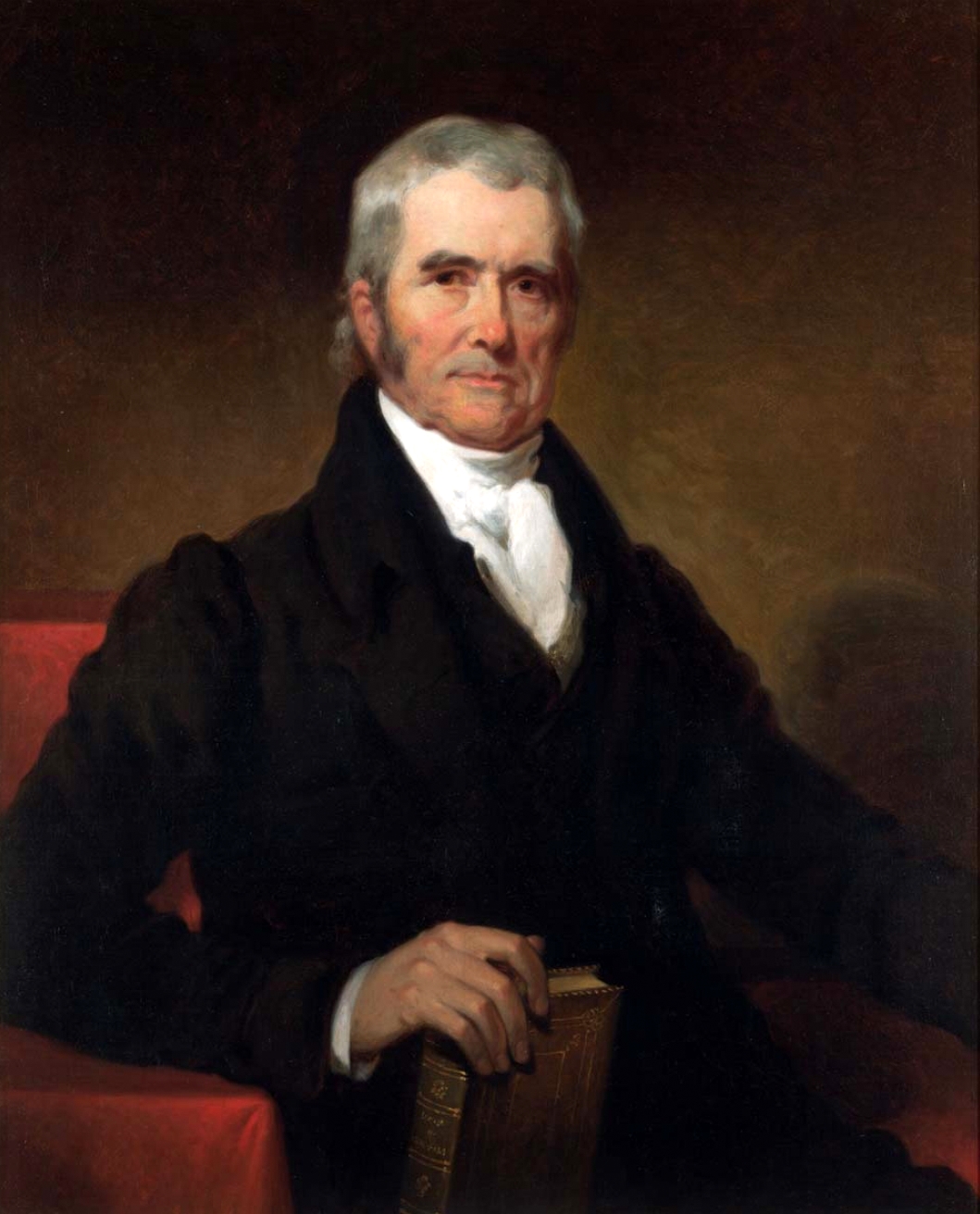
    John Marshall, the fourth Chief Justice of the United States Supreme Court. By: Henry Inman.

    In the first years of the American Republic, there were drastic changes in the law. The importance and organization of laws were coming into place. At the top were constitutional rights, which, as James Cannon explained “must be protected and defended ‘as the apple of your eye’ from danger ‘or they will be lost forever.’” Gordon Wood, The Creation of the American Republic: 1776-1787, 293 quoting James Cannon, “Cassandra,” Apr. 1776, Force, ed., American Archives, 4th Ser., V, 1094, quoting from Hulme, Historical Essay, 143-44. Cannon continued, stating that constitutional rights must be set “on a foundation never more to be shaken,” meaning that constitutional rights “must be specified and written down in immutable documents. Id.

    (more…)

  • The First Doomsayers

    3164770622_48b329e284_o
    Fisher Ames. By: Gilbert Stuart.

    Many expected that the American Revolution would lead to some “bloody noses” as “almost all revolutions are founded in blood.” Samuel A. Otis to Theodore Sedgwick, July 30, 1782, Theodore Sedgwick Papers, A. 55, Massachusetts Historical Society, Boston. The British had made predictions that separating from Britain would lead to quarrels and the Americans splitting into parties. Gordon Wood, The Creation of the American Republic: 1776-1787, 397. As the Revolutionary years went on, it looked that the British were right, which appeared to put America on a path toward destruction.

    (more…)

  • Fostering Participation in Government

    vote_5a
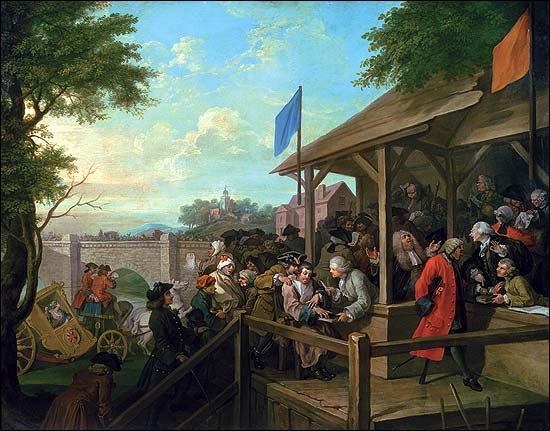
    The Polling. By: William Hogarth.

    Involvement in government is crucial to the success of government as a whole. During the American Revolution, it was clear that participation in the political process would continue to be valued. Since those years, much has changed.

    (more…)

  • Bringing the Revolution into Focus

    yorktown80
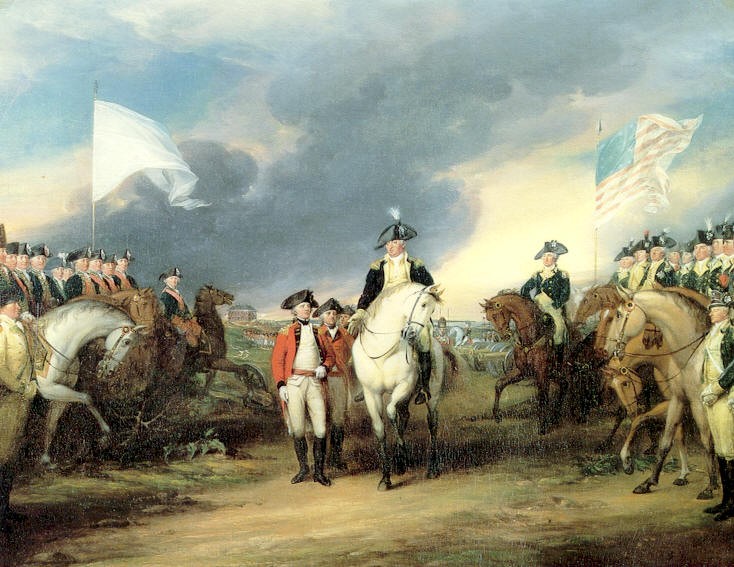
    Siege of Yorktown. By: John Trumbull.

    To fully understand the magnitude and impact of the American Revolution, context is crucial. While the Enlightenment was the process of society learning “the sources of a flourishing society and human happiness,” the Revolution was the process of finding the best form of government perhaps the world has ever known. See Gordon Wood, The Idea of America: Reflections on the Birth of the United States, 59.

    (more…)

  • The Selection of Senators

    benjamin_lincoln_by_charles_wilson_peale
    Benjamin Lincoln. By: Charles Willson Peale.

    As explained in The Birth of the Senate, the states’ creation of an upper house of Congress set the precedent for a fully functioning, bicameral legislature in most states and the federal government. However, the selection process of who should be a senator was another subject for debate.

    (more…)