The success or failure of countries, and politicians for that matter, are an often studied subject. Studies have been ongoing for centuries.
James Burgh, an English Whig, wrote: “Almost all political establishments have been the creates of chance rather than of wisdom. Therefore it is impossible to say what would be the effect of a perfect commonwealth” as there was no precedent in history. James Burgh, Political Disquisitions, Vol. 1, 23. (more…)
Signing of the Constitution. By: Louis S. Glanzman.
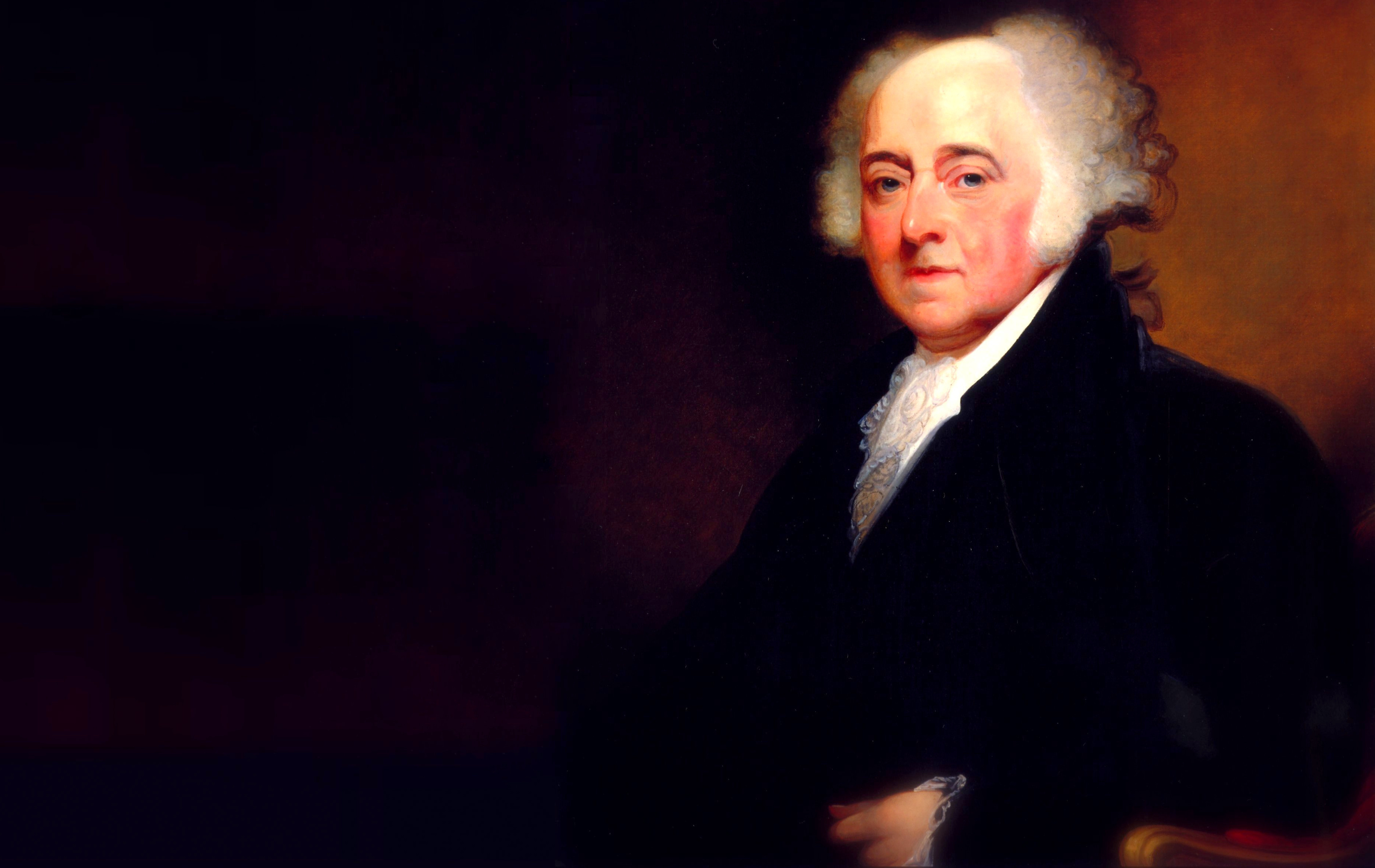
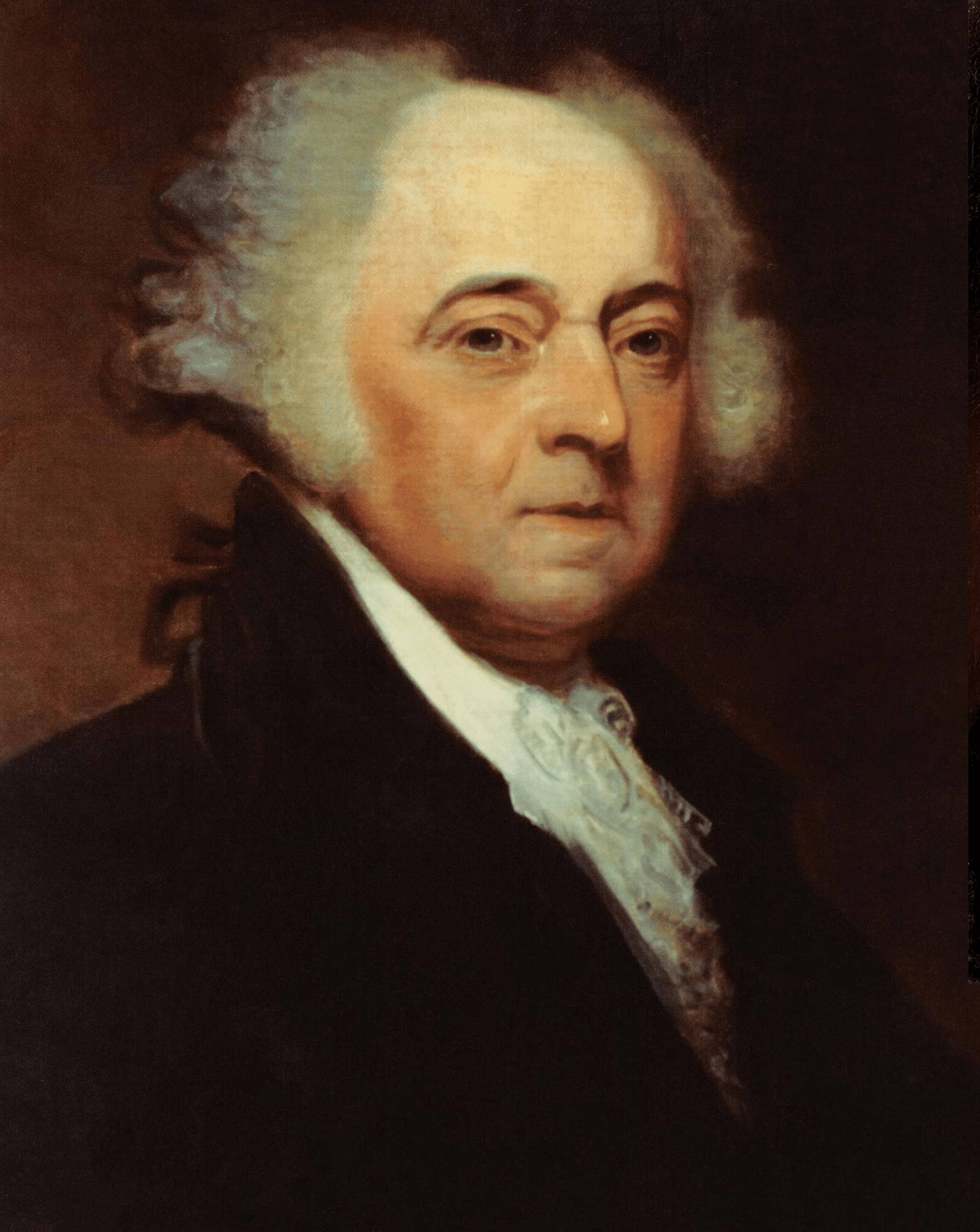
John Adams had strong opinions about federalism. He believed that the government should be structured similarly to the British Empire, given the British Empire’s extraordinary success.
At the time of the signing of the Constitution, Adams firmly believed that the Constitution had secured a national government, as opposed to a government dividing its sovereignty into states and a federal government. Gordon Wood, Revolutionary Characters: What Made the Founders Different, 191. (more…)
Painting of the Inauguration of President George Washington. By: Jean Leon Gerome Ferris.
For many of the Founding Fathers, the biggest threat to the stability and success of the United States was tyranny. Tyranny was a force that could bring down the most free and just societies. Underlying much of the creation of the institutions that now define the American government, the judiciary, the legislature, and the executive, are precautionary and prophylactic measures to prevent tyranny. (more…)
John Adams was amongst the most hopeful about America’s prospects for the future. At the time of the Declaration of Independence and the years of the American Revolution, he believed America could avoid the pitfalls of the European nations.
But just ten years later, Adams was of a different mind. In 1787, he wrote his Defenceof the Constitutions, where he concluded that “his countrymen were as corrupt as any nation in the world.” Gordon Wood, Revolutionary Characters: What Made the Founders Different, 181. (more…)
In 1790 and 1791, Alexander Hamilton, as Secretary of the Treasury, proposed the creation of a financial system in four reports, which covered the topics of a national bank, a mint, and manufactures. Gordon Wood, Revolutionary Characters: What Made the Founders Different, 133. (more…)
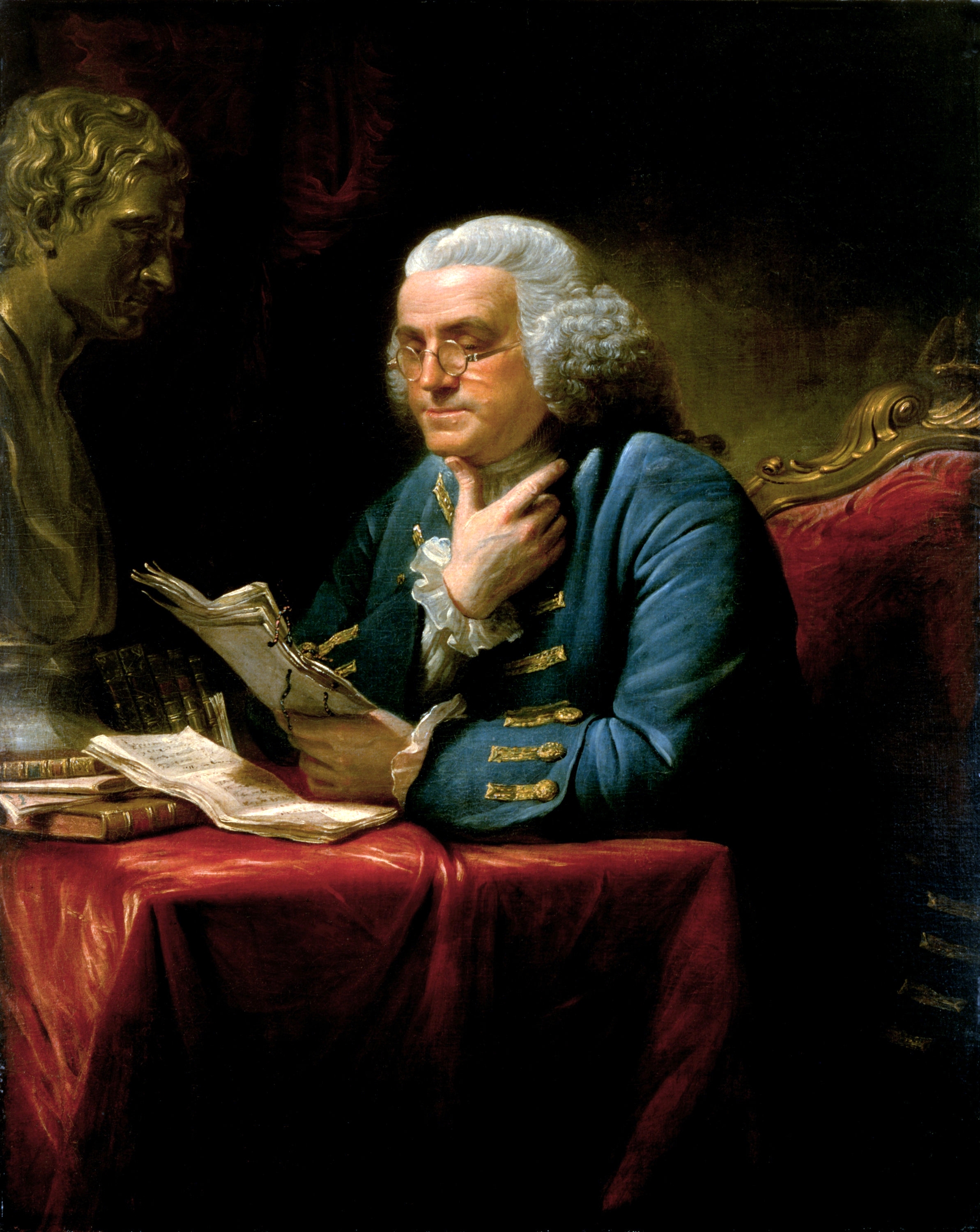
Benjamin Franklin, depicted in London in 1767. By: David Martin.
Benjamin Franklin, one of the most well-known and most revered Founding Fathers, had a more controversial history than most modern Americans realize.
In the late 1750s and early 1760s, Franklin was a “complete Anglophile.” Gordon Wood, Revolutionary Characters: What Made the Founders Different, 79. He made “disparaging comments about the provinciality and vulgarity of America in contrast with the sophistication and worthiness of England.” Id. He also believed that America, not England, was “corrupt and luxury-loving.” Id.
While living in England, Franklin was becoming more influential and had become a deputy postmaster. Id. at 84. In 1772, Franklin came into possession of some damning letters that would change his life. In the late 1760s, Thomas Hutchinson, the then-lieutenant governor of Massachusetts, had written letters to an Englishman advocating taking away liberties from the colonists so as to “maintain the colonies’ dependency on Great Britain.” Id. at 83. Franklin sent these letters to Massachusetts, prompting a crisis that would result in Franklin being terminated as deputy postmaster. Id.
In March 1775, he came back to America a changed man: a passionate patriot. Some of this passion was feigned, so as to show his fellow colonists that he was not an Englishman masquerading as a revolutionary. Id. at 84. He would become one of the most popular and widely respected Americans in the world, with only George Washington outshining him.
By the time of his death in 1790, Benjamin Franklin had created a legacy that lasts to this day. In the early Republic, that legacy was predicated on him showing that being self-made in America was not only possible, it was downright glamorous. Often forgotten or lost after those years of the early Republic, however, is that Franklin was not the same as the other Founding Fathers.
While Alexander Hamilton was not a full-blooded American and Thomas Jefferson spent a significant amount of time in Europe, Franklin so fully affiliated himself with England that it is difficult to draw a parallel to a contemporary American figure. In modern times, such an affiliation would certainly spell doom to a legacy.
Nonetheless, Franklin is remembered for his genius, his relatable nature, and his embodiment of the most American of ideals. Modern Americans’ forgiveness is likely warranted, but some may wonder: What if Franklin had not sent those letters? What would his legacy be then?
As the 1800s progressed, the era of the Founding Fathers was coming to an end. Thomas Jefferson and John Adams would outlast most of the Founding Fathers, only to die on the same date: July 4, 1826. The Founding Fathers would leave a profoundly different country than the one they created.
Common Americans had created the sense that the United States was “a land of enterprising, optimistic, innovative, and equality-loving” people. Gordon Wood, Empire of Liberty, 733. The entrepreneurial, ambitious American spirit was born and permeating the entire country.
Particularly after the resolution of the War of 1812, manifested in the Treaty of Ghent, Americans began to feel a permanent independence from Europe and a separation from European ideals. Gordon Wood, Empire of Liberty, 735. Americans began to look at themselves as worthy of analysis, introspection, and recognition.
Thomas Jefferson believed that, as of 1823, America would serve “as a light to the world showing that mankind was capable of self-government.” Gordon Wood, Empire of Liberty, 737 citing Thomas Jefferson to Lafayette, 4 Nov. 1823, in Ford, ed., Writings of Jefferson, 10: 280. Jefferson confessed that his ideals for America “may be an Utopian dream, but being innocent, I have thought I might indulge in it till I go to the land of dreams, and sleep there with the dreams of all past and future times.” Id. at 738 citing Thomas Jefferson to J. Correa de Serra, 25 Nov. 1817, in L and B, eds. Writings of Jefferson, 15: 157.
Jefferson’s dream of America may not have been achieved in exactly the way he imagined, but the country was becoming a player on the global stage. Americans had shown that they would not be a British colony, twice, and that Americans would create their own spirit which was loosely based on Europe and the classical civilizations of Greece and Rome.
With the success of America increasing, the specter of slavery began to loom over the country. It presented an ideological divide for the North and South, but it also economically divided the country. In retrospect, the Civil War seemed inevitable, but as the sun was setting on the Founding Fathers’ America, there was hope that a major conflict could be avoided.
At the beginning of the 1800s, the American economy was becoming an unconventionally successful economy. Domestic commerce was “incalculably more valuable” than foreign commerce and “the home market for productions of the earth and manufactures is of more importance than all foreign ones.” Gordon Wood, Empire of Liberty, 707 quoting Nathan Miller, The Enterprise of a Free People: Aspects of Economic Development in New York State During the Canal Period, 1792-1838 (Ithaca, 1962), 42.
Meanwhile, a middle class was emerging in the United States. In the 1780s, Benjamin Franklin predicted “the almost mediocrity of fortune that prevails in America . . . [made] its people to follow some business for subsistence,” which made the United States “the land of labor.” Gordon Wood, Empire of Liberty, 709 quoting Benjamin Franklin, “Information to Those Who Would Remove to America” (1784), Franklin: Writings, 975-83. This new middle class was gaining “a powerful moral hegemony over the society, especially in the North.” Gordon Wood, Empire of Liberty, 709.
Both Benjamin Franklin and J. Hector St. John de Crevecoeur hoped a society could exist that lacked “both an aristocracy and a lower class.” Id. at 711. As Charles Ingersoll observed in 1810, “Were it not for the slaves of the south, there would be one rank.” Id. quoting Charles Jared Ingersoll, Inchiquin, the Jesuit’s Letters (1810), in Gordon S. Wood, ed., The Rising Glory of America, 1760-1820 (New York, 1971), 387.
These developments would lead to some to conclude that the Americans in the North were “probably the happiest people upon the earth.” J.M. Opal, Beyond the Farm: National Ambitions in Rural New England (Philadelphia, 2008), 135, 136.
These early years of the Republic, where prosperity was so widely spread that a seemingly universal middle class existed is of course a bit of an exaggeration in that there were poor and rich segments of society. But, on the other hand, the fact that so many individuals during that time commented on the subject reflects that it was a phenomenon occurring. A more cohesive, more uniform society was emerging. It was a society free from the highest highs and lowest lows that had come to characterize Europe.
Since those early years, there has been a fluctuation in the strength and size of the middle class. One thing has not changed, however. The notion of a prosperous middle class has come to be an aspiration for all Americans. The early aspirations of Benjamin Franklin and other Founding Fathers transformed this dream into a reality. That reality is one that Americans hope to carry forward for many generations to come.
The United States, as the 18th Century transitioned into the 19th Century, introduced to the world a host of ideas and beliefs that strayed from the Enlightenment period. The North American Review, in 1816, concluded that America was unlike any other country “in the points of greatness, complexity, and the number of its relations.” Gordon Wood, Empire of Liberty, 721 citing North American Review, 3 (1816), 345-47.
America was also becoming the standard bearer for progress. The principles emerging in society emanated from the people themselves, “free from all sorts of artificial restraints, especially those imposed by government.” Gordon Wood, Empire of Liberty, 721 citing Gordon Wood, The Radicalism of the American Revolution (New York, 1992), 360.
One example of the shift away from the ideals of the Enlightenment period is Dr. Benjamin Rush’s work “in seeking the universal theory that would purge medicine of its complexities and mysteries.” Gordon Wood, Empire of Liberty, 725. He believed that the Old World’s medicine could be “sufficiently simplified and republicanized” so that all members of society would be capable of treating themselves. Id. He carried the simplification to the furthest logical extent possible: that all diseases came down to fever, “caused by convulsive tension in the blood vessels,” which could only be treated by blood-letting. Id.
Obviously, this extrapolation of American thinking applied to the medical field was a colossal failure. However, it showed the extent of the permeation of American ideals into society. Even the most closely held beliefs, or the sturdiest foundations underlying society, were questioned by Americans.
This was a crucial, if unintentional, development for the United States. Rather than tailor American society and institutions to those of Europe or anywhere else for that matter, Americans tailored the society to its people.
This people-centered approach would reap rewards for the coming centuries of Americans. Institutions, norms, and the government would all bend to the will of the people. That responsiveness has ensured that the government is able to adapt to the changing times, which is just one prerequisite for any country to survive over the course of two tumultuous centuries.
In the early 1800s, America underwent a campaign of infrastructure building. The building of new roads, bridges, and canals were done in a spirit of “national grandeur and individual convenience.” Gordon Wood, Empire of Liberty, 730 quoting Charles G. Haines, Considerations on the Great Western Canal (Brooklyn, 1818), 11.
In 1806, Samuel Blodgett, an economist and architect, concluded that commerce held together the Americans. Gordon Wood, Empire of Liberty, 730. Blodgett believed that commerce was “the most sublime gift of heaven, wherewith to harmonize and enlarge society.” Id.quoting Samuel Blodgett, Economica: A Statistical Manual for the United States of America (Washington, DC, 1806), 102.
Blodgett believed that if America were to surpass Europe, it could not be done with the policies of Alexander Hamilton and the Federalists. Id. Instead, it had to be done with the Republicans, led by Thomas Jefferson. Id. Blodgett believed that only the Republican policies had the “capacity to further the material welfare of” America’s citizens. Id. citing Samuel Blodgett, Economica: A Statistical Manual for the United States of America (Washington, DC, 1806), 102.
If commerce is the “most sublime gift of heaven,” as Blodgett said, then the manifestation of commerce in the United States as being carried out with the spirit of “national grandeur and individual convenience” is the reason that America has economically surpassed the individual states of Europe. Since the days of the early Republic, Americans have taken actions that both contributed to their individual benefit and have had the aggregate effect of creating national grandeur.
In this sense, America has distinguished itself both historically and currently from other countries. Many countries, for example the Soviet Union in the past and China currently, have attempted to create national grandeur not through individual innovation but through government involvement. In doing so, those other countries have created the facade of success and grandeur that they hope to achieve. That is not to say that those countries have not developed sophisticated, successful economies. But the sustainability of those countries’ economies is debatable.
One of America’s best qualities is that it has had prolonged economic success. Of course, there have been tumultuous times, like the Great Depression, and the so-called “Great Recession” and the panics and scares that are all but forgotten in modern times.
However, America from the earliest days has encouraged individual success through its institutions, its culture, and its laws. The American people have believed in that opportunity and have taken risks, worked hard, and created an economy characterized by its national grandeur. Preserving the institutions, culture, and laws that foster such grandeur is crucial for America’s continued success.





 Last Best Hope of Earth