Tag: Early Republic

  • The First Casualties

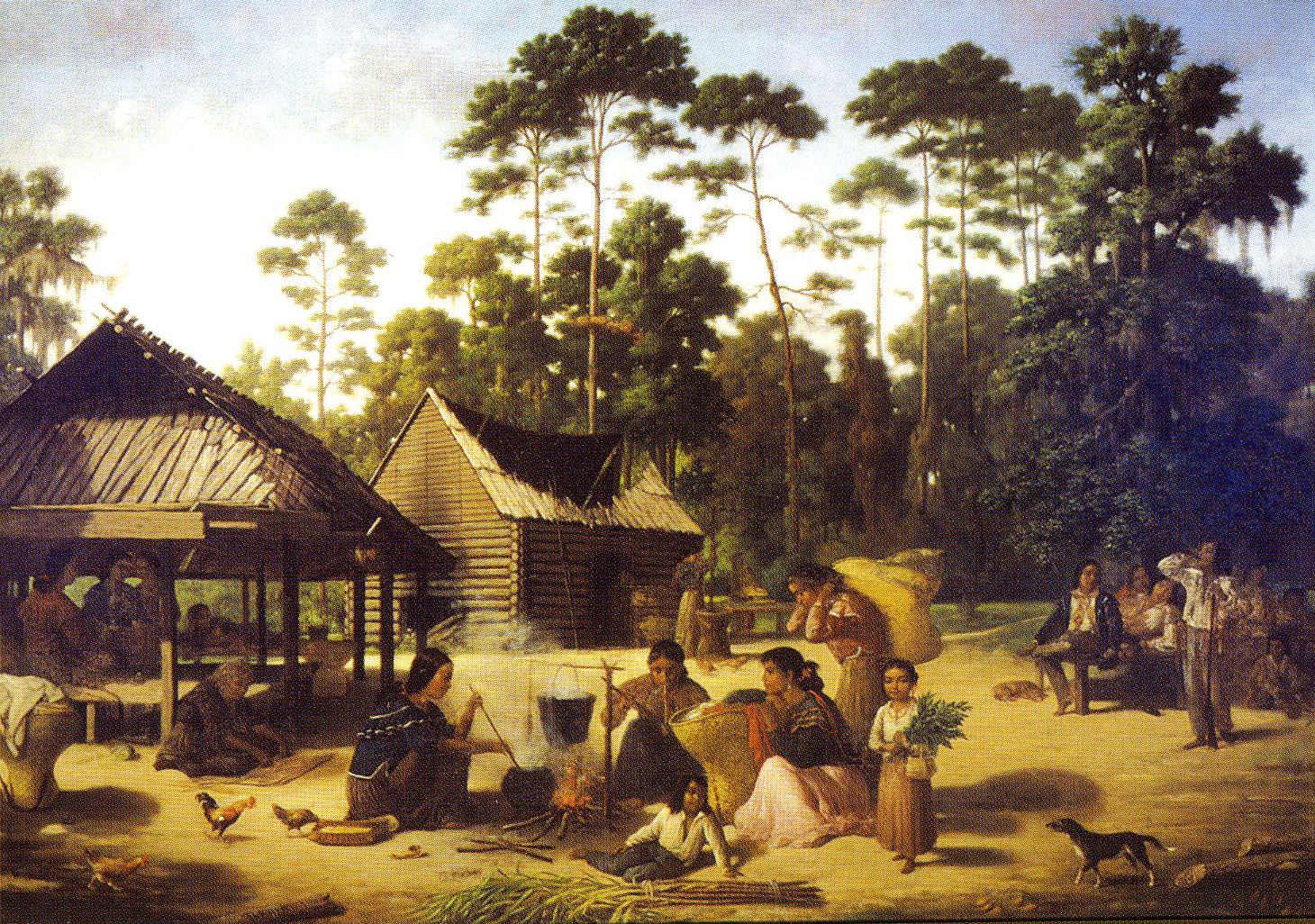
    Painting of Choctaw Village. By: Francois Bernard.

    The friction between the Native Americans and colonizing settlers is well documented and known. However, the general policy underlying that friction is perhaps best captured by Thomas Jefferson’s perspective on the subject: “let the natural demographic growth and movement of white Americans take their course.” Gordon Wood, Empire of Liberty, 398.

    Jefferson believed that this would surround the Native Americans, and ultimately force them to take up farming. Meanwhile, the American government could acquire the hunting grounds of the Native Americans and settle those lands. This strategy, executed by Jefferson and his successor, James Madison, resulted in the negotiation of 53 “treaties of land cession with various tribes.” Id.

    Some tribes, like the Cherokees in the Southwest, adapted to the new way of life (living in houses and relying on agriculture for food), but mostly, Jefferson’s plan ended in tragedy for the Native Americans. Id.

    The early Americans did not comprehend that tragedy would be the result of forcing a civilization to change its ways. These acts by the early Americans undoubtedly weakened and fragmented the Native American tribes, which enabled later presidents, like Andrew Jackson, to implement removal and relocation policies. Those policies would be the death knell for Native American society.

    Often, the sheer harshness of the early Americans toward the Native American societies is forgotten or downplayed. But the early Americans truly were ruthless both in their quest for land and for their lack of belief that the Native American way of life should have continued in any recognizable manner.

    Some may posit that these actions by the early Americans were the first examples of how the United States would routinely impose its beliefs on others, to push its interests forward. There are certainly times in American history where this has been the case, and the treatment of the Native Americans is unquestionably one of those times.

    As much as Americans have to be thankful for, it is worth taking a moment to reflect on the great tragedies that the early Americans forced on the Native Americans. While those actions enabled the American engine of growth to begin, it came at a great cost to human life and dignity, which should not be forgotten.

  • Preservation of America and its Virtues

    Painting of Daniel Boone leading party into Kentucky. By: Daniel Murphy.

    Europeans and early Americans both believed that the New World, America included, was made of a climate “harmful to all living creatures, including the Indians, who were the only humans native to the New World.” Gordon Wood, Empire of Liberty, 386. George Louis Leclerc, comte de Buffon, wrote in his 36-volume book Natural History that the New World had “some combination of elements and other physical causes, something that opposes the amplification of animated Nature.” Buffon, Natural History, General and Particular, in Henry Steele Commager and Elmo Giordanetti, eds.

    Americans were insecure about this fact. Americans knew that America had twice as much rain as Europe, that there could be wild swings in temperature, and that the same regions that would be bitterly cold in winter could be boiling hot in summer. Gordon Wood, Empire of Liberty, 389.

    America’s leaders came to believe that these conditions, particularly the intense heat and humidity, would routinely lead to the spread of diseases, like yellow fever. The leading intellectuals of the day, including Benjamin Rush, Noah Webster, Samuel Mitchill, Benjamin Latrobe and Charles Caldwell, thought how best to deal with this problem. Charles Caldwell imagined that American cities should be rebuilt as a result of the unusual climate, “requiring lofty buildings, lots of squares, and many trees, especially Lombardy poplars, which were the best kind of tree for soaking up the miasma and emitting vital air.” Id. at 390.

    Many Americans began to wonder if the Native Americans’ lack of progress in the thousands of years prior to the colonies was attributed to the circumstances of America’s land, not a difference in nature. Id. at 394. Why did so many Americans wonder this? Because a fear began to develop that Americans might degenerate to a cruder and more savage state, as a result of their environment. Id. at 395.

    Some Americans observed that as settlers moved west, they tended to lose their “politeness and refinement.” Id. at 396. Some questioned whether that was a result of the environment and was the beginning of a regressive movement back to a more savage state.

    Thomas Jefferson told a different story, however. “The tendency of the American character is then to degenerate, and to degenerate rapidly; and that not from any peculiar vice in the American people, but from the very nature of a spreading population. The population of the country is out-growing its institutions.” Thomas Jefferson to William Ludlow, September 6, 1824.

    There are two interesting points of analysis here.

    First, there is always a continual sense in American history that the essential element of American-ness is being lost. Rather than being confident that society could preserve its best traditions and attributes, Americans seem to have a fear that because styles, norms, or people change, those traditions and key American attributes are at risk. This fear seems to be misplaced, considering the extraordinary changes that American society has experienced in its over 200 years of existence.

    Second, Jefferson’s fear that the spreading population was outgrowing the government was a legitimate fear but one that ultimately did not come to fruition. As the settlers expanded the boundaries of the United States westward, the ability of the federal government and states to keep up was undoubtedly tested. However, the settlers came from the East, with all of its established institutions. Those settlers must have desired to recreate the familiar structure of American life that was familiar to them, and even those who were not familiar with the Eastern lifestyle would quickly have seen the benefits.

    Both of these points, the preservation of American virtues and the government’s ability to adapt to its growing and changing population, remain as relevant now as the early 1800s. These same issues are raised and argued over time after time throughout American history, and yet, the Union remains strong. Perhaps the concerns and the worries about these two fundamental issues, while understandable, are misplaced.

  • The Louisiana Controversy

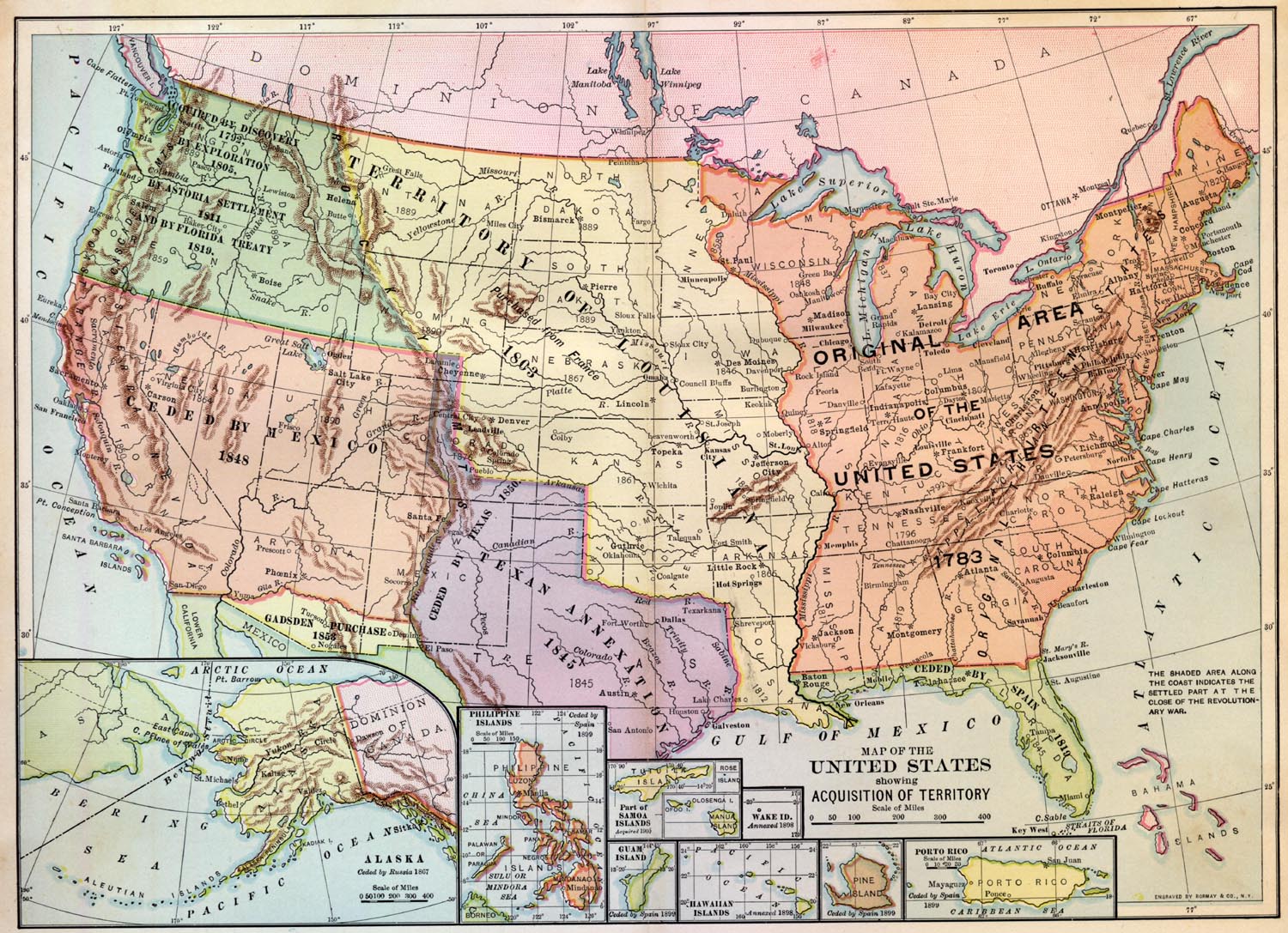
    A map portraying the Louisiana Purchase’s territory.

    The Louisiana Purchase in 1803 added approximately 823,000 square miles to the United States’ territory. At that time, Thomas Jefferson favored the purchase, as it protected America from the threat of France or Britain invading the United States, particularly through New Orleans. Gordon Wood, Empire of Liberty, 369. The acquisition also would force the territory of Florida, owned by Spain then, to join the United States, which it of course eventually did.

    A majority of Americans saw the Louisiana Purchase as a momentous occasion for America, in that it ended the struggle for control of the Mississippi River but it also allowed America to gain independence from the European powers of France and Britain. Id.

    Fisher Ames, a Representative of Massachusetts from 1789-1797, declared that the Louisiana Purchase was “a great waste, a wilderness unpeopled with any beings except wolves and wandering Indians.” He explained that it was a waste by stating: “We are to spend money of which we have too little for land of which we already have too much.” Id. He saw it as instead a way for “Imperial Virginia to move its slaveholding population westward to gain influence. Id. at 370.

    Even Alexander Hamilton favored the purchase, but expressed his reservations as to its effect on the United States as a whole: Could it be made “an integral part of the United States,” or would it merely be a colony of America? Id.

    Certainly, very few modern Americans would now question the wisdom and the investment of the Louisiana Purchase, for territorial purposes alone. The short term security benefits are long forgotten, as the European powers who then threatened the United States are now its strongest allies.

    Nonetheless, these views by Fisher Ames and Alexander Hamilton show that even the most popular and beneficial decisions by presidents are not without dissent. Now, sometimes analysts and commentators are tempted to speculate that there was a moment in American history where a presidents’ actions were widely appreciated and admired and free of dissent.

    While that may occasionally be true, even with the Louisiana Purchase, that added so much territory for settlers to use and security for the existing states, there was dissent.

  • The Ohio System

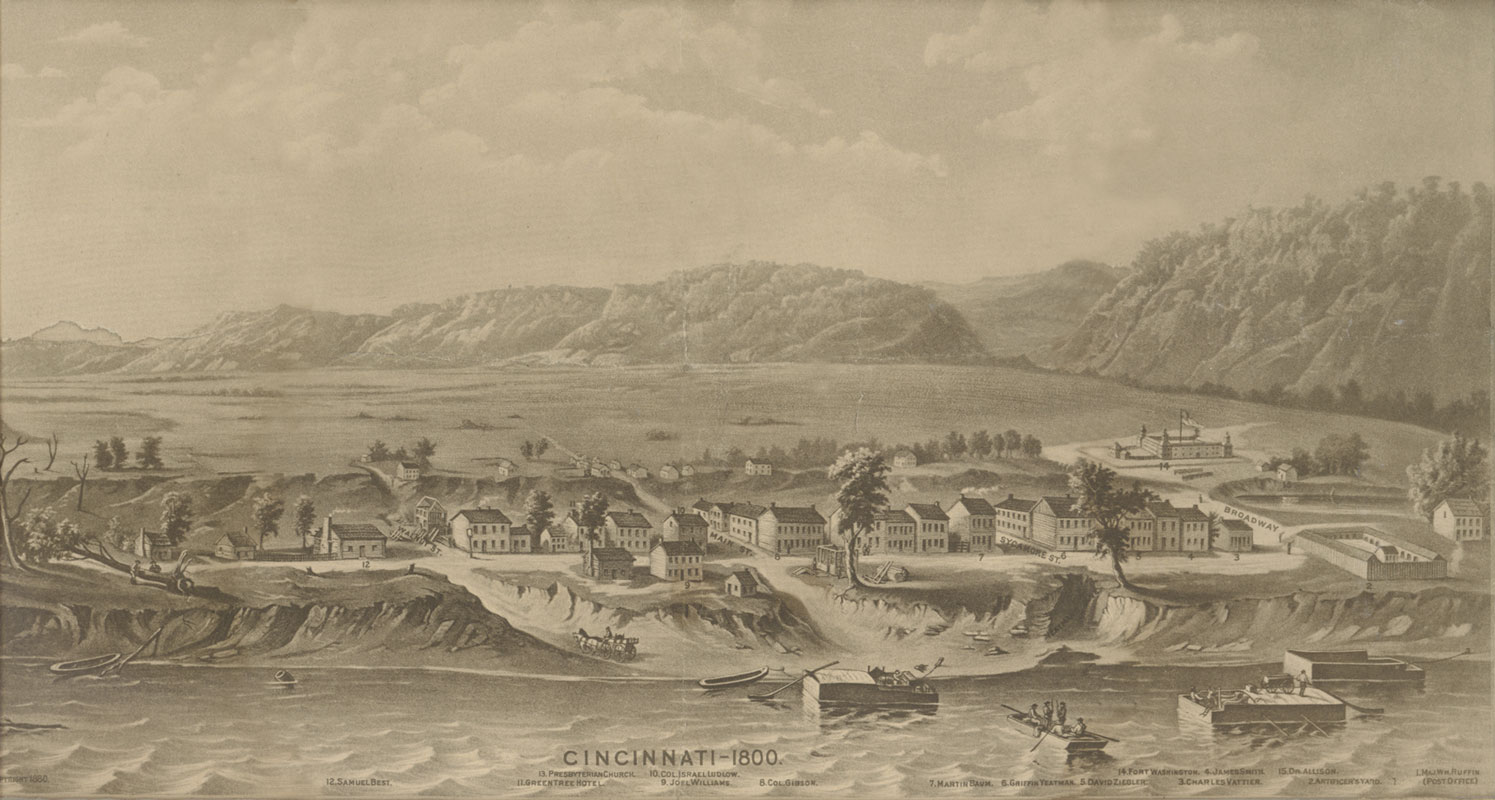
    Lithographic Print of Cincinnati, Ohio. 1800. By: Stobridge Lithographing Co.

    Ohio was admitted into the Union in 1803, and it introduced a new political system to the United States. Each county in Ohio had county commissions that each county’s citizens elected, rather than the states of the South and Southwest, who had self-perpetuating commissions. Gordon Wood, Empire of Liberty, 365.

    Further, each county commission had overlapping jurisdiction with “towns, school districts, and other subdivisions,” which produced a variety of offices for election. Id. Local citizens were responsible for electing its local representatives to these towns, school districts, and county commissions, as well as fulfilling their obligations for electing representatives to the Ohio State Senate and House of Representatives and of course the federal Senate and House of Representatives.

    Gordon Wood notes in Empire of Liberty that so many political offices open created a widespread, competitive political atmosphere, with dozens and dozens of candidates running for the various offices then open for politicians in Ohio. For example, 116 men ran for “Hamilton County’s [the County including Cincinnati] seven seats in Ohio’s third territorial assembly.” Id. In 1803, 22 candidates ran to be Ohio’s first governor. Id.

    Meanwhile, because of Ohio’s diverse economy, “with a variety of markets and no simple distribution for the region’s many products,” small towns began popping up all over Ohio. Id.

    These early years in Ohio inevitably created a sense of participation in politics on all levels for Ohioans. As is familiar for modern Americans, early Ohioans, beginning in 1803, would participate in their local politics, state politics, and federal politics. Unlike other states in the Union in the South and Southwest of the country then, Ohioans would have an active role in electing their local governments and having a say in how local affairs were conducted.

    The fact that so many Americans had no ability to be involved in their local elections prior to this Ohioan system being adopted deserves more analysis. The uniquely American obsession with having democratic principles from top to bottom and from small to large has spread throughout the United States by now, but in those early years, it is clear that the extent of democratic rights were, for some, perhaps just limited to state elections and federal elections.

    Americans now enjoy the full benefits of democracy on the local level, the state level, and the federal level. Some in the early years of the Republic may have questioned the capability of the citizenry to be informed enough to elect their local politicians. But there is no question that the election of local politicians, whether they be in school districts, county commissions, or towns, is a fundamental responsibility that is valued by Americans who choose to inform themselves and exercise their right to vote.

  • The Great Replacement

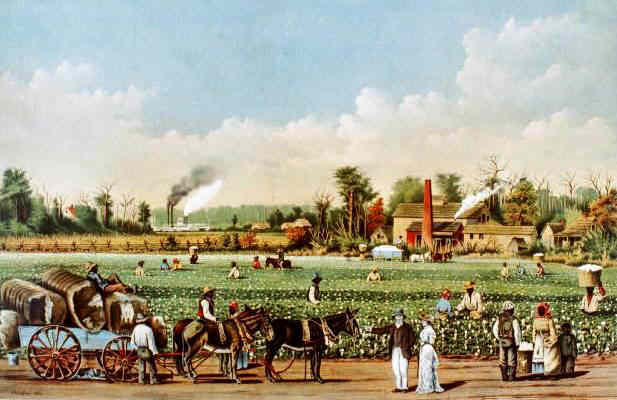
    Cotton Plantation, 1800s.

    By 1776, indentured servitude had become a widespread and prominent part of English life. By the 1810s, however, indentured servitude was seen by most Americans as inherently at conflict with the “natural rights of man.” Gordon Wood, Empire of Liberty, 346. Some Americans concluded that servitude as a whole was “highly anti-republican.” Id.

    However, as indentured servitude became less prominent, black slavery took its place. The servants who continued to work were quick to differentiate themselves from the black slaves, often times not admitting that they were servants but instead classifying themselves as merely “help,” who was “staying in the house.” Id.

    It is plausible to hypothesize that the decline of indentured servitude led to the increase in using slaves. As repulsive and disgusting as it may seem now, early Americans did not view the slaves as individuals, instead classifying them as property. Servants had a different role altogether, sometimes sitting at the table with their “bosses.” Notably, slaves did not use the word “boss,” but instead used the word “master” typically.

    While this issue gets to a broader piece of American history rife with controversy and hypocrisy, it also reflects perhaps a reason that slavery grew to become such a staple of American life in the decades leading up to the Civil War. With the increase of “human rights” came a decrease in the use of servants in Americans’ lives, which ultimately appears to have led, at least partially, to an increase in the use of slaves.

    This development in American history is troubling, as it shows the profound misplacement of belief that the early Americans had in what human rights meant. While some were opposed to the idea of slavery altogether in the earliest years of the Republic, many tolerated it, despite also proclaiming to be Republicans concerned with the rights of all humans.

    Fortunately, as the decades wore on, it became increasingly clear to Americans that human rights inherently must include slaves. One wonders what would have been had the indentured servants not so readily been replaced by slaves, and if widespread slavery could have been prevented altogether before it came to dominate the Southern economy.

  • Early American Behavior

    Simon Snyder.

    Americans in the late 1700s were “known for pushing and shoving each other in public and for their dread of ceremony.” Gordon Wood, Empire of Liberty, 329. Further, violence, rioting, and demonstrations in America had become commonplace, more than in England. See id. at 335-36. Some blamed this uniquely American behavior as being caused by an excessively alcohol-centered culture. By way of example, Gordon Wood explains in Empire of Liberty that during a trial in court, “a bottle of liquor might be passed among the attorneys, spectators, clients, and the judge and jury.” Id. at 340.

    These early American behaviors changed the nature of politics. Republicans began to realize that the dream of a Republic full of virtuous, compassionate individuals who would sacrifice their wellbeing for those of their compatriots was not coming true. Gordon Wood, Empire of Liberty, 329.

    Common Americans began to want unpretentious men for politicians, which some took as troubling. When some attempted to mock those politicians who were unpretentious and unrefined, the majority of individuals would crowd out the naysayers. For example, Simon Snyder was elected governor of Pennsylvania in 1808, and insisted in not having an honor guard at his inauguration because he did not want the “pomp and parade,” which he felt was un-democratic. See Gordon Wood, Empire of Liberty, 331. Opponents mocked him, calling his followers clodhoppers as an insult, however, him and his supporters took that term and reversed it, treating it as a badge of honor.

    To illustrate the new American mentality even further, while in the 1700s men had worn colorful, varied clothing, in the 1800s men came to dress alike with “black coats and pantaloons,” so as to be equal with all other men. Id. at 332.

    Since those early days of “wild American behavior,” much has changed. The days of passing around liquor bottles in court are certainly gone. But the sense of having a truly democratic society, as Simon Snyder preferred, has not changed. When an inauguration occurs, whether at the state level or the federal level, there are traditions that have developed over the past two centuries. However, these traditions fall short of anything close to the monarchical traditions of Europe at the time of Simon Snyder.

    Setting aside the fact that Americans have apparently had a reputation for violence from the beginning, it is interesting to note that Americans have tightly held to the belief that a modest Republic is possible to maintain and is preferable to other types of government. While America is no longer quite so modest as in its early days, it stands alone as one of the most powerful countries in the world, both economically and militarily, while also keeping an identifiable modesty in the conduct of the government.

    Some may take issue with such a conclusion, that America is a noble republic that does not display “pomp and parade.” But then again, looking to other powers in the world currently and looking to the great powers of years past, when has a country with so much power carried a quiet confidence that its power was here to stay? It surely takes a significant amount of scouring the history books to answer that question.

  • The American Spirit of Work

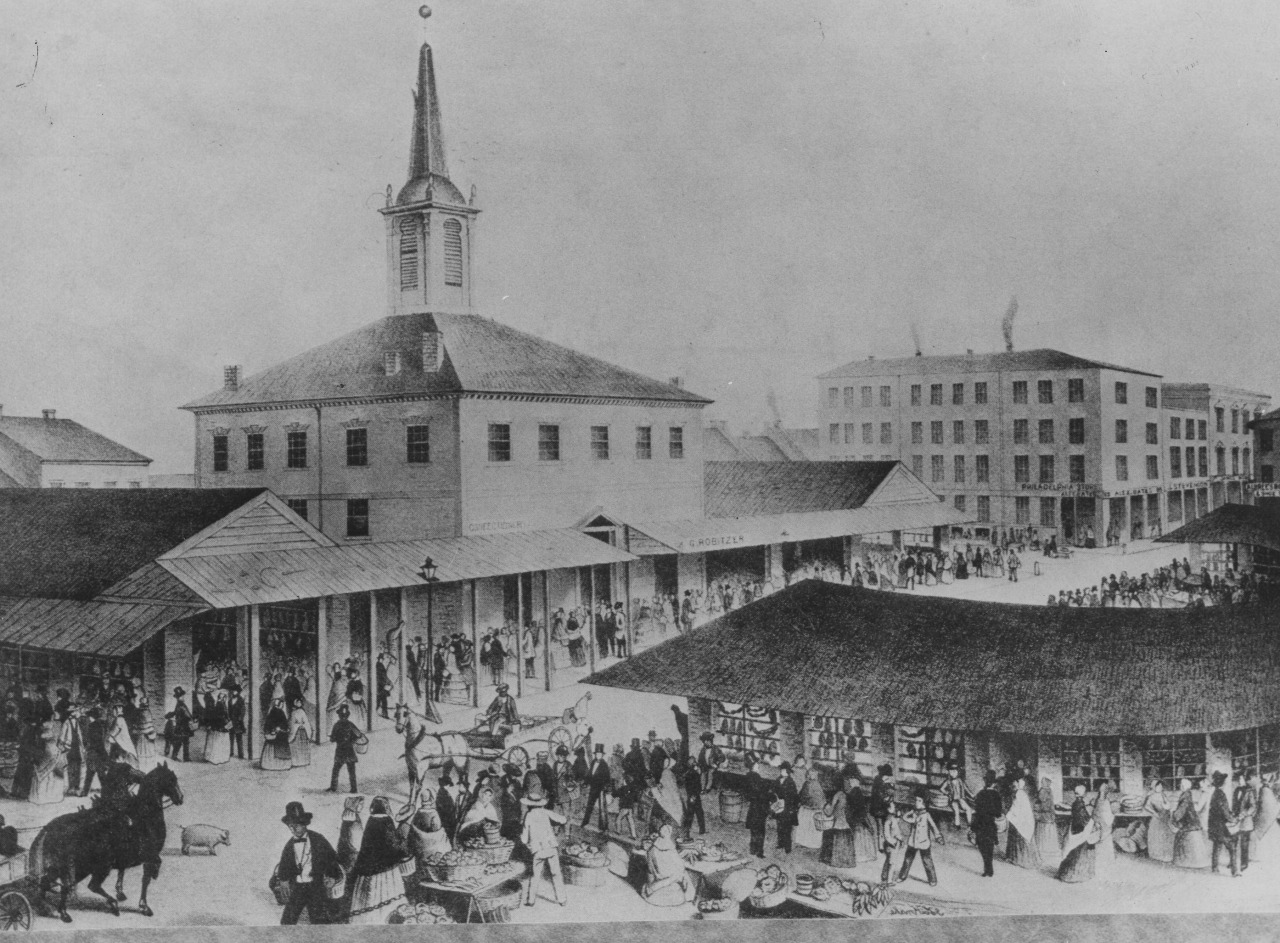
    Pittsburgh, 1790s.

    Arthur Young, an English writer who was supposedly enlightened and known for his writings about agriculture commented that “Everybody but an idiot knows that the lower class must be kept poor or they will never be industrious.” Derek Jarrett, England in the Age of Hogarth, (London, 1974), 79-80.

    This English belief, that the lower rungs of society were not entitled to an equal chance with their peers, captured the view of many for centuries leading up to the American Revolution. Most people in England believed that “people would not work unless they had to.” Gordon Wood, Empire of Liberty, 324.

    Benjamin Franklin, in 1784, asked the question: “Is not the Hope of one day being able to purchase and enjoy Luxuries a great Spur to labour and Industry?” Benjamin Franklin to Benjamin Vaughn, 26 July 1784. In the 1790s and early 1800s, farmers were now working hard and participating in national commerce “to increase their purchase of luxury goods and become more respectable,” not just to stay “out of poverty” or work by mere necessity. Gordon Wood, Empire of Liberty, 324.

    The equality amongst citizens in the early Republic was not only captured in the Constitution, but also had become woven into the fabric of American society. There was a universal belief that individuals were capable of accomplishing goals, of moving up in their profession, and of not being hindered by their modest means.

    Some would look to these formative years as the spark that led to the great American economy. It is not clear how this culture emerged, or what prompted this culture to emerge, but it became obvious by the early 1800s that the American economy was a force to be reckoned with, largely in part because of its burgeoning population and rapid expansion westward.

    That American spirit of work carries forward to today. Often, many politicians, commentators, and common folk are quick to explain that the American dream is dead. At least a part of the American dream, the ability for individuals to generate enough income to purchase luxuries to enjoy, has been present in Americans’ minds since the early Republic. Few would question whether this portion of the American dream is still being fulfilled by ordinary Americans.

  • Shift to Idealism

    George Washington Inauguration, 1789.

    The early Republic years were filled with hope and optimism for what the new country could achieve. The Republicans, through the 1790s and into the first decade of the 1800s, had a new idea about what government should be and how it should fit into the citizens’ lives.

    Republicans imagined “that people’s natural sociability and willingness to sacrifice their selfish interests for the sake of the whole would be sufficient social adhesives,” and a powerful federal government would not be necessary. See Gordon Wood, Empire of Liberty, 301.

    Alexander Hamilton and the Federalists thought these ideas were merely “pernicious dreams” of the Republicans and were surely too radical to be true. See id.

    Since those early years of the Republic, there has been a continuation of this debate. Undoubtedly, at least part of Thomas Jefferson’s and the Republicans’ view regarding Americans’ compassion and charity is true. Americans, as a collective, are charitable to a number of causes and organizations around the world, and Americans reinforce that principle that they are willing to occasionally sacrifice their selfish interests for the betterment of others.

    However, that compassion and charity does not supplant the need for a federal government to take some actions that could not have been contemplated by the Republicans or the Federalists. The Federalists’ misguided notion that a bureaucracy was necessary for the perpetuation of the country was just as incorrect as the Republicans’ belief that the people would inherently be willing to sacrifice their selfish interests in all regards.

    This would later become evident as the federal government’s intrusion was necessary to eradicate slavery, prevent discriminatory laws from being enforced, and ensure minorities’ rights, among a myriad of other examples.

    Some of what the Republicans believed and some of what the Federalists believed ultimately has proven to be true. Both Hamilton and Jefferson would be satisfied in knowing that their debate has vigorously continued, even if they would not be elated to know some of their ideals have been eroded.

  • The Indebtedness of the Early Republic

    The Louisiana Purchase Treaty.

    From its declaration of independence to the start of Thomas Jefferson’s first term as president in 1800, the federal government had consistently taken on a significant amount of debt: $80 million in total. See Gordon Wood, Empire of Liberty, 298. Prior to that, the federal government had taken out millions of dollars from Europe, including from the French government and from Dutch bankers, to finance the Revolutionary War effort. United States Department of State, available at https://history.state.gov/milestones/1784-1800/loans.

    By the time Thomas Jefferson took office in 1800, the Revolutionary War debt had been paid off, however, Thomas Jefferson and the Republicans were especially concerned about the growing debt that the United States had taken on. In fact, in 1798, Jefferson considered the idea of amending the Constitution to take the power of borrowing away from the federal government. See Gordon Wood, Empire of Liberty, 298. While Jefferson never accomplished such a drastic step, he prioritized paying the debt down each year. He foretold that the United States would “be committed to the English career of debt, corruption and rottenness, closing with revolution. The discharge of the debt, therefore, is vital to the destinies of our government.” See Gordon Wood, Empire of Liberty, 298.

    Throughout the 1790s, the United States shifted all of its obligations from the governments of Europe to private investors. By 1795, America only owed money to private investors. United States Department of State, available at https://history.state.gov/milestones/1784-1800/loans. This, combined with the federal government’s payments created a solid credit rating in Europe, which enabled taking low-interest loans from European lenders for the Louisiana Purchase. Id.

    By 1810, the Republicans reduced the debt to approximately $40 million, even after having spent $15 million in cash on the Louisiana Purchase. See Gordon Wood, Empire of Liberty, 298. Thomas Jefferson had made significant progress in moving the federal government away from its borrowing spree. Perhaps Jefferson was fearful that the federal government would default on its obligations as it had in 1785 on interest payments to France and further installments in 1787. United States Department of State, available at https://history.state.gov/milestones/1784-1800/loans.

    This brief history of the federal government’s debt illustrates the difficulty of balancing spending with saving. Few would question significant investments like borrowing for the financing a war for independence or for a purchase that effectively doubled the size of the country. The question that arises nearly every year is rather, how much discretionary spending is necessary?

    Jefferson’s fear of corruption leading to revolution is likely at the furthest end of the spectrum of possibilities. Regardless, a default on indebtedness held by the federal government would have significant consequences that could not be ignored in the early Republic and cannot be ignored now. Where there are benefits to be gained, investments are necessary.

    While some may be opposed to debt as a matter of principle, Jefferson’s concerns show the true threat of excessive liability for the federal government. Simply having debt to pay down is not a threat to the future of the country. When America’s wellbeing is endangered or America’s credit rating is threatened, action is unquestionably necessary to prevent those results.

  • How Small is Too Big?

    Portrait of Thomas Jefferson. By: Rembrandt Peale. 1805.

    When Thomas Jefferson and the Republicans came to power in 1800, they had a major priority: reverse the Federalist trend of expanding the federal government.

    In Thomas Jefferson’s first message to Congress, in 1801, Jefferson framed the role of the federal government as only being “charged with the external and mutual relations only of these states.” All other matters were to be left to the states.

    In 1800, the American federal government was “small even by eighteenth-century European standards.” Gordon Wood, Empire of Liberty, 291. Gordon Wood explains in Empire of Liberty that in “1801 the headquarters of the War Department, for example, consisted of only the secretary, an accountant, fourteen clerks, and two messengers. The secretary of state had a staff consisting of a chief clerk, six other clerks (one of whom ran the patent office), and a messenger. The attorney general did not yet even have a clerk.” Id.

    Throughout the 1790s, there was significant growth in the governmental offices, so the numbers cited for 1801 would have appeared to be a major jump from those in the first years after the adoption of the Constitution. Nonetheless, Jefferson and the Republicans were determined to reverse the trend of a growing federal government that began to resemble the bureaucratic monarchies of Europe.

    Jefferson’s perspective of the role of government, and the tension between the Federalists and Republicans on the desirable and proper size of the federal government continue to be relevant today. Obviously, the federal government has grown to include numerous other departments and agencies since the early Republic, but the same question is still discussed amongst common people, analysts, and politicians: how much of a presence should the federal government have in the common person’s life?

    While Jefferson and the early Republicans sought to limit the presence of the federal government to essentially handling the mail and foreign relations, the belief that the federal government needed to be involved in crucial aspects of Americans’ lives undoubtedly won the contest.

    Few Americans now would advocate abolishing Social Security, taxes, downsizing of federal agencies, and having a more passive, impotent federal government overall. These federal responsibilities feel necessary to the average American. Justifiably so, as the federal government is uniquely positioned to oversee the implementation of policies that benefit all Americans.

    Perhaps the gradual growth in the federal government, with occasionally growing under liberal-leaning presidents and Congresses and occasionally diminishing under conservative-leaning presidents and Congresses, was the best way for the United States to progress from a small republic to a global superpower.

    It seems that the healthy debate between the parties over the past two centuries of what the federal government should be is what kept the United States on a moderate path, never straying too far from its principles.