Tag: Early Republic

  • The Fort Hill Address

    Personalities AE  6
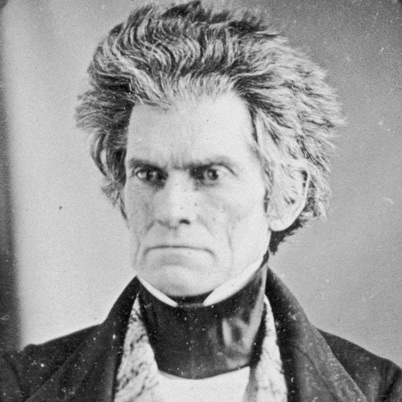
    John Calhoun.

    John Calhoun, by 1831, had alienated himself from President Andrew Jackson, and he wanted to “head off talk of secession,” and on July 26, 1831, he published his “Fort Hill Address” in a South Carolina newspaper. Daniel Walker Howe, What Hath God Wrought: Transformation of America, 1815-1848, 399.

    (more…)

  • The Aftermath of Jackson’s Bank Policies

    secondbank
    Illustration of the Second Bank of the United States.

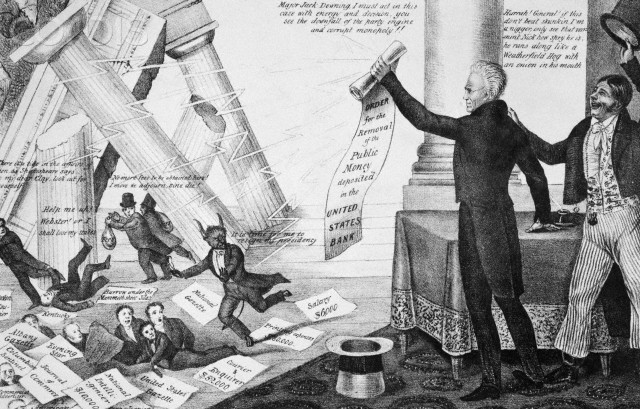
    In the aftermath of President Andrew Jackson’s destroying the Second Bank of the United States, there were ramifications throughout the country, from top to bottom.

    (more…)

  • The Most Important Veto

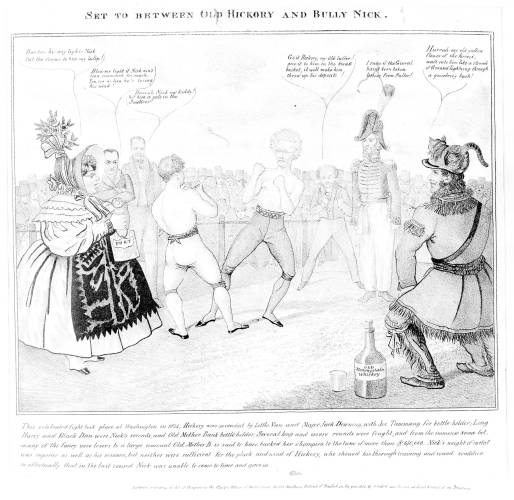
    old_hickory_and_bully_nick
    Political Cartoon of Andrew Jackson and Nicholas Biddle. Published in Harpers Weekly in 1834.

    President Andrew Jackson did not want banknotes in the American economy, as he was an adherent to the gold standard. Daniel Walker Howe, What Hath God Wrought: Transformation of America, 1815-1848, 376. He would be forced to confront Nicholas Biddle, the President of the Second Bank of the United States.

    (more…)

  • The Second Bank of the United States

    second_bank_of_the_united_states_front
    The Second Bank of the United States. Photograph by: Beyond My Ken.

    In 1816, with James Monroe as president, Congress agreed to “charter a Second Bank for twenty years.” Daniel Walker Howe, What Hath God Wrought: Transformation of America, 1815-1848, 374.

    (more…)

  • Liberty and Union, Now and Forever, One and Inseparable

    daniel_webster
    Daniel Webster.

    In 1830, Daniel Webster, Senator from Massachusetts, engaged in a heated debate with Robert Hayne, Senator from South Carolina, which touched on the political theory of federal and state sovereignty.

    (more…)

  • Jackson’s Early Economic Success

    ralph_eleaser_whiteside_earl_andrew_jackson_ncmoa
    President Andrew Jackson. Circa 1830-32. By: Ralph Eleaser Whiteside Earl.

    President Andrew Jackson had good fortune as his presidency began with a wave of prosperity. See Daniel Walker Howe, What Hath God Wrought: Transformation of America, 1815-1848, 360.

    (more…)

  • The Maysville Road Veto

    Political Cartoon of Andrew Jackson
    Political Cartoon Depicting the Maysville Road Veto.

    The Maysville Road was a major internal improvement that Congress had captured in a bill, the Maysville Road Bill. Daniel Walker Howe, What Hath God Wrought: Transformation of America, 1815-1848, 357. It was meant to be a link in the burgeoning transportation network, “connecting the National Road to the north with the Natchez Trace to the south and the Ohio with the Tennessee river systems.” Id.

    (more…)

  • Jackson’s Removal of Native Americans

    chief-joseph
    Depiction of the Removal of Native Americans.

    In the first year of Andrew Jackson’s presidency, the removal of Native Americans from their lands became a top priority.

    (more…)

  • The Jurisprudence of the Removal of Native Americans

    william-wirt-2-e1451418942611-825x510-1451419281
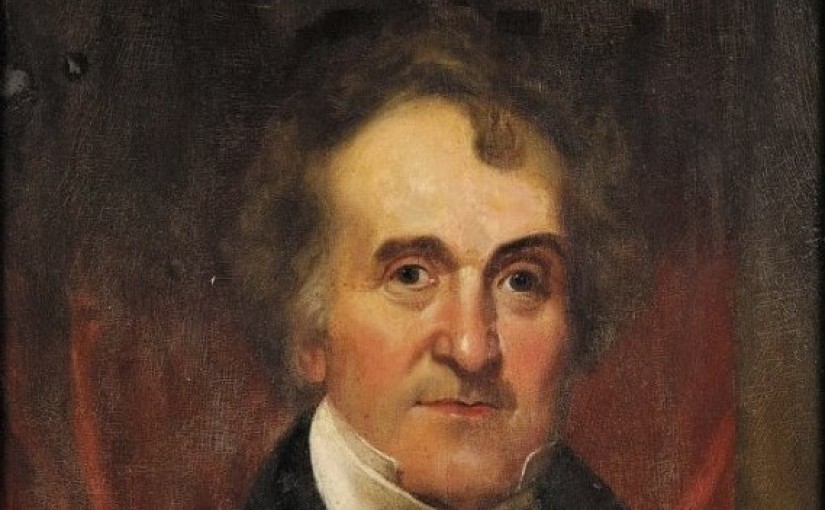
    William Wirt. By: Henry Inman.

    In the face of the removal of Native Americans, the Cherokees turned to the federal courts for help.

    (more…)

  • America’s First Sex Scandal

    andrew_jackson_portrait
    Andrew Jackson. By: Alexander Hay Ritchie.

    Upon arriving in the White House, Andrew Jackson appointed John Eaton as Secretary of War. Daniel Walker Howe, What Hath God Wrought: Transformation of America, 1815-1848, 336. Little did Jackson know the extent to which this decision would plague the first year of his presidency.

    (more…)