Tag: Economic Development

  • The Railroad Revolution

    dewitt_clinton_28locomotive29
    A Depiction of the Replica of the Dewitt Clinton, an American-made Locomotive.

    Following the Panics of 1837 and 1839, America began rapidly expanding a new innovation: the railroad. While this would seem to have brought the country together, in fact, it increased sectionalism, creating more tension between the North and the South. Daniel Walker Howe, What Hath God Wrought: Transformation of America, 1815-1848, 569.
    (more…)

  • The Classification of Americans

    850px-death_of_locofocoism_crop
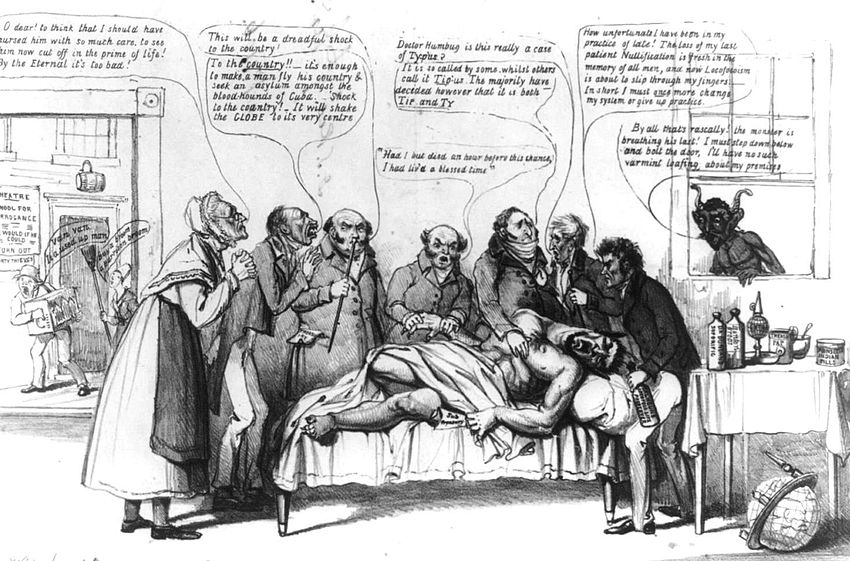
    Cartoon Celebrating the Death of the Locofoco Movement.

    America’s economic development resulted in American workers being classified, creating tension between the classes.

    (more…)

  • The Aftermath of the Panics

    rmth-standingright
    Robert M.T. Hunter, Speaker of the House.

    Amidst the Panics of 1837 and 1839, the Whigs enjoyed significant gains in Congress, which led to Robert M.T. Hunter, a pro-states’ rights southerner, becoming Speaker of the House. Daniel Walker Howe, What Hath God Wrought: Transformation of America, 1815-1848, 506. Further, besides the changing composition of Congress, the federal government’s policies would change, as a result of the Panics.

    (more…)

  • The Panic of 1839

    martinvanburen
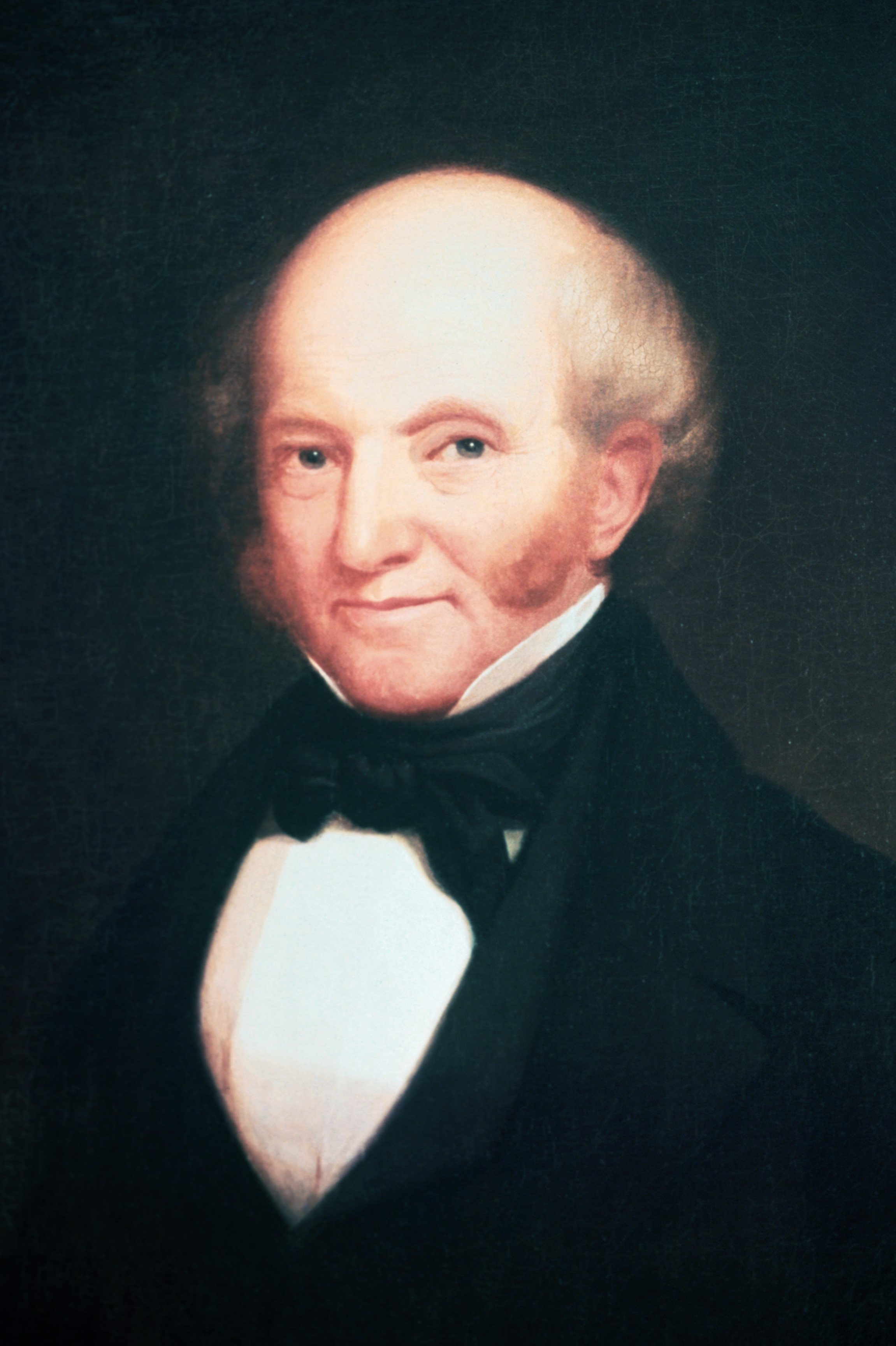
    Martin Van Buren.

    Not long after the Panic of 1837 had set in and gripped America’s economy, a second shock came: the Panic of 1839.

    (more…)

  • The Panic of 1837

    1724403_orig
    A Political Cartoon About the Panic of 1837.

    In Martin Van Buren’s inaugural address, in March of 1837, he boasted of the prosperity and expansion of commerce that had occurred under his predecessor, Andrew Jackson. Just months later, the Panic of 1837 would begin. Daniel Walker Howe, What Hath God Wrought: Transformation of America, 1815-1848, 502.

    (more…)

  • The Aftermath of Jackson’s Bank Policies

    secondbank
    Illustration of the Second Bank of the United States.

    In the aftermath of President Andrew Jackson’s destroying the Second Bank of the United States, there were ramifications throughout the country, from top to bottom.

    (more…)

  • The Most Important Veto

    old_hickory_and_bully_nick
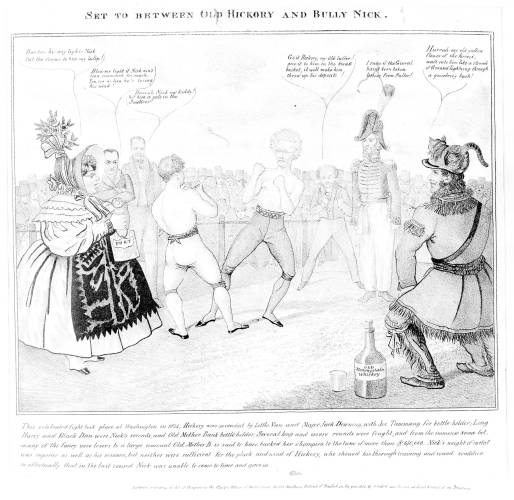
    Political Cartoon of Andrew Jackson and Nicholas Biddle. Published in Harpers Weekly in 1834.

    President Andrew Jackson did not want banknotes in the American economy, as he was an adherent to the gold standard. Daniel Walker Howe, What Hath God Wrought: Transformation of America, 1815-1848, 376. He would be forced to confront Nicholas Biddle, the President of the Second Bank of the United States.

    (more…)

  • The Second Bank of the United States

    second_bank_of_the_united_states_front
    The Second Bank of the United States. Photograph by: Beyond My Ken.

    In 1816, with James Monroe as president, Congress agreed to “charter a Second Bank for twenty years.” Daniel Walker Howe, What Hath God Wrought: Transformation of America, 1815-1848, 374.

    (more…)

  • Jackson’s Early Economic Success

    ralph_eleaser_whiteside_earl_andrew_jackson_ncmoa
    President Andrew Jackson. Circa 1830-32. By: Ralph Eleaser Whiteside Earl.

    President Andrew Jackson had good fortune as his presidency began with a wave of prosperity. See Daniel Walker Howe, What Hath God Wrought: Transformation of America, 1815-1848, 360.

    (more…)

  • The Tariff of Abominations

    Painted Portrait Of Martin Van Buren
    Martin Van Buren.

    Both President John Quincy Adams and Henry Clay were of the mindset that much could be accomplished in developing the American economy with the help of the government. Martin Van Buren had different ideas, however.

    (more…)