Tag: England

  • The Civil War: Jefferson Davis: Farewell Address in the U.S. Senate

    January 21, 1861

    United States Senator Jefferson Davis, of Mississippi, rose on the floor of that august chamber the morning of January 21, 1861 to make an announcement. It would not be one pertaining to some Senate bill, or a resolution, but instead an announcement that he was leaving the Senate.

    (more…)
  • The Revolution: Cato’s Thoughts on a Question Proposed to the Public (Part III)

    Pamphlet by “Cato”: Thoughts on a Question of Importance Proposed to the Public, Whether it is probable that the Immense Extent of Territory acquired by this Nation at the late Peace, will operate towards the Prosperity, or the Ruin of the Island of Great-Britain?

    London, 1765.

    Part I here.

    Spheres of influence as well as empires are difficult to maintain. Maintaining them requires time, money, and sound discretion. The author whose pen name was Cato recognized this when discussing the British colonies, which he labeled as “unweildy Possessions [sic].” In making his arguments, he wrote, he did not base them “upon the Treachery of particular Men, or even the Degeneracy of the present Age, but upon the Mistakes of Human Nature.”

    (more…)
  • The Revolution: Thomas Jefferson on the Draft Articles of Confederation (Part II)

    The Autobiography. By: Thomas Jefferson

    July 30, 1776 – August 1, 1776

    How the colonies would get along with each other was always going to be a monumental challenge. And, when the nation was born, there was tension between delegates and their states in setting up the framework for how the colonies would vote. With states such as Massachusetts and Pennsylvania being much larger in size and population, smaller states such as Rhode Island could justifiably fear that confederating with the colonies would bring more harms than benefits. However, to the chagrin of larger states, in the draft Articles of Confederation, at Article XVII, it stated: “In determining questions each colony shall have one vote.”

    (more…)
  • The Revolution: Cato’s Thoughts on a Question Proposed to the Public (Part II)

    Pamphlet by “Cato”: Thoughts on a Question of Importance Proposed to the Public, Whether it is probable that the Immense Extent of Territory acquired by this Nation at the late Peace, will operate towards the Prosperity, or the Ruin of the Island of Great-Britain?

    London, 1765.

    Part I here.

    When a nation has “Elegance and Luxury” introduced to its people, “it must be Manufacture and Commerce only, which can make a People numerous and prosperous.” So wrote Cato, and he continued by noting that when a nation has a more expansive territory, there is “less Necessity either of Manufactures or Commerce” as the “Multitude of common People, by whose Hands National Industry must be carried on, can easily find Support without them.” But, what if, as was the case with the British Empire, the territories become so far spread? Cato doubted that the same rules applied to such a situation; he predicted that manufacture and commerce were indeed still necessary for making the common people “numerous and prosperous.” And he made that prediction based on three reasons.

    (more…)
  • The Revolution: Cato’s Thoughts on a Question Proposed to the Public (Part I)

    Pamphlet by “Cato”: Thoughts on a Question of Importance Proposed to the Public, Whether it is probable that the Immense Extent of Territory acquired by this Nation at the late Peace, will operate towards the Prosperity, or the Ruin of the Island of Great-Britain?

    London, 1765.

    At the end of the Seven Years War, known to Americans as the French and Indian War, a peace came to be that included Great Britain adding more territory to its empire. That territory, located in the New World, brought the British Empire to effectively control North America, and while that was widely viewed as a net positive, questions were emerging about what the empire would do with its burgeoning colonies; colonies which may have been bringing income and commodities to Great Britain itself but also colonies that were becoming more difficult to maintain. To the author known as “Cato,” these developments did not bode well: he urged the British government to use the “quiet Interval, such as you now enjoy,” and while it “is very rare in Countries where there is so much Liberty as we have at present; neither can it be expected to last long.”

    (more…)
  • The Second Inauguration of Jefferson Davis

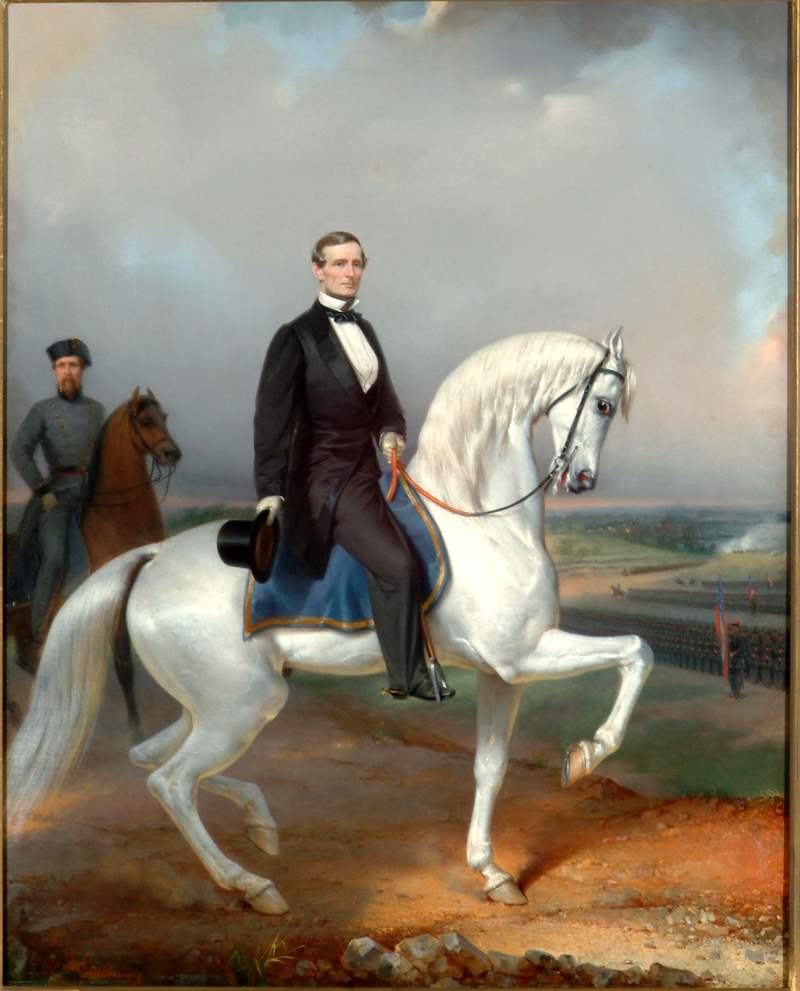
    The Second Inauguration of Jefferson Davis

    Confederate President Jefferson Davis, on the 130th anniversary of George Washington’s birthdate, was due to be inaugurated for a second time. Davis ran unopposed in the first (and only) presidential election in the Confederate States of America and was set to begin his six-year term on February 22, 1862. His daily responsibilities as president left him more involved in paperwork than any other activity, and the beginning of the day of his second inauguration was scarcely different from any other day for Davis: he did an hour of paperwork before preparing for the ceremony.[i] (more…)

  • Constitution Sunday: “Cato” V

    “Cato” V

    New York Journal, November 22, 1787

    Following are excerpts from an anonymous article published in the New York Journal:

    To the Citizens of the State of New-York.

    In my last number I endeavored to prove that the language of the article relative to the establishment of the executive of this new government was vague and inexplicit, that the great powers of the President (more…)

  • Constitution Sunday: Answers to Mason’s “Objections”: “Marcus” [James Iredell] II

    Answers to Mason’s “Objections”: “Marcus” [James Iredell] II

    Norfolk and Portsmouth Journal (Virginia), February 27, 1788

    Following are excerpts from James Iredell’s responses to George Mason’s “Objections” to the Constitution:

    IVth. Objection. The Judiciary of the United States is so constructed and extended, as to absorb and destroy the Judiciaries of the several States (more…)

  • The Image of Democracy

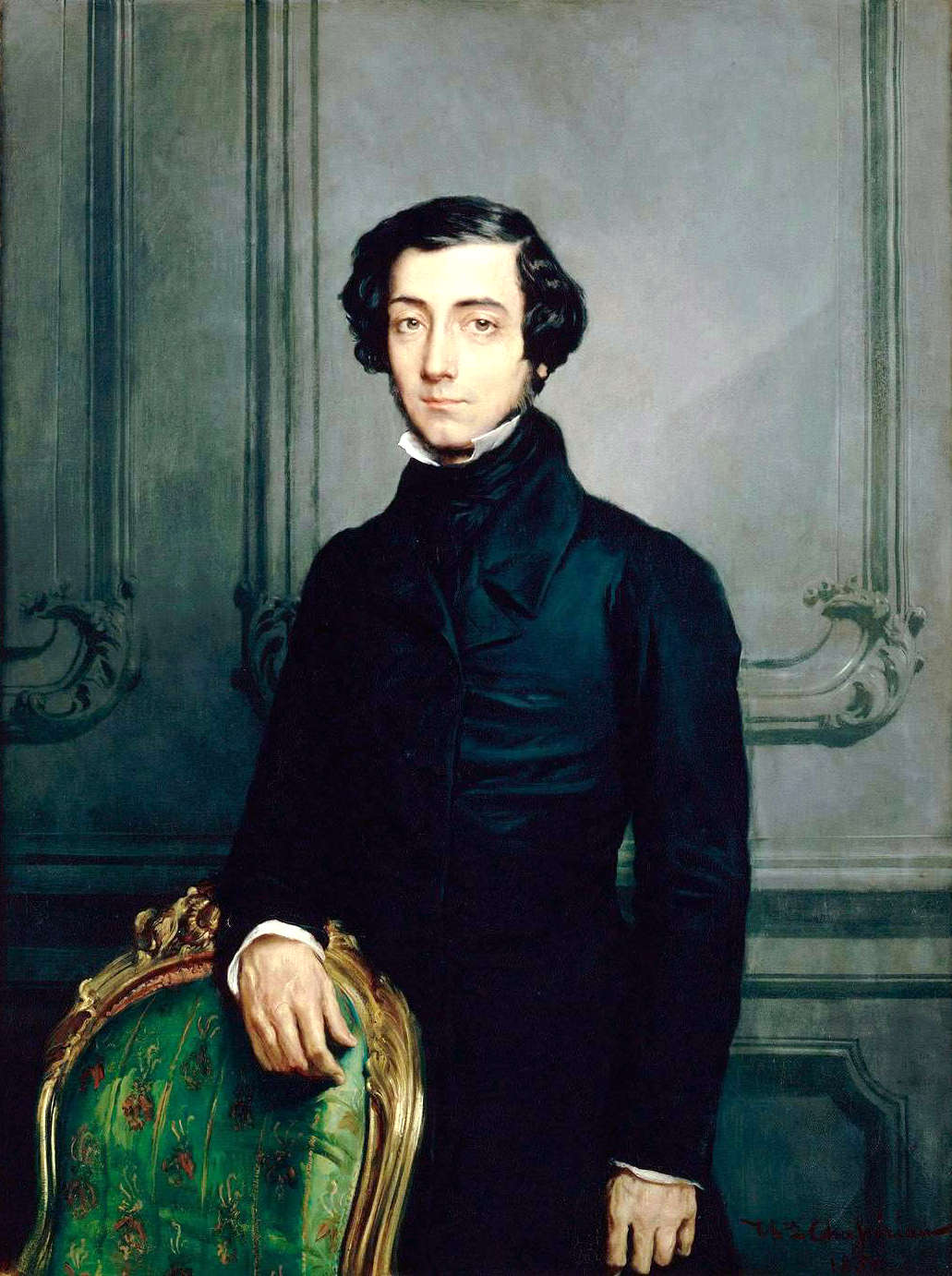
    alexis_de_tocqueville
    Alexis de Tocqueville. By: Theodore Chasseriau.

    America, in the early part of the 1800s, developed a reputation for being an experimental society. It was a prime example of popular rule, which brought a unique perspective to the world stage. See Daniel Walker Howe, What Hath God Wrought: Transformation of America, 1815-1848, 304.

    (more…)

  • The Defense Against Encroachments

    large_bp29
    James Varnum. By: John Nelson Arnold.

    While during the American Revolution, the judiciary was mostly forgotten, in the interest of controlling gubernatorial power by empower legislatures, that began to change during the 1780s.

    (more…)