Tag: Federalists

  • Constitution Sunday: “Centinel” [Samuel Bryan] XII

    Independent Gazetteer (Philadelphia)

    January 23, 1788

    When a group of people conspire, their interests are aligned to work toward a result and bring about that result. The reasons for participating in a conspiracy may be varied, but often, enriching oneself—either with money, influence, or power—is at the heart of it. Conspiracies are usually simple in design as enriching oneself need not be overly complicated. But, it is the allegation of grander conspiracies that often capture the public’s attention and imagination. Sometimes, this is because those grander conspiracies can explain the world’s events—which are often overwhelming and complex—in a clear, definite way. These conspiracies aren’t the type for which believers require detailed evidence; adherents would say that these conspiracies involve too many people with power and money to leave a trail of evidentiary breadcrumbs back to the wrongdoers. In their view, the most damning evidence simply cannot exist. Nonetheless, believers will find what they can, however weak or speculative or trivial it may be, and have no choice but to rely on it because otherwise the allegation of conspiracy collapses in on itself. And there is motivation to do this: it may be easier to maintain that facade of a conspiracy by adding to it weak evidence than to confront the complex realities of the world. It was within this context, at the beginning of 1788, that Samuel Bryan published an article in Philadelphia that, in his view, finally called out the framers of the Constitution, the Federalists, for the conspirators that they were.

    (more…)
  • Constitution Sunday: Letters from the “Federal Farmer” to “The Republican”

    Letters from the “Federal Farmer” to “The Republican”

    New York, November 8, 1787

    Following are excerpts from a series of letters published in New York, supposedly from the Federal Farmer to The Republican:

    “A general convention for mere commercial purposes was moved for—the authors of this measure saw that the people’s attention was turned solely to the amendment of the federal system; (more…)

  • Constitution Sunday: “A Political Dialogue”

    “A Political Dialogue”

    Massachusetts Centinel (Boston), October 24, 1787

    Following are excerpts from an article published in the Massachusetts Centinel, which purported to capture a conversation between “Mr. Grumble” and “Mr. Union”:

    “Mr. Union. Well, but neighbour, what are your objections to the new Constitution?”

    “Mr. Grumble. Why, as to the matter, I can’t say I have any, but then what vexes (more…)

  • Taking the Wolf by the Ears

    paul_cuffee
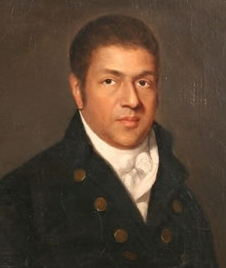
    Paul Cuffe. By: Chester Harding.

    Paul Cuffe, by 1816, began making voyages across the Atlantic Ocean to Africa, transporting African-Americans who wished to make a new home in Africa. Daniel Walker Howe, What Hath God Wrought: Transformation of America, 1815-1848, 260.

    (more…)

  • The Election of 1824

    m-9636
    William Harris Crawford.

    Not long after the election of 1820, an essentially uncontested election seeing the re-election of President James Monroe, the campaigning for the election of 1824 began. President Monroe had indicated that he would not seek an unprecedented third term as president, but that did not stop others from posturing for the election. As a journalist observed in the spring of 1822, “electioneering begins to wax hot.” Daniel Walker Howe, What Hath God Wrought: Transformation of America, 1815-1848, 203 quoting James F. Hopkins, “Election of 1824,” in History of American Presidential Elections, ed. Arthur M. Schlesinger Jr. (New York, 1985), 363.

    (more…)

  • Injury to the Cause of Christ

    lyman_beecher_-_brady-handy
    Lyman Beecher. By: Mathew Brady.

    The role of religion in Americans’ lives began to change not long after the War of 1812. In fact, the state of Connecticut “disestablished religion in 1818.” Daniel Walker Howe, What Hath God Wrought: Transformation of America, 1815-1848, 165. It should be noted that the First Amendment to the Constitution reads: “Congress shall make no law respecting an establishment of religion or prohibiting the free exercise thereof.” In other words, the First Amendment “restricted the federal government only, not the states.” Id. This would change in the 20th Century when the Supreme Court “incorporated” the freedoms of the Bill of Rights, through the Fourteenth Amendment (not passed until 1868), to the states. Id.

    (more…)

  • The New Republican Nationalism

    tsp-0064-cfa-08-06-09-resizejpg-25ab31ced2e9ad6e_large
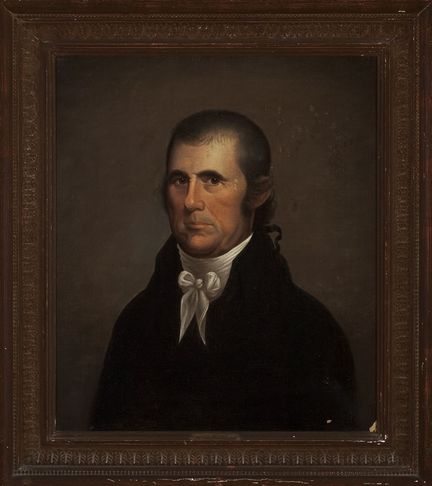
    Chief Justice John Marshall of the Supreme Court of the United States. By: Cephas Thompson.

    John Marshall would serve as Chief Justice of the United States Supreme Court from 1801 to 1835 and had a lasting impact on the institution. More broadly, he shaped the development of policy in America.

    (more…)

  • Constitution Sunday: Reply to Wilson’s Speech: “An Officer of the Late Continental Army”

    Reply to Wilson’s Speech: “An Officer of the Late Continental Army”

    Independent Gazetteer (Philadelphia), November 6, 1787

    Following are excerpts from an article with an unknown author, published in response to James Wilson’s speech:

    “That of the senate is so small that it renders its extensive powers extremely dangerous: it is to consist only of 26 members, (more…)

  • The Last Founding Father

    james_monroe_02
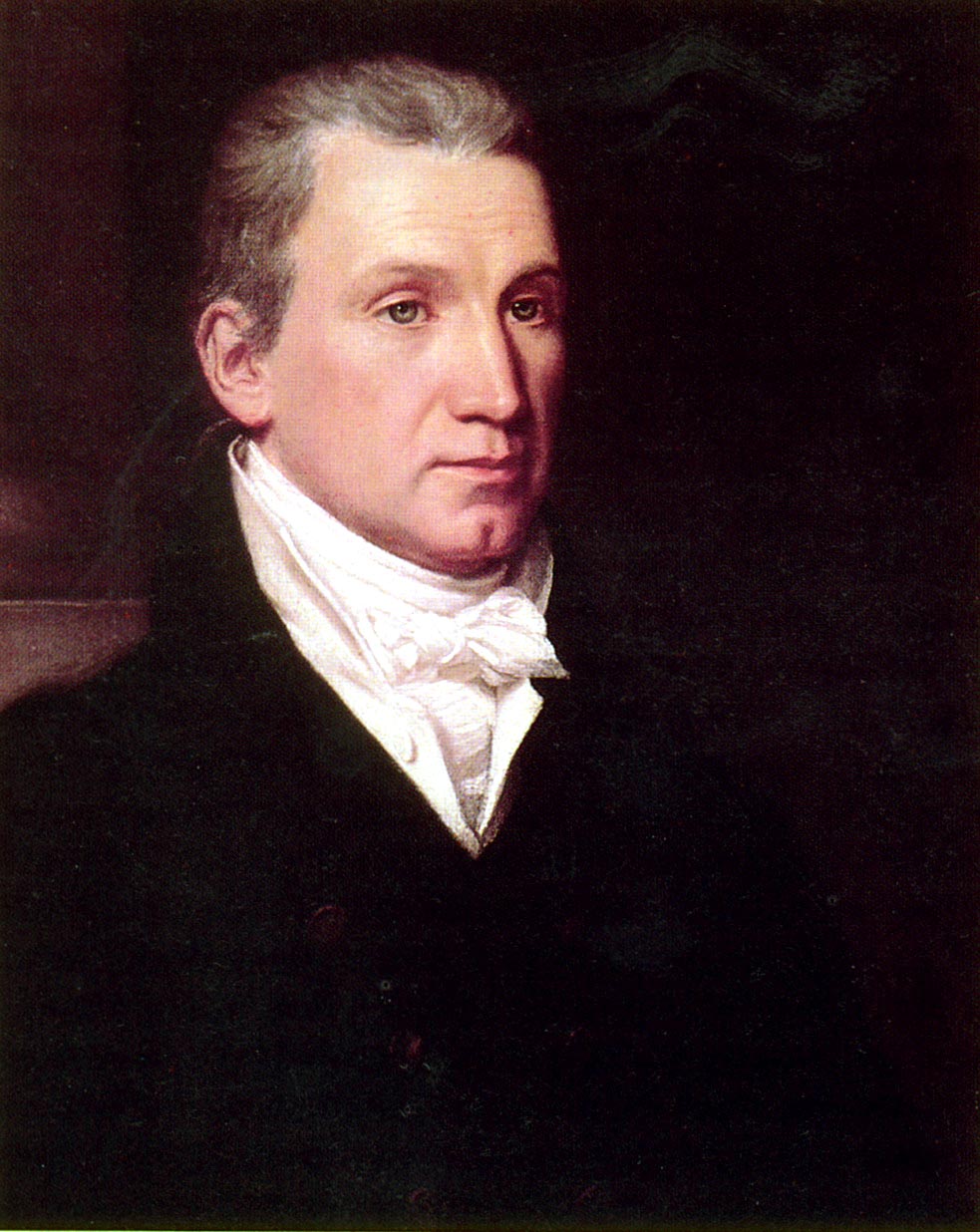
    James Monroe.

    James Monroe was the last president who was truly part of the American Revolution generation. Daniel Walker Howe, What Hath God Wrought: Transformation of America, 1815-1848, 91. He crossed the Delaware River with George Washington. Id. Obvious to his contemporaries, he dressed the part of the Revolutionary gentleman, wearing knee breeches and buckled shoes, with a powdered wig and three-cornered hat. Id.

    (more…)

  • Constitution Sunday: Reply to Wilson’s Speech: “Cincinnatus” [Arthur Lee] I

    Reply to Wilson’s Speech: “Cincinnatus” [Arthur Lee] I

    New York Journal, November 1, 1787

    Following are excerpts from the article, published in response to James Wilson’s speech:

    “Your first attempt is to apologize for so very obvious a defect as—the omission of a declaration of rights. This apology consists in a very ingenious discovery; that in the state constitutions, whatever is not reserved is given; but in the congressional constitution, whatever is not given, is reserved. (more…)