Tag: Founding Fathers

  • The Heir to the Founders

    john-quincy-adams-picture
    John Quincy Adams.

    On July 4, 1826, during America’s Golden Jubilee, celebrating the 50th anniversary of the Declaration of Independence, Thomas Jefferson and John Adams died. Daniel Walker Howe, What Hath God Wrought: Transformation of America, 1815-1848, 243. The two political rivals were two of the last three surviving signers of the Declaration of Independence, leaving only Charles Carroll of Maryland alive. Id. President John Quincy Adams, learning of his father’s death and Jefferson’s death, remarked that it was a “‘visible and palpable mark of Divine favor,’ to the nation, and most of his countrymen agreed.” Id. quoting James Morton Smith, The Republic of Letters (New York, 1995), II, 1973-74.

    (more…)

  • The Last Founding Father

    james_monroe_02
    James Monroe.

    James Monroe was the last president who was truly part of the American Revolution generation. Daniel Walker Howe, What Hath God Wrought: Transformation of America, 1815-1848, 91. He crossed the Delaware River with George Washington. Id. Obvious to his contemporaries, he dressed the part of the Revolutionary gentleman, wearing knee breeches and buckled shoes, with a powdered wig and three-cornered hat. Id.

    (more…)

  • America in 1815: Slavery

    morland-execrable20slave20trade-1789-1-3mb-crop-rtstoryvar-large-execrable20slave20trade-1789-1-3mb
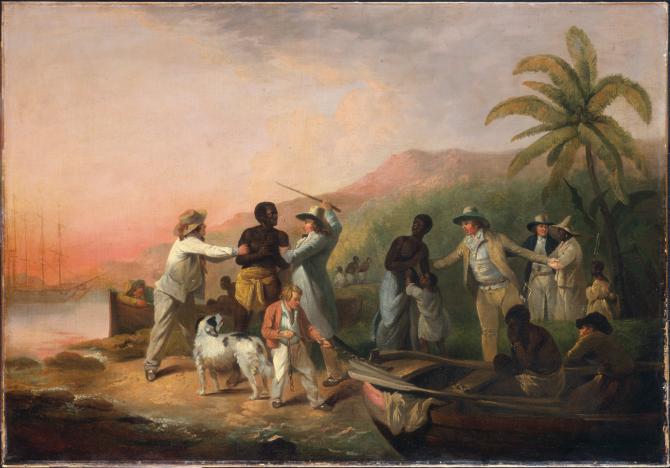
    Execrable Slave Trade. By: George Morland.

    By 1815, America was already split between those states that were taking steps to eliminate slavery and those states who were fortifying their support of slavery. As the Founding Fathers had predicted, a chasm was beginning to open in the United States.

    (more…)

  • America in 1815: The Economy

    home_in_the_woods_1847_thomas_cole
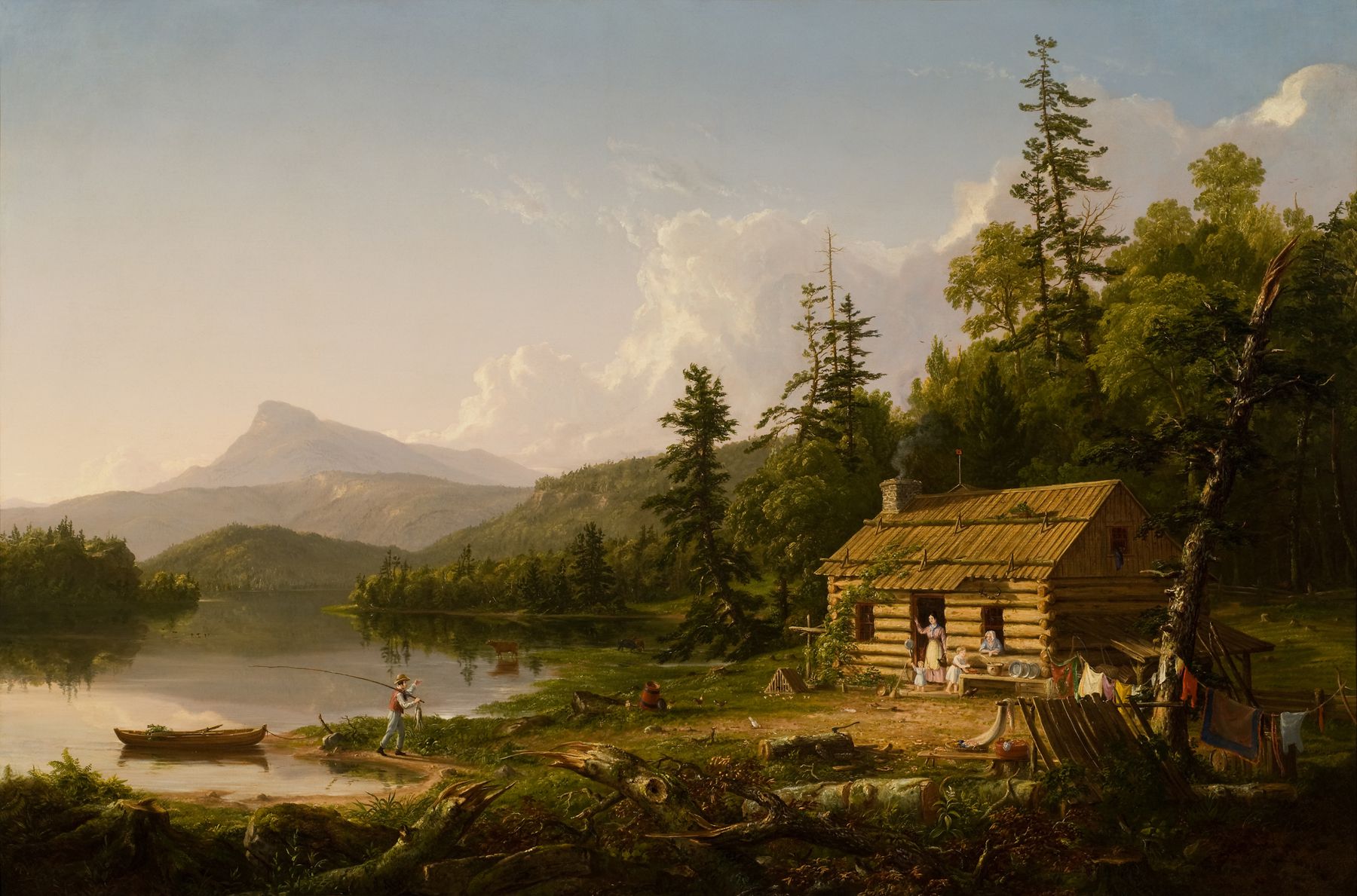
    Home in the Woods. By: Thomas Cole.

    The economy of the early United States would be familiar to modern Americans in some respects but also hard to recognize, given the development of the American economy in the past two centuries.

    (more…)

  • America in 1815: The Jeffersonian Republicans

    portrait
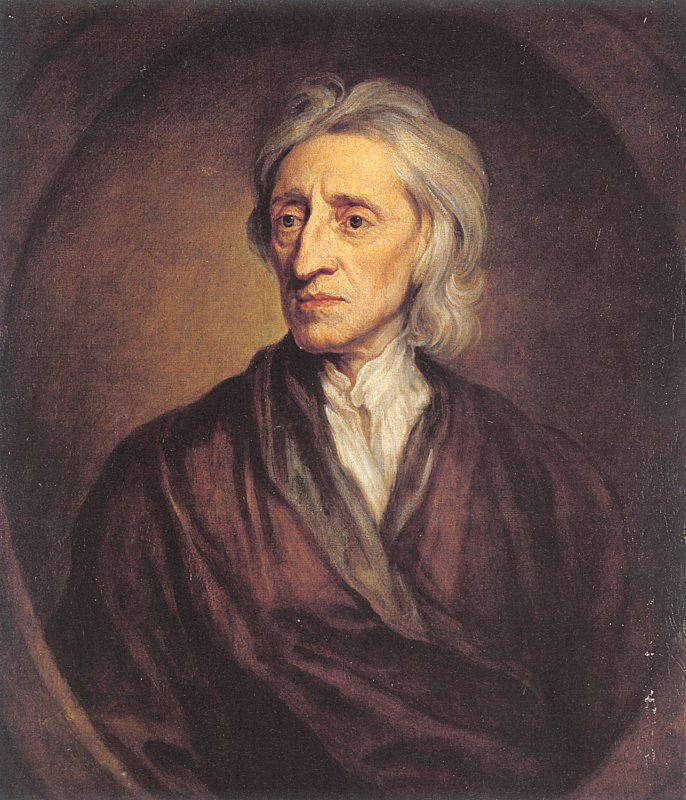
    John Locke. By: Godfrey Kneller.

    The Republican ideology, created and led by Jefferson, manifested itself in the generation after the Founding Fathers.

    (more…)

  • The Lesson of the American Revolution

    emanuel_leutze_american_schwc3a4bisch_gmc3bcnd_1816e280931868_washington_d-c-_-_washington_crossing_the_delaware_-_google_art_project
    Washington Crossing the Delaware. By: Emanuel Gottlieb Leutze.

    The American Revolution changed political theory and government. At the heart of that change was the empowerment of the people, which continues to present day America.

    (more…)

  • A Charter of Power Granted by Liberty

    chipmannathanieltnmax
    Nathaniel Chipman. Artist unknown.

    Thomas Paine described the Constitution as “not a thing in name only; but in fact . . . . It is the body of elements, to which you can refer, and quote article by article; and which contains . . . every thing that relates to the complete organization of a civil government, and the principles on which it shall act, and by which it shall be bound.” Paine, Rights of Man, Foner, ed., Writings of Paine, I, 278.

    (more…)

  • Cap-Stone of the Great American Empire

    wilson
    James Wilson.

    The political theory that emerged from the Revolution and the debates surrounding the Constitution was not “a matter of deliberation as it was a matter of necessity.” Gordon Wood, The Creation of the American Republic: 1776-1787, 593.

    (more…)

  • No Special Providence for Americans

    tom_22_adams_brown
    John Adams. By: Mather Brown.

    Despite the optimism surrounding the Revolution, John Adams had taken a different tact.

    (more…)

  • Redefining Bicameralism

    charles_cotesworth_pinckney_by_benbridge
    Charles Pinckney. By: Henry Benbridge.

    Looking to the state governments’ creation of their respective senates, as explained in The Birth of the Senate, the creation of the Senate in the Constitution was a given, when the Constitutional Convention began. See Gordon Wood, The Creation of the American Republic: 1776-1787, 553.

    (more…)