Tag: George Washington

  • Constitution Sunday: “Centinel” [Samuel Bryan] XII

    Independent Gazetteer (Philadelphia)

    January 23, 1788

    When a group of people conspire, their interests are aligned to work toward a result and bring about that result. The reasons for participating in a conspiracy may be varied, but often, enriching oneself—either with money, influence, or power—is at the heart of it. Conspiracies are usually simple in design as enriching oneself need not be overly complicated. But, it is the allegation of grander conspiracies that often capture the public’s attention and imagination. Sometimes, this is because those grander conspiracies can explain the world’s events—which are often overwhelming and complex—in a clear, definite way. These conspiracies aren’t the type for which believers require detailed evidence; adherents would say that these conspiracies involve too many people with power and money to leave a trail of evidentiary breadcrumbs back to the wrongdoers. In their view, the most damning evidence simply cannot exist. Nonetheless, believers will find what they can, however weak or speculative or trivial it may be, and have no choice but to rely on it because otherwise the allegation of conspiracy collapses in on itself. And there is motivation to do this: it may be easier to maintain that facade of a conspiracy by adding to it weak evidence than to confront the complex realities of the world. It was within this context, at the beginning of 1788, that Samuel Bryan published an article in Philadelphia that, in his view, finally called out the framers of the Constitution, the Federalists, for the conspirators that they were.

    (more…)
  • Ulysses S. Grant: An American Hero

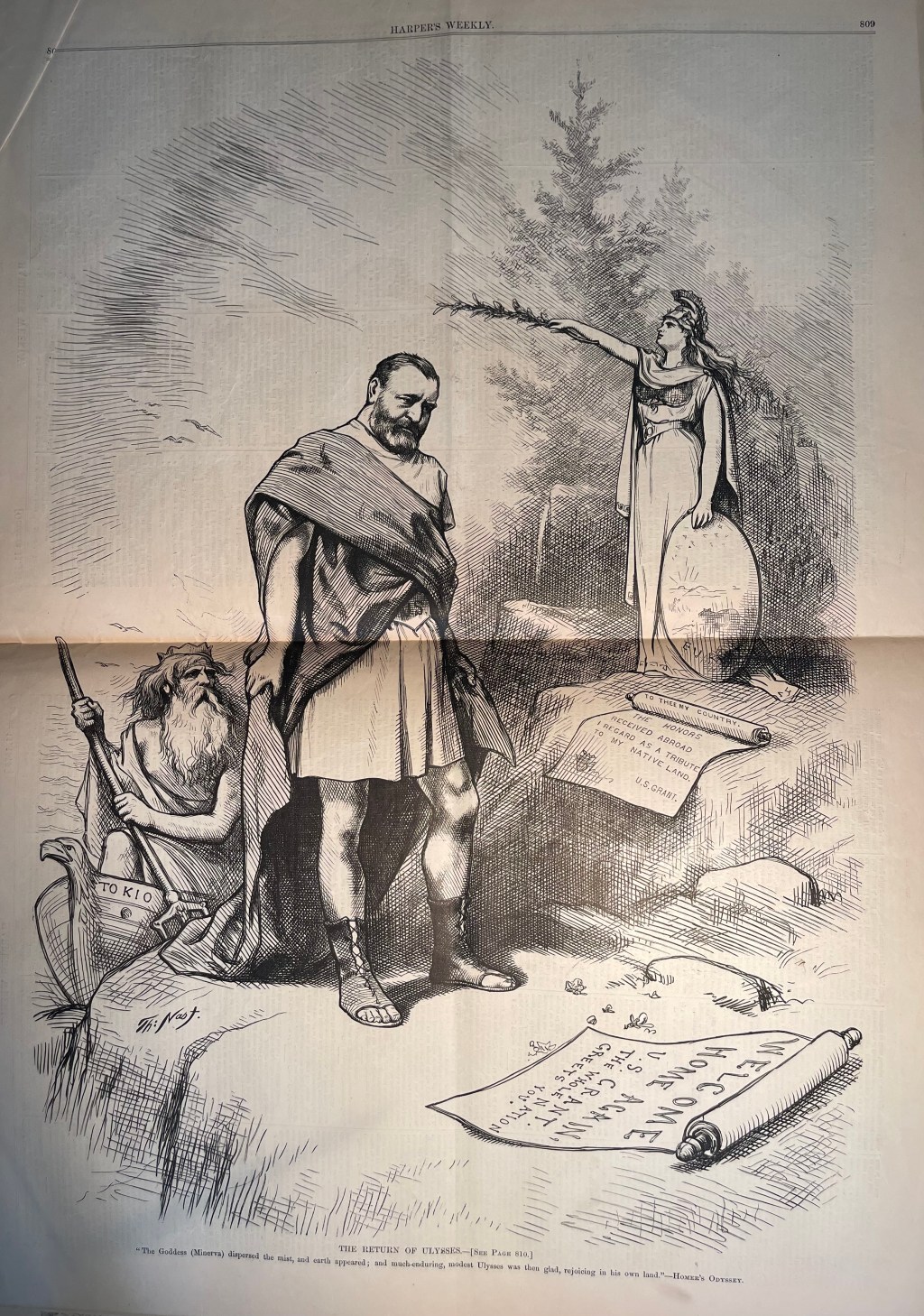
    Ulysses S. Grant: An American Hero


    As time passes and collective morals change, the legacies of prominent figures in American history often evolve. The context in which these individuals earned their place in American memory becomes increasingly difficult to uncover.

    (more…)
  • The Election of 1876

    The Election of 1876

    In celebrating America’s first centennial, on July 4, 1876, one must have recalled the tumult of that century: a war to secure independence, a second war to defend newly-obtained independence, and then a civil war the consequences of which the country was still grappling with eleven years after its end. But there also had been extraordinary success in that century, albeit not without cost; by the 100-year mark, the country had shown itself and the world that its Constitution—that centerpiece of democracy—was holding strong (with 18 Presidents, 44 Congresses, and 43 Supreme Court justices already having served their government by that time), and the country had expanded several times over in geographic size, putting it in command of a wealth of resources as its cities, industries, and agriculture prospered. Several months after the centennial celebration was the next presidential election, and during the life of the country, while most elections had gone smoothly, some had not—the elections of 1800 and 1824 were resolved by the House of Representatives choosing the victor as no candidate secured a majority of Electoral College votes and the election of 1860 was soon followed by the secession of Southern states. And yet, even with those anomalous elections in view, the upcoming election of 1876 was to become one unlike any other in American history.

    (more…)
  • The Battle of the Wilderness

    The Battle of the Wilderness

    By the spring of 1864, changes were abound on the Union side. Three generals—Ulysses S. Grant, William Tecumseh Sherman, and Philip Sheridan—had become the preeminent leaders of the northern army. With Congress having revived the rank of lieutenant general, a rank last held by George Washington, President Abraham Lincoln promoted Grant to that rank and bestowed on him the title of general in chief.[i] While the North was in the ascendancy, the Confederate army had suffered through the winter. The Confederate Congress had eliminated substitution, which had allowed wealthy southerners to avoid conscription, and “required soldiers whose three-year enlistments were about to expire to remain in the army.”[ii] Even with Congress taking the extraordinary step of adjusting the draft age range to seventeen years old through fifty years old, the rebels still numbered fewer than half their opponents.[iii] Nonetheless, hope was not lost: a camaraderie pervaded the Southern army—particularly amongst the many veteran soldiers—which was perhaps best encapsulated in General Robert E. Lee’s saying that if their campaign was successful, “we have everything to hope for in the future. If defeated, nothing will be left for us to live for.”[iv] (more…)

  • The Second Inauguration of Jefferson Davis

    The Second Inauguration of Jefferson Davis

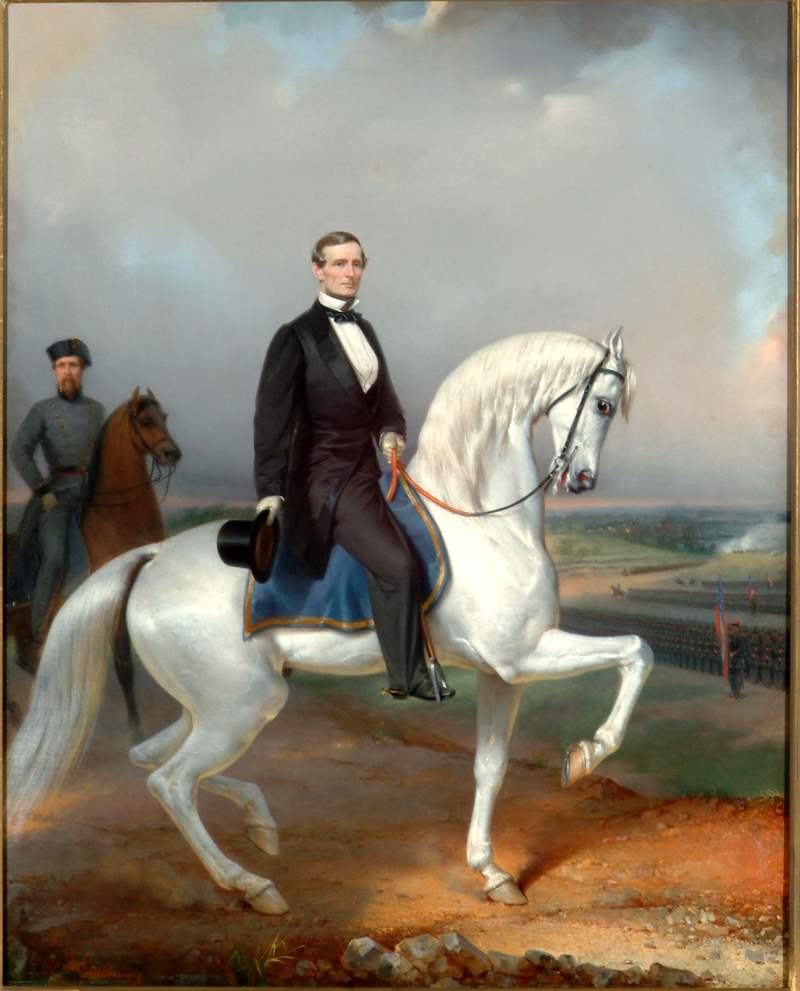
    Confederate President Jefferson Davis, on the 130th anniversary of George Washington’s birthdate, was due to be inaugurated for a second time. Davis ran unopposed in the first (and only) presidential election in the Confederate States of America and was set to begin his six-year term on February 22, 1862. His daily responsibilities as president left him more involved in paperwork than any other activity, and the beginning of the day of his second inauguration was scarcely different from any other day for Davis: he did an hour of paperwork before preparing for the ceremony.[i] (more…)

  • The Compromise of 1850

    henry_clay_senate3
    “United States Senate, A.D. 1850.” By: Peter F. Rothermel.

    Upon President Zachary Taylor taking office, he sent a message to Congress deploring the sectionalism that was pervading the country. See David Potter, The Impending Crisis: America Before the Civil War, 1848-1861, 91. He looked to George Washington’s warnings against “characterizing parties by geographical discriminations,” which appeared by 1849 to be a prescient warning. Id. citing James D. Richardson, ed., A Compilation of the Messages and Papers of the Presidents (11 vols.; New York, 1907), V, 9-24. President Taylor offered hope for northerners and those Americans who wanted to preserve the Union with his vow: “Whatever dangers may threaten it [the Union] I shall stand by it and maintain it in its integrity.” David Potter, The Impending Crisis: America Before the Civil War, 1848-1861, 91 citing James D. Richardson, ed., A Compilation of the Messages and Papers of the Presidents (11 vols.; New York, 1907), V, 9-24. (more…)

  • The Theories of Slavery

    a89cbad2a1dccb130f3199e02ae7de2c
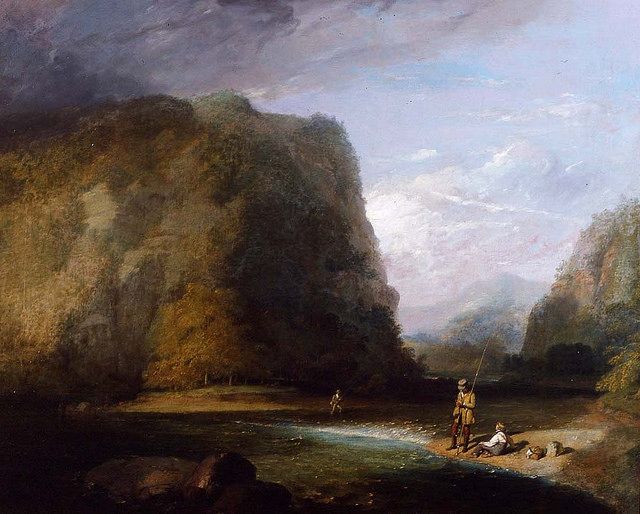
    Trout Fishing in Sullivan County, New York. By: Henry Inman.

    In the 15 years leading up to the Civil War, a wide variety of theories emerged for how the federal government should deal with slavery expanding, or not expanding, into the territories acquired by the United States.

    (more…)

  • Constitution Sunday: George Washington to Bushrod Washington

    George Washington to Bushrod Washington

    Mount Vernon, November 10, 1787

    Following are excerpts from George Washington’s letter to Bushrod Washington:

    “Dear Bushrod: In due course of Post, your letters of the 19th. and 26th. Ult. came to hand and I thank you for the communications therein; for a continuation in matters of importance, I shall be obliged to you. (more…)

  • The Inauguration of William Henry Harrison

    rembrandt_peale_-_william_henry_harrison_-_google_art_project
    William Henry Harrison. By: Rembrandt Peale.

    William Henry Harrison, a Whig, won the White House in the election of 1840. In March 1841, for his inauguration, he stood in the cold and wind and spoke for an hour and a half. See Daniel Walker Howe, What Hath God Wrought: Transformation of America, 1815-1848, 570.

    (more…)

  • The Decline of the Militia

    1828_militiamuster_watercolor_bydcjohnston_aas
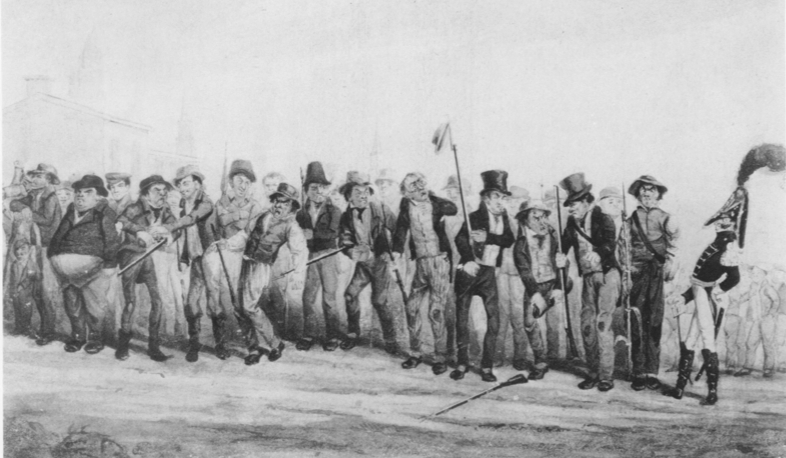
    Depiction of a Militia in 1828.

    From the War of 1812 on, for the next few decades, the use of militias would become less and less prominent in America.

    (more…)