Toward the end of President Andrew Jackson’s second term, the federal government had come to enjoy a substantial surplus, primarily coming as a result of land sales and “proceeds from the Tariff 0f 1833.” Daniel Walker Howe, What Hath God Wrought: Transformation of America, 1815-1848, 499.
A Depiction of the Cholera Outbreak in New York City in 1832.
With the communications and transportation revolution came new, unforeseeable consequences. One such consequence was the spread of cholera and other contagious diseases, which would test the mettle of Americans.
John Calhoun and his like-minded supporters hoped that nullification would become a legitimate alternative to secession for the South. Nullification was the doctrine that Calhoun believed meant that states could nullify a federal law, on the basis that states had their own sovereignty and the federal government could not infringe on that sovereignty. See Daniel Walker Howe, What Hath God Wrought: Transformation of America, 1815-1848, 402. This approach was designed to primarily perpetuate the institution of slavery, without the conflict culminating in secession, or worse, civil war.
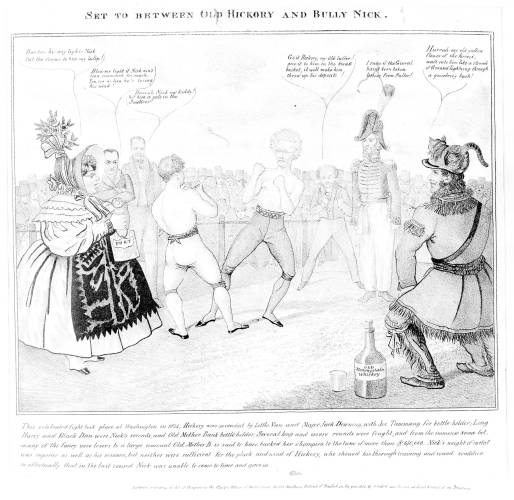
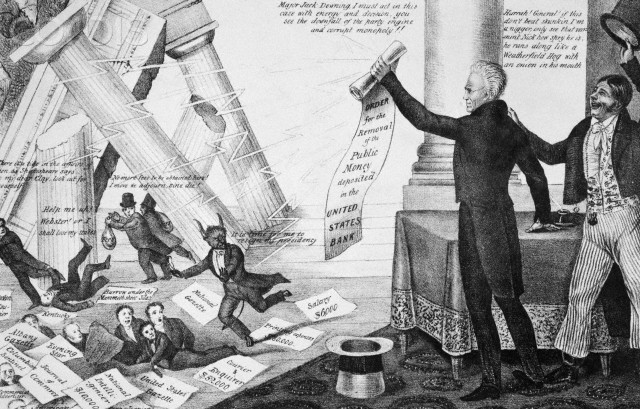
Political Cartoon of Andrew Jackson and Nicholas Biddle. Published in Harpers Weekly in 1834.
President Andrew Jackson did not want banknotes in the American economy, as he was an adherent to the gold standard. Daniel Walker Howe, What Hath God Wrought: Transformation of America, 1815-1848, 376. He would be forced to confront Nicholas Biddle, the President of the Second Bank of the United States.
Political Cartoon Depicting the Maysville Road Veto.
The Maysville Road was a major internal improvement that Congress had captured in a bill, the Maysville Road Bill. Daniel Walker Howe, What Hath God Wrought: Transformation of America, 1815-1848, 357. It was meant to be a link in the burgeoning transportation network, “connecting the National Road to the north with the Natchez Trace to the south and the Ohio with the Tennessee river systems.” Id.
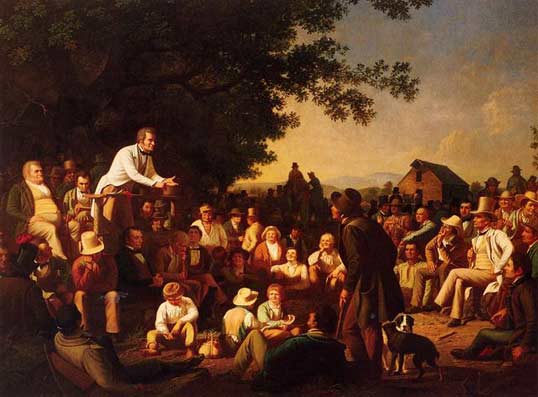
Andrew Jackson Stump Speaking. By: George Caleb Bingham.
Over the course of President John Quincy Adams’ term from 1824 to 1828, defenders of his administration began calling themselves National Republicans while opponents called themselves Democratic Republicans. Daniel Walker Howe, What Hath God Wrought: Transformation of America, 1815-1848, 275. The Election of 1828 served as a culmination of the changing politics of the country.
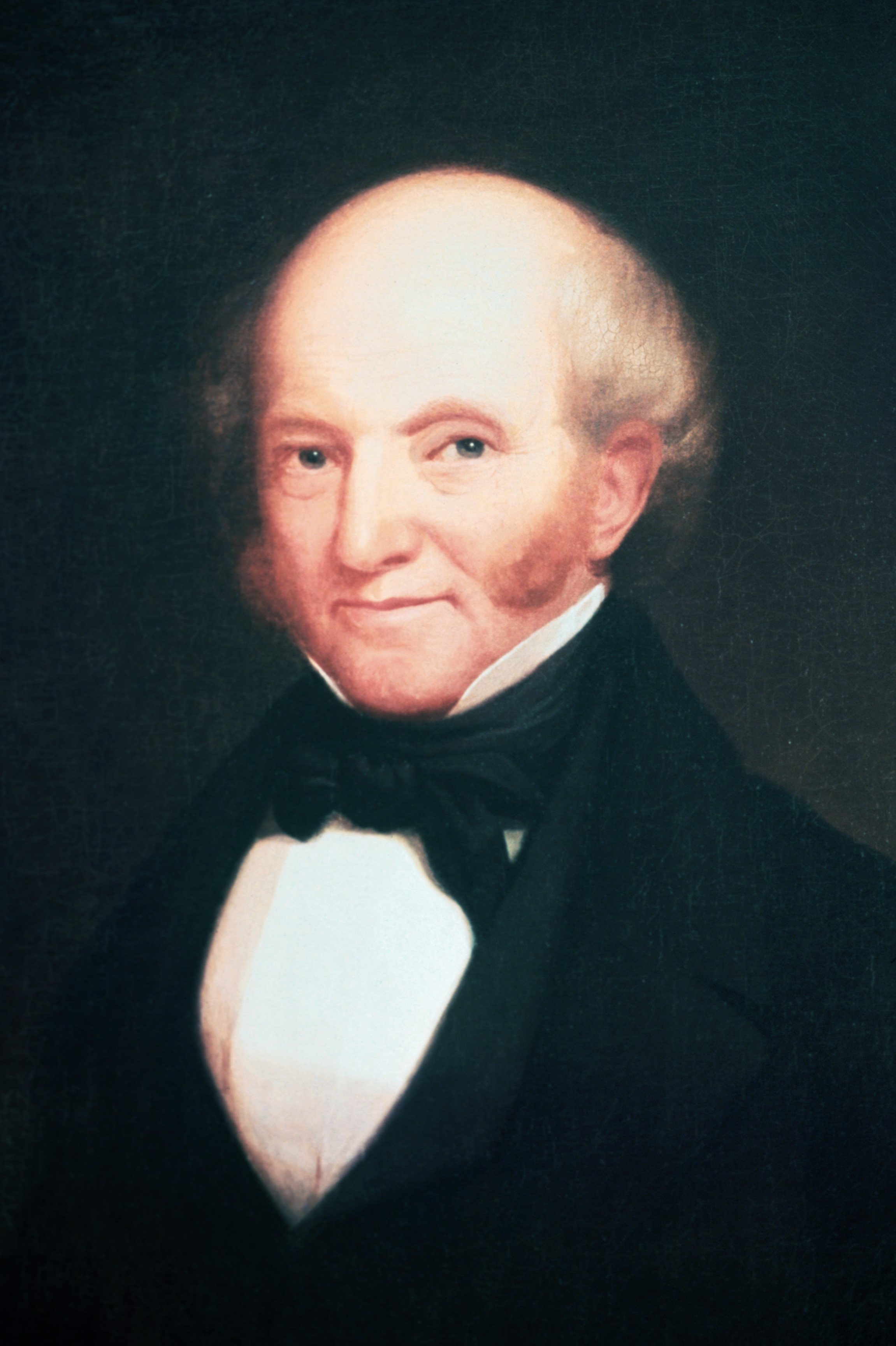
Both President John Quincy Adams and Henry Clay were of the mindset that much could be accomplished in developing the American economy with the help of the government. Martin Van Buren had different ideas, however.
Certificate for Life Membership in the American Colonization Society.
The American Colonization Society, the premier organization advocating for the exportation of slavery to Africa, had a major supporter in Secretary of State Henry Clay in the late 1820s.





 Last Best Hope of Earth