Tag: Infrastructure

  • The Election of 1860

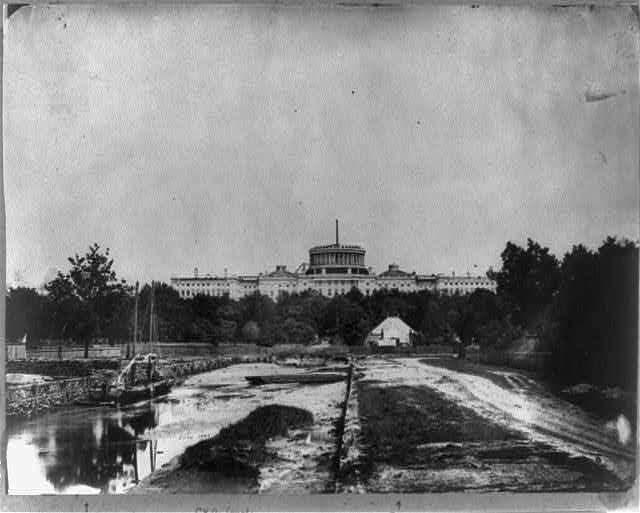
    1860photo_uscapitol_washingtoncanalvisiblie
    The United States Capitol in 1860. Courtesy: Library of Congress

    Every presidential election is consequential, but the Election of 1860 would play a significant role in whether the United States would remain one nation. The division of the North and South on the issue of slavery threatened to cause a secession of the South. The result of the election would determine whether that threat would materialize and cause a Second American Revolution. (more…)

  • The Obstinacy of the North and South

    enhanced-28733-1444703692-1
    Construction on the Capitol in 1859. Courtesy: William England, Getty Images.

    By 1859, the northern and southern sections of America had developed different economic systems, cultural norms, and approaches to permitting slavery. Congress and the political parties had been able to overlook those differences for the sake of self-preservation and advancement of the collective agenda. As 1859 concluded and 1860 sprang, Americans understood that the status quo of compromise was not to continue much longer. (more…)

  • The Kansas-Nebraska Act

    crockers_workers
    Construction of the Transcontinental Railroad.

    In 1844, Asa Whitney, a merchant in New York, proposed that a transcontinental railroad be built. While he hoped to lead the construction of the railroad and reap the benefits of the ambitious project, that was not to be. However, three components of his plan captured the spirit of Americans toward the construction of the railroad: “There must be a railroad to the Pacific; it must be financed by grants of public lands along the route; and it must be built by private interests which received these grants.” David Potter, The Impending Crisis: America Before the Civil War, 1848-1861, 146. (more…)

  • Election of 1848: The Barnburners

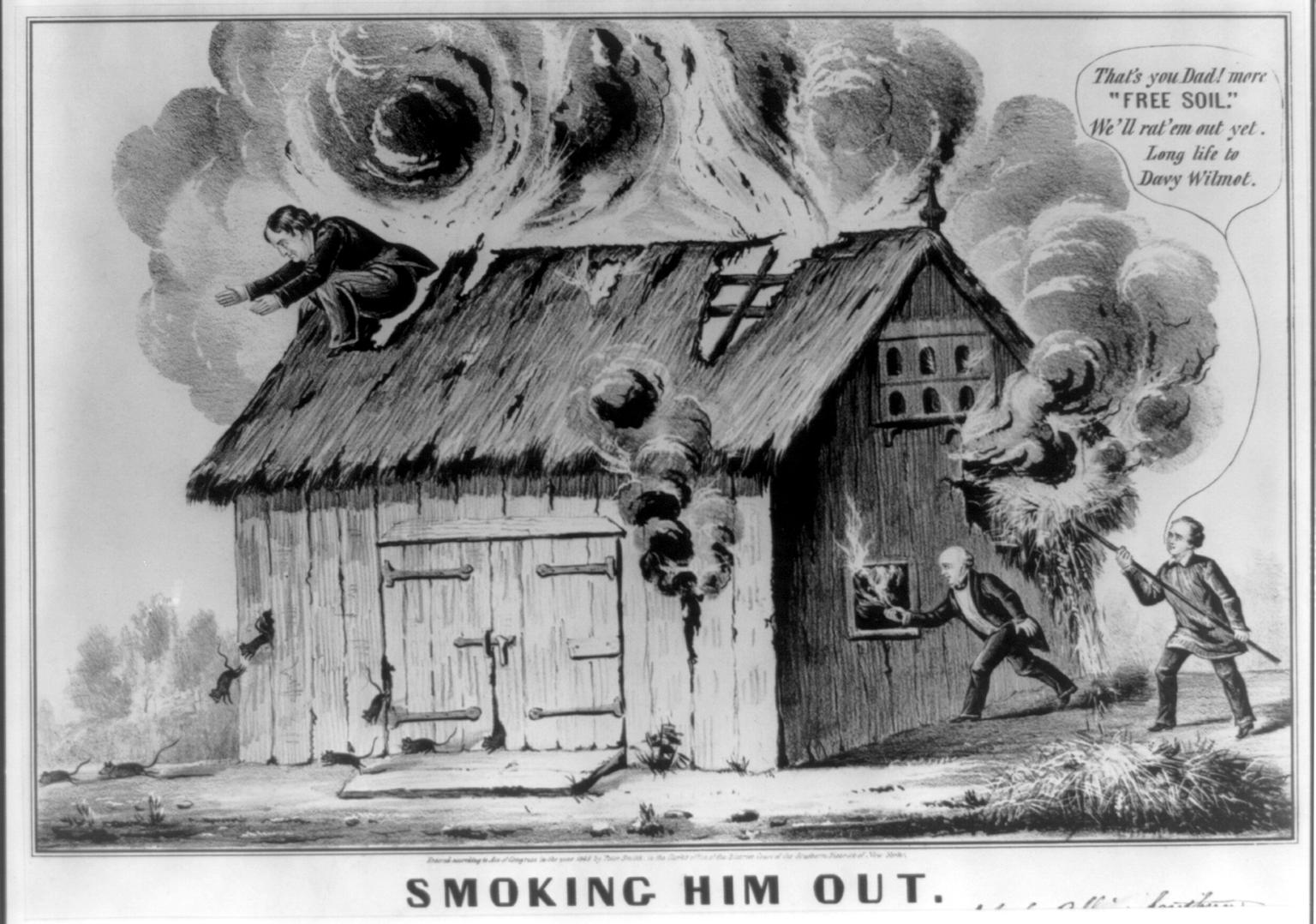
    smoking_him_out
    A Political Cartoon Regarding the Barnburners.

    Approaching the Election of 1848, President James Polk did not have unanimous support amongst Democrats. In fact, quite the opposite.

    (more…)

  • The Illinois System

    abraham_lincoln_by_nicholas_shepherd2c_1846-crop
    Abraham Lincoln in 1846, then Representative from Illinois. By: Nicholas H. Shepherd.

    Abraham Lincoln, as a Congressman in the House of Representatives, would be “an ardent supporter of internal improvements.” Daniel Walker Howe, What Hath God Wrought: Transformation of America, 1815-1848, 596.

    (more…)

  • The Railroad Revolution

    dewitt_clinton_28locomotive29
    A Depiction of the Replica of the Dewitt Clinton, an American-made Locomotive.

    Following the Panics of 1837 and 1839, America began rapidly expanding a new innovation: the railroad. While this would seem to have brought the country together, in fact, it increased sectionalism, creating more tension between the North and the South. Daniel Walker Howe, What Hath God Wrought: Transformation of America, 1815-1848, 569.

    (more…)

  • The Early Federal Government Surplus

    henry-clay-orator
    Henry Clay Addressing the Senate.

    Toward the end of President Andrew Jackson’s second term, the federal government had come to enjoy a substantial surplus, primarily coming as a result of land sales and “proceeds from the Tariff 0f 1833.” Daniel Walker Howe, What Hath God Wrought: Transformation of America, 1815-1848, 499.

    (more…)

  • Jackson’s Early Economic Success

    ralph_eleaser_whiteside_earl_andrew_jackson_ncmoa
    President Andrew Jackson. Circa 1830-32. By: Ralph Eleaser Whiteside Earl.

    President Andrew Jackson had good fortune as his presidency began with a wave of prosperity. See Daniel Walker Howe, What Hath God Wrought: Transformation of America, 1815-1848, 360.

    (more…)

  • The Maysville Road Veto

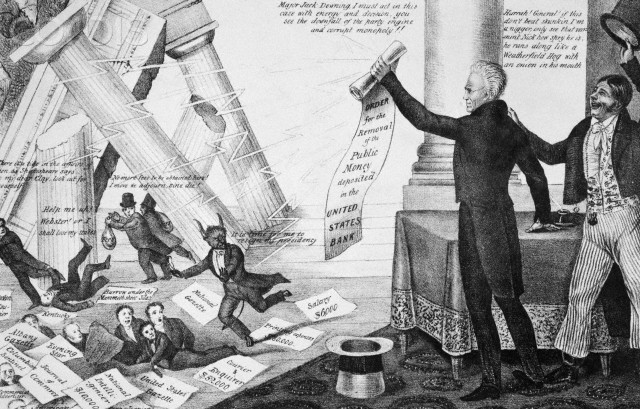
    Political Cartoon of Andrew Jackson
    Political Cartoon Depicting the Maysville Road Veto.

    The Maysville Road was a major internal improvement that Congress had captured in a bill, the Maysville Road Bill. Daniel Walker Howe, What Hath God Wrought: Transformation of America, 1815-1848, 357. It was meant to be a link in the burgeoning transportation network, “connecting the National Road to the north with the Natchez Trace to the south and the Ohio with the Tennessee river systems.” Id.

    (more…)

  • Quincy Adams’ Economic Agenda

    john-quincy-adams
    John Quincy Adams Shakes Hands with Admiral of the Fleet James Gambier. By: Amedee Forestier.

    President John Quincy Adams, in his First Annual Message to Congress delivered on December 6, 1825, set forth his agenda for developing the American economy. Daniel Walker Howe, What Hath God Wrought: Transformation of America, 1815-1848, 251.

    (more…)