Tag: James Buchanan

  • The Lecompton Constitution

    lecompton20constitution20hall
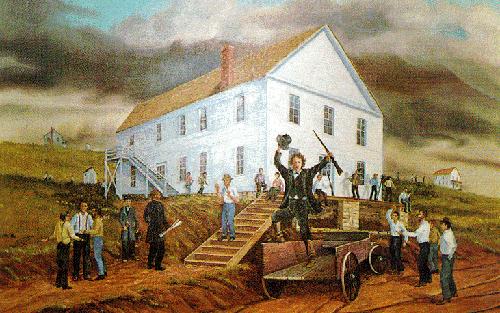
    Constitution Hall in Lecompton, Kansas.

    Following the violence in Kansas known as Bleeding Kansas, there was a question of whether the territory would be admitted as a free state or slave state. After taking office in 1857, President James Buchanan appointed Robert J. Walker of Pennsylvania to be governor of Kansas. Governor Walker wrote a letter to President Buchanan, stating “that the actual bona fide residents of the territory of Kansas, by a fair and regular vote, unaffected by fraud or violence, must be permitted, in adopting their State Constitution, to decide for themselves what shall be their social institutions.” Walker to Buchanan, March 26, 1857, in Kansas State Historical Society Transactions, V (1891-1896), 290 (italics in original). Even with such a pronouncement regarding the nature of an election, no one knew how Kansans would vote on the issue of slavery or how soon Kansas would become a state. (more…)

  • A Supreme Court Tragedy: Dred Scott v. Sandford

    05_e
    The Taney Supreme Court.

    In 1857, the United States Supreme Court decided one of the most controversial cases in the history of the country. Just days after James Buchanan began his term as president, Chief Justice Roger Taney wrote the opinion for the Court, ruling that neither slaves nor freedmen could be citizens of the United States. The implications of this decision, and its reasoning, have been analyzed, dissected, and discussed since 1857. While many have concluded it is one of the Supreme Court’s worst decisions, its impact on Antebellum America should not be overlooked.

    (more…)

  • The Evolving Political Parties of the 1850s

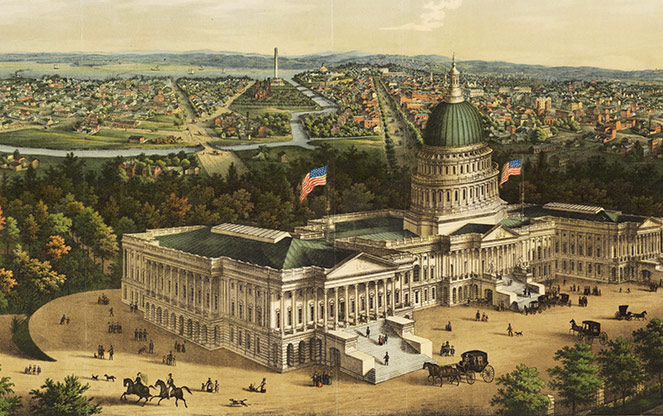
    panoramic-view-of-washington-city-e-sachse-and-co-1856
    Panoramic View of Washington, DC in 1856. Courtesy: E. Sachse & Co.

    The Democratic Party and Whig Party were the dominant political parties from the early 1830s up until the mid-1850s. Both were institutions in national politics despite not having a coherent national organization by cobbling together a diverse group of states to win elections. While the Democrats had a more populist agenda, the Whigs were more focused on pursuing industrialization and development of the country. See David Potter, The Impending Crisis: America Before the Civil War, 1848-1861, 226. While the Democratic Party would survive to the present day, the Whig Party would not survive the mid-1850s, not as a result of its own ineptness but because of the changing political landscape of that era. (more…)

  • Halting Manifest Destiny

    reynolds-political-map1
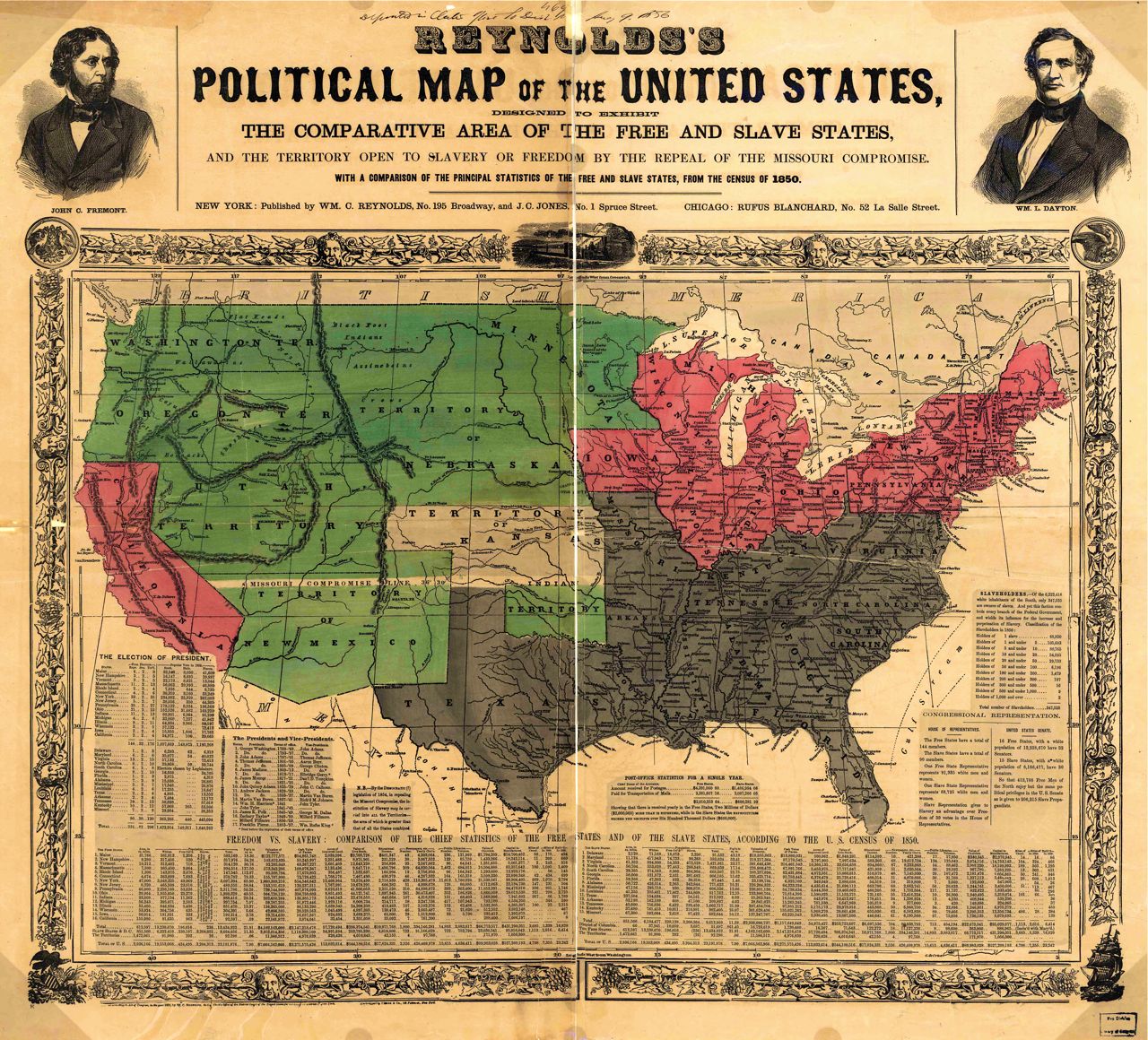
    Map of America in 1850.

    During 1854, while the Kansas-Nebraska Act was making its way through Congress and to President Franklin Pierce’s desk, there were significant developments throughout the country that would have lessen the manifest destiny fever that had captured the nation’s attention up to that point. One of the hallmarks of American progress was nearing its end. (more…)

  • The Election of 1852

    george_p-a-_healy_-_franklin_pierce_-_google_art_project
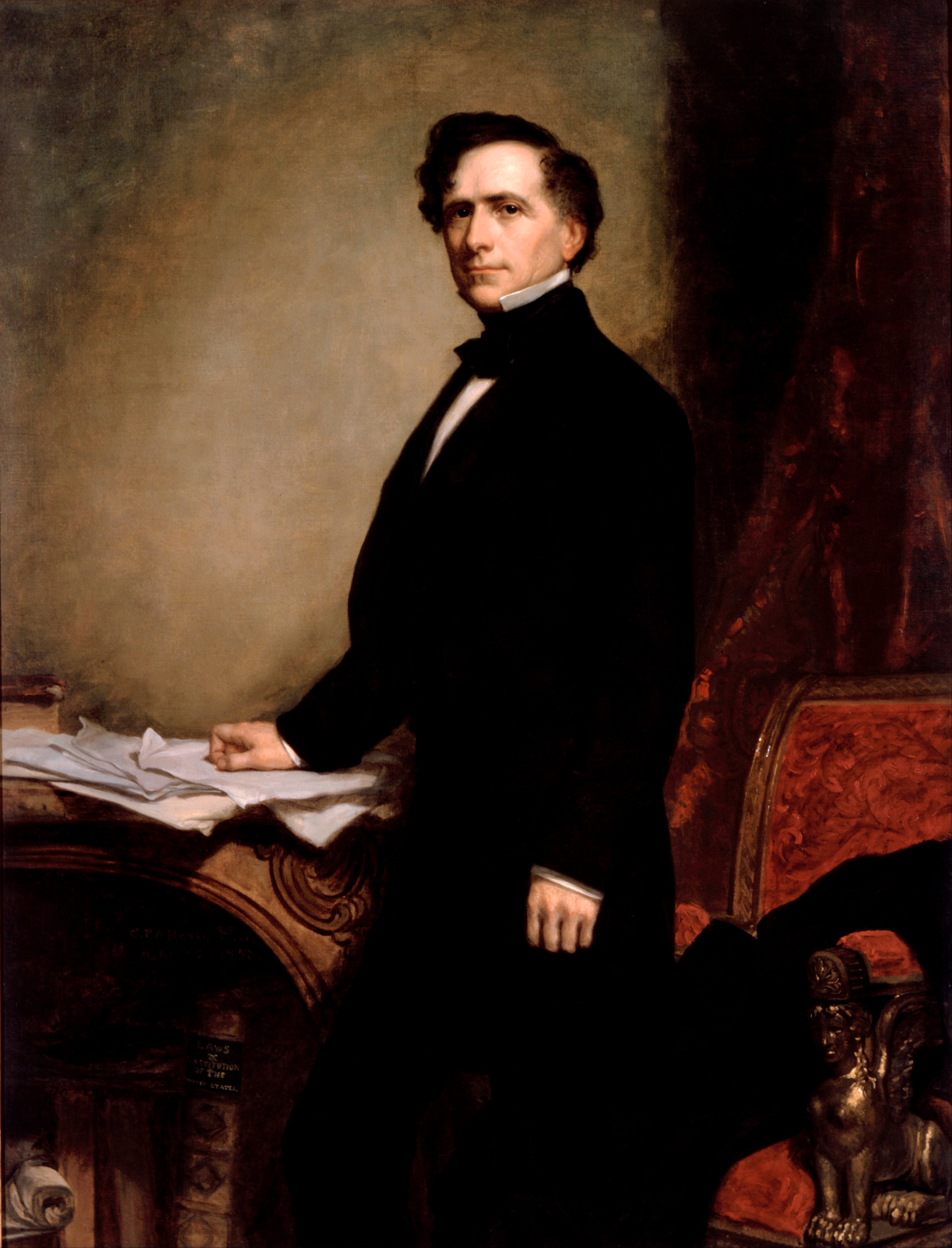
    President Franklin Pierce. By: George P.A. Healy.

    With the first term of Millard Fillmore’s presidency winding down in 1852, the Democrats felt a sense of momentum that they could reclaim the White House. In the midterm elections of 1850, the Democrats secured 140 of the 233 seats in the House of Representatives, eclipsing the Whig Party. See David Potter, The Impending Crisis: America Before the Civil War, 1848-1861, 141.

    (more…)

  • The Theories of Slavery

    a89cbad2a1dccb130f3199e02ae7de2c
    Trout Fishing in Sullivan County, New York. By: Henry Inman.

    In the 15 years leading up to the Civil War, a wide variety of theories emerged for how the federal government should deal with slavery expanding, or not expanding, into the territories acquired by the United States.

    (more…)

  • Dissent Between Two Presidents

    buchanan-lrg
    James Buchanan.

    Leading up to President James Polk’s May 13, 1846 announcement of the Mexican-American War, tension arose between President Polk and the Secretary of State, James Buchanan.

    (more…)

  • The Start of the Mexican-American War

    war_news_from_mexico
    War News From Mexico. By: Richard Caton Woodville.

    On the evening of April 24, 1846, Captain Seth Thornton and 68 American dragoons “went to confirm intelligence that a Mexican military force had crossed the Rio Grande” just miles away from where Brigadier General Zachary Taylor was camped. Daniel Walker Howe, What Hath God Wrought: Transformation of America, 1815-1848, 731.

    (more…)

  • The Tariff of Abominations

    Painted Portrait Of Martin Van Buren
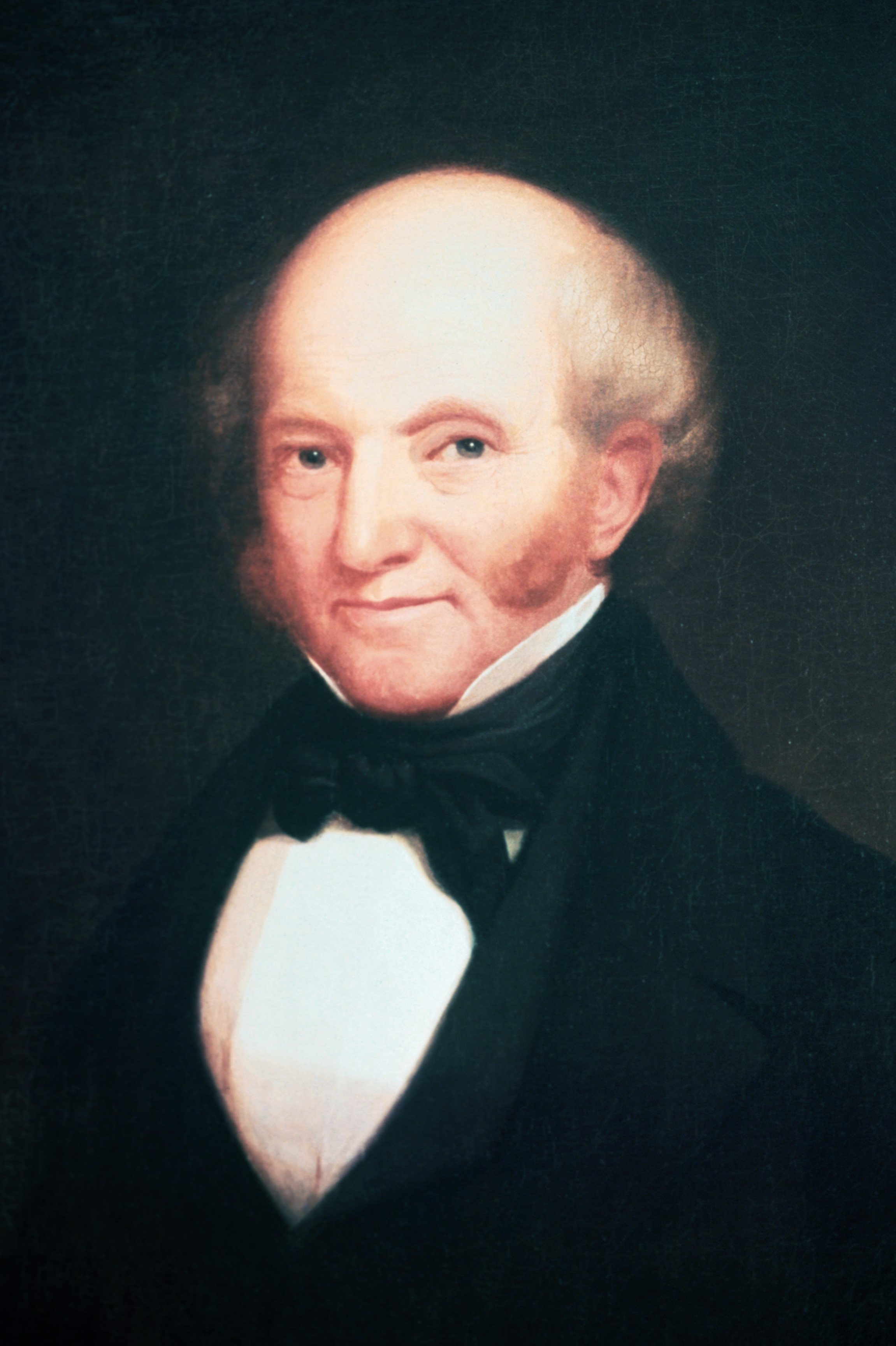
    Martin Van Buren.

    Both President John Quincy Adams and Henry Clay were of the mindset that much could be accomplished in developing the American economy with the help of the government. Martin Van Buren had different ideas, however.

    (more…)

  • The Election of 1824

    m-9636
    William Harris Crawford.

    Not long after the election of 1820, an essentially uncontested election seeing the re-election of President James Monroe, the campaigning for the election of 1824 began. President Monroe had indicated that he would not seek an unprecedented third term as president, but that did not stop others from posturing for the election. As a journalist observed in the spring of 1822, “electioneering begins to wax hot.” Daniel Walker Howe, What Hath God Wrought: Transformation of America, 1815-1848, 203 quoting James F. Hopkins, “Election of 1824,” in History of American Presidential Elections, ed. Arthur M. Schlesinger Jr. (New York, 1985), 363.

    (more…)