Tag: James Madison

  • The Aftermath of the War of 1812

    Imacon Color Scanner
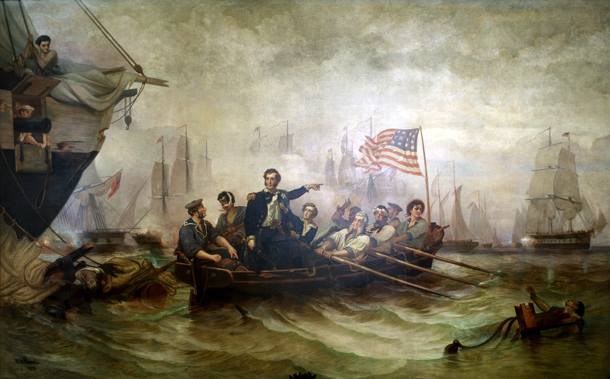
    Depiction of the Battle of Lake Erie, during the War of 1812.

    As news arrived in America on February 13, 1815 that the Treaty of Ghent was finalized and that peace between America and Britain was complete, Americans had a complete change of mind. Rather than dwell on the burning of Washington, D.C. or the humiliation of Britain’s invasion, Americans relished the victory of General Andrew Jackson in the Battle of New Orleans and the peace. See Daniel Walker Howe, What Hath God Wrought: The Transformation of America, 1815-1848, 71.

    (more…)

  • Wrapping Up the War of 1812

    hith-british-burn-washington-dc-200-years-ago-e
    The Burning of the White House. 1814.

    By the end of the War of 1812, President James Madison had weathered what is likely one of the tumultuous years that any president has had to endure. The British had landed a force, marched on Washington, D.C., and burned the White House. President Madison had trusted his Secretary of War John Armstrong when he doubted the possibility of a British invasion, only to be caught off guard when a scouting party, led by Secretary of State James Monroe, located just how close the British were to Washington. See Daniel Walker Howe, What Hath God Wrought: The Transformation of America, 1815-1848, 63-64.

    (more…)

  • The Lesson of the American Revolution

    emanuel_leutze_american_schwc3a4bisch_gmc3bcnd_1816e280931868_washington_d-c-_-_washington_crossing_the_delaware_-_google_art_project
    Washington Crossing the Delaware. By: Emanuel Gottlieb Leutze.

    The American Revolution changed political theory and government. At the heart of that change was the empowerment of the people, which continues to present day America.

    (more…)

  • A Charter of Power Granted by Liberty

    chipmannathanieltnmax
    Nathaniel Chipman. Artist unknown.

    Thomas Paine described the Constitution as “not a thing in name only; but in fact . . . . It is the body of elements, to which you can refer, and quote article by article; and which contains . . . every thing that relates to the complete organization of a civil government, and the principles on which it shall act, and by which it shall be bound.” Paine, Rights of Man, Foner, ed., Writings of Paine, I, 278.

    (more…)

  • The Pivot of American Government

    james_sullivan
    James Sullivan. By: Gilbert Stuart.

    In the earliest years of the American Republic, individuals like James Madison, Samuel Williams, Charles Pinckney, and Samuel Langdon concluded that no country had created a better model for representative government than America’s. See Gordon Wood, The Creation of the American Republic: 1776-1787, 596.

    (more…)

  • War Between the Governors and Governed

    james_madison_by_gilbert_stuart
    James Madison. By: Gilbert Stuart.

    The debate surrounding the adoption of the Bill of Rights revealed to many Americans the stark differences between Federalists and Antifederalists. Edmund Pendleton, in the Virginia Convention, stated that opposition to the Constitution “rested on ‘mistaken apprehensions of danger, drawn from observations on government which do not apply to us.’” Gordon Wood, The Creation of the American Republic: 1776-1787, 543 quoting Pendleton (Va.), in Elliot, ed., Debates, III, 36-37. Pendleton pointed out that many governments in the world were ruled by dictators. Id. Those governments had “bred hostility between ‘the interest and ambition of a despot’ and ‘the good of the people,’ thus creating ‘a continual war between the governors and the governed.’” Id. Pendleton believed that these beliefs led Antifederalists to demand a bill of rights and to have other unfounded fears about the Constitution. Id.

    (more…)

  • Building the Bill of Rights

    georgemason-painting
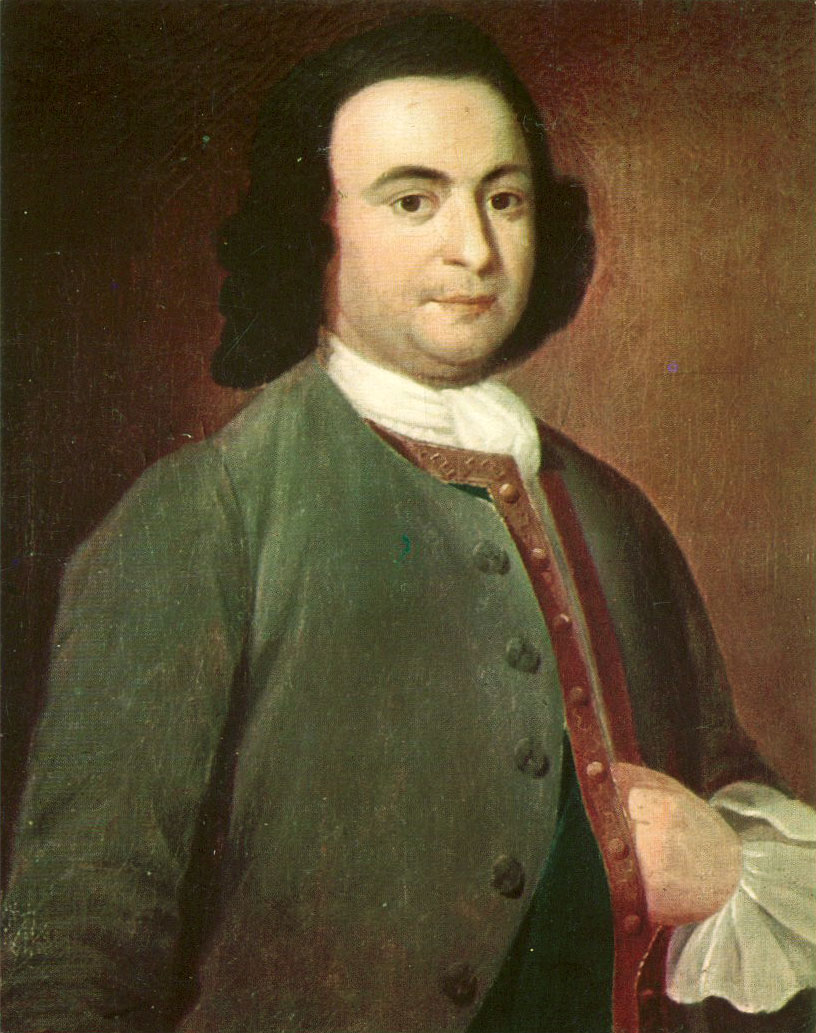
    George Mason. By: Dominic W. Doubet.

    A bill of rights was not contemplated at the Constitutional Convention, until George Mason mentioned it in the last days of the Convention. Every state ruled it out. Rufus King, however, suggested that “as the fundamental rights of individuals are secured by express provisions in the State Constitutions; why may not a like security be provided for the Rights of the States in the National Constitution?” Gordon Wood, The Creation of the American Republic: 1776-1787, 536 quoting Farrand, ed., Records of the Federal Convention, II, 375-76, 378-79, I, 492-93.

    (more…)

  • Two Supreme Coordinate Powers

    gouverneur_morris
    Gouverneur Morris. Engraving by: J. Rogers.

    Coming out of the Philadelphia Convention, many Americans had different perspectives about what had transpired and how effective the Constitution could be as a governing document.

    (more…)

  • Storms of Sedition

    allan_ramsay_-_david_hume_1711_-_1776-_historian_and_philosopher_-_google_art_project
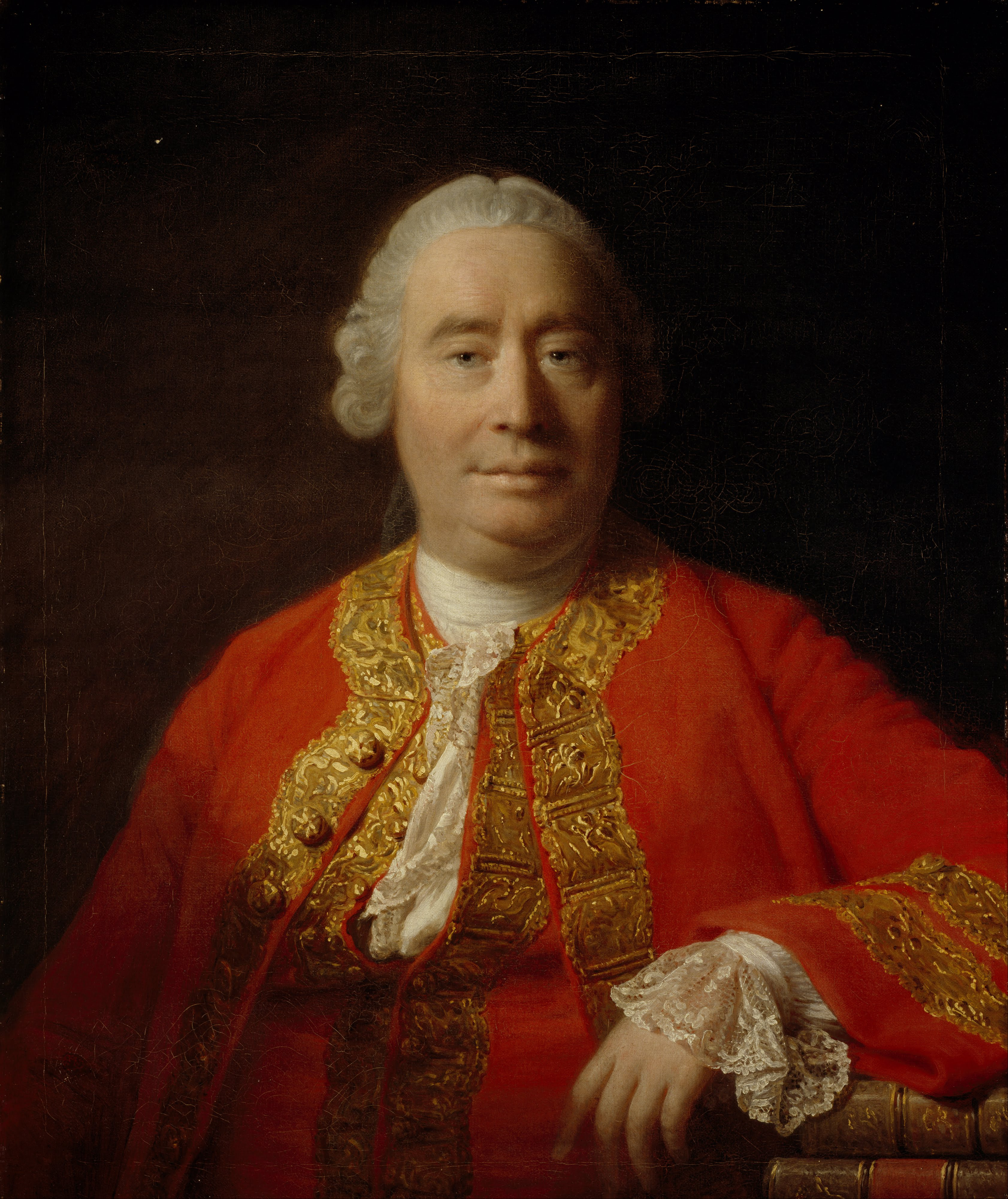
    David Hume. By: Allan Ramsay. 1766.

    Because the American Revolution was leading to a breakdown of the traditional social distinctions of the Eighteenth Century, groups of individuals were becoming increasingly empowered. Groups, based on “social, economic, and religious interests” were emerging. Gordon Wood, The Creation of the American Republic: 1776-1787, 501.

    (more…)

  • The Revolution’s Failure and Excesses

    port_dickinson-peale
    John Dickinson. By: Charles Willson Peale.

    The culmination of beliefs and events that led to the drafting of the Constitution were varied but also generally in agreement about the necessity of having the Constitution.

    (more…)