Throughout 1862, the Union embraced a defensive, passive approach to prosecuting the Civil War—shying away from incisive troop movements and relentless pursuits even after battles that left Confederates fatigued and fleeing—while the Confederacy had most recently displayed its more aggressive strategy by its attack near the Antietam Creek in Maryland. At the helm of the Union army, and the epitome of its quiescent nature, stood General George McClellan: a man who had come under fire for his failed Peninsula Campaign and refusal to pursue Confederate General Robert E. Lee after the Battle of Antietam. The latter decision prompted action from the White House. President Abraham Lincoln, whom McClellan had labeled as the “Gorilla,” replaced McClellan with General Ambrose E. Burnside on November 7, 1862.[i] (more…)
Tag: James Monroe
-
The Election of 1852
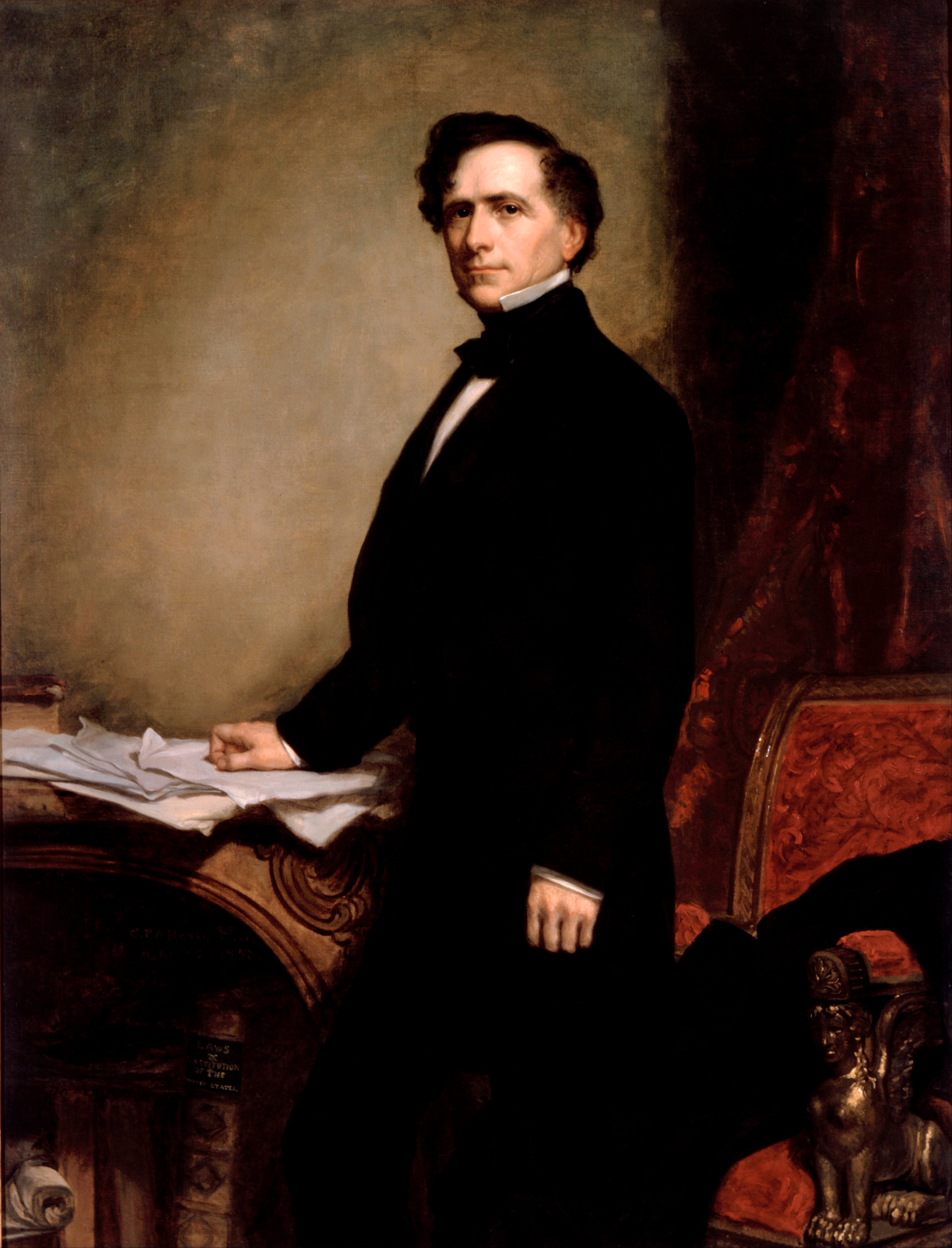
President Franklin Pierce. By: George P.A. Healy. With the first term of Millard Fillmore’s presidency winding down in 1852, the Democrats felt a sense of momentum that they could reclaim the White House. In the midterm elections of 1850, the Democrats secured 140 of the 233 seats in the House of Representatives, eclipsing the Whig Party. See David Potter, The Impending Crisis: America Before the Civil War, 1848-1861, 141.
-
The Theories of Slavery

Trout Fishing in Sullivan County, New York. By: Henry Inman. In the 15 years leading up to the Civil War, a wide variety of theories emerged for how the federal government should deal with slavery expanding, or not expanding, into the territories acquired by the United States.
-
Andrew Jackson’s Third Term

Martin Van Buren. Martin Van Buren, President Andrew Jackson’s hand-picked heir, would carry out many of Jackson’s policies, such as the removal of the Native Americans westward, as he was elected in the election of 1836. President Jackson also fundamentally changed the nature of the presidency.
-
Election of 1828: The Changing Politics
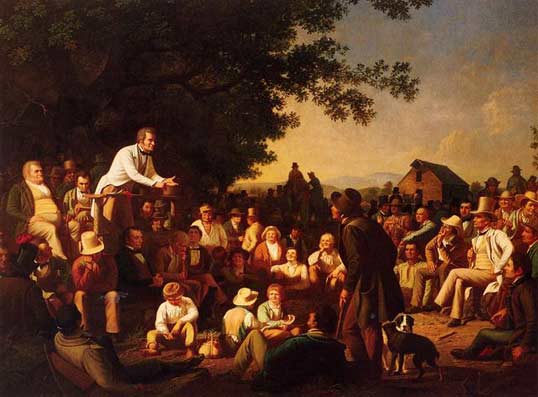
Andrew Jackson Stump Speaking. By: George Caleb Bingham. Over the course of President John Quincy Adams’ term from 1824 to 1828, defenders of his administration began calling themselves National Republicans while opponents called themselves Democratic Republicans. Daniel Walker Howe, What Hath God Wrought: Transformation of America, 1815-1848, 275. The Election of 1828 served as a culmination of the changing politics of the country.
-
The Failure of Colonization

Certificate for Life Membership in the American Colonization Society. The American Colonization Society, the premier organization advocating for the exportation of slavery to Africa, had a major supporter in Secretary of State Henry Clay in the late 1820s.
-
Taking the Wolf by the Ears

Paul Cuffe. By: Chester Harding. Paul Cuffe, by 1816, began making voyages across the Atlantic Ocean to Africa, transporting African-Americans who wished to make a new home in Africa. Daniel Walker Howe, What Hath God Wrought: Transformation of America, 1815-1848, 260.
-
Protecting the Native Americans

Secretary of War John Calhoun. By: Charles Bird King. President John Quincy Adams and his administration faced a serious challenge in dealing with the Native Americans.
-
The Conception of the Democratic Party
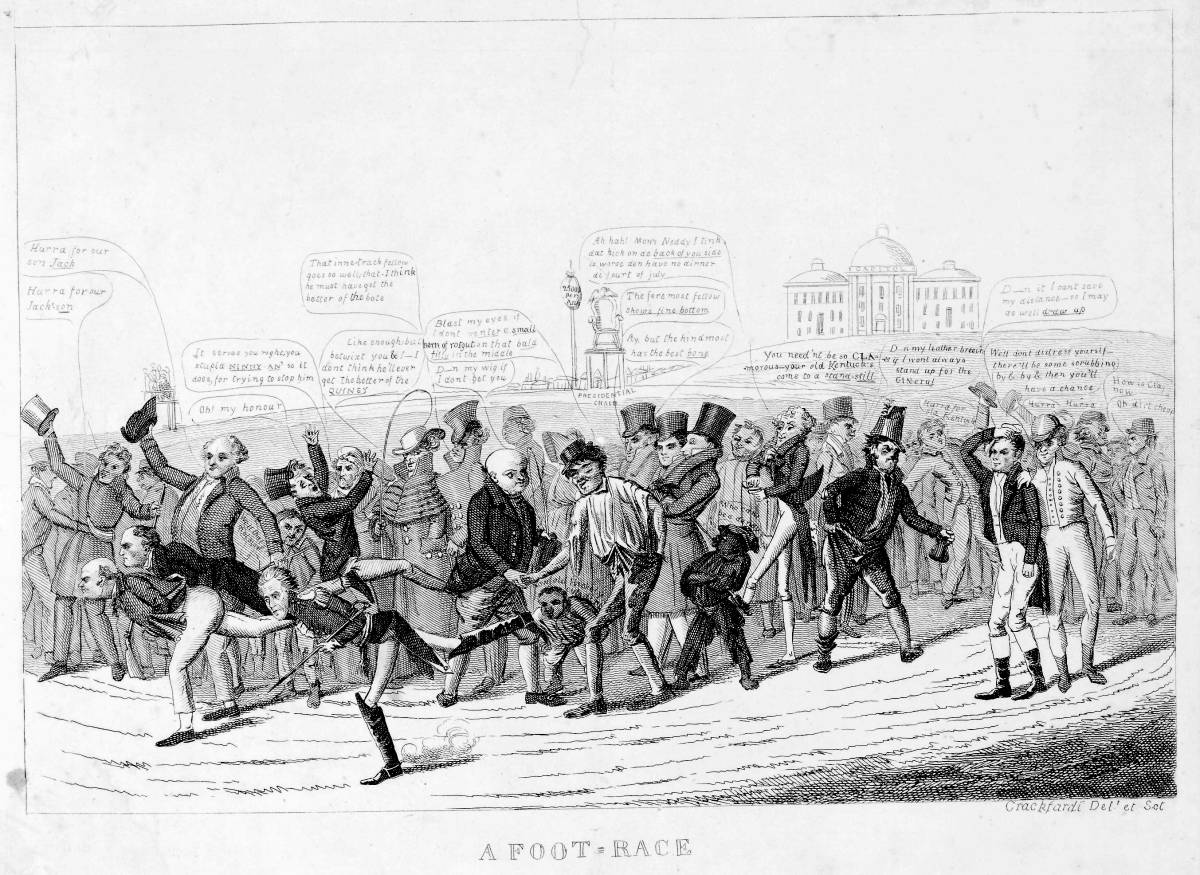
A Foot Race. Political Cartoon of the Election of 1824. Following the Election of 1824, newly elected President John Quincy Adams went into the White House with a great deal of hope for the future. He was a lifelong student of Cicero and “envisioned the American republic as the culmination of the history of human progress and the realization of the potential of human nature.” Daniel Walker Howe, What Hath God Wrought: Transformation of America, 1815-1848, 245. In fact, historians have remarked that Quincy Adams was the “most learned president between [Thomas] Jefferson and [Woodrow] Wilson.” Id.
-
The Transportation Revolution
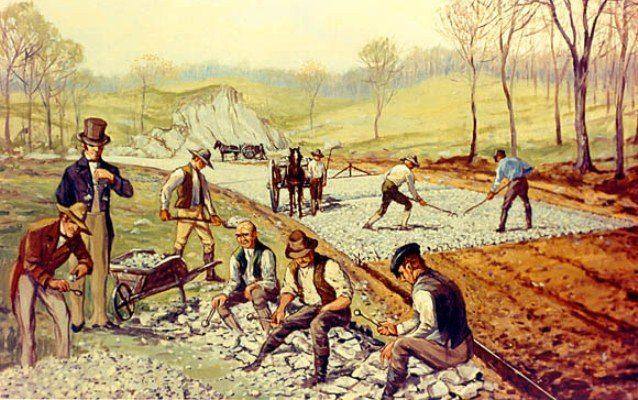
Depiction of the Building of the National Road. Following the end of the War of 1812, the United States underwent a transportation revolution. This transportation revolution came about as a result of Americans moving westward but also as more Americans moved into cities to engage in industrial work. Daniel Walker Howe, What Hath God Wrought: Transformation of America, 1815-1848, 212. (more…)
 Last Best Hope of Earth