Tag: James Wilson

  • The Revolution: Thomas Jefferson on the Draft Articles of Confederation (Part II)

    The Autobiography. By: Thomas Jefferson

    July 30, 1776 – August 1, 1776

    How the colonies would get along with each other was always going to be a monumental challenge. And, when the nation was born, there was tension between delegates and their states in setting up the framework for how the colonies would vote. With states such as Massachusetts and Pennsylvania being much larger in size and population, smaller states such as Rhode Island could justifiably fear that confederating with the colonies would bring more harms than benefits. However, to the chagrin of larger states, in the draft Articles of Confederation, at Article XVII, it stated: “In determining questions each colony shall have one vote.”

    (more…)
  • The Revolution: Thomas Jefferson on the Draft Articles of Confederation (Part I)

    The Autobiography. By: Thomas Jefferson.

    July 30, 1776 – July 31, 1776

    In Thomas Jefferson’s autobiography, he wrote of the debate and adoption of the Articles of Confederation. While the country has long learned that the Constitution is far superior to those Articles, the reasons why must extend beyond “a stronger national government was needed under the Articles, and the Constitution cured that defect.” A committee took up the Articles on July 30th and 31st and then August 1st of 1776. During the first couple days, the delegates debated how to calculate each state’s monetary contribution to the “common treasury” and the “manner of voting in Congress.” And it was there that controversy occurred; controversy that would continue to the time when the Constitution was drafted and adopted and even to nearly 250 years later.

    (more…)
  • Constitution Sunday: James Wilson’s Summation and Final Rebuttal

    Constitution Sunday: James Wilson’s Summation and Final Rebuttal

    Pennsylvania Ratifying Convention.

    December 11, 1787

    Before concluding the Pennsylvania Ratifying Convention, James Wilson delivered a closing argument for ratifying the draft Constitution and took on many of his adversaries’ best arguments while presenting the most compelling reasons for adopting the Constitution. To detractors of the Constitution, a most glaring flaw in the document was its creation of a relatively powerful federal government as compared to that existing under the Articles of Confederation. Some called for scrapping the draft Constitution and simply enlarging the powers of the present federal government to make it more effective yet still modest.

    (more…)
  • Constitution Sunday: James Wilson Replies to William Findley

    Constitution Sunday: James Wilson Replies to William Findley

    Pennsylvania Ratifying Convention.

    December 1, 1787

    James Wilson, one of the most eloquent and artful of his time, spoke at Pennsylvania’s Ratifying Convention on December 1, 1787 about the merits of the draft Constitution. One of the crucial components of the draft was its creation of the legislature as a “restrained” legislature; a legislature that would “give permanency, stability and security” to the new government.

    (more…)
  • Constitution Sunday: James Wilson’s Opening Address

    Constitution Sunday: James Wilson’s Opening Address

    Pennsylvania Ratifying Convention. November 20 through December 15, 1787. James Wilson’s Opening Address.

    November 24, 1787

    At the convention in Pennsylvania called for ratifying the draft Constitution, one of the foremost students of history and articulate Americans of his time, James Wilson, delivered the opening address. Just as every great storyteller knows to do, he provided the context for the moment: whereas most governments are created as “the result of force, fraud, or accident,” America “now presents the first instance of a people assembled to weigh deliberately and calmly, and to decide leisurely and peacably, upon the form of government by which they will bind themselves and their posterity.” Past governments, whether that of the Swiss Cantons, the United Kingdom’s monarchy, the United Netherlands, or the ancients—the Achaean and Lycian leagues, the Greeks, the Romans—provided examples for the three forms of government: “Monarchical, Aristocratical, and Democratical.”

    (more…)
  • Constitution Sunday: Rebuttal to “An Officer of the Late Continental Army”: “Plain Truth”

    Rebuttal to “An Officer of the Late Continental Army”: “Plain Truth”

    Independent Gazetteer (Philadelphia), November 10, 1787

    Following are excerpts from an article with an unknown author, published as a rebuttal to a reply by an officer of the late Continental Army to James Wilson’s speech:

    “Congress may ‘provide for calling forth the militia,’ ‘and may provide for organizing, arming and disciplining it.’—But the states respectively can only raise it, (more…)

  • Constitution Sunday: Reply to Wilson’s Speech: “An Officer of the Late Continental Army”

    Reply to Wilson’s Speech: “An Officer of the Late Continental Army”

    Independent Gazetteer (Philadelphia), November 6, 1787

    Following are excerpts from an article with an unknown author, published in response to James Wilson’s speech:

    “That of the senate is so small that it renders its extensive powers extremely dangerous: it is to consist only of 26 members, (more…)

  • Constitution Sunday: Reply to Wilson’s Speech: “Cincinnatus” [Arthur Lee] I

    Reply to Wilson’s Speech: “Cincinnatus” [Arthur Lee] I

    New York Journal, November 1, 1787

    Following are excerpts from the article, published in response to James Wilson’s speech:

    “Your first attempt is to apologize for so very obvious a defect as—the omission of a declaration of rights. This apology consists in a very ingenious discovery; that in the state constitutions, whatever is not reserved is given; but in the congressional constitution, whatever is not given, is reserved. (more…)

  • Constitution Sunday: Reply to Wilson’s Speech: “Centinel” [Samuel Bryan] II

    Reply to Wilson’s Speech: “Centinel” [Samuel Bryan] II

    Freeman’s Journal (Philadelphia), October 24, 1787

    Following are excerpts from Samuel Bryan’s article, published in response to James Wilson’s speech:

    “Friends, countrymen, and fellow-citizens, As long as the liberty of the press (more…)

  • The Lesson of the American Revolution

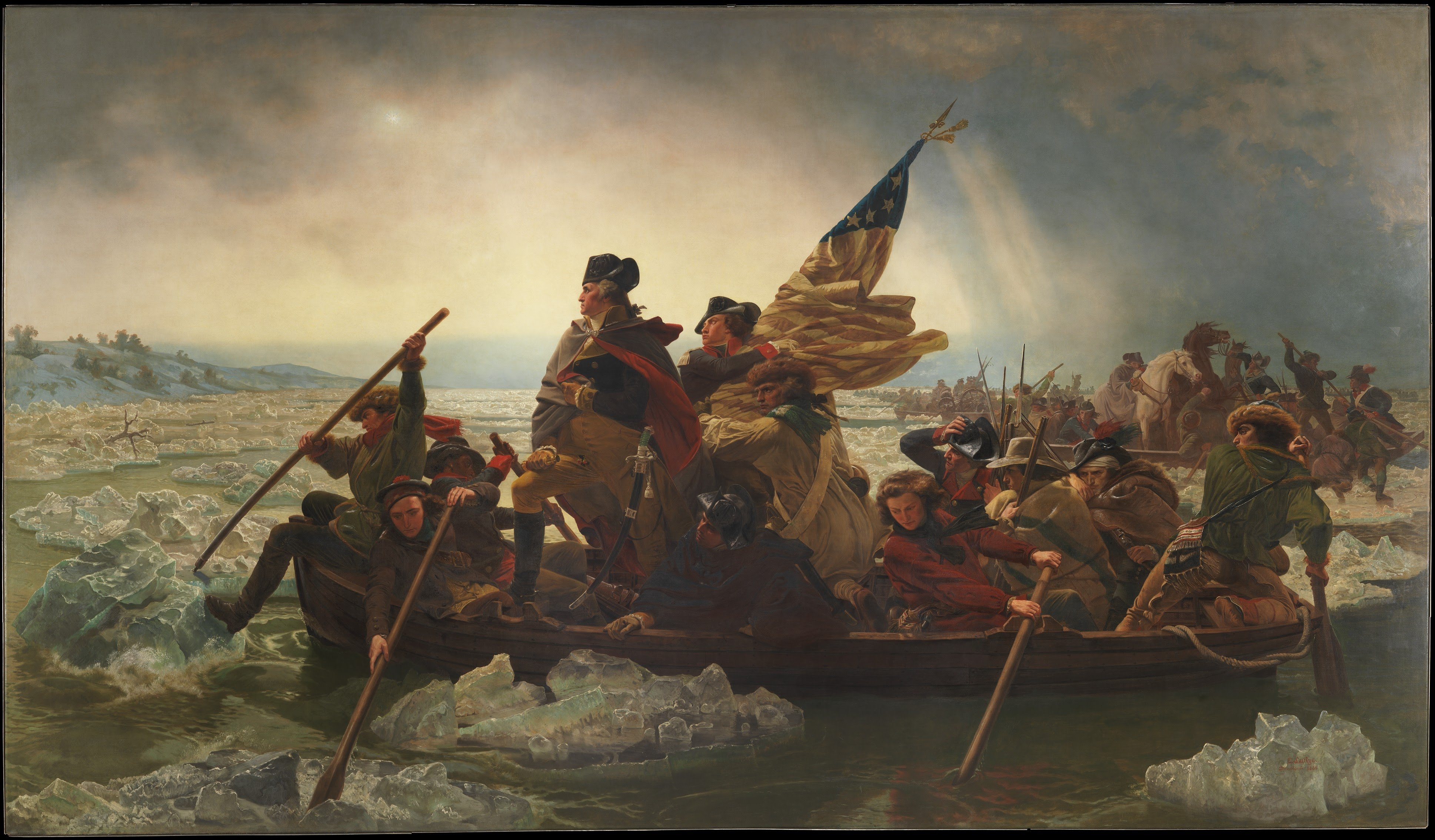
    emanuel_leutze_american_schwc3a4bisch_gmc3bcnd_1816e280931868_washington_d-c-_-_washington_crossing_the_delaware_-_google_art_project
    Washington Crossing the Delaware. By: Emanuel Gottlieb Leutze.

    The American Revolution changed political theory and government. At the heart of that change was the empowerment of the people, which continues to present day America.

    (more…)