Tag: Jefferson Davis

  • The Atlanta Campaign

    ECWC TOPIC Atlanta Campaign Dalton to Chattahoochee PIC Battle of Kennesaw Mountain
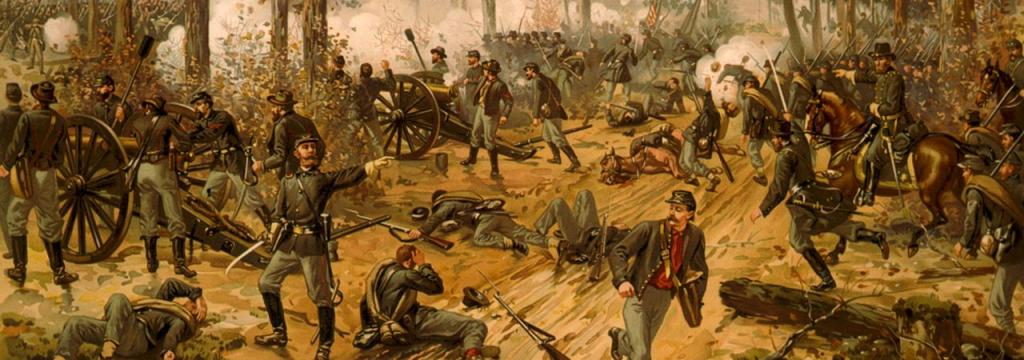
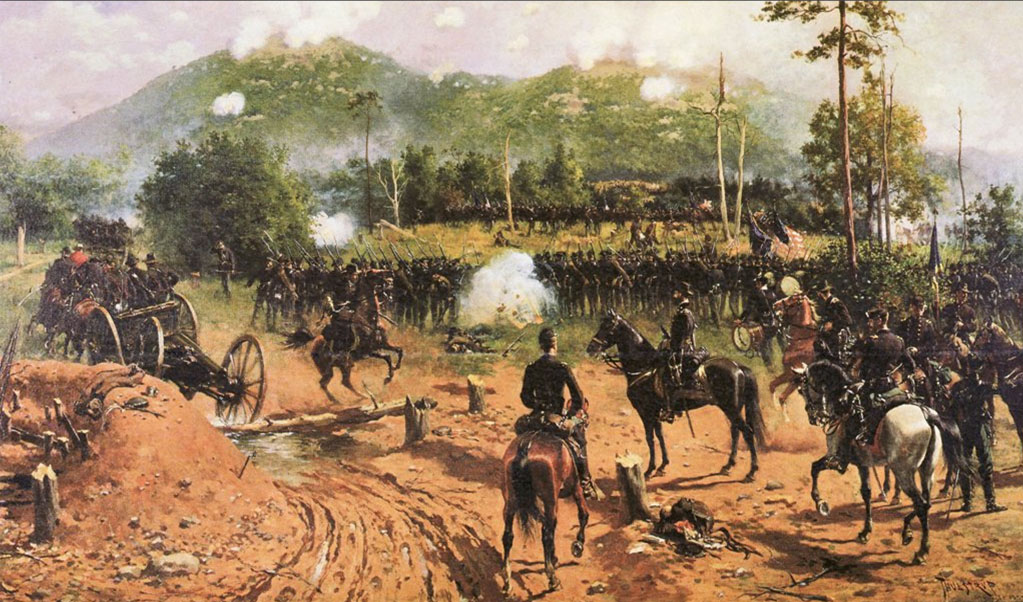
    Battle of Kennesaw Mountain. By: Thure de Thulstrup. Courtesy: U.S. Department of the Interior.

    After over four years of fighting, the North and the South had become increasingly fatigued with the war and anxious for its resolution. Throughout the Confederacy, hope was growing that the Union, rather than continue to tighten its grip at the expense of casualties on both sides, would agree to a negotiated peace. Standing in the way of that result was President Abraham Lincoln who had expected nothing less than a total victory. While the Union generals led by Ulysses S. Grant had achieved progress by taking territory in the west and cutting off resources to the Confederate capital, for each of the past four years, momentum had stalled whenever any general, including Grant, had come within earshot of Richmond. With the election of 1864 approaching, the rebels saw the potential for the northern electorate to oust Lincoln and bring a president to Washington that would negotiate an end to the war. (more…)
  • The Battle of Cold Harbor

    The Battle of Cold Harbor

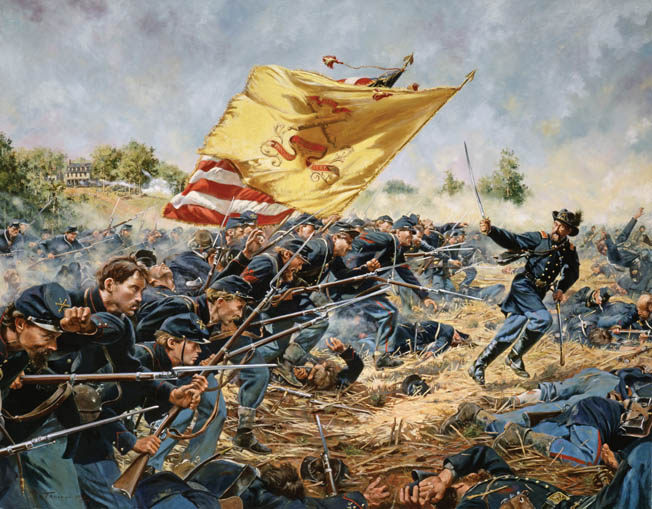
    Within a dozen miles of Richmond sat the dusty crossroads of Cold Harbor. The town, with its tavern and “triangular grove of trees at the intersection of five roads,” would be the next stop in Ulysses S. Grant’s Overland Campaign in Virginia to defeat Robert E. Lee. There, approximately 109,000 Union troops sat ready to take on around 59,000 entrenched rebels.[i] The battle was likely to only be a continuation of the “relentless, ceaseless warfare” that had characterized Grant’s campaign into Virginia throughout 1864, and in Grant’s mind, he felt that “success over Lee’s army” was “already assured.”[ii] (more…)

  • The Battle of Gettysburg

    The Battle of Gettysburg

    By the spring of 1863, the Union had given the Confederacy every reason to remain defensive: for the duration of the war, federal troops had invaded points throughout the south forcing the rebels to shift to the location of each incision. Allowing this dynamic to continue to play out meant the only way for a Confederate success was a negotiated peace. On May 15, the southern brain trust, including General Robert E. Lee and President Jefferson Davis, convened in Richmond to discuss strategy. Lee proposed that he lead an effort that would remove the threat to Richmond, throw the Yankees on their heels, spell political doom for the Republicans (led by Abraham Lincoln in the White House), open up the possibility of Britain or France recognizing the Confederacy, and, at worst, an armistice that resulted in the Confederate States of America coexisting with the United States.[i] While Postmaster-General John Reagan and other Confederates felt that Lee should have sent troops to protect Vicksburg and the west from the trouble Ulysses S. Grant and his men were causing, Lee did not want to oblige the Confederacy to remain on the defensive but instead introduce the “prospect of an advance” as it would change “the aspect of affairs.”[ii] (more…)

  • The Siege of Vicksburg

    The Siege of Vicksburg

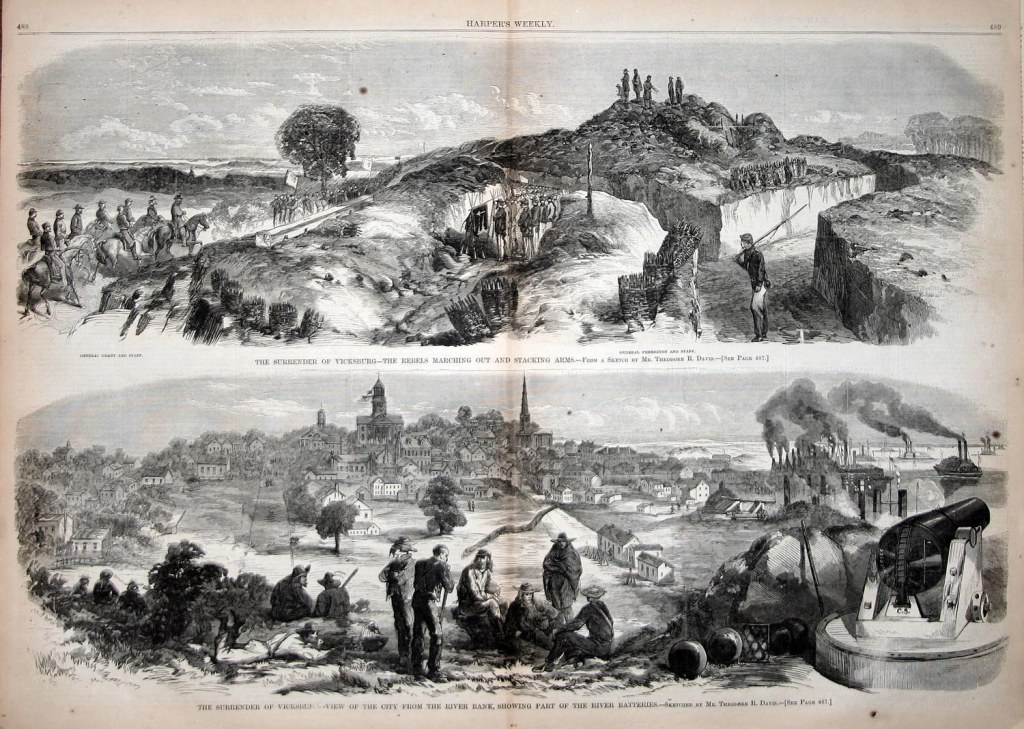
    In the western theater of war, Ulysses S. Grant had set his sights on a goal early in his campaigning: Vicksburg, a town hugging the Mississippi River on the border of Louisiana and Mississippi. Taking the city would not only secure the Mississippi River; taking it would give the Union a lasso around the Confederacy. Just as spring of 1863 was getting underway, Grant had drawn up a plan to take the town and tighten the Union grip on the Confederacy. (more…)

  • The Battle of Shiloh

    The Battle of Shiloh

    Two of the greatest Confederate generals in early 1862, Albert Sidney Johnston and P.G.T. Beauregard, rendezvoused in Corinth, Mississippi with a combined 42,000 men.[i] The city not only could serve as an origin point of a campaign into nearby Tennessee; it also was the meeting point for the Confederacy’s “main north-south and east-west railroads.”[ii] Given Corinth’s importance, Henry Halleck ordered Ulysses S. Grant to march his men to Pittsburg Landing, wait for his fellow general Don Carlos Buell to arrive with his army, and then move on Corinth as a combined force numbering approximately 75,000.[iii]

    (more…)

  • The Second Inauguration of Jefferson Davis

    The Second Inauguration of Jefferson Davis

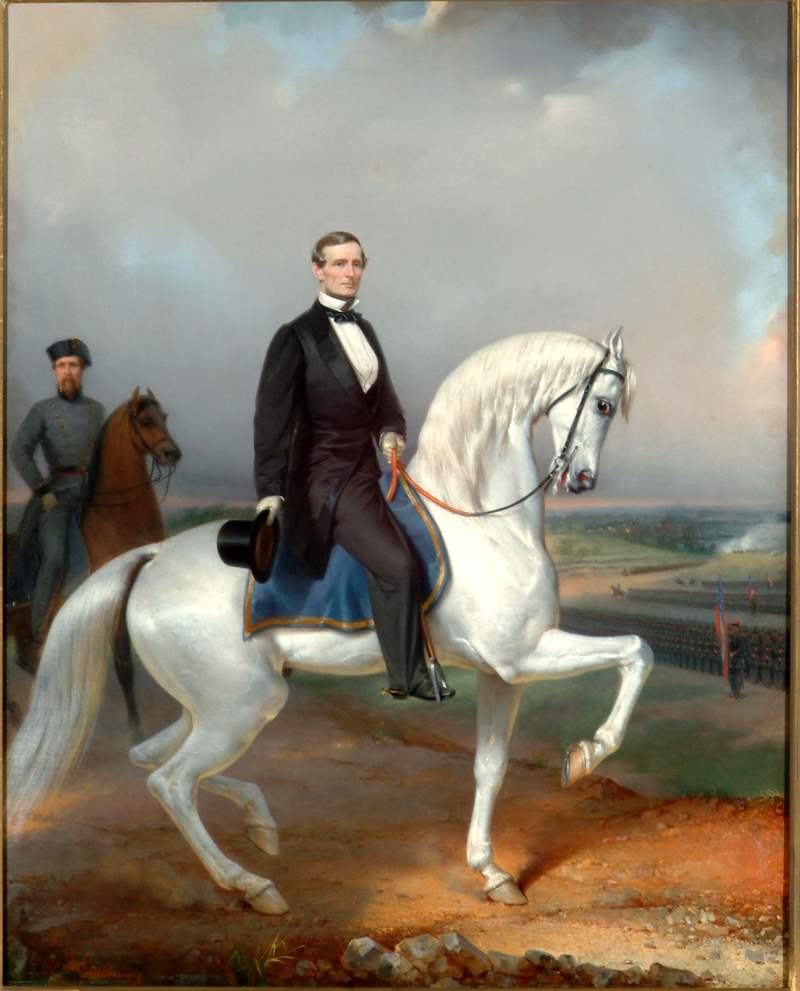
    Confederate President Jefferson Davis, on the 130th anniversary of George Washington’s birthdate, was due to be inaugurated for a second time. Davis ran unopposed in the first (and only) presidential election in the Confederate States of America and was set to begin his six-year term on February 22, 1862. His daily responsibilities as president left him more involved in paperwork than any other activity, and the beginning of the day of his second inauguration was scarcely different from any other day for Davis: he did an hour of paperwork before preparing for the ceremony.[i] (more…)

  • The First Battle of Bull Run

    Three months after the firing on Fort Sumter, the Confederacy and Union had produced armies capable of fighting and mobilized to northern Virginia; roughly halfway between Washington and Richmond. There, near a “sluggish, tree-choked river” known as Bull Run, the first major battle following the secession of the South would occur.[i]  (more…)

  • The Outbreak of the Civil War

    The Outbreak of the Civil War

    Within a matter of weeks of Abraham Lincoln’s presidency beginning, the gravest crisis of perhaps any president confronted him and the nation: civil war. (more…)

  • The North’s Attempt at Salvation

    washington-dc
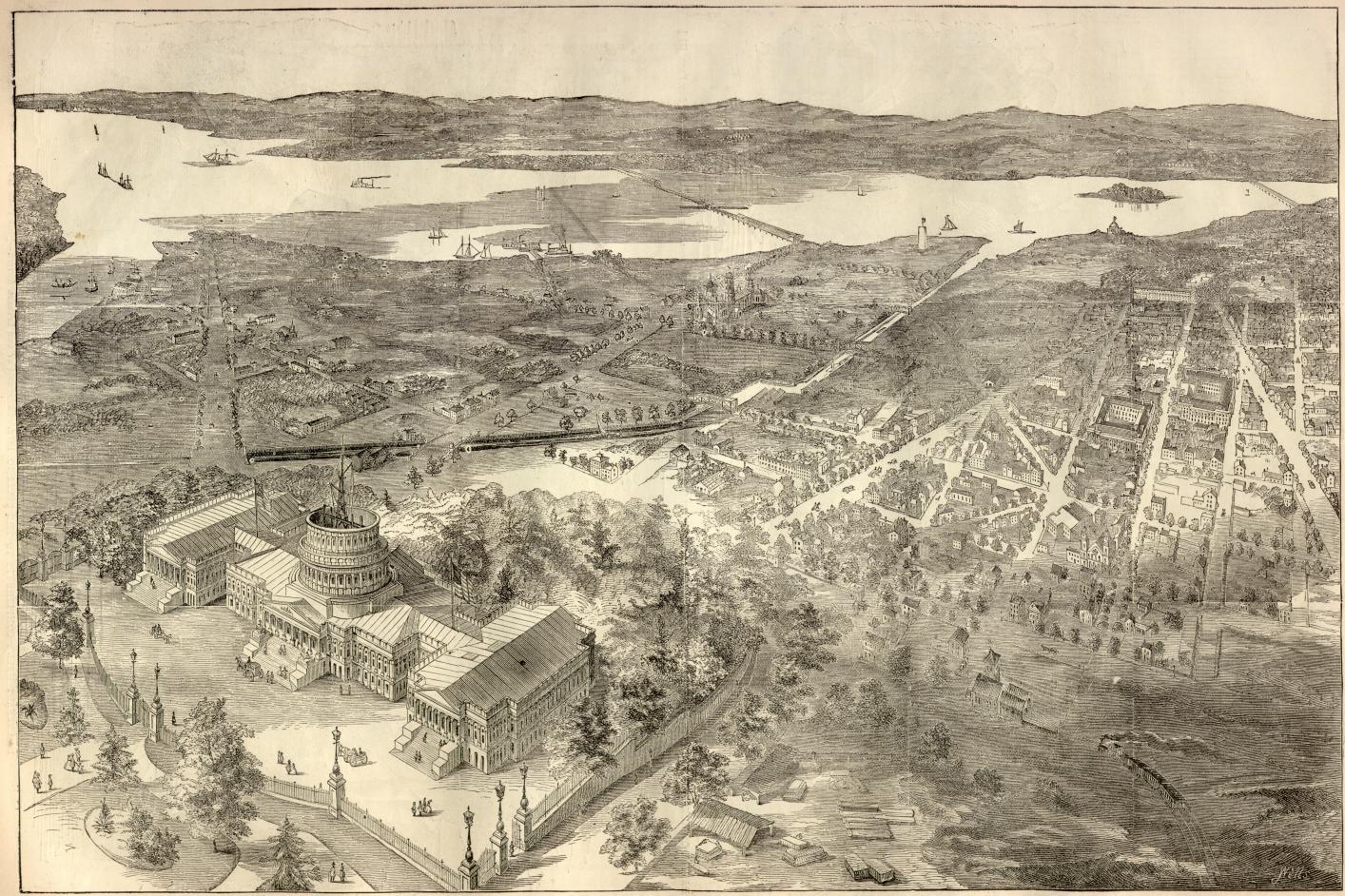
    Aerial Perspective of Washington DC in 1861.

    The Deep South’s animating of a Second American Revolution, by seceding from the Union and laying the foundation for an operational Confederate government, forced the North to either suppress the South’s uprising or craft a resolution. The likelihood of war would deter any widespread northern suppression, leaving the question: What compromise could the North propose that appeased the South and put both sections of the country on a path of coexistence? While variations of this question had been posed in the years leading up to 1860, at no prior point were states seceding from the Union en masse to form a rival government. (more…)

  • The Secession of the Deep South

    secession-hall-583x600
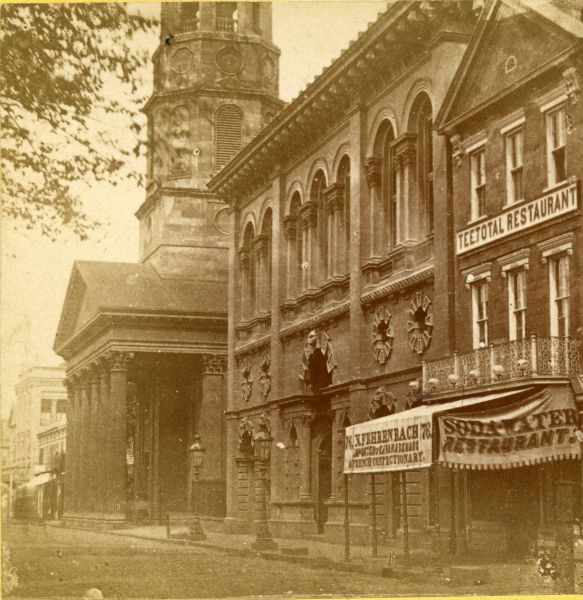
    Secession Hall in Charleston, South Carolina. Credit: The Civil War Trust.

    In the wake of the disconcerting result of the Election of 1860, the nature of southern secessionism suggested the imminent secession of at least some southern states from the Union. The timing and execution of states actually seceding from the Union was unclear, but the Deep South was prepared to act first. (more…)